




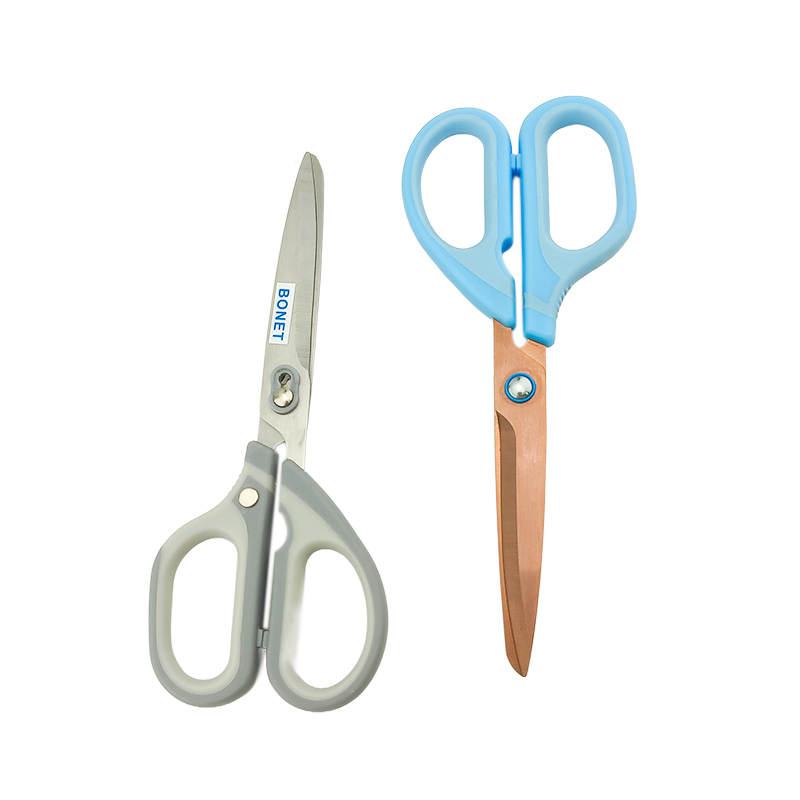
Titanium Scissors Manufacturing: What B2B Buyers Should Know
Titanium scissors sit in a specialized area of the cutting-tool market where buyers look for durability, cutting precision, appealing finishes, and comfortable handling. For importers, distributors, promotional product buyers, office supply brands, and houseware retailers, the key challenge is not simply finding a scissors factory. It is understanding what to ask, how to compare suppliers, and how to confirm that the final product matches the intended use.
The original appeal of titanium scissors comes from titanium’s reputation for strength, rust resistance, and a lightweight feel. In commercial sourcing, however, buyers should be precise with terminology. Some products may be made from titanium, while others may use a titanium-colored or titanium-based coating over another blade material. Before placing an order, confirm the actual blade construction, coating method, handle material, and performance expectations in writing.
Key Takeaways
- Clarify whether the scissors are solid titanium, titanium-coated, or titanium-finished before discussing price.
- Evaluate blade sharpness, alignment, handle comfort, and finish consistency with pre-production samples.
- Custom options can include blade finish, handle color, ergonomic grip, packaging, and functional details such as a box opener.
- Ask suppliers for documented quality-control steps instead of relying on broad claims about durability.
How Titanium Scissors Manufacturing Typically Works
A titanium scissors factory may use a multi-stage production process that includes forming or forging, grinding, polishing, coating, assembly, and final inspection. The exact process depends on the product design and the materials specified by the buyer. For B2B sourcing, the important point is to understand which steps the supplier performs in-house and which are outsourced.
Grinding and blade finishing are especially important because they influence how cleanly the scissors cut paper, fabric, packaging film, or craft materials. Blade alignment is another critical factor. Even a sharp blade can perform poorly if the two sides do not meet correctly. During supplier discussions, ask how the factory checks cutting performance, edge consistency, and screw tension during production.
Product Design Options for Wholesale and OEM Buyers
Modern titanium scissors are often selected not only for cutting performance but also for their appearance. Buyers may request finishes such as iridescent, matte black, or rose gold when these are available from the supplier. These finishes can help a product line stand out in office, craft, school, or household categories, but color should not be treated as the only purchasing criterion.
Handle design matters just as much. Ergonomic soft-grip handles are commonly requested because they can improve comfort during repeated use. Buyers should still test the handle size and grip shape against the target market. A handle that works well for adult office users may not be ideal for school use, crafting, or heavy packaging tasks.
Custom titanium scissors may also include specialized features. The original article mentions multifunction designs and an integrated box opener as possible examples. If these details are required, the buyer should confirm safety, usability, packaging warnings, and whether the added feature affects the main cutting function.
Comparison Checklist for Evaluating Suppliers
| Evaluation Point | What to Check | Questions to Ask the Supplier |
|---|---|---|
| Blade material | Actual construction and surface finish | Is the blade solid titanium, titanium-coated, or another material with a titanium-style finish? |
| Cutting performance | Sharpness, smooth opening, clean cut | What cutting tests are performed before shipment? |
| Alignment | Blade contact, screw tension, tip matching | How is blade alignment inspected during production? |
| Handle comfort | Grip shape, soft-touch areas, hand fit | Can we review samples for different user groups? |
| Finish quality | Color consistency, coating adhesion, scratches | How do you protect coated blades during packing and transport? |
| Customization | Color, handle design, packaging, logo options | What customization options are available, and what are the minimum order requirements? |
| Quality control | Inspection records and sample approval | Can you provide the inspection checklist used for this model? |
Quality Control Points That Matter
Quality control should not be limited to checking the appearance of finished scissors. For a cutting tool, performance and consistency are more important than a perfect product photo. Buyers should review samples from the same production route expected for the bulk order, not only showroom samples.
- Blade sharpness: Test the scissors on the intended materials, such as paper, light packaging, thread, or craft sheets.
- Blade alignment: Open and close the scissors several times to check for rubbing, gaps, or uneven contact.
- Tip accuracy: For detail work, the blade tips should meet cleanly.
- Handle comfort: Ask several users to test the grip, especially if the product will be sold for school, office, or craft use.
- Finish durability: Inspect for scratches, uneven color, or peeling on coated or colored surfaces.
- Packing protection: Confirm that the blade finish and tip are protected during shipment.
Custom Titanium Scissors: What to Specify
Customization can turn a general-purpose tool into a product suited for a specific channel. Retailers may prioritize packaging and color coordination. Promotional buyers may need logo placement. Craft brands may focus on blade shape and decorative finishes. Office supply distributors may care most about comfort, safety, and repeatable quality.
A clear product brief should include the intended use, target user, blade finish, handle color, grip requirements, logo needs, packaging format, and any special function such as a box opener. Avoid vague instructions such as “high quality” or “premium feel.” Instead, describe measurable or reviewable requirements: smooth opening, comfortable grip, clean paper cutting, consistent blade color, and secure retail packaging.
Commercial Questions to Ask Before Ordering
Because production capability varies by supplier, buyers should avoid assuming details that have not been confirmed. Ask direct questions and keep the answers attached to the quotation or product specification sheet. Useful questions include:
- What materials are used for the blades, handle, screw, and grip areas?
- Which production steps are completed in your facility, and which are outsourced?
- What sample approval process do you recommend before mass production?
- What customization options are available for blade finish, handle design, logo, and packaging?
- What are the minimum order quantities, lead times, and carton packing details?
- What inspections are performed during production and before shipment?
- Can the same finish be maintained across repeat orders?
FAQ
Are titanium scissors always made entirely from titanium?
Not necessarily. Some scissors may use titanium, while others may use a titanium coating or a titanium-style finish. Buyers should confirm the exact blade material and finish with the supplier.
What makes titanium scissors attractive for retail or wholesale programs?
They are associated with strength, rust resistance, a lightweight feel, and modern finishes. For B2B buyers, the main value depends on verified performance, consistent appearance, and suitable customization.
Can titanium scissors be customized?
Yes, many suppliers can discuss custom blade colors, handle designs, soft-grip options, packaging, logos, and functional features. Availability, minimum quantities, and cost should be confirmed with the factory.
How should buyers test samples?
Test the scissors on the materials your customers will actually cut. Check sharpness, blade alignment, handle comfort, finish quality, and packaging protection before approving production.
What should be included in a purchasing specification?
Include blade material, finish, handle design, intended use, packaging, logo requirements, inspection expectations, and any agreed sample standard. This reduces misunderstanding between buyer and supplier.
Final Sourcing Advice
Titanium scissors can be a strong product choice for office, craft, household, and promotional channels when the specification is clear. Focus on verified material details, practical cutting performance, consistent finishing, and supplier transparency. A good factory conversation should move beyond appearance and cover how the scissors are made, checked, packed, and repeated in future orders.
