




Multi-Functional Kitchen Scissors: Practical Buying Guide
Multi-functional kitchen scissors are one of the most useful small tools in a busy kitchen because they can handle quick cutting jobs that do not always require a knife and cutting board. The original article highlighted three important ideas: versatility, comfortable handling, and sourcing from experienced kitchenware suppliers. This rewritten guide keeps those points but turns them into practical selection advice for home users, retailers, wholesalers, and OEM buyers.
Unlike basic office scissors, kitchen scissors are intended for food preparation and everyday kitchen tasks. They may be used to snip herbs, trim food packaging, cut cooked meat, portion flatbread, or help with poultry preparation when the design is suitable. However, not every pair offers the same comfort, blade strength, cleaning convenience, or packaging quality. Buyers should evaluate the product carefully instead of relying only on appearance.
Key Takeaways
- Multi-functional kitchen scissors should be judged by cutting performance, grip comfort, cleaning method, and safe handling.
- For retail or wholesale sourcing, ask suppliers clear questions about materials, packaging, branding options, quality checks, and lead times.
- Comfortable handles matter because repeated cutting can cause hand fatigue, especially in commercial or batch-prep settings.
- OEM kitchen scissors can support private-label projects, but buyers should confirm customization limits before ordering samples.
- Care and storage affect long-term performance, so users should clean, dry, and store scissors properly after use.
What Makes Kitchen Scissors Multi-Functional?
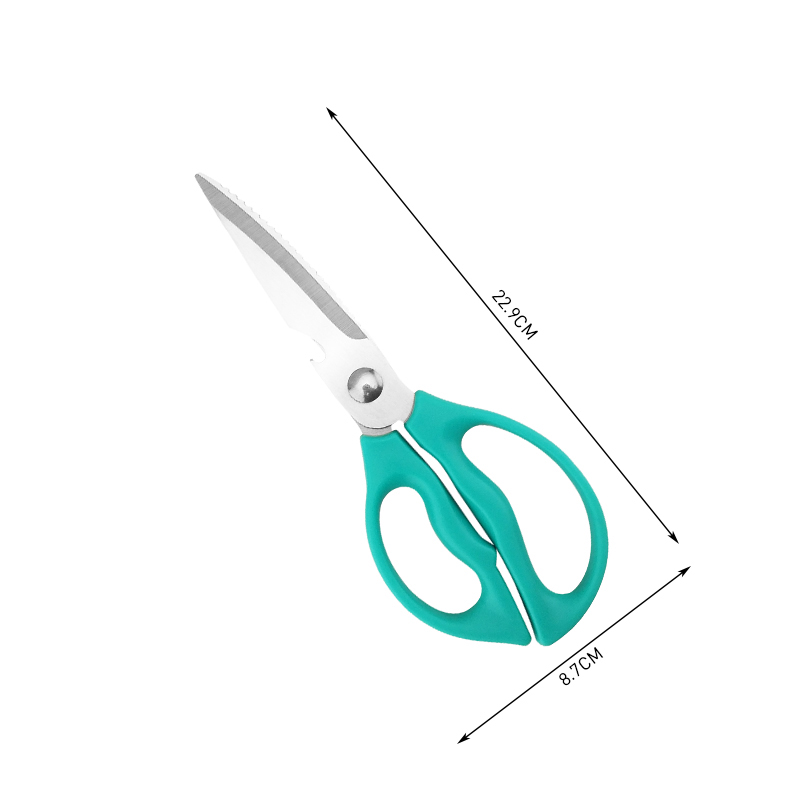
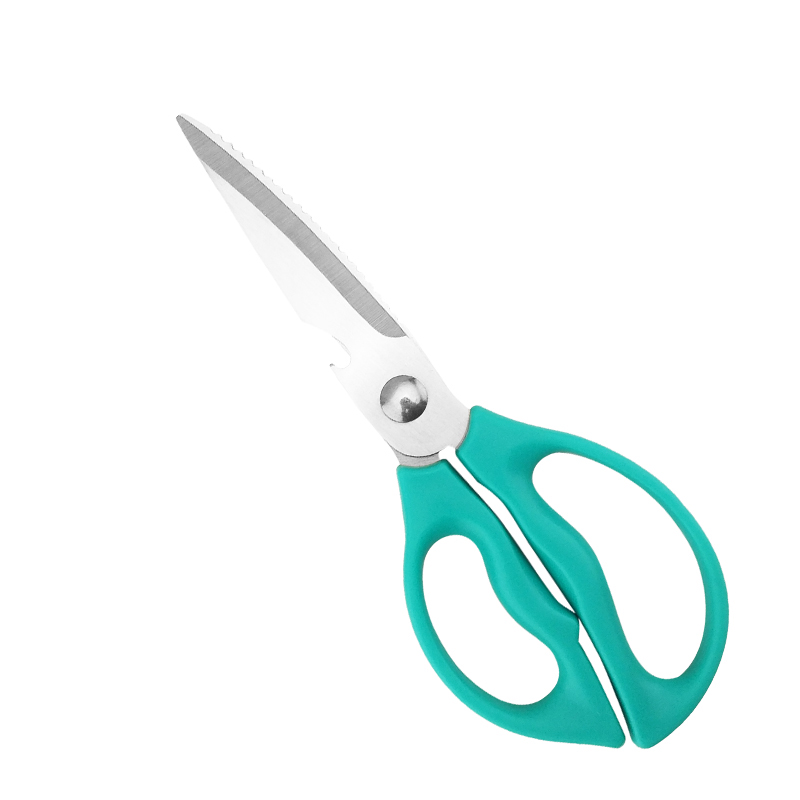
The term multi-functional should mean more than a marketing phrase. A useful pair of kitchen scissors should perform several everyday tasks reliably. Common uses include cutting herbs, trimming vegetables, opening food bags, cutting parchment, portioning cooked food, and handling small preparation jobs where a chef's knife feels unnecessary. Some designs may also include extra functions such as a bottle opener, nutcracker-style grip, or serrated section, but buyers should verify these features from the product specification rather than assume they are included.
For consumers, the best choice is usually the pair that fits the most frequent kitchen tasks. For B2B buyers, the better question is whether the feature set matches the target customer. A budget retail line, a premium gift set, and a professional kitchenware range may require different handle materials, packaging styles, and quality expectations.
Blade and Cutting Performance
Cutting performance is the first point to evaluate. The blades should align cleanly and close smoothly without wobbling. A precise cutting edge helps users snip herbs without bruising them and cut packaging without tearing. If the scissors are intended for heavier food preparation, such as poultry or cooked meats, the buyer should request samples and test them under realistic conditions.
The original article mentions stainless steel kitchen shears through the linked product title. If stainless steel is part of the product specification, buyers should still ask what type of steel is used, how the blade is finished, and what corrosion-resistance expectations are supported by the supplier's documentation. Avoid making assumptions about grade, hardness, dishwasher suitability, or food-contact compliance unless the supplier provides verifiable details.
Handle Comfort and Ergonomics
Comfortable handle kitchen scissors are especially important for people who cook often or prepare ingredients in volume. A good handle should feel stable in the hand, allow controlled pressure, and avoid sharp pressure points around the fingers. Non-slip handling is useful when working near water or food, but the buyer should confirm the actual handle material and texture.
Ergonomics also affects safety. If the handle is too small, too hard, or poorly shaped, users may apply uneven force and lose control. For wholesale or OEM projects, request samples and test them with different hand sizes. It is also useful to check whether the scissors are comfortable for both quick tasks and repeated cutting over several minutes.
Comparison Checklist for Product Selection
| Selection Point | What to Check | Why It Matters |
|---|---|---|
| Blade alignment | Open and close the scissors several times; check for wobble or gaps | Better alignment improves cutting precision and user confidence |
| Handle comfort | Test grip shape, finger space, and surface texture | Comfort reduces fatigue during repeated prep tasks |
| Cleaning design | Ask whether the scissors separate for cleaning or require hand washing only | Food tools need easy, hygienic maintenance |
| Multi-use features | Confirm any opener, grip, serration, or poultry function in writing | Prevents overpromising features in retail listings |
| Packaging and branding | Review retail card, box, barcode, logo, and instruction options | Important for OEM, private label, and wholesale sales |
| Supplier documentation | Ask for available material, test, and compliance information | Supports responsible sourcing and market entry checks |
Use and Care Guidance for Home Kitchens
Kitchen scissors last longer when they are used and cleaned correctly. Users should avoid cutting hard non-food materials that may damage the edge unless the supplier specifically states the scissors are designed for that purpose. After cutting meat, seafood, or oily foods, clean the scissors promptly and dry them thoroughly before storage.
- Wash the scissors after food contact, especially after raw meat or seafood.
- Dry the hinge and blade area carefully to reduce moisture buildup.
- Store the scissors in a drawer organizer, sheath, or safe tool area away from children.
- Do not use kitchen scissors for garden wire, metal packaging, or other hard materials unless rated for that use.
- Check the hinge regularly; stop using the scissors if the blades loosen or become unsafe.
B2B Sourcing from a Kitchen Scissors Supplier
For businesses, sourcing is not only about unit cost. A reliable kitchen scissors program depends on consistent product quality, suitable packaging, clear communication, and realistic lead times. The original article refers to a Yangjiang kitchen scissors factory, which is relevant because Yangjiang is widely known as a cutlery and kitchenware manufacturing hub. Still, buyers should evaluate each supplier on its own evidence rather than relying on location alone.
Before placing a bulk order, request samples from the exact production version, not only a showroom sample. Test cutting performance, grip comfort, surface finishing, packaging strength, and carton labeling. If the product will be sold in a regulated market, ask what documents the supplier can provide and have them reviewed by a qualified compliance professional for your market.
OEM and Private-Label Questions to Ask
OEM kitchen scissors can help retailers and brands create a product that fits their own identity. Customization may include logo placement, handle color, packaging artwork, instruction sheets, or bundle formats. However, the available options depend on tooling, materials, order quantity, and production schedule, so every detail should be confirmed before final artwork approval.
Useful supplier questions include: What handle colors are available for this model? Can the logo be printed, laser marked, or added to packaging only? What packaging formats are supported? Are pre-production samples available before mass production? What quality checks are performed during production and before shipment? What is the expected production lead time after sample approval? These questions help prevent misunderstandings and support a smoother sourcing process.
FAQ
Are multi-functional kitchen scissors better than a knife?
They are not a replacement for every knife task, but they are faster for many small jobs such as snipping herbs, cutting packaging, or portioning cooked food. A good kitchen uses both tools.
Can kitchen scissors be used for poultry?
Some kitchen shears are designed for poultry, but not all are. Check the supplier's product description and test samples before advertising poultry-cutting capability.
Should kitchen scissors be dishwasher safe?
Only claim dishwasher suitability if the supplier states it clearly. Even then, hand washing and drying often help preserve the hinge, blade edge, and handle finish.
What should wholesalers check before ordering?
Wholesalers should check sample quality, blade alignment, handle comfort, packaging, labeling, available documentation, lead time, and after-sales handling for defects.
What is the most important feature for OEM buyers?
Consistency is often the most important factor. A customized design is valuable only if the supplier can maintain stable quality, packaging accuracy, and agreed specifications across the order.
Final Buying Advice
The best multi-functional kitchen scissors are practical, comfortable, easy to clean, and appropriate for the user's real cooking habits. For consumers, focus on grip, safe handling, and simple maintenance. For retailers, wholesalers, and OEM buyers, combine product testing with clear supplier questions about materials, customization, packaging, documentation, and quality control. That approach creates a more reliable kitchen tool and a better buying decision.
