




Quick answer: A reliable multifunction kitchen gadget manufacturer should help buyers verify every advertised task as part of a complete kitchen workflow: prepare the ingredient, activate the right function, complete the task, switch modes when needed, clean the tool, and store it safely. Importers should validate the individual functions and the transitions between them, using an approved sample and measurable inspection criteria. The product with the most features is not necessarily the product customers will keep using.
For a buyer developing an OEM kitchenware range, multifunctionality is both an opportunity and an obligation. A tool that peels and juliennes may replace two items in a drawer. A spatula that becomes a pair of tongs may reduce storage. A cutter with a working container may support preparation and transfer. Yet those benefits disappear if the mode selector is confusing, food becomes trapped in joints, a component loosens, or the user must spend longer cleaning the tool than preparing the ingredient.
This guide uses publicly listed BONET HOUSEWARE products as sourcing references and introduces an original Use–Switch–Clean–Repeat validation framework . It is intended for brand product managers, sourcing specialists, importers, wholesalers, supermarket buyers and OEM/ODM teams who want to turn a multifunctional concept into an item that can be demonstrated, inspected, packaged and reordered consistently. It does not claim to report independent tests of BONET products; the methods are proposed buyer-side checks to apply to actual samples.
1. What Should a Multifunction Kitchen Gadget Manufacturer Actually Deliver?
A useful multifunction kitchen gadget solves more than one meaningful task without making any essential task awkward. That sounds simple, but procurement teams often see a supplier's presentation arranged around feature count: two blades, three cutting modes, five attachments, several opening edges, or a combination of cooking and serving tools. Feature count is easy to print on a retail box; repeatable usefulness is harder to prove.
A manufacturer discussion should therefore deliver four things. First, an exact function list that distinguishes standard functions from optional accessories or marketing demonstrations. Second, a physical sample that can complete those functions with the foods or materials appropriate to the intended user. Third, a cleanability and safe-handling description for each mode and for transitions between them. Fourth, a production specification that identifies components, materials, dimensions, markings, accessories and inspection criteria.
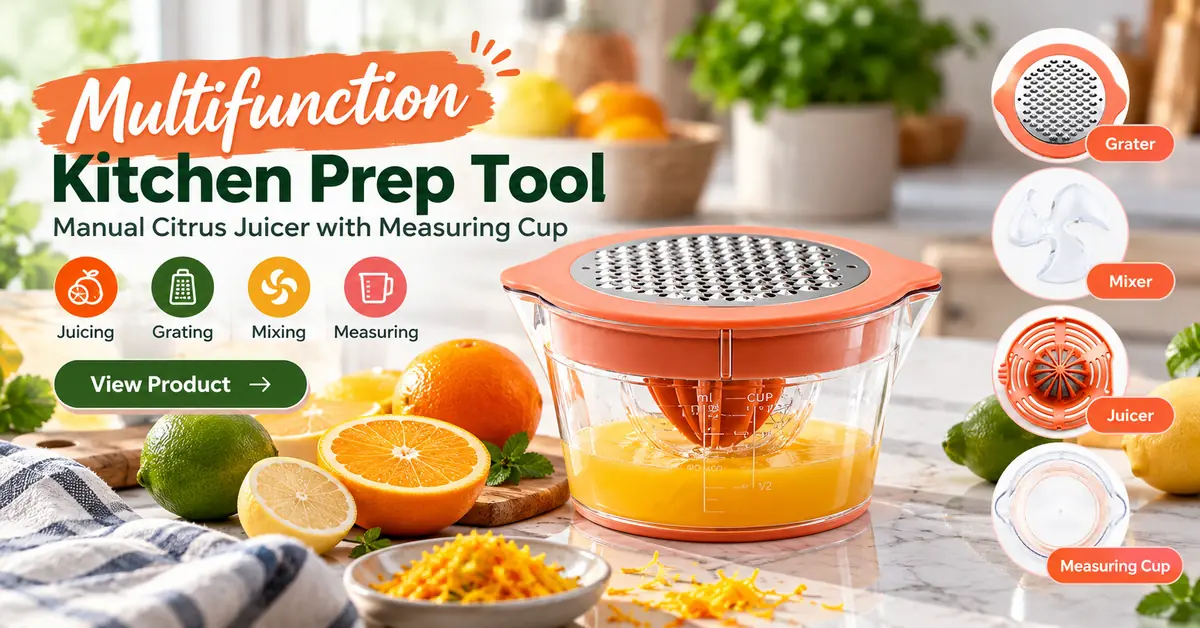
The last requirement matters because consumers do not use a single isolated component. They use a combined system. A well-sharpened insert will not rescue an unstable grip; a smooth handle will not compensate for an attachment that is hard to remove; attractive packaging will not solve a missing instruction about orientation. The factory's value lies partly in helping the buyer see those system risks before mass production.
For products presented as OEM multifunction kitchen gadgets , ask what the supplier actually controls: existing molds, design modifications, component purchasing, assembly, finishing, function checks, logo application and export packaging. A broad catalog does not prove that every process is performed in-house, and it does not establish a universal MOQ or delivery date. The practical goal is accountability for the finished product.
2. Which Buyers Benefit—and Which Projects Need a Different Product?
Private-label kitchenware brands can use multifunctional tools to create a recognizable product line built around compact storage, coordinated colors and simple task demonstrations. Supermarkets may prefer a small number of functions that customers understand from the front of the box. E-commerce sellers often need a product that demonstrates clearly in a short video and arrives with concise instructions. Importers and distributors need stable specifications, price breaks and an orderly reorder process.
Hospitality or catering suppliers have a different threshold. A consumer peeler or compact cutter may suit limited prep tasks, but that does not make it suitable for high-volume commercial kitchens. More intense use may require larger capacities, replaceable components, stronger construction or different sanitation arrangements. The product's claims should follow the actual use conditions and evidence.
Some projects are not a good fit for a multifunction design . If one task is used far more often than the others, a dedicated single-function tool may be easier to grip, clean and replace. If changing modes exposes sharp edges or requires excessive disassembly, combining functions may worsen the experience. If a market demands professional sanitation or heavy-duty throughput that the selected design cannot support, a different product platform should be considered before customization.
The buying decision is therefore not “multifunction or single-purpose?” in the abstract. It is “which everyday task sequence does this customer perform, and will one tool make that sequence simpler in real conditions?” That question creates a more defensible specification and a stronger retail message.
3. Define Function Types Before Comparing Product Claims
Not all multifunctional gadgets work in the same way. Three categories create different testing obligations. Sequential-function tools perform one task and then another with the same body or a selector, such as a peeler with alternative cutting edges. Combined-function tools allow a common mechanism to serve two actions, such as turning food and gripping it with the same utensil. System-function tools combine components into a workflow, such as cutting food and collecting it in an integrated holder.
These categories are a planning framework, not BONET's official product taxonomy. A tool may fit more than one category, and a feature should be classified from the actual approved sample. The distinction matters because the buyer tests something different in each case. Sequential tools need repeatable mode selection; combined tools need compromise-free operation in both positions; system tools need coordinated part fit, assembly and clean-up.
| Multifunction design type | Buyer question | Transition risk | Useful sample test |
|---|---|---|---|
| Sequential modes | Can the user choose the intended mode easily? | Selector confusion, exposed edge, weak detent | Alternate modes repeatedly and record errors |
| Combined two-in-one use | Does either task become worse because of the shared geometry? | Grip interference, unstable working end, joint movement | Complete both tasks without changing the user's normal posture |
| Modular or system workflow | Do the components work as a coherent process? | Mismatched parts, trapped food, missing accessories | Assemble, process, empty, wash and reassemble the complete set |
| Added auxiliary feature | Does the extra feature help a relevant user? | Bulky form, poor access or irrelevant claim | Test the extra feature without degrading the primary function |
This classification also protects the product description. A knife sharpener with two sharpening stages offers two processing steps, but the retail claim should describe those steps accurately rather than suggesting it performs unrelated kitchen jobs. A container that makes food transfer easier is useful, yet it should not be counted as another cutting blade. Each claim should reflect something a user can observe.
4. Verified BONET Product References for a Real Sourcing Discussion
BONET HOUSEWARE lists several products that can illustrate different multifunction challenges. The published specifications below are catalog references, not independently measured performance results, guaranteed stock availability or proof of particular regulatory certifications. A quotation and control sample are needed to confirm the current revision.
| Public product reference | Public dimensions and materials | Relevant multifunction concept | Critical buyer confirmation |
|---|---|---|---|
| M054 3-in-1 Vegetable Peeler | L: 18 × 10.8 × 2.5 cm, 32.6 g; M: 15.1 × 9.2 × 2 cm, 23 g; S: 13 × 6 × 2 cm, 16.5 g; 420 stainless steel and PP | Straight, serrated and julienne tasks | Actual size/configuration supplied, blade selection, cleaning and pack contents |
| M047 Multi-Functional Potato Cutter | 15.9 × 11.7 × 11.5 cm; 314.6 g; 420 stainless steel; PP + TPR | Cutter, handling support and container workflow | Blade and holder configuration, force needed, removal and cleaning route |
| U103 2-in-1 Spatula Tongs | 27.5 × 8 × 4 cm; 420 stainless steel; product specification lists nylon | Turning and gripping with one utensil | Confirm exact head material; marketing description also mentions silicone; verify intended temperatures |
| G2011 Magnetic Kitchen Scissors | 21.8 × 8.6 × 2 cm; 420 stainless steel and PP | Cutting plus integrated auxiliary uses and magnetic storage | Confirm supplied sheath, intended cut media and limitations of every auxiliary feature |
See the individual references: M054 vegetable peeler , M047 potato cutter , U103 spatula tongs and G2011 magnetic kitchen scissors .
For M054, do not assume that every size is packaged together or that all three configurations carry an identical blade arrangement without checking the quoted version. For U103, the material discrepancy is especially important: the visible description uses “silicone,” while the specifications list “NYLON.” Before publishing a material or heat-resistance claim, request a component-level specification and supporting evidence. That is a practical example of why buyers should treat online product copy as a starting point for clarification, not the final technical file.
These references illustrate a supplier discussion rooted in actual products while leaving room for a manufacturer to propose feasible alternatives. The buyer can compare functional goals without implying that every listed accessory, custom color, special material or packaging variant is available on the same commercial terms.
5. The Use–Switch–Clean–Repeat Method: Test the Complete Cycle
A multifunction product can perform each advertised function in a demonstration and still disappoint in daily use. What happens between functions is often the missing part of the evaluation. This guide proposes a repeatable four-phase cycle that an importer can record on a sample sheet: Use , Switch , Clean and Repeat .
Phase A — Use the first function under representative conditions
Choose a normal ingredient and a defined result: carrot peeling, vegetable cutting, gripping cooked food or trimming herbs. Record the user, ingredient size, starting condition, task sequence and any assistance needed. Observe whether the tool performs its main function without an awkward grip, slipping, excessive force or unexpected detachment. Ask a second user to repeat the task without watching the first demonstration; that reveals whether the process is self-explanatory.
Phase B — Switch to the next declared function
Time is useful, but mistakes are more revealing than speed alone. Can the user identify the new mode? Does changing the blade require a step that the instruction sheet omits? Must the user touch an exposed sharp component? Do parts seat positively? Does the handle remain usable once the second function is engaged? Log hesitation, incorrect orientation, drops and unintended contact with the active edge.
Phase C — Clean the tool as instructed
Follow the cleaning instructions that the manufacturer intends to print, not an improvised method used only in the test kitchen. Watch for food fragments under the blade carrier, in a hinge, inside the handle connection or behind a removable guard. Record whether disassembly is required, whether parts are difficult to reach, and whether reassembly introduces a new mistake. A product that is difficult to clean may see reduced repeat use even when it performs well on the first task.
Phase D — Repeat after the tool has been cleaned and reassembled
Repeat the first and second function. Check that the mechanism still seats firmly, dimensions have not visibly changed, and there are no new sharp plastic edges, loose joints or abnormal sounds. A short pilot is not a durability certification; the purpose is to identify failure patterns that need a formal test plan. Where the intended use justifies repeated-operation testing, negotiate cycle counts, fixtures and pass/fail criteria before production.
| Phase | Recorded output | Possible failure mode | Buyer release criterion |
|---|---|---|---|
| Use | Task result, grip observations, operator notes | Incomplete cut, excessive effort, slipping | Meets the approved practical task definition |
| Switch | Steps, hesitation, mis-selection, hand position | Wrong mode, exposed edge, loose insert | Mode change is understandable and controlled |
| Clean | Wash route, trapped residues, reassembly steps | Unreachable crevice, lost part, difficult refit | Matches written care instructions and agreed cleaning inspection |
| Repeat | Functional result after reassembly | Reduced performance, movement, cracks | Equivalent accepted function and secure assembly |
A buying team can repeat this protocol across multiple operators and record results on the same form. The advantage is comparable evidence: two visually similar tools can be judged by the full user workflow instead of subjective claims that one design “feels more innovative.”
6. Specify Real Food and Real Task Conditions
Testing only one convenient ingredient creates false confidence. A vegetable peeler may handle a firm carrot differently from a ripe tomato; a cutter may work on a small potato but need excessive force on a larger one. A combined spatula and tong may perform differently on a delicate fillet, a firm vegetable or a portion of roasted food. The correct test menu depends on the product's intended use, not an attempt to make a demonstration fail.
Create a representative task set with a routine task, a realistic boundary case and a task the product explicitly does not claim to handle. The boundary case should still be within intended use. For example, a handheld peeler evaluation might compare a firm carrot and a softer-skinned fruit if both are stated applications. A cutter evaluation should identify ingredient dimensions, orientation and the force method. A tong test should specify the type and approximate size of food to be gripped.
The team should record ingredient preparation, operator posture, task duration if appropriate, resulting cut quality, failures and how much effort was needed to change modes. Record the temperature of ingredients or equipment only where it matters to the stated application. Do not infer a safe heat rating from a marketing phrase, product color or a single demonstration.
For regional retail programs, consider ordinary kitchen habits. Some markets emphasize stir-frying and serving; others emphasize quick salad prep, roasting or food presentation. The same gadget can have different value across channels. The best test protocol mirrors the buyer's proposed consumer instruction and marketing demonstration rather than a generic laboratory-looking checklist.
7. Function Switching: Geometry, Recognition and Safety
The physical interface is central to a multifunction tool. When a product changes between functions, users must recognize the active setting, keep fingers away from the working edge and know when the change is complete. This is not just industrial-design language. It affects support requests, negative reviews, returns and possibly injury risk.
Ask whether modes have clear visual or tactile differentiation. If several inserts look nearly identical, consider markings, differentiated colors or storage slots—but make sure any marking survives the expected cleaning process and does not interfere with food contact. If a tool uses a rotating or sliding part, check end stops and whether a reasonable user can accidentally leave the part halfway engaged. If parts are detachable, ask how they are retained in the package and stored between uses.
G2011 kitchen scissors provide a different form of multifunctionality from a peeler: the buyer should review cutting, integrated auxiliary features and the magnetic sheath as separate claims. The main pair of scissors may cut acceptably while a secondary opener is awkward; a magnet may be useful but should not be presented as safe on every household surface without verification. The supporting feature needs an independent task check as well as an assessment of whether it alters grip comfort during normal cutting.
When reviewing M054 or another multi-blade peeler, note how the user selects the right edge and where the unused cutting surfaces are during operation and cleaning. For a container cutter, focus on the relation between blade path, stabilizing base and handling of the prepared food. Every transition has a potential failure that can be written into the acceptance criteria.
8. Ergonomics Should Be Tested in Both Primary and Secondary Modes
A handle can feel comfortable when held in a showroom but become awkward after several minutes of repetitive use. Multifunction products can magnify the problem because one handle must serve several working angles. Ask a small set of representative users to complete the intended sequence rather than rating the handle while the product is stationary.
Record where fingers naturally rest, whether wet hands affect control, whether the working end obscures the food, and whether switching modes requires a hand position that seems unsafe or unintuitive. Test the tool with the same dominant and non-dominant hand conditions your product claims imply. Do not call a design universally ambidextrous simply because a salesperson can operate it with either hand in a short video.
For kitchenware sold to a general consumer population, simple, legible instructions matter as much as a comfortable grip. A short illustrated sequence may prevent users from holding a component incorrectly. However, clear instructions cannot substitute for eliminating an avoidable design hazard. A buyer should escalate repeated handling mistakes to product development rather than hide them inside a longer manual.
A useful ergonomic approval note is specific: “Operator can access and operate the switching control without contacting the cutting edge under the defined test.” Statements such as “comfortable for everybody” or “zero fatigue” are not credible technical acceptance criteria. Use observations, measurements when available and a named test method.
9. Cleanability Is a Product Feature, Not an Afterthought
Food-preparation gadgets must be evaluated in their dirty condition. After a polished catalog demonstration, take the used tool apart only in the manner the end user is instructed to use. Inspect edges, seams, hinge cavities, fasteners and hidden volumes. Small amounts of food can remain in places that never appear in hero images.
For a manually operated gadget, distinguish cleaning access from material compatibility . A smooth surface may rinse easily but have an inaccessible gap behind a removable blade. A robust molded body may survive ordinary washing but become difficult to reassemble. An apparently removable component may rely on a small clip that wears or is easy to lose. Each issue requires a different solution.
The package and product page must not promise dishwasher compatibility unless the actual product configuration, materials, components and test evidence support the instructions. BONET pages sometimes use broad cleaning language in descriptions; buyers should validate it for the SKU and revision that will be sold. A plastic designation such as PP, TPR, ABS or nylon alone is insufficient to establish a complete product's care conditions.
A practical residue-location audit
Before cleaning, photograph the used product. After following the claimed care procedure, inspect each interface in the same lighting. Pay particular attention to blade attachment points, the underside of guards, transitions between plastic and metal, cavities behind sliders, container rims and storage mechanisms. Record whether ordinary household tools or brushes are required. If a brush is necessary, clarify whether it is supplied and how it is described in the instructions.
For products with multiple parts, conduct a count-back test : identify all parts before cleaning and verify each one after drying and reassembly. The goal is to prevent an accessory from disappearing between customer use and the next task. Retail packaging and instructions should help users retain the components, not simply present an impressive accessory count.
10. Materials and Food-Contact Surfaces Need Component-Level Evidence
Multifunctional tools commonly combine stainless steel cutting elements, molded plastic handles, flexible grips, fasteners and sometimes separate containers. The buyer needs a component-level bill of materials (BOM), because a catalog line that says “stainless steel + plastic” does not tell you which components contact food, what additives are present or how the components are joined.
The BONET references provide useful examples. M054 lists 420 stainless steel and PP . M047 lists 420 stainless steel and PP + TPR . G2011 lists 420 stainless steel and PP . U103 lists 420 stainless steel and nylon in its specification block, while its promotional text mentions silicone. That mismatch should be resolved before use claims, care instructions or market-specific documentation are finalized.
Material questions should cover identity, functional purpose, supplier traceability, colorants, permitted substitutions, food-contact status where applicable and any required test evidence. For steel parts, ask how the material and finished edge relate to the declared task. For molded parts, ask how the resin choice affects stiffness, grip, appearance, cleaning and expected use. Where parts interface with cutting edges, verify that the final combination is controlled, not just that each component has a certificate by itself.
| Part or material area | What the purchase specification should identify | What not to assume |
|---|---|---|
| Stainless steel blade or insert | Exact grade, geometry, surface finish and relevant processing/inspection | Steel grade alone guarantees sharpness or service life |
| Rigid polymer body | Resin identity, finish, color, dimensions and contact role | All plastics are suitable for every food-contact or heat condition |
| Soft grip or flexible component | Material identity, attachment method, odor/finish and intended cleaning | “Soft touch” proves heat or chemical resistance |
| Joint, pivot or lock | Part count, fit, retention, movement and inspection | One successful sample proves repeat durability |
| Food collection container | Material, usable geometry, sealing/fit and cleaning access | A container automatically makes the tool suitable for storage of all foods |
If you are selling into the EU, the European Commission's food-contact framework includes Regulation (EC) No 1935/2004, and EU rules specifically address relevant plastic food-contact materials under Regulation (EU) No 10/2011 as amended. In the United States, the applicable FDA framework depends on the substances and intended conditions of use. These are buyer due-diligence references , not a statement that BONET or any specific SKU has obtained a particular approval. Confirm the product, document scope, destination and intended use with the responsible compliance specialist.
11. Manufacturing Quality Depends on the Full Assembly
A multifaceted gadget may look like one simple retail SKU while involving multiple supplier processes. Molded parts, purchased metal components, finishing, assembly, markings and packaging must converge on a consistent approved version. That creates more opportunities for variation than a simple single-piece utensil.
The control plan should separate incoming-part inspection, first-off production checks, in-process assembly checks, functional testing and final pack verification. A blade component can meet its dimensional drawing while seating incorrectly in a molded carrier. A handle can look correct while its latch fails after repeated operation. A product can work perfectly but be packed with the wrong accessory. Each stage should detect the failure that it can most effectively prevent.
Where a supplier uses third-party components or partner operations, ask which party owns the final inspection and change authorization. A buyer does not need every component to be manufactured at one address; the buyer needs traceability, controlled specifications and one accountable route for resolving nonconformities.
A manufacturing partner should also be able to explain what happens if a component changes. Does a new polymer supplier require a fresh material review? Does a revised blade carrier require a repeat switch test? Does a packaging change alter the risk of a loose cutting insert during transit? Those are production-engineering questions, not decorative details, and they should be settled before the shipment rather than after a retailer complaint.
12. OEM and ODM Development: Turn a Concept Into an Approved Sample
BONET's published OEM and ODM services describe production against customer drawings or samples, plus concept support, structural optimization, sample development, material recommendations, customization, inspection and packaging. That information provides a practical entry point, but it does not establish the feasibility, MOQ or lead time of every requested feature.
For a limited OEM modification , the buyer may choose a known platform and request a color, logo, packaging or other approved change. The change should still be tested if it can affect grip, assembly, food-contact surfaces or cleaning. For ODM development , the starting point may be a user task or ergonomic issue rather than a finished drawing. In that route, the buyer should define what decision the prototype must answer and who approves the result.
A good sample-development sequence is simple: define the intended tasks; identify the reference platform; agree on the feature map and risk list; build or select the sample; run the Use–Switch–Clean–Repeat tests; record corrections; approve the final product and packaging versions; and only then release the production order.
Each revision should be identified. If a handle shape is updated, note whether the blade carrier, assembly method or package insert also changed. If a new color is proposed, confirm whether the functional sample still represents the final molded product. A signed or otherwise controlled “golden sample” is useful only when everyone knows which specification and artwork it represents.
Buyers can begin at BONET's Multi Functional product category , identify a relevant model and send requirements through the contact page . The supplier can then distinguish stock/reference features from custom work requiring feasibility review.
13. A Comparison Matrix for Four Relevant BONET Models
A model comparison should not force every gadget into the same test. Instead, apply the same decision logic while choosing different representative tasks. The table below proposes a validation focus; it is not a claim that independent acceptance tests have already been performed.
| Model | Main user outcome | Additional or shared function | Highest-priority test | What the buyer should request |
|---|---|---|---|---|
| M054 | Prepare produce with a peeler | Alternative cutting edges | User identifies and uses the correct blade safely; cleans around the edge | Exact included configuration, blade list and sample video |
| M047 | Cut and handle vegetables | Supporting holder / container workflow | Cutting alignment, force, food release, cleaning and component count | Full accessory list, assembly instructions, approved materials |
| U103 | Turn or lift food | Grip food with tong mode | Switching hand position, retention and working-end material | Material clarification, function sample and use-temperature evidence if claimed |
| G2011 | Cut food or light packaging within intended use | Auxiliary use and magnetic storage | Primary cut performance, extra function and sheath retention separately | Included sheath details, task claims and sample acceptance plan |
If your customer wants only a dedicated vegetable peeler, M054 may need to be compared with a simpler item rather than automatically selected for its multiple edges. If the market wants a compact food-prep process, M047 should be tested as an entire workflow. If consumers frequently transfer cooked food between pan and plate, U103's combined use may be more meaningful. A shelf feature list cannot answer these questions; targeted sample tests can.
The comparison also creates more informative inquiries. Instead of “Please send your best multifunctional gadget,” ask: “We need a compact manual tool for three everyday prep tasks, with clear mode selection and easy cleaning, and our target market requires a specific packaging language; which existing model can be validated against these requirements?” This is easier for a manufacturer to quote accurately.
14. Packaging and Instructions Must Show the Switch, Not Only the Features
Packaging is particularly important for a product with several modes. A lifestyle photo can show the finished dish, but the consumer also needs to understand how to engage each function safely. A practical retail layout usually distinguishes the primary use, the secondary uses, included accessories and care limitations. The exact approach depends on the channel, available packaging area and destination-language obligations.
Use realistic demonstrations rather than icon claims that have not been verified. If packaging promises “three functions,” make the three functions visibly identifiable. If a component is sold separately, do not present it as part of the included set. If a blade requires repositioning, illustrate the safe sequence and do not hide the step in fine print. Clear communication helps reduce unnecessary returns and protects customer confidence.
For e-commerce, product images and a short use sequence can show the transition between modes. For supermarkets, the front panel should explain the main benefit within a quick glance while the back panel gives clear use and cleaning guidance. Gift and private-label packaging can incorporate consistent colors and logos, but visual branding must not overrule the safety information or obscure a required warning.
Ask to inspect a packed sample , not only the loose item. Check that loose accessories cannot damage the working edge, that no sharp part punctures the pack, that the barcode is readable, and that the correct version of the instruction sheet is included. Treat pack contents and printed claims as part of quality control.
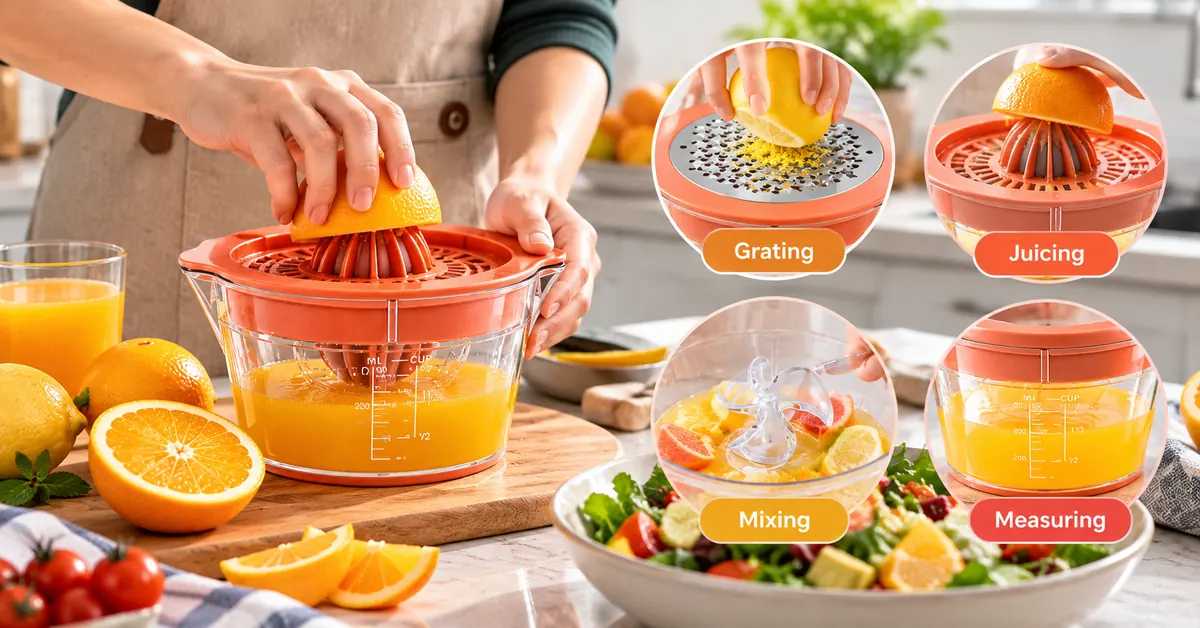
15. Cost and Risk: Price Each Useful Function, Not Each Advertised Feature
A multifunction gadget can save shelf space and replace several ordinary tools for the user. It can also cost more to mold, assemble, inspect and pack. More functions may mean more components, tools, supplier interfaces, instructions and customer-service questions. A lower component count can help, but that is not guaranteed when the mechanism becomes more complicated.
For procurement analysis, separate one-time development cost from recurring landed unit cost . One-time items may include tooling changes, engineering samples, artwork or special test programs; recurring items may include molded and metal parts, assembly, quality inspection, packing, shipping and import expenses. A quotation should state what is included and what is excluded before comparing suppliers.
A useful internal calculation is cost per validated everyday use : estimate the cost of the approved retail-ready product and compare it with the number of tasks that testing has shown ordinary customers can perform confidently. This is a merchandising tool, not an established industry standard or a claim of precise consumer savings. If five listed features produce only two reliable real-world tasks, the extra complexity may not justify a premium price.
Also account for support and return costs. A tool that is difficult to reassemble can produce “defective” returns even when the materials are intact. A confusing mode selector can generate low product ratings. A small cost allocated to clearer markings, better instructions or accessory storage may protect more value than a discount obtained by removing those features.
16. MOQ, Lead Time and Capacity: Ask Questions by Configuration
No single published BONET MOQ, price or standard lead time should be assumed for all multifunctional gadgets. A stocked reference, a standard color with a custom label and a newly developed structure can require different commercial arrangements. Custom molds, specialized components or printed retail packaging may influence order quantities and schedules, but their actual impact must be confirmed by the manufacturer.
Ask for the minimum quantity by product revision, color, accessory configuration and packaging version . If several tools are grouped into a line, confirm whether an apparent “mixed-SKU MOQ” refers to total quantity or to each model. Ask what can be sampled before tooling and what requires a production-equivalent prototype. These details prevent a buyer from planning a launch on an untested assumption.
For timing, separate sample development, test/document review, tooling where applicable, material procurement, production, inspection, packing and shipping. The target handover date matters more than an unqualified statement about how fast the factory can produce. Confirm the current project schedule and the named trade term on the quotation.
Most importantly, do not shorten validation to meet an unrealistic launch calendar. A rushed multifunction product can create costly problems after it reaches customers. A transparent schedule with decision gates makes more commercial sense than a promising date without a sample and packaging approval plan.
17. Build a Practical RFQ With Measurable Acceptance Criteria
A request for quotation should make the supplier's response comparable and allow the buyer to release the final order without rewriting the project. The first page should state the intended user, target market, sales channel, product or reference model, defined functions and expected order quantity. A second page can capture sample tests, materials, logo/packaging and supporting documents.
RFQ fields to send the manufacturer
- Project scope: one product or several SKUs; intended buyer channel and target country.
- Reference: BONET M054, M047, U103, G2011 or a supplied drawing/sample, clearly identified.
- Function map: primary task, secondary tasks, task transitions and functions explicitly out of scope.
- Materials: component-level material requirements, food-contact surfaces, supplier alternatives requiring approval.
- Sample test plan: foods/tasks, operators, switching process, cleaning route and reassembly check.
- Appearance: size, color, finish, grip, marks, logo placement and allowable cosmetic variation.
- Packing: included accessories, care instructions, languages, barcode and master-carton requirements.
- Quality: first-off approval, in-process check, lot inspection approach, defect categories and remedies.
- Commercial: forecast, pilot quantity, requested MOQ, trade term, target dates and price-break requirements.
- Open questions: new tooling, certification evidence, exceptions, ownership and required buyer decisions.
Where an acceptance-sampling standard is used, agree on the relevant version and inspection plan. For example, ISO 2859-1:2026 describes sampling schemes indexed by acceptance quality limit for lot-by-lot inspection; the standard does not certify an individual gadget and does not remove the need for appropriate functional and safety checks. The team should define critical, major and minor defects using the actual product risk and customer expectations.
Request that the supplier return a quote against the same document revision, with any suggested alternative listed separately. This allows an engineering lead to evaluate feasibility, purchasing to compare cost and the brand team to approve the correct product claim. It also gives both parties a repeat-order record.
18. How BONET Can Enter the Sourcing Process
BONET HOUSEWARE CO., LTD. presents kitchen tools, multifunctional products, knives, utensils, cutting boards and scissors through its site. Its OEM/ODM page describes project steps from requirement communication and design sampling through quotation, production, quality inspection and packing. Those capabilities are relevant to multifunctional kitchenware, but buyers should ask which reference models and customization routes match the specific application.
An efficient initial inquiry can start with the use case rather than the product name : “Our retailer needs a manual vegetable-preparation tool that handles two common tasks, switches without direct blade contact and can be cleaned under the care procedure we plan to print.” Add an estimated trial quantity, destination market, branding preference and packaging format. If one of BONET's existing platforms appears suitable, request a sample; if not, ask for an ODM feasibility discussion.
The purpose of an initial manufacturer conversation is not to obtain a perfect answer to every technical question. It is to identify what is already documented, what can be tested on a sample, what needs development and what cannot be promised. That distinction protects both the buyer and supplier and moves the discussion from marketing slogans toward a quotable project.
Review the Multi Functional product range , explore relevant BONET products and use the contact page to submit a function-based RFQ. Include your intended tasks and cleaning expectations so the supplier can respond to a real commercial need.
19. Frequently Asked Questions About Multifunction Kitchen Gadget Manufacturing
1. What is a multifunction kitchen gadget manufacturer?
A multifunction kitchen gadget manufacturer supplies or develops tools designed for more than one useful kitchen task. For B2B buyers, that capability should be assessed through documented functions, suitable materials, sample approval, assembly control and a repeatable quality plan. A catalog description alone is not enough to confirm how reliably the product performs every advertised task.
2. How do I verify that all claimed functions work?
Write a function map and test each claimed task using representative ingredients and the intended instruction sequence. Include the changeover between tasks, not just isolated demonstrations. Record user errors, performance problems, cleaning difficulty and reassembly results. Compare the outcomes against written acceptance criteria before authorizing the order.
3. Are more functions always better for retail sales?
No. Additional functions can increase value if they reduce tools, storage or preparation steps, but they can also add cost, confusing controls or cleaning burden. Choose functions that match the customer's routine and can be explained clearly in the package and online listing. A smaller number of reliable tasks may be more commercially useful.
4. What are the main differences between a 3-in-1 peeler and a modular vegetable cutter?
A 3-in-1 peeler such as BONET's M054 emphasizes different peeling or cutting edges in a handheld format. A modular cutter such as M047 involves a broader operating system with supporting components and a container workflow. Buyers should therefore focus on blade selection and grip for the peeler, versus cutting alignment, part fit, emptying and cleaning for the cutter.
5. Can BONET customize multifunction kitchen gadgets for private labels?
BONET's OEM/ODM service describes support for drawings or samples, materials, colors, logos, packaging and product-development activities. The feasibility of a particular modification depends on the model and scope. Request a project quotation identifying the approved reference, custom parts, tooling or setup charges, sample process, minimum quantity and schedule.
6. What should I check about metal and plastic materials?
Request a bill of materials that identifies each component, its grade, intended use, joining method and supplier control. Check the relevant finished product against the destination market's food-contact expectations where applicable. Do not infer overall durability, heat resistance or compliance from “stainless steel,” “PP,” “ABS,” “nylon” or another broad material label alone.
7. Why is cleaning especially important for multifunction products?
Extra edges, joints, containers and detachable parts can create locations where food remains after use. A sample should be tested in its dirty condition, cleaned using the intended instructions and then reassembled and used again. This reveals hidden maintenance problems that are not visible in a showroom demonstration and helps ensure instructions match the actual design.
8. What is the MOQ for custom multifunction kitchen tools?
There is no universal published BONET MOQ that applies to every model and custom configuration. Minimum quantities can depend on the existing platform, color, tooling, branding, accessories and packaging. Ask for MOQ by product revision and pack format, including whether a pilot order can use standard components before deeper customization.
9. How should I inspect a finished production lot?
Start with the approved sample and technical file. Verify materials where required, dimensions, appearance, mechanism fit, each claimed function, correct accessories, cleaning and reassembly features, labels and carton contents. Define inspection frequency, defect categories, acceptance rules and corrective action in advance; apply any selected statistical sampling plan appropriately.
10. What information should I send to request an OEM or ODM quote?
Send the target market, user, sales channel, reference model or drawing, primary and secondary functions, estimated order size, materials, colors, logo/packaging needs, test expectations and target launch window. Include the Use–Switch–Clean–Repeat sequence you need the sample to pass. You can submit those details through BONET's inquiry page .
20. Conclusion
Choosing a multifunction kitchen gadget manufacturer should begin with the customer's complete task, not the number of symbols on the retail box. Buyers need to know whether the tool works in its primary mode, whether users can switch functions safely, whether it can be cleaned and reassembled without confusion, and whether the same performance can be reproduced across a production lot. That full cycle is the difference between a plausible demonstration and a product suitable for an ongoing wholesale or OEM program.
BONET HOUSEWARE offers public references such as M054, M047, U103 and G2011, together with published OEM/ODM development and manufacturing support. Those references provide a basis for sample discussion; their exact configuration, material evidence, customization scope, MOQ, lead time and production acceptance terms still require project-specific confirmation. Review BONET's multifunctional kitchen tools , examine its OEM/ODM process , and contact BONET with your use-case brief, intended functions and quality requirements to request a meaningful quote.
