








What buyers really mean when they ask for a non stick cookware supplier
When sourcing a non stick cookware supplier, most buyers are not just shopping for utensils or pans. They are trying to solve a wider kitchen compatibility problem: how to protect coated cookware, keep prep efficient, and avoid product complaints about scratching, melting, warping, or awkward handling. That matters whether you are building a retail kitchenware bundle, stocking a food-service line, or filling an OEM order for a private-label brand.
The best suppliers in this category do more than offer a catalog. They help a buyer choose a coherent product mix, match materials to the intended use, and avoid the common mismatch between “looks premium” and “works in a real kitchen.” That is especially true for non-stick utensils and cookware accessories, where the wrong edge profile or a brittle handle can undermine the whole set.
Why non-stick compatibility is a sourcing issue, not a design detail
Non-stick cookware has a narrow tolerance for abuse. A pan can look fine on the shelf and still fail in the field if the user reaches for a metal turner, a stiff brush, or a tool with a sharp seam. So the supplier question is really about system compatibility: cookware, utensils, user habits, and retail positioning all need to line up.
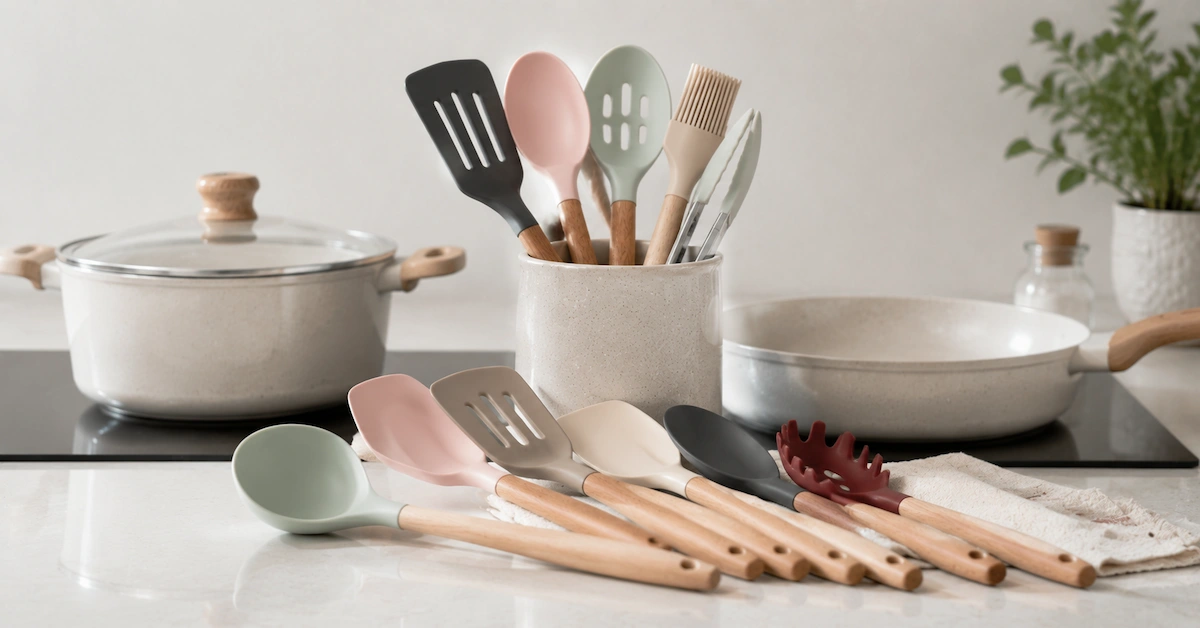
In practical terms, buyers usually want a non stick kitchenware supplier that can provide tools with smooth working ends, soft-touch finishes, and a geometry that slides under food rather than digging into it. The image-based product profile here points to a mixed utensil assortment: slotted spatulas, solid spoons, a ladle-like spoon, a pasta/server-style piece, a pastry brush, and tongs or clips. That mix makes sense for packaged sets because it covers everyday stovetop tasks without relying on metal contact.
There is also a merchandising angle. Coordinated color ranges, hanging holes, and uniform handle length make a set easier to display and easier to sell. Those are not minor cosmetic touches; they reduce friction for the end user and help a buyer build a line that looks intentional rather than assembled from leftovers.
What a usable product line should include
A good non stick utensils supplier typically offers more than one utensil shape, because different jobs require different edge behavior. A spoon is useful for stirring sauces and serving. A slotted spatula helps drain oil or liquid. A solid turner is better for pancakes, eggs, and fish. A ladle-style spoon matters in soups and stews. A pastry brush and tongs extend the line into baking and handling tasks.
The set described in the preparation data leans toward soft-touch, muted-color tools with wooden handles and silicone or heat-resistant polymer heads. That is a common and sensible formula because it balances appearance, grip, and cookware safety. The wooden handle gives a warmer visual feel, while the molded working end is what protects the pan surface. For buyers, this combination can sit comfortably in mid-market retail, gift sets, or bundled cookware packages.
One thing to watch: not every tool in a “non-stick” line needs to be the same material, but they should behave consistently in use. Mixed material systems can create a premium feel, or they can look disjointed if the finish quality varies from piece to piece. That is where supplier consistency becomes more important than the marketing copy.
How to evaluate a supplier before you place an order
Start with the basics: what cookware surface is the product intended to protect, and what sort of cooking environment will it face? A home kitchen set is not the same as a food-service prep line, even if the tools look similar on a website. Buyers should ask whether the supplier can support the full intended application, not just the photo.
1. Check the working end, not just the handle
The visible working end should be smooth and non-scratching in appearance. That sounds obvious, but many sourcing problems start when a product looks soft in photos and arrives with edges, seams, or a stiffer finish than expected. For coated pans and pots, the difference between a forgiving edge and a slightly sharp one is real.
2. Ask about the manufacturing logic
The preparation notes suggest wooden handles bonded to silicone or a heat-resistant polymer head, likely via a molding or assembly process. That is a reasonable structure for this product family, but the exact process cannot be assumed without supplier confirmation. A buyer should ask how the head is attached, what the handle finish is, and whether any exposed seams could trap residue or loosen over time.
3. Review storage and merchandising features
Hanging holes near the end of the handle are a small detail with outsized value. They support retail display, home organization, and kitchen convenience. If the supplier also offers coordinated colors across the assortment, that can help with brand consistency. In kitchenware, visual discipline often sells better than a random rainbow of parts.
Common buyer mistakes in this category
One common mistake is buying by appearance alone. A soft matte finish and muted color palette can make a set look high-end, but the real test is whether the tool performs under heat, grease, and repeated washing. Another mistake is assuming a broad utensil assortment automatically means a better product. If the set includes too many similar pieces and not enough distinct utility, the buyer ends up paying for shelf fillers.
A second issue is overlooking end-user habits. A non stick cookware supplier may offer products suitable for light domestic use, yet the buyer plans to market them for busy prep kitchens or heavy daily use. That mismatch leads to complaints. It is better to define the use case clearly at the sourcing stage, even if that means narrowing the audience.
Finally, some buyers under-specify the finish. A supplier may have the right shapes but vary too much in sheen, color tone, or handle treatment. For retail and private-label programs, those details matter. They are often what make a bundle feel cohesive on the shelf.
Where this product type fits in the market
This kind of kitchenware line sits in a useful middle ground. It is not a bare-bones utility set, and it is not trying to be a luxury chef’s toolkit. Instead, it serves home kitchens, cookware bundles, and practical gifting. That positioning is commercially attractive because it gives buyers room to sell convenience, color coordination, and cookware protection in one package.
For retailers, the set format helps with basket-building. For OEM buyers, it creates a branded accessory line that can ride alongside pans, pots, and baking items. For sourcing teams, the challenge is maintaining quality across multiple SKUs without losing visual and functional consistency.
In that sense, the right non stick cookware supplier is often the one that understands line building, not just unit production. A supplier that can keep the assortment coherent across spatulas, spoons, tongs, and brushes is usually more useful than one that offers a single good item in isolation.
Practical questions to ask before sampling
Before moving beyond samples, buyers should ask a few plain questions. What exact materials are used in the handle and working end? Are the colors stable enough for a multi-piece set? Is the tool intended for everyday cooking, baking, or both? Can the supplier support custom packaging or private label presentation if the order requires it?
It is also wise to ask about maintenance expectations. The preparation data does not confirm dishwasher safety, temperature limits, or food-contact certifications, so those should not be assumed. A cautious buyer will request documentation rather than rely on visual impressions. That is not bureaucracy for its own sake; it is the difference between a manageable product and a returns headache.
Quick buyer takeaway
If your goal is to source a non stick kitchenware supplier, focus on three things: surface compatibility, assortment coherence, and manufacturing consistency. If the tools protect coated cookware, look unified on shelf, and hold up in the intended use environment, you are probably looking at a product line that can sell without constant troubleshooting.
If the offer is vague on materials, inconsistent in finish, or too dependent on marketing language, keep looking. In kitchenware sourcing, the photos may get attention, but the working end decides whether the line lasts.
FAQ
Is a non stick utensils supplier the same as a cookware supplier?
Not always. Some suppliers focus on pans and pots, while others specialize in utensils and accessories that support non-stick surfaces. Many buyers need both, but the product expertise is not identical.
What makes a utensil suitable for non-stick pans?
Smooth working surfaces, non-scratching edges, and a shape that moves food without gouging the coating. Material choice matters, but geometry matters too.
Why do hanging holes matter in a kitchenware set?
They improve storage and retail display. It is a small feature, but it often signals that the supplier thought about real-world use rather than only packaging.
Can one supplier cover both home and food-service needs?
Sometimes, but buyers should verify the intended duty level. A product that works well in a home kitchen may not be the best fit for a high-throughput prep environment.
Next step for sourcing teams
Shortlist suppliers that can show a balanced utensil assortment, clear material descriptions, and a finish that fits your brand position. Ask for samples, inspect the edges and handle joins, and compare the set as a system rather than a pile of individual tools. That approach saves time, and more importantly, it helps you choose a non stick cookware supplier that can support your product line after the first shipment, not just on the first page of a catalog.
