




OEM Children Scissors: Safe and Creative Tools for Kids
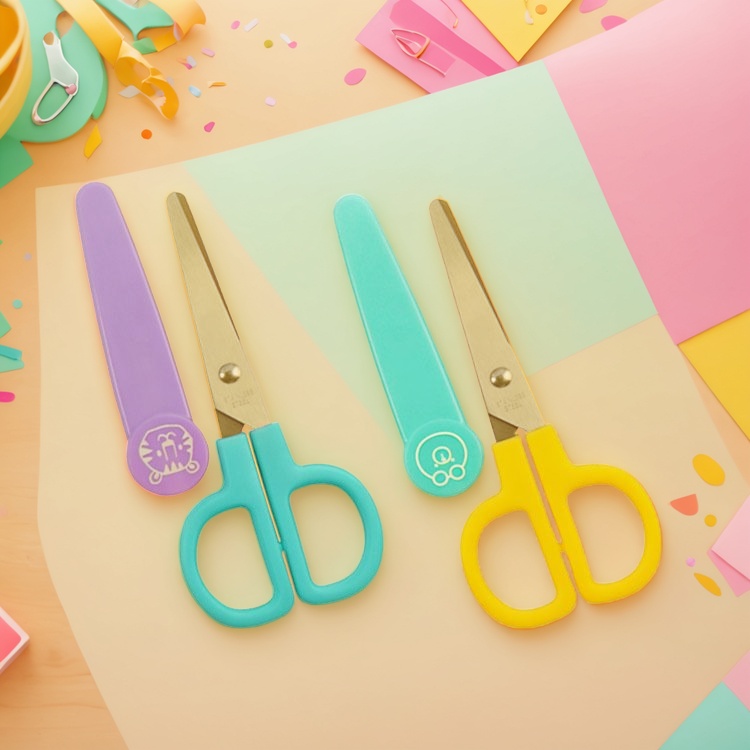
OEM children scissors serve a specific purpose: they help young users practice cutting, crafting, and classroom creativity while giving brands, distributors, and school-supply buyers room to customize products for their market. The original product context highlights student scissors with covers, colorful teal and yellow designs, playful sea-creature handle motifs, ergonomic grips for small hands, blunt-tipped stainless steel blades, and snug-fitting protective covers. Those are useful starting points, but sourcing children safety scissors requires more than choosing a bright color.
For B2B buyers, the key question is whether a scissors factory can consistently produce a child-friendly tool that fits your intended age group, packaging channel, and quality expectations. This guide explains how to evaluate design, safety, OEM customization, supplier communication, and inspection points before placing an order.
Key Takeaways
- Children scissors should be assessed for safe blade shape, handle comfort, cover fit, and age-appropriate usability.
- OEM customization can include colors, handle motifs, packaging, branding, and accessory choices, but every detail should be confirmed with the supplier.
- Student scissors with cover are useful for classrooms, art kits, stationery retail, and home craft sets because the cover protects the blades when stored.
- Do not rely only on product photos; request samples and inspect cutting performance, grip comfort, cover retention, and finish quality.
- Ask the scissors factory clear questions about materials, quality control, packaging, testing options, lead time, and documentation before ordering.
What Makes OEM Children Scissors Different?
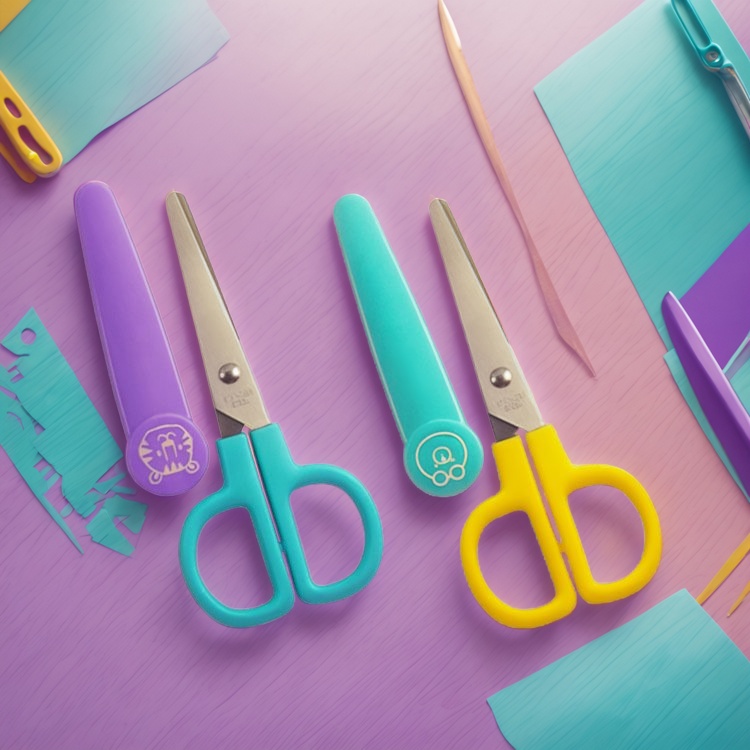
OEM children scissors are produced for a buyer's brand, program, or distribution requirement rather than sold only as a standard off-the-shelf item. A buyer may want a certain color combination, a themed handle design, a retail card, a school kit package, or a private-label presentation. The original article describes a vibrant safety scissor duo for kids with teal and yellow options and playful designs such as an octopus or sea creature on the handle. These visual features can help the product feel approachable for children, but they should not distract from the practical safety requirements.
Unlike general office scissors, children safety scissors need to balance cutting ability with controlled use. If the blades are too dull, children may apply excessive force and lose control. If the tips or edges are too aggressive for the intended user group, the product may not be suitable for younger children. Buyers should define the target user clearly, such as preschool craft activities, elementary classroom use, or supervised home projects, then align the product design with that use case.
Safety Features Buyers Should Review
The source article mentions blunt-tipped stainless steel blades, ergonomic grips, and protective covers. These are important features to review in a physical sample. A blunt tip can help reduce puncture risk during normal handling, while a cover protects the blades in a pencil case, craft box, or classroom drawer. However, a cover only works well if it fits securely and is easy enough for children or teachers to remove without forcing it.
When reviewing children safety scissors, check whether the handles are comfortable for small hands and whether the finger holes have smooth inner edges. Open and close the scissors repeatedly to feel for stiffness, uneven movement, or pinch points. Inspect the blade finish for burrs or sharp irregularities. If the scissors are intended for school use, consider how they will perform after repeated cutting of paper, card, or craft materials commonly used in class.
Student Scissors with Cover: Practical Use Cases
Student scissors with cover are especially practical where products are stored loosely or transported often. In a classroom, covered scissors can be distributed in bins or art carts. In retail, a covered pair may be more attractive for parents who want a tidy and safer storage option. In an OEM craft kit, the cover helps separate the scissors from paper, stickers, yarn, or other accessories.
The cover can also support hygiene and product presentation by keeping the blades cleaner during storage. For buyers, the important point is to test the cover as part of the complete product, not as an afterthought. A loose cover may fall off in transit, while an overly tight cover may frustrate users. Ask the supplier whether the cover color, shape, or logo area can be customized, and request packaging samples that show how the covered scissors will be secured before shipment.
OEM Customization Options to Confirm
OEM projects depend on precise communication. The original product description notes vibrant colors, playful handle designs, and ergonomic grips. If you plan to customize similar children scissors, create a specification sheet before requesting a quotation. Include the preferred color references, handle motif, blade style, cover design, packaging type, barcode needs, carton markings, and any market-specific labeling requirements you want the supplier to review.
Buyers should avoid assuming that every factory can provide the same customization options at the same cost or lead time. Ask which parts are existing molds and which would require new tooling. Confirm whether artwork files are needed in a specific format. If your sales channel requires warning labels, age grading, or documentation, ask the supplier what information they can provide and what must be arranged by the buyer or a third-party testing provider.
Comparison Checklist for Sourcing Children Safety Scissors
| Review Area | What to Check | Questions to Ask the Supplier |
|---|---|---|
| Blade design | Blunt tips, smooth finish, consistent cutting | What blade material is used, and can samples be tested before order confirmation? |
| Handle comfort | Fit for small hands, smooth edges, easy grip | Is the handle based on an existing mold or a custom design? |
| Protective cover | Secure fit, easy removal, clean storage | Can the cover color, shape, or branding be customized? |
| Appearance | Color accuracy, playful motifs, surface finish | Can the factory provide color samples or production proofs? |
| Packaging | Retail card, bulk pack, kit insert, carton marks | What packaging formats are available for school, retail, or wholesale channels? |
| Quality control | Function, finish, count, labeling, carton condition | What inspection steps are used before shipment, and can third-party inspection be arranged? |
How to Evaluate a Scissors Factory
A reliable scissors factory should be able to answer product and process questions clearly. Buyers should ask for product samples, available customization options, packaging examples, and a written quotation that separates product cost, packaging cost, tooling cost if any, and shipping terms. It is also useful to ask how the supplier controls color consistency, blade assembly, cover fit, and final packing.
Because children's products can face stricter buyer requirements, avoid vague statements. Instead of accepting a general claim such as “safe for kids,” ask what design features support safer use, what age group the product is intended for, and what documentation can be provided if your market requires testing. Do not assume certifications, compliance results, or testing reports exist unless the supplier provides current documents for the exact product and configuration.
Sample Testing Before Bulk Orders
Samples are essential for OEM children scissors. A photo can show color and shape, but it cannot confirm grip comfort, blade action, or cover retention. When samples arrive, test them in realistic conditions. Cut standard paper, construction paper, and light craft materials if those are relevant to your customer. Check whether the scissors cut smoothly without requiring too much force. Observe whether the handle remains comfortable after repeated use.
For wholesale or school-supply programs, keep one approved sample as the reference for production. Record agreed details such as color, logo placement, packaging layout, cover fit, and carton information. If you make changes after sampling, request an updated sample or production proof so the final order matches your expectations.
Practical FAQ
Are OEM children scissors suitable for schools?
They can be suitable for school programs when the design, packaging, labeling, and safety expectations match the intended age group and use. Buyers should review samples with teachers, distributors, or internal quality teams before ordering.
Why choose student scissors with cover?
A cover helps protect the blades during storage and transport. It is useful for pencil cases, classroom bins, craft kits, and retail packs where scissors may be handled before use.
What should buyers ask before placing an OEM order?
Ask about blade material, handle mold options, cover customization, packaging choices, sample timing, production lead time, quality inspection steps, labeling support, and whether documentation is available for your target market.
Can colors and handle designs be customized?
Often they can, especially in OEM projects, but the exact options depend on the supplier's molds, materials, tooling requirements, and order details. Confirm every customization in writing before production.
How can buyers reduce sourcing risk?
Start with clear specifications, request physical samples, confirm packaging, define inspection criteria, and keep an approved reference sample. For regulated channels, arrange appropriate review or testing before bulk shipment.
Conclusion: Source for Safety, Use, and Consistency
OEM children scissors are not just colorful school tools. They are small products with important usability and safety expectations. The best sourcing approach is to combine child-friendly design with disciplined supplier evaluation. Review blunt-tip blade design, ergonomic handles, protective covers, sample performance, packaging, and documentation needs before committing to production. With clear specifications and careful sample checks, buyers can source children safety scissors that support creative activities while meeting the practical demands of classrooms, retail shelves, and wholesale programs.
