




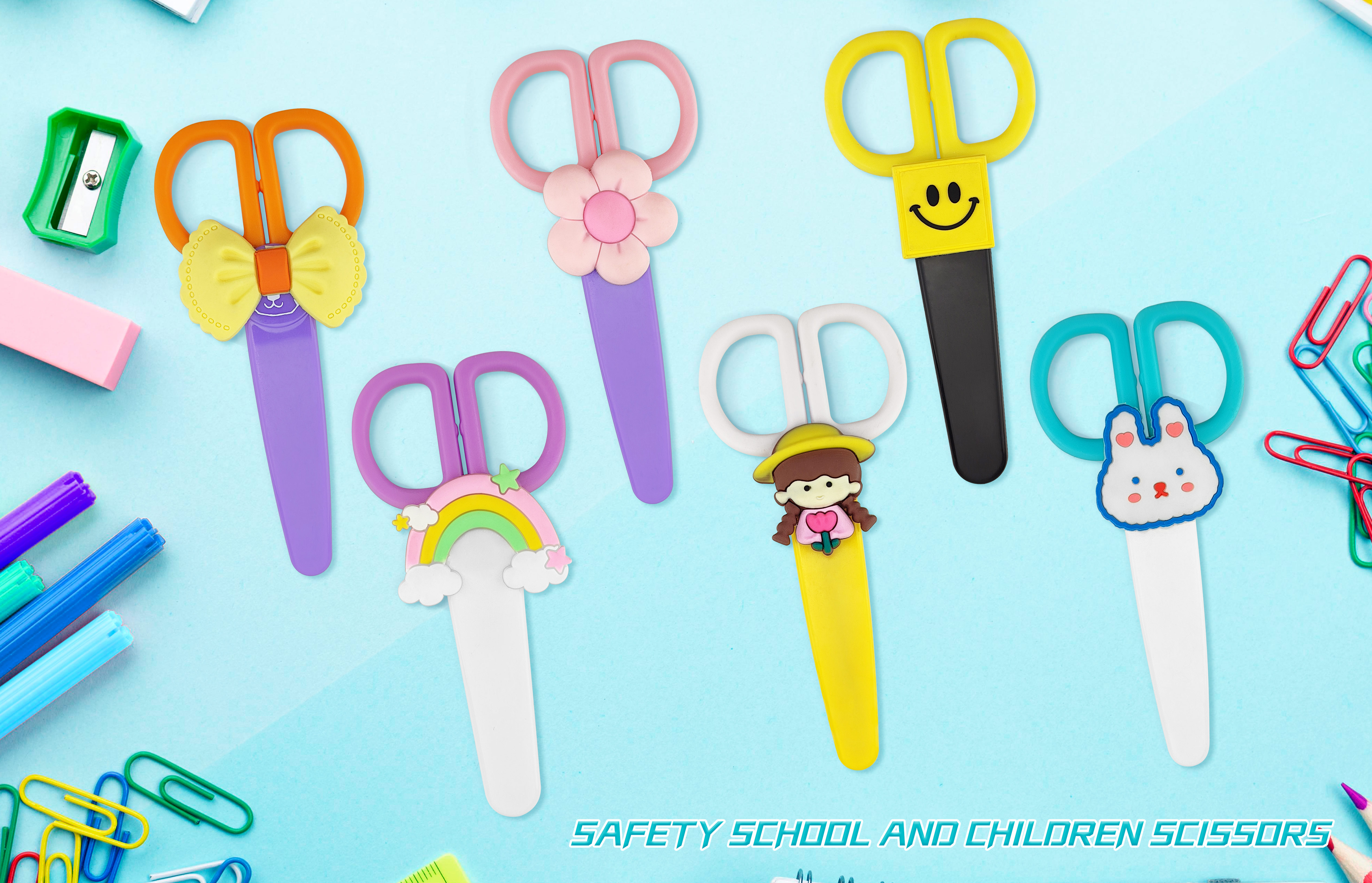
OEM Children Scissors: Safe and Creative Tools for Kids

OEM children scissors are small classroom and home craft tools designed for young users, where safety, comfort, and simple cutting performance matter more than adult-level sharpness. For buyers, schools, distributors, stationery brands, and promotional product teams, the main sourcing goal is not just to find a colorful item. It is to choose student scissors with cover, rounded blade designs, and child-friendly handling details that fit the intended age group and use case.
The original product description highlights several useful facts: these scissors are intended for children, may include protective covers, use rounded blades, come in bright colors such as turquoise and yellow, and may include decorative case elements such as animal motifs. It also mentions stainless steel blades. This guide expands those points into a practical OEM sourcing checklist without assuming unverified specifications, certifications, prices, or production capacity.
Key Takeaways
- For OEM children scissors, safety-focused design should be reviewed before color, packaging, or branding.
- Rounded tips, protective covers, and handles sized for small hands are important selection points.
- Buyers should ask the scissors factory for material details, safety test options, packaging choices, and sample approval steps.
- Classroom products should be easy to identify, store, clean, and replace when worn.
- Do not rely on appearance alone; request samples and inspect cutting performance, cover fit, and edge consistency.
What Makes Children Scissors Different from Regular Scissors?
Children safety scissors are designed for supervised creative activities such as paper cutting, classroom projects, card making, and basic art lessons. Compared with general-purpose scissors, they usually place more emphasis on rounded blade ends, manageable handle size, light weight, and visual cues that help children handle and store them correctly.
A student scissors with cover design can also reduce loose-blade exposure in pencil cases, storage bins, or classroom drawers. The cover is not a substitute for supervision, but it is a practical feature for schools and parents who need better organization. If the cover includes a bright color or decorative motif, it may also make the tool easier to locate and less likely to be confused with adult scissors.
Design Features Buyers Should Review
When sourcing OEM children scissors, the first review should focus on whether the product fits the intended age range and cutting task. A tool for preschool craft paper may not need the same cutting feel as one used by older students for thicker paper sheets. The original article mentions ergonomic design for small hands, rounded blades, protective covers, vibrant colors, and stainless steel blades. These are helpful starting points, but buyers should still confirm each detail with the supplier before placing a bulk order.
- Blade tip: Ask whether the blade ends are rounded and inspect samples for smooth finishing.
- Blade material: If stainless steel is offered, confirm the exact material description and whether it is suitable for your market expectations.
- Handle size: Check whether the grip suits the target age group and hand size.
- Cover fit: The cover should be easy to place and remove, but not fall off too easily during storage.
- Color choice: Bright colors such as turquoise and yellow can improve visibility in classrooms.
- Decorative case design: Animal motifs or similar details can make storage more appealing for children.
Comparison Checklist for OEM Selection
The table below can help purchasing teams compare samples from a scissors factory or OEM supplier before confirming a design.
| Selection Point | Why It Matters | Questions to Ask the Supplier |
|---|---|---|
| Rounded blade tips | Helps reduce sharp point exposure during classroom use | Can you provide close-up sample photos and physical samples? |
| Protective cover | Supports safer storage in bags, drawers, or craft kits | How secure is the cover fit after repeated use? |
| Handle ergonomics | Affects comfort and control for small hands | What age range is the handle size intended for? |
| Blade material | Influences cutting feel, durability, and maintenance | What blade material is used, and can it be documented? |
| Color and decoration | Improves classroom identification and child appeal | Which colors or case motifs are available for OEM orders? |
| Packaging | Affects retail display, school distribution, and storage | Can packaging be customized, and what labeling information is required? |
OEM and Branding Considerations
OEM children scissors are often purchased by brands, distributors, educational suppliers, and retailers that need a product aligned with their market position. Customization may involve handle color, cover color, packaging artwork, logo placement, and set configuration. However, every customization should be checked against safety, usability, and production consistency.
Before approving branding, confirm where the logo will appear and whether it can wear off, create rough surfaces, or interfere with grip. If the product is sold in schools or child-focused retail channels, packaging should clearly show the intended use, age guidance if applicable, and basic care or supervision language required by the buyer's market. Because compliance rules vary by destination, buyers should ask the supplier what testing support or documentation can be provided, rather than assuming any certification is included.
Questions to Ask a Scissors Factory
A good sourcing conversation should be specific. Instead of asking only for a low price, buyers should request details that affect repeat orders and customer satisfaction. Useful questions include:
- What blade, handle, and cover materials are used in the quoted model?
- Can you provide pre-production samples with the selected colors and packaging?
- How do you inspect blade edge finishing, tip rounding, and cover fit?
- What customization options are available for handles, covers, cases, and retail packaging?
- Can the product be packed for classroom sets, retail cards, or bulk educational supply cartons?
- What documents, test reports, or third-party testing support can be discussed for the target market?
- How are color consistency and logo placement controlled across production batches?
Use and Care Guidance for Schools and Parents
Even well-designed children safety scissors should be used with basic rules. Children should cut paper or approved craft materials only, keep scissors closed when walking, and return the cover after use. Teachers may want to assign colors to groups or store scissors in labeled bins so missing items are easier to track.
For cleaning, follow the supplier's instructions. In general classroom handling, avoid soaking scissors unless the supplier confirms it is appropriate. Wipe dust or glue residue from the blade area, check that the hinge still moves smoothly, and remove any tool that becomes loose, cracked, rusty, or difficult to control. A damaged cover should also be replaced because poor storage can undermine the benefit of a covered design.
Common Sourcing Mistakes to Avoid
One common mistake is choosing only by appearance. Bright turquoise, yellow, or animal-themed covers can make the product attractive, but the sample still needs to cut paper consistently and feel stable in a child's hand. Another mistake is assuming every child scissors model is suitable for every age group. Handle opening size, blade length, cutting resistance, and grip comfort can vary significantly.
Buyers should also avoid vague purchase specifications. A better purchase brief states the target users, expected materials, colors, cover requirements, packaging format, logo position, sample approval process, and any market documentation that must be discussed before production. This reduces misunderstanding between the buyer and the OEM supplier.
FAQ
Are OEM children scissors only for schools?
No. They can be used for schools, home craft kits, stationery retail, promotional education sets, and art supply channels, depending on the design and packaging.
Is a protective cover necessary?
A cover is strongly useful for storage and transport, especially in classrooms and pencil cases. Buyers should check that the cover fits securely and is easy for children to use.
Can children scissors have stainless steel blades?
The source article mentions stainless steel blades, but buyers should still confirm the exact blade material, finish, and documentation with the supplier before ordering.
What should buyers check in a sample?
Inspect tip rounding, cutting performance on paper, handle comfort, hinge movement, cover fit, surface smoothness, color accuracy, and packaging quality.
Can colors and cases be customized?
OEM programs often discuss color, logo, case, and packaging options, but availability depends on the supplier. Ask for samples and written confirmation of the final approved design.
