




OEM Household Scissors: Precision Cutting Redefined
OEM household scissors are common tools, but sourcing the right version for retail, promotional, office, craft, or homeware lines requires more than choosing a shape and color. Buyers need to evaluate cutting performance, handle comfort, packaging, customization options, and the supplier's ability to maintain consistent quality across production batches.
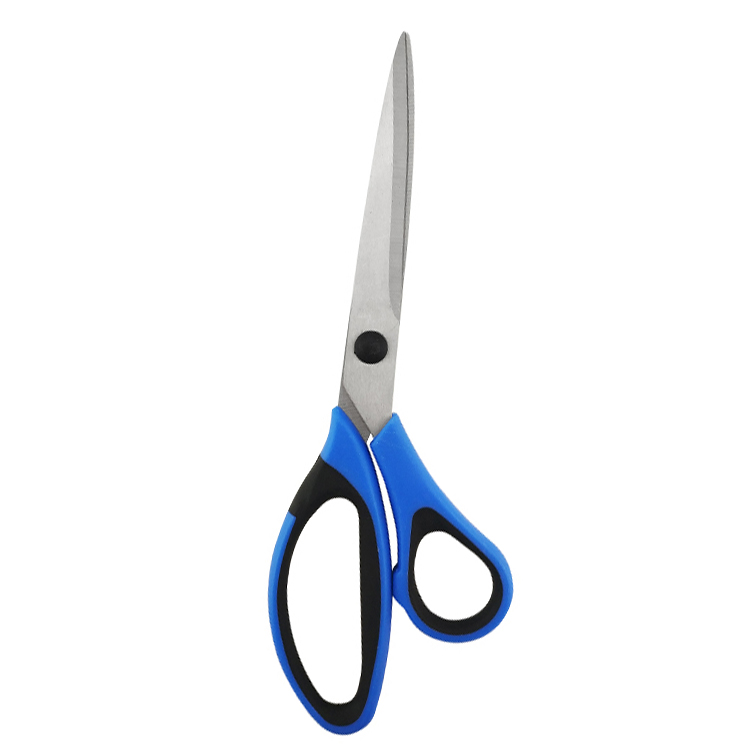
The original product presentation highlights household scissors with stainless steel blades, an ergonomic soft-grip handle, and a cobalt blue and black color combination. Those are useful starting points, especially for buyers looking for a practical everyday cutting tool for paper, light craft materials, office use, or general household tasks. The key is to turn those visible features into a structured sourcing checklist before confirming an OEM order.
Key Takeaways
- Confirm blade material, edge finish, and corrosion-resistance expectations directly with the supplier before ordering.
- Soft-grip handles can improve comfort, but buyers should test fit, balance, and grip security with real users.
- OEM customization may include handle color, logo placement, packaging, and assortment planning, subject to supplier capability.
- Ask for samples, inspection criteria, and packaging details before approving bulk production.
- A good household scissors program balances cutting performance, safety, durability, and price positioning.
What Makes OEM Household Scissors Different?
Standard household scissors are usually selected from existing stock designs. OEM household scissors, by contrast, are developed or adapted for a buyer's brand, sales channel, and target use case. The difference may be small, such as a custom handle color or branded packaging, or more involved, such as a new handle style, blade length, retail set, or point-of-sale presentation.
For importers, wholesalers, and private-label brands, OEM sourcing gives more control over how the scissors fit into a broader houseware or stationery range. However, it also places more responsibility on the buyer to define expectations clearly. Vague requests such as "high quality scissors" are difficult to verify. A better brief specifies intended users, cutting materials, handle preference, visual style, packaging format, and quality checks.
Blade Quality: Questions Buyers Should Ask
The source article explicitly describes the blades as stainless steel. That is a helpful fact, but buyers should still ask follow-up questions before treating all stainless steel scissors as equal. Stainless steel can vary by composition, hardness, finish, and sharpening method, all of which influence cutting feel and long-term usability.
When discussing blade quality with a supplier, ask whether the scissors are intended mainly for paper, fabric, plastic packaging, light cardboard, or mixed household use. A pair that cuts copy paper cleanly may not be suitable for thicker craft board or fabric. Buyers should also request information on edge retention, blade alignment, pivot smoothness, and any recommended care instructions.
- Ask what stainless steel type or specification is used, if the supplier can disclose it.
- Request samples for cutting tests on the materials your customers are most likely to use.
- Check whether the blades open and close smoothly without wobble or excessive friction.
- Inspect the tip, edge, and pivot area for burrs, rough finishing, or uneven alignment.
Soft Grip Scissors and User Comfort
The original description notes an ergonomic handle with a soft grip, using a cobalt blue outer color with a black inner core. For household scissors, comfort is not only about softness. A good handle should support the fingers, reduce pressure points, and remain secure when used for repeated cuts.
Buyers should test the handle with different hand sizes and both quick and extended cutting tasks. Soft material can make scissors feel more comfortable, but it should not be too loose, slippery, or prone to peeling. If the product is intended for offices, schools, craft kits, or retail homeware shelves, the handle should feel intuitive to a wide user group.
Color also matters for merchandising. Blue and black can communicate a practical, professional look, while other OEM colorways may suit seasonal ranges, private-label branding, or multi-pack assortments. Confirm whether color matching is possible and whether the supplier can provide physical color samples before production.
OEM Customization Options to Clarify
Custom scissors manufacturing can support brand differentiation, but buyers should avoid assuming every feature is available for every design. Before requesting a quotation, prepare a specification sheet that separates required features from optional preferences.
| Selection Area | What to Confirm | Why It Matters |
|---|---|---|
| Blade | Material, length, edge finish, tip style, and target cutting use | Determines performance, safety, and customer satisfaction |
| Handle | Grip material, shape, color, handedness, and comfort testing | Affects usability during repeated household or craft tasks |
| Branding | Logo position, print method, color tolerance, and durability | Protects brand presentation after shipping and regular handling |
| Packaging | Blister card, sleeve, box, label, barcode, and multilingual text needs | Supports retail display, warehousing, and market requirements |
| Quality Control | Sample approval, inspection criteria, defect limits, and reporting format | Reduces disputes and helps maintain repeat-order consistency |
Useful OEM conversations often include questions about mold availability, artwork formats, packaging dielines, lead time, production tolerances, and whether changes affect tooling or setup costs. If details such as MOQ, pricing, certifications, or test reports are important to your market, ask the supplier directly and request current documentation rather than relying on assumptions.
How to Evaluate Samples Before Bulk Orders
Samples should be tested in the same way customers will use the finished scissors. For a household or office product, that may include cutting printer paper, envelopes, thin plastic packaging, light cardboard, thread, or craft paper. For each material, check whether the cut starts cleanly at the base, continues smoothly through the blade length, and finishes without tearing or folding.
Also evaluate non-cutting details. Open and close the scissors repeatedly to assess pivot consistency. Hold the handle for several minutes to identify pressure points. Check that the soft grip is properly seated and that there are no sharp edges around the handle, blade spine, or screw area. If packaging is included, test whether it protects the product in transit and presents the product clearly for retail or e-commerce photos.
Supplier Communication for Wholesale and Private Label Buyers
For B2B buyers, the best results come from clear documentation. Send the supplier a brief that includes target market, expected retail channel, preferred handle colors, branding needs, packaging requirements, and the materials the scissors must cut. Ask the supplier to identify which requests are standard, which require customization, and which need extra development time.
It is also useful to ask how the supplier controls consistency between approved samples and mass production. Practical questions include: Who signs off the pre-production sample? What inspection steps are used during production? How are visual defects classified? What happens if packaged goods do not match approved artwork? These questions help prevent misunderstandings later.
FAQ: OEM Household Scissors
What are OEM household scissors?
OEM household scissors are scissors produced or customized for a buyer's brand or specification. Customization may involve handle color, logo, packaging, assortment format, or other agreed details.
Are soft grip scissors better for daily use?
Soft grip scissors can be more comfortable for repeated cutting, especially when the handle shape fits the user's hand. Buyers should still test grip security, pressure points, and durability before placing a larger order.
What should I ask before ordering custom scissors?
Ask about blade material, intended cutting use, sample availability, logo options, packaging formats, color matching, quality checks, lead time, MOQ, and any documents required for your sales market.
Can I claim stainless steel scissors are rust proof?
It is safer to avoid unsupported claims. The original product information states stainless steel blades and mentions rust-resistant longevity, but buyers should request supplier confirmation and relevant test information before using stronger claims.
How do I compare suppliers for OEM scissors?
Compare sample performance, communication clarity, customization capability, packaging support, inspection process, and willingness to answer technical questions. Price matters, but it should be evaluated alongside consistency and after-sales handling.
Final Sourcing Advice
OEM household scissors can be a strong addition to a houseware, craft, stationery, or office supply range when the product brief is specific and the sample process is disciplined. The stainless steel blade, ergonomic soft-grip handle, and blue-black appearance described in the original article provide a practical foundation, but buyers should verify every commercial and technical detail that affects their market.
Before approving production, define the cutting use, confirm the handle and packaging design, review samples carefully, and document inspection standards. That approach helps turn a simple everyday tool into a reliable private-label or wholesale product with fewer surprises after shipment.
