




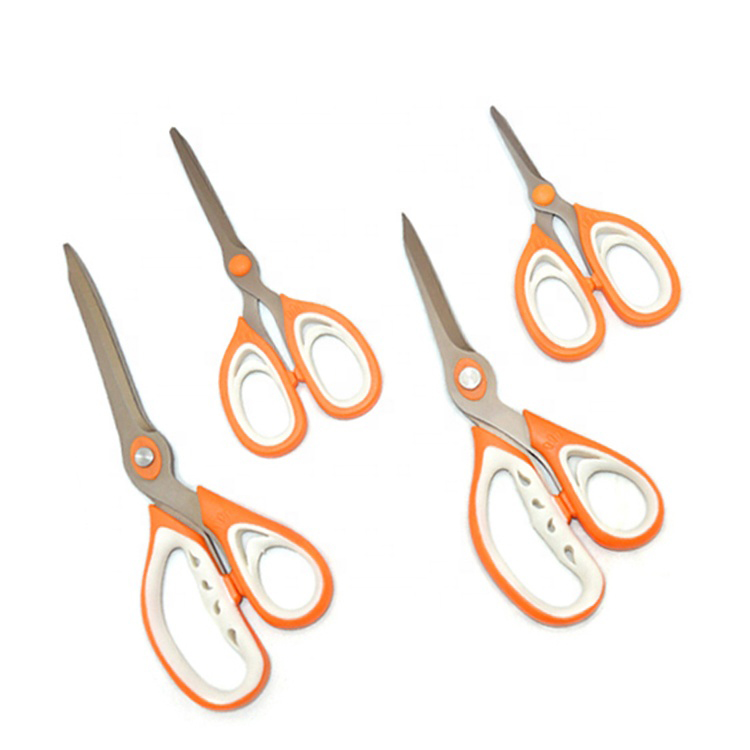
OEM Household Scissors: Precision & Durability
OEM household scissors are everyday cutting tools used in homes, offices, craft areas, and light professional settings. For buyers, importers, private-label brands, and distributors, the search intent is usually practical: how to choose a reliable household scissors supplier, what customization options matter, and which questions should be asked before placing an OEM order.
The original product focus highlights stainless steel blades, ergonomic handles, titanium coating scissors, and custom scissors manufacturing. Those are useful starting points, but a strong sourcing decision should go beyond appearance. Buyers should review intended use, blade finish, handle comfort, packaging, inspection methods, and supplier communication before confirming a design.
Key Takeaways
- OEM household scissors should be selected according to task, user comfort, blade material, coating, and packaging requirements.
- Titanium coating scissors may offer better resistance to corrosion and wear, but buyers should ask suppliers how the coating is applied and tested.
- Custom scissors manufacturing can include handle shape, blade length, finish, color, logo placement, and retail packaging.
- Before ordering, request samples and clarify quality standards, inspection process, lead time, MOQ, and compliance documents if required for your market.
What Makes OEM Household Scissors Different?
Standard household scissors are usually purchased as finished products. OEM household scissors, by contrast, are developed or adapted for a buyer's brand, market, or product line. The buyer may request changes to the handle color, blade length, coating, packaging, label, or overall style. This makes OEM sourcing useful for retailers, promotional product companies, hardware distributors, craft brands, and homeware wholesalers.
The main advantage is control. A buyer can choose a product that fits a specific customer group rather than relying only on generic stock. For example, scissors intended for craft kits may need comfortable handles and clean cutting performance on paper or fabric-like materials, while general kitchen drawer scissors may need a more versatile household design. The right OEM approach starts with defining the user and the cutting tasks.
Blade Material and Titanium Coating Options
The source article notes the use of stainless steel blades, which are common in household scissors because they are practical for everyday cutting. Buyers should still ask suppliers what stainless steel type is used, how blade hardness is controlled, and whether the blades are designed for light paper use, general household use, office use, or craft use. Do not assume a specific grade unless the supplier confirms it in writing.
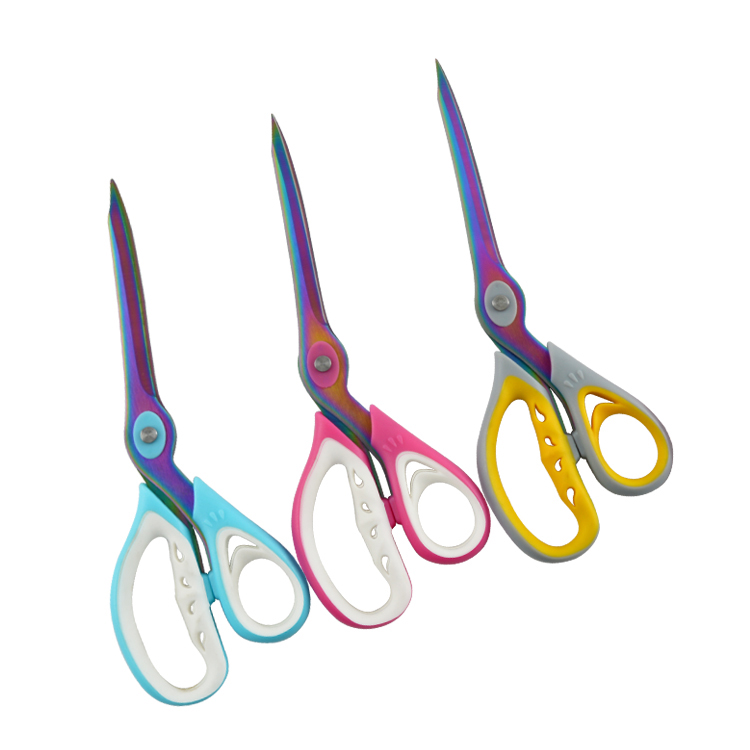
Titanium coating scissors are also mentioned in the original article. A titanium coating can provide enhanced resistance to corrosion and wear, which may help the blades maintain performance during frequent use. However, coating quality can vary. Buyers should ask whether the coating is decorative, functional, or both; whether it changes blade thickness or cutting feel; and how durability is checked during production.
Customization Choices in Scissors Manufacturing
Custom scissors manufacturing can involve small visual changes or more detailed product development. The original article mentions unique handle shapes and personalized blade lengths. These are important because comfort and cutting control are directly affected by hand fit and blade geometry.
Common OEM decisions include:
- Blade length and overall scissor size for the target user.
- Handle shape, color, and grip feel for comfort during repeated use.
- Blade finish, including polished, coated, or other supplier-available finishes.
- Branding options such as logo printing, engraving, hang tags, or retail packaging.
- Assortment planning, such as multiple sizes for a household or office range.
When reviewing customization, balance visual design with usability. A handle may look distinctive but still need to be comfortable for both left and right hand positions if that is required by your market. Similarly, a longer blade may look more premium but may not be suitable for fine crafting tasks.
Comparison Checklist for Buyers
| Selection Area | What to Check | Questions to Ask the Supplier |
|---|---|---|
| Blade | Material, sharpness, finish, cutting consistency | What blade material is used, and how is sharpness inspected? |
| Coating | Wear resistance, corrosion resistance, appearance | Is the titanium coating functional, decorative, or both? |
| Handle | Grip comfort, shape, color, user fit | Can you provide handle samples or drawings before tooling? |
| Customization | Blade length, logo, packaging, color options | Which changes affect tooling, lead time, or MOQ? |
| Quality Control | Cutting test, alignment, surface finish, packing check | What inspection steps are used before shipment? |
| Commercial Terms | MOQ, sample time, production time, payment terms | Can these details be confirmed in a quotation? |
How to Evaluate a Household Scissors Supplier
For B2B sourcing, the supplier evaluation process should be structured. Start with the product brief: intended market, target price range, product size, coating preference, packaging style, and expected order volume. Then ask the supplier which existing models can be adapted and which requests require custom tooling.
Samples are essential. A photo cannot show cutting feel, blade alignment, or handle comfort. Test samples on the materials your customers are likely to cut, such as paper, card, packaging film, ribbon, or light craft materials. Check whether the scissors open smoothly, close evenly, and cut cleanly near the tip as well as near the hinge.
Buyers should also ask about quality control documentation. Avoid vague answers such as “good quality” without process details. Instead, request information on incoming material checks, in-process inspection, final inspection, packaging inspection, and how defects are handled. If your market requires specific compliance documents, ask the supplier to confirm availability before ordering.
Practical Applications and Product Positioning
OEM household scissors can be positioned for different channels. Retailers may focus on general home use, office and school supplies, craft categories, or multipurpose homeware. Distributors may prefer stable designs that can be reordered consistently. Promotional buyers may care more about branding surface, packaging efficiency, and color matching.
The original article also notes reduced hand fatigue and improved grip as benefits. These should be verified through actual handling. If a product will be sold as comfortable or ergonomic, buyers should make sure the handle design supports that claim in practical use. Comfort is especially important for users who cut repeatedly, such as crafters, office staff, or packaging teams.
FAQ
What should I confirm before ordering OEM household scissors?
Confirm blade material, finish, size, handle design, logo method, packaging, sample approval process, MOQ, lead time, inspection standard, and shipping terms. If compliance documents are needed for your market, ask for them early.
Are titanium coating scissors always better?
Not always. Titanium coating can improve resistance to corrosion and wear, but performance depends on the base blade, coating process, edge quality, and intended use. Samples should be tested before placing a bulk order.
Can household scissors be customized for private label?
Yes, many OEM programs can include color, logo, packaging, blade length, and handle design changes. The level of customization may affect tooling cost, MOQ, and production time, so these details should be confirmed with the supplier.
How do I test samples from a scissors supplier?
Test cutting smoothness, tip performance, handle comfort, blade alignment, surface finish, opening and closing action, and packaging condition. Use materials similar to the real customer use case.
Final Sourcing Advice
OEM household scissors may look like simple products, but small differences in blade finish, alignment, coating, and handle comfort can affect customer satisfaction. A good sourcing process combines clear specifications, physical samples, practical cutting tests, and direct supplier questions. By comparing options carefully and confirming commercial details in writing, buyers can select household scissors that fit their market without relying on unsupported claims.
