




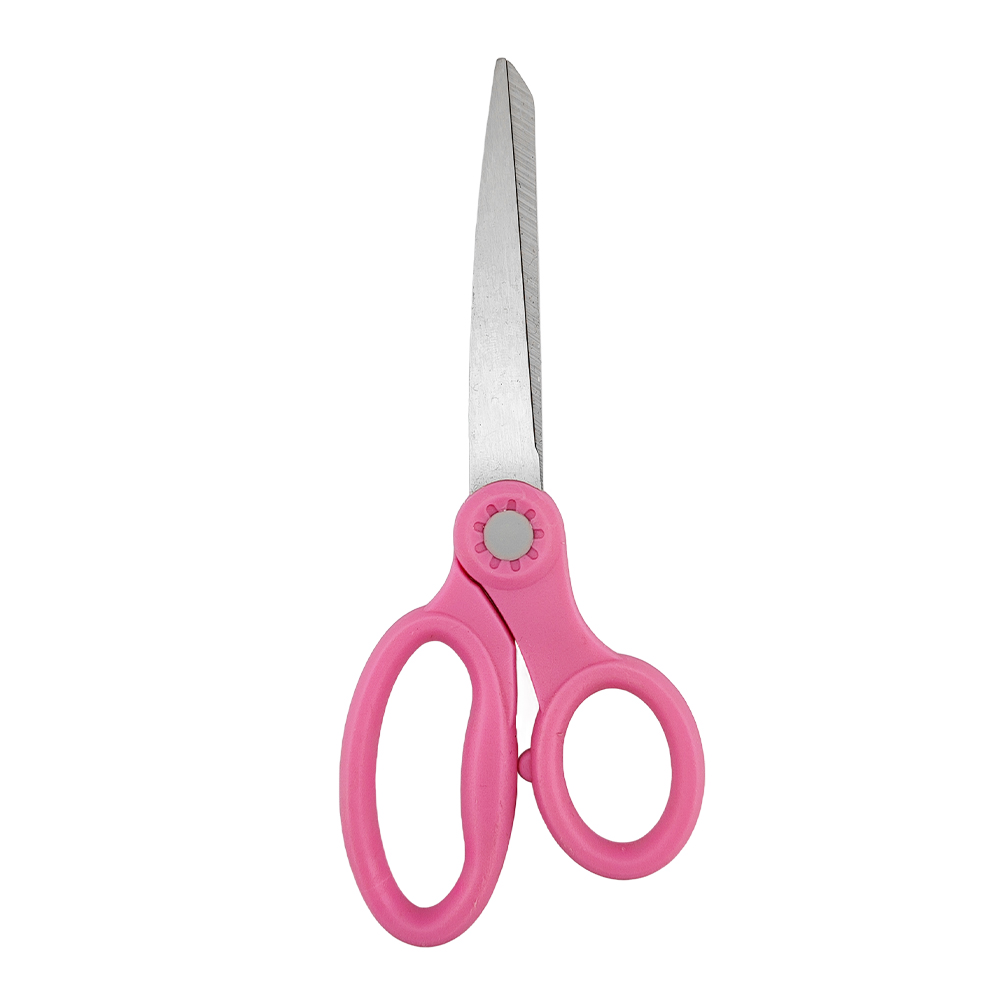

OEM 7in Household Scissors: Sourcing Guide for Practical Everyday Cutting
OEM 7in household scissors are a common product for homeware brands, supermarket ranges, stationery distributors, gift sets, and general merchandise buyers. The search intent behind this product is usually practical: buyers want a reliable everyday scissor that can cut paper, light packaging, tags, thread, and similar household materials while still being suitable for private label or customized supply.
The original product description highlights stainless steel blades, a pink handle, an ergonomic grip, soft-grip comfort, and a smooth pivot system. These are useful starting points, but B2B buyers should go beyond general claims. A good sourcing process should confirm the blade material, cutting performance, handle construction, packaging options, branding method, and quality inspection standards before placing an order.
What Makes a 7in Household Scissor Practical?
A 7in household scissor sits in a versatile size range. It is large enough for routine cutting tasks but compact enough for kitchen drawers, office desks, sewing boxes, school supplies, and household tool kits. For many retailers, this makes it easier to position as a general-purpose item rather than a specialist cutting tool.
Practicality depends on more than length. The blade should open and close smoothly, the tips should align cleanly, and the handle should feel stable in the hand. If the scissor is intended for everyday consumers, it should be easy to control and comfortable during repeated use. If it is intended for promotional kits or value retail, buyers still need to confirm that basic cutting performance is consistent across production batches.
Blade Quality: Questions to Ask Before Ordering
The source article states that the scissors use stainless steel blades. For OEM sourcing, buyers should ask the supplier to define the exact stainless steel specification rather than relying on the broad term alone. Different grades, hardness levels, polishing methods, and edge treatments can affect cutting feel, corrosion resistance, and durability.
Useful questions include: What stainless steel grade is used? What blade thickness is available? Is the edge machine-ground or finished by additional sharpening steps? How is blade alignment checked during production? Can the scissors cut paper cleanly from heel to tip? Are sample tests performed after assembly?
For household scissors, the most important performance issue is not only sharpness on the first cut. Buyers should also ask how the scissors perform after repeated opening and closing, whether the pivot loosens quickly, and whether the blades rub unevenly. These points are especially important for private label programs where customer complaints can affect the retailer, not only the factory.
Handle Comfort and Everyday Usability
The original article mentions an ergonomic pink handle and soft-grip comfort. For consumer-facing products, handle design is a major part of perceived quality. A scissor that cuts well but feels uncomfortable may still receive poor reviews, especially from users doing craft work, office preparation, packaging tasks, or light sewing projects.
When evaluating handles, buyers should check the size of the finger openings, edge smoothness, grip texture, and how the handle attaches to the blade. A pink handle can help the product stand out on shelf or in online listings, but color alone is not enough. The handle should feel secure and should not have sharp plastic edges, rough seams, or unstable movement under pressure.
- Check whether the handle is comfortable for both short and repeated cutting tasks.
- Ask whether other handle colors can be produced for private label programs.
- Confirm whether color matching can be based on a supplied sample or color reference.
- Review physical samples under normal use, not only product photos.
- Ask how handle defects, burrs, or color inconsistency are controlled during inspection.
Comparison Checklist for OEM Buyers
Before selecting a supplier, compare samples using measurable and practical criteria. The following checklist can help purchasing teams, product managers, and quality inspectors evaluate 7in household scissors in a consistent way.
| Evaluation Point | What to Check | Why It Matters |
|---|---|---|
| Blade material | Ask for the stainless steel grade and blade thickness | Helps verify durability and suitability for the target price level |
| Cutting performance | Test paper, light card, thread, and packaging film if relevant | Confirms real household usability instead of relying on appearance |
| Pivot action | Open and close the scissors repeatedly and check blade alignment | A loose or rough pivot affects control and customer satisfaction |
| Handle comfort | Check grip shape, finger opening size, and surface finish | Reduces hand fatigue during repeated use |
| Finish quality | Inspect polishing, handle seams, burrs, and visible defects | Supports a more consistent retail presentation |
| Packaging | Confirm blister card, sleeve, hang tag, or other available options | Affects shelf display, shipping protection, and branding |
| OEM support | Ask about logo, color, packaging artwork, and sample approval process | Clarifies what can be customized before committing to production |
OEM Customization and Packaging Considerations
OEM household scissors often need more than a standard product. Buyers may require a brand logo, custom handle color, retail card design, barcode placement, multilingual labeling, or carton marks. These details should be discussed early because they may affect sampling time, artwork approval, packaging cost, and inspection requirements.
Do not assume that every customization is available by default. Ask the supplier which parts can be customized, what files are needed for artwork, how pre-production samples are approved, and whether there are additional charges for tooling, printing plates, or packaging changes. If the product will be sold through retail chains, confirm what labeling information the retailer requires and make sure the supplier can follow the approved packaging layout.
Supplier Selection: What to Verify
Yangjiang is widely associated with knife and scissors manufacturing, and the original article refers to a Yangjiang scissors manufacturer background. However, location alone does not guarantee consistent quality. Buyers should evaluate the specific supplier, sample quality, communication, production control, and willingness to answer technical questions.
Ask for current product photos, physical samples, packaging examples, and a clear quotation that separates product, packaging, customization, and freight-related terms where applicable. If compliance, safety, or market-specific requirements apply, ask the supplier what documents they can provide and verify them through the appropriate process. Do not rely on verbal claims for regulated markets.
Quality Inspection Before Shipment
For a simple product, inspection can still prevent costly problems. A practical inspection plan for household scissors should include visual checks, blade alignment, cutting tests, pivot smoothness, handle strength, packaging accuracy, barcode readability if used, and carton marking. The inspection standard should be agreed before production rather than after goods are finished.
Buyers should also define acceptable and unacceptable defects. For example, minor cosmetic marks may be acceptable for some value channels, while rough handle edges, loose pivots, misaligned blades, rust spots, incorrect logos, or damaged packaging may be unacceptable. Clear standards reduce disputes and help suppliers understand the buyer's expectations.
Key Takeaways
- OEM 7in household scissors are suitable for broad everyday cutting needs when blade alignment, handle comfort, and pivot action are well controlled.
- The original product information mentions stainless steel blades, a pink ergonomic handle, soft-grip comfort, and a smooth pivot, but buyers should verify technical details with samples.
- For OEM projects, confirm customization options, packaging format, artwork requirements, and inspection criteria before production.
- Supplier selection should focus on sample consistency, clear communication, quality control, and documented answers to technical questions.
FAQ
What should I ask a supplier before ordering OEM 7in household scissors?
Ask about blade material, blade thickness, handle material, pivot construction, available colors, logo options, packaging choices, sample lead time, inspection process, and what documents can be provided for your target market.
Are stainless steel blades enough to guarantee good scissors?
No. Stainless steel is useful, but buyers should also check blade hardness, edge sharpness, alignment, pivot smoothness, polishing quality, and cutting performance through physical samples.
Can the pink handle be changed for private label orders?
It may be possible, but buyers should ask the supplier directly. Confirm available colors, color matching process, sample approval, and whether any tooling or minimum order conditions apply.
What packaging is best for household scissors?
The best packaging depends on the sales channel. Retail display may require a hanging blister card or printed card, while online or bulk distribution may prioritize protection, barcode placement, and carton strength.
How should buyers test samples?
Use the scissors on common household materials such as paper, light card, thread, tags, and light packaging. Also check comfort during repeated cutting, blade alignment from base to tip, and whether the pivot stays smooth.
