





OEM Household Scissors: Practical Sourcing Guide for Home-Use Cutting Tools
OEM household scissors are a small product category, but they carry real importance for retailers, distributors, promotional buyers, and private-label houseware brands. A pair of scissors may be used for opening packages, trimming paper, cutting thread, handling light craft work, or keeping in a kitchen drawer for everyday tasks. Because the product is familiar, buyers sometimes underestimate the sourcing details that affect repeat purchases, returns, and customer satisfaction.
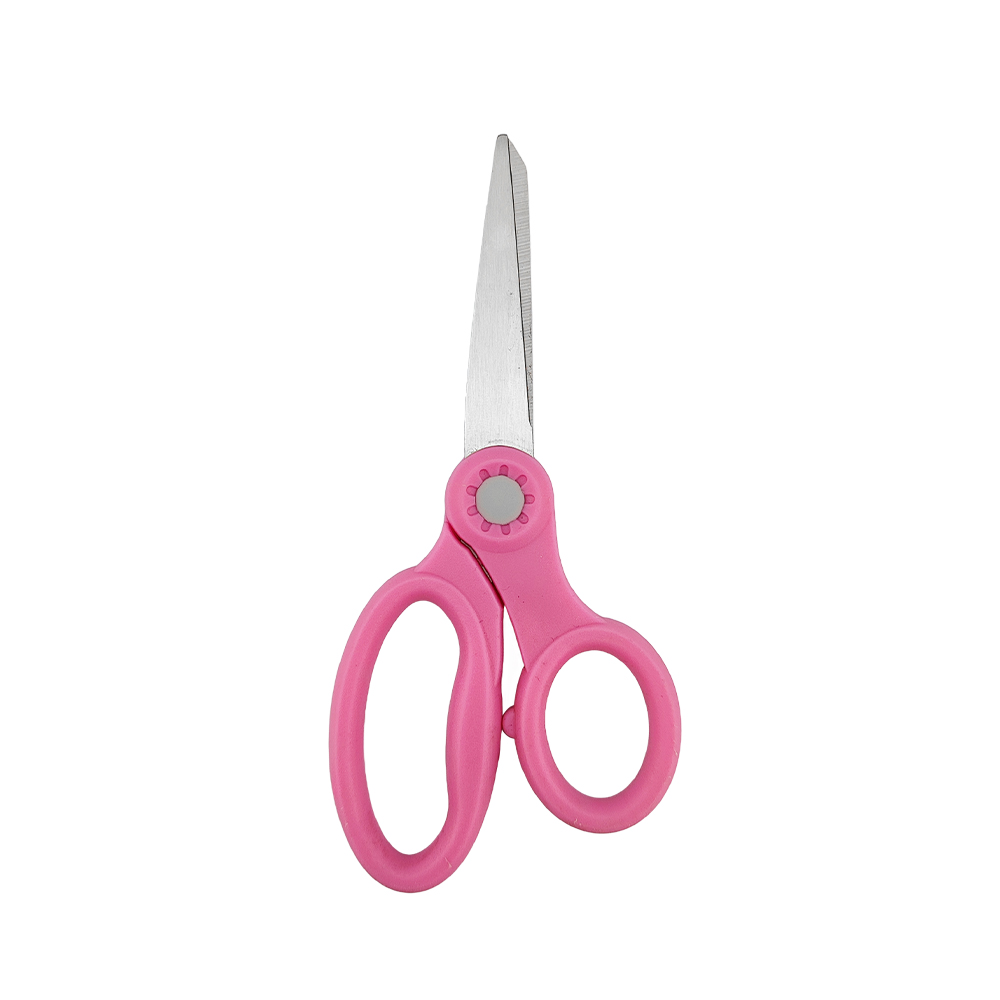
The original product description highlights pink-handled household scissors with ergonomic handles and stainless steel blades suitable for common materials such as paper and fabric. Those are useful starting points, but a professional OEM sourcing decision should go further. Buyers should confirm blade material details, handle construction, finish, packaging, quality standards, and customization options directly with the supplier before placing an order.
Key Takeaways
- Household scissors should be evaluated for comfort, cutting consistency, safety, and durability in normal home-use scenarios.
- Do not rely only on appearance; request samples and test them on the materials your target customers are likely to cut.
- For OEM programs, ask clear questions about branding, packaging, color matching, sample approval, inspection criteria, and replacement policy.
- Any claims about steel grade, certifications, compliance, or performance testing should be confirmed with supplier documents, not assumed.
What Makes Household Scissors Suitable for OEM Programs?
OEM household scissors are designed to be supplied under a buyer’s brand, package design, or product line. For a retailer, they may be part of a general homeware range. For a distributor, they may be sold in bulk to stationery stores, supermarkets, craft suppliers, or online sellers. For a promotional buyer, they may be packaged with other daily-use household tools.
The most important requirement is not extreme cutting power. Instead, the product must perform reliably across everyday tasks. Home users expect scissors to open smoothly, cut cleanly, sit comfortably in the hand, and be easy to store. If the handle shape causes discomfort or the blades pull material instead of cutting it, the buyer may face complaints even if the product looks attractive on the shelf.
For OEM sourcing, buyers should also consider whether one model can support multiple market needs. For example, color variation, private-label packaging, and different retail presentation formats may help the same core item fit several channels. However, available customization should always be confirmed with the supplier before it is included in a sales proposal.
Design Features to Review Before Ordering
The source article describes pink-handled scissors with ergonomic handles and stainless steel blades. These details are relevant because they influence both user experience and product positioning. A pink handle may suit a home, stationery, or craft-oriented assortment, while an ergonomic handle can help reduce discomfort during repeated cutting tasks.
When reviewing a household scissors sample, buyers should look beyond the first impression. Open and close the scissors repeatedly and check whether the movement feels smooth. Inspect the joint area to see whether it is stable. Test the grip with different hand sizes if the product is intended for general household use. Also check whether the handle edges feel rounded and comfortable or sharp and unfinished.
For the blades, the original article states that stainless steel is used, but buyers should ask the supplier to specify the material grade if that information is important for the market. It is also sensible to ask how the blade edge is finished, whether the product is intended only for light household materials, and what care instructions should appear on the packaging.
Comparison Checklist for Buyer Evaluation
A simple comparison table can help purchasing teams evaluate samples from different suppliers in a consistent way. The goal is not only to find the lowest quoted price, but to identify the best fit for the intended channel and customer expectations.
| Evaluation Area | What to Check | Questions to Ask the Supplier |
|---|---|---|
| Handle comfort | Grip shape, surface feel, finger opening size, comfort during repeated use | Can handle color, material, or shape be customized for an OEM order? |
| Blade performance | Clean cutting on paper, light fabric, packaging, and thread | What blade material is used, and can documentation be provided if required? |
| Opening action | Smooth movement, stable pivot, no excessive looseness | What inspection criteria are used for pivot tension and cutting alignment? |
| Appearance | Color consistency, surface finish, printing or branding quality | How is color matching handled for private-label programs? |
| Packaging | Retail card, blister, box, barcode area, warning text, instructions | What packaging formats are available, and who supplies the artwork template? |
| Order controls | Sample approval, production sample, inspection process, shipment packing | What are the MOQ, lead time, payment terms, and defect handling process? |
Sample Testing for Home-Use Scissors
Before committing to an OEM order, request production-representative samples rather than judging only from photos. A product image can show the handle color and general shape, but it cannot confirm comfort, sharpness, blade alignment, or packaging strength. Samples should be tested in conditions that match real customer use.
A practical in-house test plan may include the following steps:
- Cut standard copy paper several times to check whether the edge is clean or ragged.
- Cut light fabric or thread if the product will be marketed for sewing or craft use.
- Open common household packaging to assess control and hand comfort.
- Use the scissors repeatedly for several minutes to check grip fatigue.
- Inspect the blades and pivot after testing for looseness, burrs, or visible wear.
- Review packaging samples for barcode placement, hanging hole strength, and safety wording.
Buyers should keep written notes and photos from sample testing. This makes supplier discussions clearer and helps avoid misunderstandings when changes are requested. If the final product must meet a specific retailer standard or regional compliance requirement, ask the supplier what documents and test reports can be provided and whether third-party testing is needed.
OEM Customization and Packaging Questions
Customization is one of the main reasons buyers look for an OEM household scissors supplier. Common areas may include handle color, logo placement, packaging artwork, product sets, or retail labeling. However, each customization affects cost, production planning, and approval time, so buyers should define the requirements early.
For a private-label project, prepare a clear product brief. It should include target market, estimated order quantity, preferred handle color, packaging type, barcode requirements, warning labels, and any retailer-specific instructions. If the scissors will be sold online, consider how the packaging will appear in product photos and whether the item needs protective packing for parcel delivery.
Important commercial details should be asked directly: minimum order quantity, sample cost, sample lead time, tooling or mold charges if any, production lead time, carton dimensions, payment terms, and acceptable inspection standard. Bonet-specific capacity, certifications, prices, or delivery promises should not be assumed unless confirmed in writing by the supplier.
Quality Control Points for Importers and Distributors
Household scissors may seem simple, but small quality issues can create large after-sales problems. A loose pivot, uneven blade edge, uncomfortable handle, or poor packaging seal can affect the customer’s impression immediately. Importers and distributors should define inspection points before production begins.
Useful inspection criteria include appearance defects, handle color consistency, blade cleanliness, cutting performance, opening and closing smoothness, logo position, packaging accuracy, carton marking, and quantity per carton. If the order is for a large retail program, consider pre-shipment inspection by the buyer’s team or an independent inspection company.
It is also wise to approve a golden sample. This approved sample becomes the reference for production quality, color, finish, packaging, and labeling. Both buyer and supplier should understand that mass production will be compared with this approved reference.
FAQ: Buying OEM Household Scissors
What should I confirm before placing an OEM scissors order?
Confirm the sample specification, handle color, blade material information, packaging format, MOQ, lead time, payment terms, inspection criteria, carton packing, and any required compliance documents for your market.
Are stainless steel blades always the same quality?
No. The source article states that the blades are stainless steel, but buyers should ask the supplier for the specific material details and supporting documentation if blade grade is important for the sales channel.
Can household scissors cut fabric?
The original description mentions cutting paper and fabric. For commercial purchasing, test samples on the exact fabric thickness and usage scenario your customers expect, because performance can vary by material.
How can I reduce quality disputes with a supplier?
Use a written specification sheet, approve a golden sample, define inspection standards, and confirm packaging artwork before mass production. Keep all changes documented.
Is handle color important for B2B sourcing?
Yes. Color affects shelf appeal, brand matching, and assortment planning. If you need a specific pink or another color, ask how the supplier manages color matching and approval.
Final Sourcing Advice
OEM household scissors are best sourced with a balance of product testing and commercial discipline. The pink-handled, ergonomic, stainless steel-blade scissors described in the original article may fit everyday home, craft, and stationery use, but buyers should verify every specification that matters to their market. A good sourcing process starts with samples, continues with clear documentation, and ends with agreed quality checks before shipment.
For retailers, wholesalers, and private-label buyers, the strongest decision is not simply choosing a visually appealing product. It is choosing a household scissors program that matches customer use, packaging needs, and supply requirements. Ask the right questions early, test the product carefully, and keep the specification clear from sample approval to delivery.
