




OEM Kitchen Scissors Manufacturer: How to Source Durable Kitchen Shears
Kitchen scissors are a small item, but for importers, retailers, promotional buyers, and private-label brands, they carry real sourcing risk. A weak hinge, uncomfortable handle, unsafe storage design, or difficult-to-clean blade can quickly lead to customer complaints. When evaluating an OEM kitchen scissors manufacturer, the goal is not only to find a product that looks appealing, but to confirm that the design, usability, packaging, and quality controls match your sales channel.
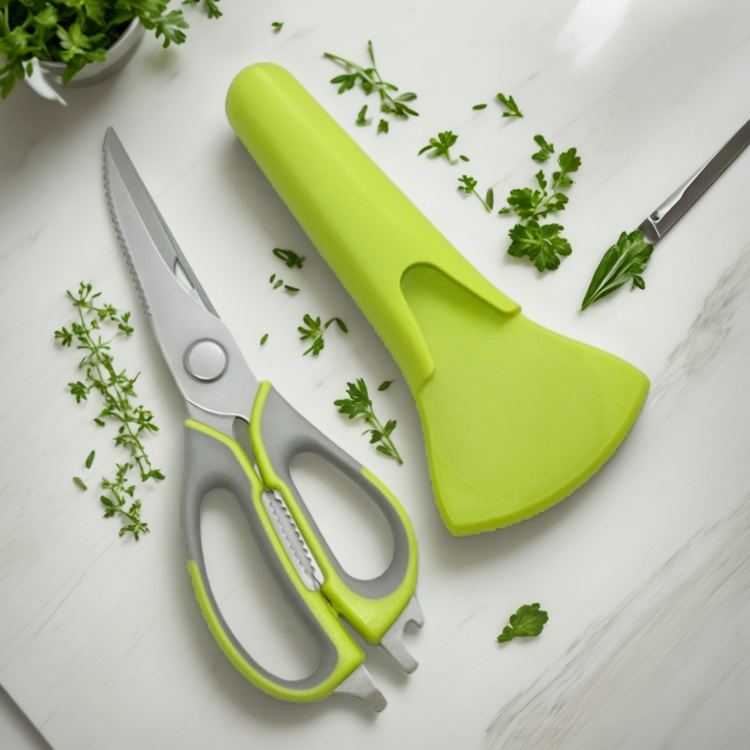
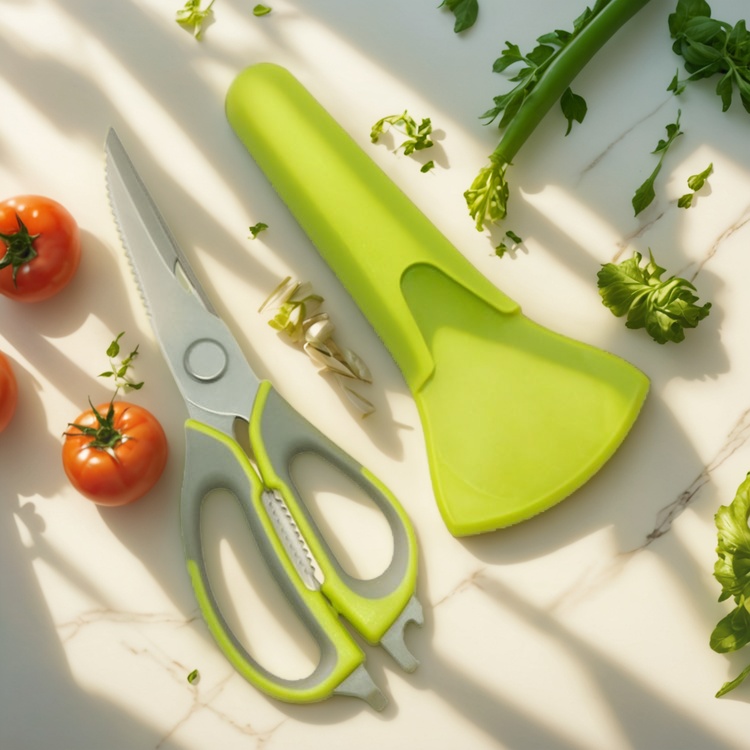
The kitchen shears shown in the original product page highlight several common buyer interests: serrated stainless steel blades, a detachable structure for cleaning, a built-in bottle opener and nutcracker, an ergonomic lime green grip, and a protective cover. These are useful features, but they should be checked carefully during sampling and supplier discussions before any volume order.
Key Takeaways
- Choose kitchen scissors based on target users, cleaning needs, storage safety, and retail positioning.
- Detachable kitchen scissors can improve cleaning access, but the joint must feel secure after repeated assembly.
- A cover or sheath supports safer drawer storage and helps protect the blade edge when not in use.
- Ask the supplier to confirm material details, packaging options, inspection standards, and customization limits in writing.
- Do not rely only on appearance; request samples and check cutting performance, comfort, hinge stability, and finishing quality.
What Buyers Should Look for in OEM Kitchen Scissors
An OEM kitchen scissors manufacturer should be able to explain how a model is intended to be used. Kitchen shears may be purchased for home cooking, gift sets, supermarket shelves, online retail, restaurant supply, or private-label kitchenware collections. Each channel has different priorities. For example, a retail gift set may emphasize color and packaging, while a restaurant supply buyer may focus more on cleaning, grip comfort, and repeat use.
The original article mentions sharp, serrated stainless steel blades designed for cutting meats, vegetables, and packaging. Serration can help grip slippery foods, but buyers should still test the scissors on realistic materials. During sample review, check whether the blades meet evenly, whether the tip alignment is clean, and whether cutting feels smooth through the full blade length rather than only near the hinge.
Feature Comparison Checklist
Use the following checklist when comparing samples from a detachable kitchen scissors supplier or reviewing a new OEM design.
| Feature | Why It Matters | Questions to Ask the Supplier |
|---|---|---|
| Serrated stainless steel blades | Supports controlled cutting on food and packaging | What stainless steel is used, and how is blade sharpness checked? |
| Detachable construction | Allows easier access for cleaning and drying | How many assembly cycles has the joint been tested for? |
| Protective cover or sheath | Improves drawer safety and blade protection | Is the cover included by default, and can it be customized? |
| Eronomic grip | Reduces discomfort during repeated cutting tasks | Can handle color, texture, or logo placement be adjusted? |
| Built-in opener or nutcracker | Adds multifunction use for home kitchens | Are these functions tested separately during inspection? |
| Retail packaging | Affects shelf appeal, shipping protection, and barcode setup | What packaging formats are available for OEM orders? |
Detachable Design and Cleaning Considerations
Detachable kitchen scissors are popular because food residue can collect near the pivot area. A removable structure makes it easier to wash and dry the blades thoroughly. This can be an advantage for customers who cut meat, herbs, vegetables, or packaging in the same kitchen environment.
However, detachable does not automatically mean better. The connection point must be stable, easy to understand, and resistant to looseness. Buyers should assemble and separate the sample several times, then check whether the blades still align correctly. If the scissors feel unstable or if the joint is confusing, customers may misuse the product or leave negative reviews.
Why a Cover or Sheath Matters
Kitchen scissors with cover are especially relevant for online retail and household storage. Many customers keep shears in drawers with knives, peelers, and other tools. A cover helps reduce accidental contact with the blade edge and can prevent the scissors from damaging other items. It also supports a cleaner, more complete presentation for gift sets or bundled kitchenware lines.
The original product image and text point to a covered design, and the linked product name references a magnetic sheath. Buyers interested in magnetic storage should ask exactly how the sheath is intended to work, what surfaces it is suitable for, and whether the magnet strength is part of internal quality checks. Avoid making marketing claims about safety or performance until the supplier provides verifiable details.
Evaluating Handle Comfort and Visual Design
The original article describes an ergonomic grip with a lime green finish. Color can help a kitchen tool stand out in a drawer or on a retail shelf, but comfort should come first. During sample testing, try the scissors with both dry and slightly wet hands. Look for sharp plastic edges, slippery surfaces, cramped finger openings, or pressure points that may bother users during longer tasks.
For private-label projects, ask whether the supplier can adjust handle color, print a logo, or modify packaging artwork. Also ask about color consistency between production batches. A bright handle can be attractive, but inconsistent color matching may create problems for brands that sell repeat orders or maintain a coordinated product range.
OEM Sourcing Questions Before You Order
Commercial details should be confirmed directly with the supplier rather than assumed from a product description. Before placing an order with an OEM kitchen scissors manufacturer, prepare a written request covering product, packaging, inspection, and after-sales expectations.
- What blade material, handle material, and cover material are used for this exact model?
- Can the scissors be supplied with the same detachable design, serrated blades, cover, bottle opener, and nutcracker shown in the sample?
- What customization options are available for logo, handle color, sheath, and packaging?
- What is the minimum order quantity for standard and customized versions?
- What quality checks are performed for blade sharpness, hinge strength, finish, assembly, and packaging?
- Can the supplier provide pre-production samples and retain an approved sample for final inspection comparison?
- What documents, test reports, or compliance information can be supplied for the target market?
Sample Testing Tips for Buyers
A sample review should be practical. Cut common kitchen items such as herbs, poultry skin, vegetables, food packaging, paperboard, and twine if these uses match your market. Clean and dry the scissors after use, then inspect the pivot and handle area. If the model is detachable, separate and reassemble it repeatedly. If it includes a cover, check whether the scissors slide in securely without excessive force.
Also review packaging from the customer viewpoint. Is the cover visible? Are instructions needed for detaching the blades? Does the package explain multifunction features clearly without overstating them? Good OEM sourcing depends on aligning product design with clear user expectations.
Practical FAQ
Are detachable kitchen scissors better than fixed kitchen scissors?
They can be better for cleaning access, especially around the hinge. The tradeoff is that the detachable joint must remain secure and easy to use. Buyers should test both cleaning convenience and assembly stability.
Should every kitchen scissors order include a cover?
A cover is useful for drawer storage, retail presentation, and blade protection. Whether it is necessary depends on price point, packaging format, and target customer expectations.
Can an OEM supplier customize the handle color and logo?
Many OEM suppliers offer customization, but options vary by model and order quantity. Ask for confirmed artwork requirements, color matching process, sample fees, lead time, and approval steps.
What should buyers avoid when choosing kitchen shears?
Avoid choosing only by appearance. Poor blade alignment, uncomfortable handles, weak covers, unclear material information, and unverified multifunction claims can create quality and customer-service issues.
What information should be confirmed before mass production?
Confirm the final sample, materials, packaging, logo placement, inspection criteria, carton details, compliance documents for your market, and the process for handling defects or shipment discrepancies.
