




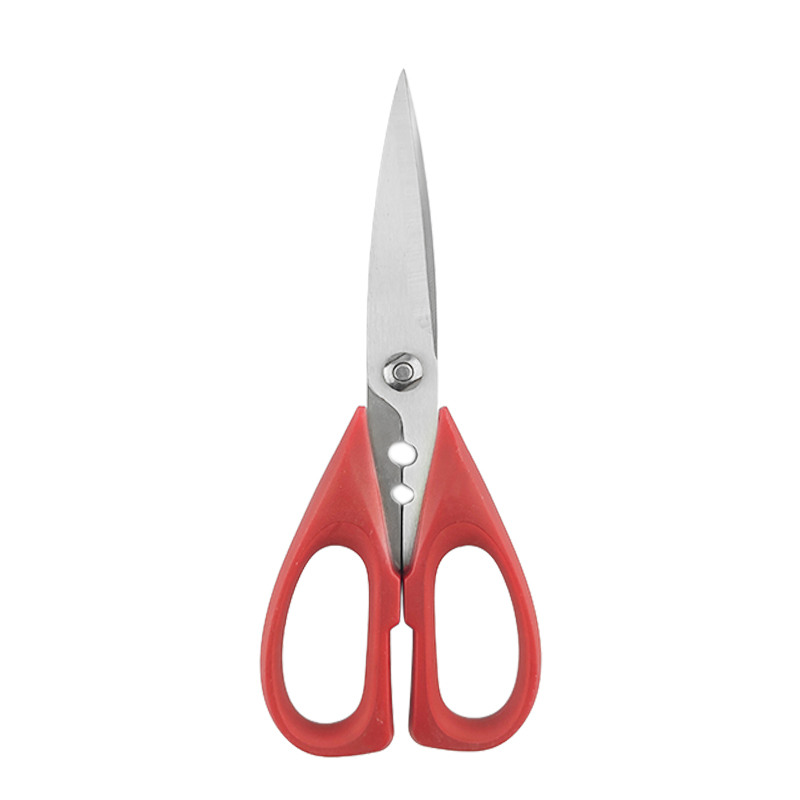
OEM Kitchen Scissors: Multi-Functional Cutting Power
OEM kitchen scissors are a compact tool with a demanding job: they must cut cleanly, feel secure in the hand, and survive repeated use in busy kitchens. For importers, wholesalers, private-label brands, and promotional product buyers, the challenge is not simply finding scissors that look good in a catalog. The real task is choosing a design, confirming usable features, and asking the right supplier questions before placing an order.

The original product description highlights several useful points: stainless steel blades, ergonomic non-slip handles, a serrated edge, an integrated bottle opener, and a built-in fish scaler. Those features make this type of multi-functional kitchen shear attractive for everyday food preparation and retail assortments. However, B2B buyers should still verify materials, finishing, packaging, and compliance requirements with the supplier instead of assuming all OEM versions are identical.
Key Takeaways
- Multi-functional kitchen scissors can combine cutting, gripping, scaling, and bottle-opening functions in one tool.
- For OEM purchasing, confirm blade material, handle material, finish, assembly, and packaging before approval.
- Do not rely only on feature lists; request samples and test them against realistic kitchen tasks.
- Ask suppliers clear questions about customization, labeling, inspection standards, and documentation.
- A practical sourcing decision balances cutting performance, user comfort, safety, cleaning, and retail presentation.
What Makes OEM Kitchen Scissors Different?
Standard kitchen scissors are usually purchased as finished goods. OEM kitchen scissors are different because the buyer may need private branding, custom packaging, adjusted colors, revised handle details, or a specific retail presentation. Even small changes can affect lead time, tooling needs, order requirements, and final cost, so the sourcing process should be handled carefully.
For example, a buyer may want a black non-slip handle for a supermarket line, a hang-card package for retail display, or a gift-box version for a cookware set. Each option should be discussed early. If the product will be sold in several markets, the buyer should also ask what labeling, warnings, or documentation may be required for those markets.
Core Features to Evaluate
The kitchen scissors described in the original article include stainless steel blades and ergonomic non-slip handles. These are relevant features because cutting tools must resist normal kitchen moisture and remain comfortable during repetitive tasks. A serrated edge can help grip slippery or tough food surfaces, while an integrated bottle opener and fish scaler add utility for households that prefer multi-purpose tools.
Still, buyers should avoid vague assumptions. “Stainless steel” can describe many grades and finishes, and “ergonomic” can mean different handle shapes depending on the supplier. Before confirming an OEM order, ask for the exact material description, handle composition, surface finish, blade thickness, and whether the scissors are designed to separate for cleaning if that feature is important to your market.
Comparison Checklist for Buyers
| Selection Point | Why It Matters | Question to Ask the Supplier |
|---|---|---|
| Blade material | Affects sharpness, corrosion resistance, and perceived quality. | What stainless steel specification is used for the blades? |
| Handle design | Influences grip comfort and control during wet or repetitive use. | What material is used for the handle, and can colors be customized? |
| Serrated edge | Helps hold certain foods in place while cutting. | Is the serration standard on all versions or optional? |
| Extra functions | Features such as a bottle opener or fish scaler can support retail value. | Which functions are included in the quoted model? |
| Packaging | Impacts shelf appeal, shipping protection, and private-label presentation. | Can the product be supplied with custom card, box, barcode, or instructions? |
| Inspection criteria | Reduces disputes over sharpness, alignment, finish, and appearance. | What quality checks are performed before shipment? |
How to Test Samples Before Ordering
Sample testing should reflect real user behavior. Do not test only on paper or thin plastic, because kitchen scissors are often used on herbs, packaging, poultry skin, small bones, seafood, and cooked food. If the product is marketed as multi-functional, test each function separately and record the result.
- Check visual finish, blade alignment, handle molding, and edge consistency.
- Cut soft herbs to see whether the blades crush or slice cleanly.
- Cut food packaging and kitchen twine to evaluate everyday convenience.
- Test grip comfort with dry and slightly wet hands.
- Try the serrated section, bottle opener, and fish scaler if included.
- Wash and dry the sample, then inspect for looseness, staining, or trapped residue.
If multiple suppliers provide similar-looking scissors, compare them side by side. The better option may not be the one with the longest feature list. It may be the one with smoother cutting action, safer grip, cleaner finishing, and more consistent packaging.
OEM Customization Points to Clarify
OEM projects often fail when buyers and suppliers use the same words but mean different things. “Custom logo,” for instance, could mean laser marking, printing on the handle, a branded label, or a printed retail card. Each method has different durability and visual results. Ask for photos of previous marking methods, pre-production artwork approval, and a physical sample when branding accuracy matters.
Packaging also deserves attention. A product for wholesale distribution may need simple protective packaging, while a retail product may need a hang hole, barcode position, product instructions, warning statements, and a clear image or feature callout. If you need multilingual packaging or market-specific labeling, confirm whether the supplier can support that work or whether you must provide final artwork.
Quality and Compliance Questions
Kitchen scissors come into contact with food and may be sold in regulated markets, so buyers should not accept general statements without documentation. Bonet’s original article does not provide certifications, test reports, or compliance claims, so these details should be treated as supplier questions rather than assumed facts.
- Can the supplier provide current material information for the blades and handles?
- Are any food-contact, safety, or market-specific test reports available?
- What inspection standard is used for blade sharpness, opening tension, and surface defects?
- How are sharp edges protected during packing and shipping?
- What happens if finished goods do not match the approved sample?
Practical Buying Advice
For B2B buyers, a strong kitchen scissors program starts with a clear product brief. Define the target channel, expected retail positioning, preferred functions, branding method, packaging format, and required documents. Then ask suppliers to quote against the same brief. This makes comparison easier and prevents confusion caused by different assumptions.
It is also wise to avoid overloading the product with features that your customers may not use. A fish scaler is useful for seafood-focused households, while a bottle opener may appeal to general kitchen users. If your market values easy cleaning above extra functions, prioritize blade separation, smooth surfaces, and clear care instructions if those options are available.
FAQ
Are OEM kitchen scissors suitable for private-label programs?
Yes, they can be suitable when the supplier supports branding, packaging customization, and consistent production. Buyers should confirm logo method, artwork approval, packaging details, and sample requirements before ordering.
What features should I prioritize for wholesale kitchen scissors?
Prioritize reliable cutting, comfortable non-slip handles, safe packaging, and clear product information. Extra functions such as a serrated edge, bottle opener, or fish scaler are useful when they match your target customer.
How can I compare different kitchen scissors suppliers?
Use the same product brief for each supplier, request samples, compare real cutting performance, and ask for material details, inspection criteria, packaging options, and available documentation.
Should I ask for certifications or test reports?
Yes. Requirements depend on the sales market and product materials. Ask the supplier what documentation is available, then confirm whether it meets your importer, retailer, or regulatory needs.
What should be checked during sample approval?
Check blade alignment, sharpness, handle comfort, surface finish, included functions, cleaning convenience, logo placement, and packaging accuracy. Keep an approved sample for comparison with bulk production.
