




OEM Kitchen Scissors: Quality and Versatility
OEM kitchen scissors are a small product category, but they can carry a large amount of value for kitchenware brands, retailers, promotional distributors, restaurant suppliers and private-label programs. A good pair of kitchen scissors should cut reliably, feel comfortable in the hand and support common kitchen tasks without becoming difficult to clean or maintain. For B2B buyers, the challenge is not simply finding a product that looks acceptable in a catalog. The real task is evaluating whether a supplier can consistently deliver the blade quality, handle design, packaging, customization and documentation needed for your target market.
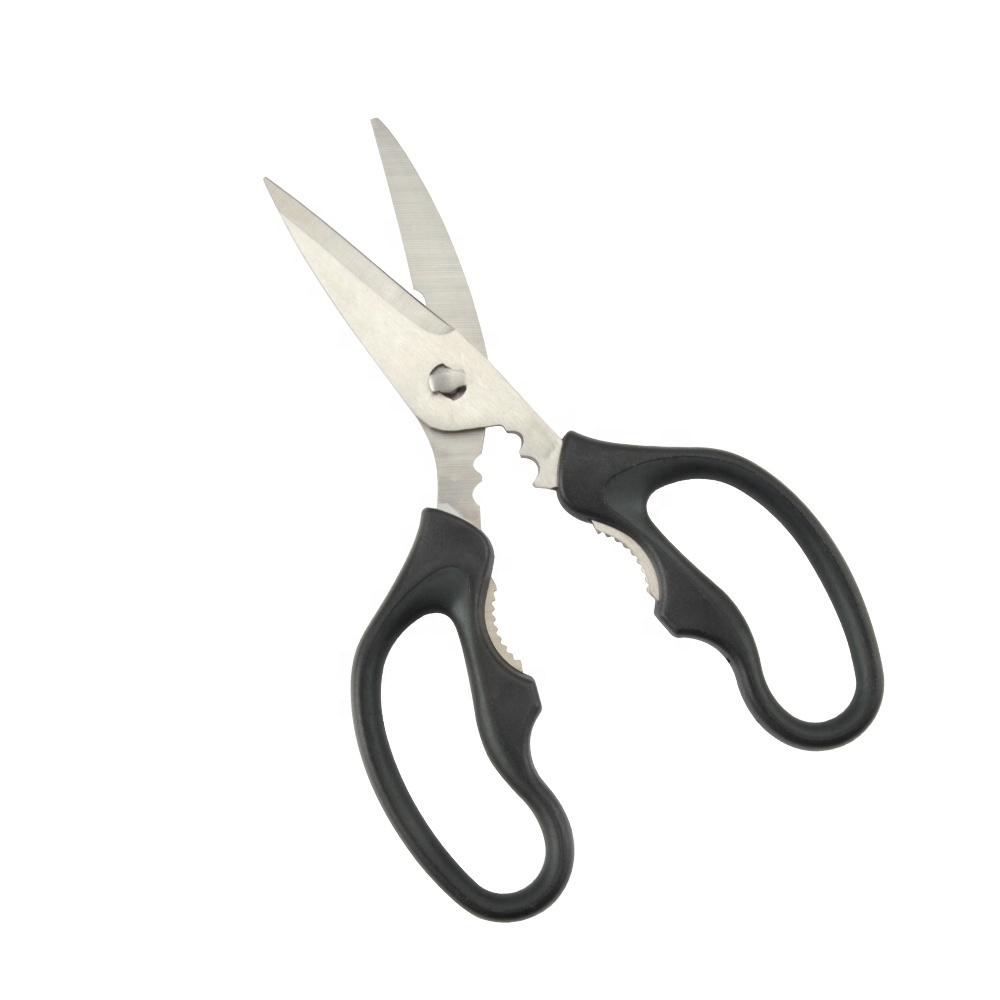
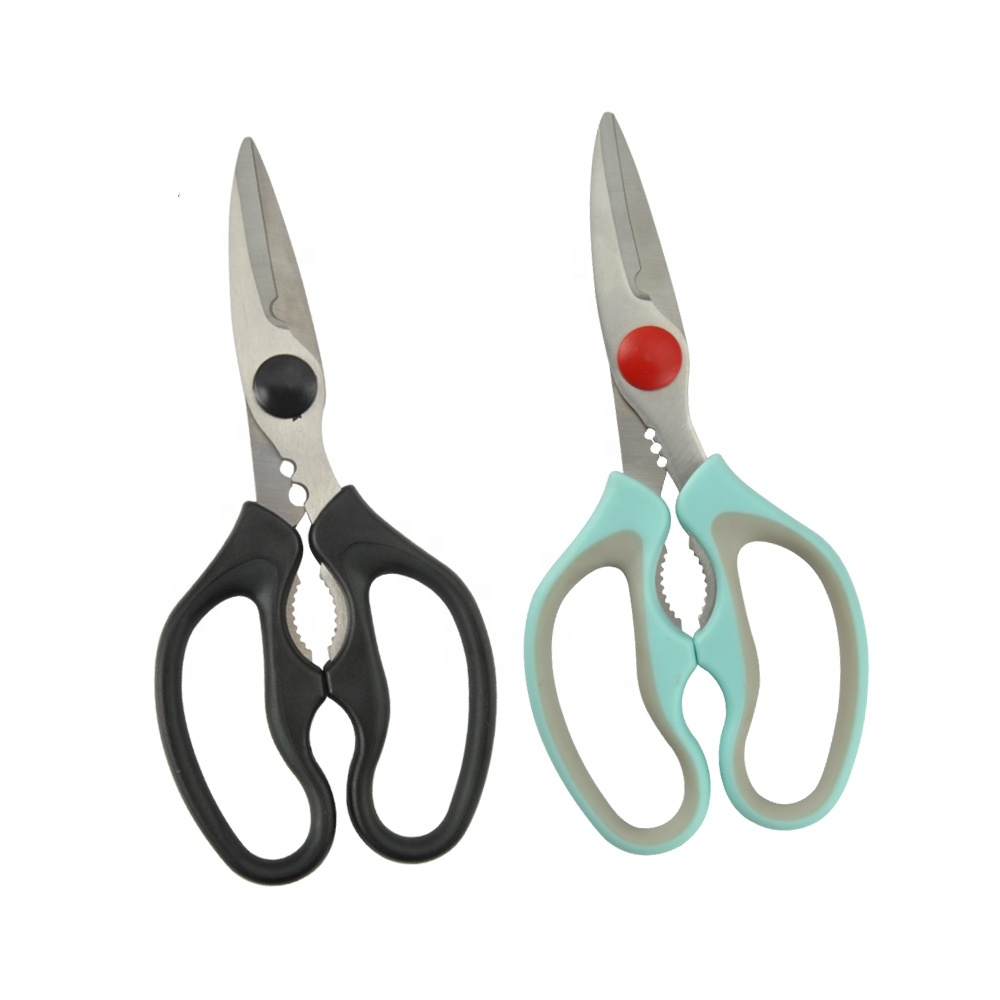
The original product description highlights several practical features: stainless steel blades, ergonomic handles, color options including black and mint-green with a red accent, and multifunctional additions such as a bottle opener and nutcracker. These details are useful starting points, but professional sourcing requires deeper questions. This guide explains how to assess OEM and wholesale kitchen scissors without relying on vague claims or decorative language.
Key Takeaways
- Start with the intended use: home kitchens, food service, gift sets, promotional programs or private-label retail all require different sourcing priorities.
- Ask suppliers to confirm blade material, hardness, finish, handle material and cleaning instructions rather than assuming specifications from product images.
- Multifunctional features such as a bottle opener or nutcracker can add value, but they should not compromise cutting comfort or safety.
- For wholesale and OEM orders, clarify packaging, branding, inspection methods, lead time, spare parts policy and after-sales support before confirming a purchase.
- Request samples and compare them under realistic kitchen tasks, including herbs, vegetables, poultry packaging, cardboard sleeves and repeated opening and closing.
What Makes OEM Kitchen Scissors Different?
OEM kitchen scissors are produced for another company to sell under its own brand, packaging concept or channel strategy. In many cases, the buyer provides branding requirements while the manufacturer or supplier provides an existing design, a modified design or a fully customized solution. This is different from buying a finished retail product in small quantities, because B2B sourcing usually involves repeat supply, quality consistency, labeling requirements and commercial documentation.
When discussing OEM kitchen scissors with a supplier, define the level of customization you need. Some buyers only need a logo on the handle or packaging. Others may want custom colors, a particular handle texture, a different blade profile, a retail-ready hang card, a private-label instruction leaflet or a set configuration with other kitchen tools. Each change can affect cost, lead time and quality control, so it should be discussed early.
Do not treat OEM as a guarantee of higher quality by itself. OEM simply describes a supply model. Quality depends on design, materials, production control, inspection standards and communication between buyer and supplier. A basic but well-controlled model can be more successful than an overcomplicated design with weak quality checks.
Blade Quality: The First Sourcing Priority
Kitchen scissors are cutting tools, so blade performance should be evaluated before decorative features. The original article refers to stainless steel blades, which is an important point because kitchen environments involve water, acids, food residue and frequent cleaning. However, stainless steel is a broad term. Buyers should ask the supplier to specify the steel type, blade thickness, hardness range, surface treatment and sharpening process. If the supplier cannot provide this information, request a physical sample and conduct your own comparison tests.
Good kitchen scissors should open and close smoothly, align properly and cut without excessive force. The pivot area is especially important. A loose pivot can cause poor cutting and wobble, while an overly tight pivot can make the tool tiring to use. For wholesale programs, consistency matters: one good sample does not prove that a full shipment will perform the same way.
Common sample tests include cutting herbs without crushing them, trimming food packaging, cutting thin vegetable stems and handling small meat preparation tasks. If the scissors are marketed for heavier tasks, ask the supplier what they are designed to cut and what use should be avoided. This helps prevent unrealistic product claims and customer dissatisfaction.
Handle Design, Comfort and User Safety
The original description mentions ergonomic handle designs intended to reduce hand fatigue during extended use. That is a useful direction, but buyers should verify comfort through practical handling. A handle may look ergonomic in photos and still feel awkward for users with larger or smaller hands. The finger loops, grip angle, texture and edge finishing all influence the user experience.
For B2B buyers, handle design should be matched to the sales channel. A low-cost promotional kitchen tool may prioritize bright colors and branding space. A retail kitchenware product may need a more refined finish and clearer packaging message. A restaurant or catering supply item may need a handle that remains secure when hands are wet. If the scissors will be sold online, close-up photography of the handle and pivot can influence perceived quality.
Safety should also be discussed. Ask whether the product includes protective packaging, blade covers or safe retail display options. If children may access the product in a household environment, packaging warnings and storage guidance should be considered. Avoid making safety or compliance claims unless the supplier provides suitable documentation for the intended market.
Multifunctional Features: Useful or Overcomplicated?
Multifunctional kitchen scissors can be attractive because they combine several common kitchen tasks in one tool. The original article notes added functions such as a bottle opener and nutcracker. These features may be useful for home kitchens, barbecue sets, picnic kits, holiday gift packs and general kitchenware assortments. However, added functions should be evaluated carefully.
A multifunctional feature is valuable only if it works reliably and does not interfere with the main cutting function. For example, a bottle opener area should be positioned so it does not create discomfort during cutting. A nutcracker section should be easy to clean and should not weaken the handle. The more functions a product has, the more inspection points the buyer should include in the quality checklist.
When reviewing multifunctional scissors, ask the supplier for clear usage guidance. What types of nuts can the nutcracker handle? Is the bottle opener designed for standard caps? Are any functions intended for light household use only? Clear answers help buyers write accurate product descriptions and reduce returns caused by unrealistic expectations.
Comparison Checklist for Wholesale Buyers
Before placing a wholesale or OEM order, compare suppliers with the same checklist. This makes it easier to evaluate samples objectively and avoid decisions based only on price or product photos.
| Evaluation Area | What to Check | Questions to Ask the Supplier |
|---|---|---|
| Blade performance | Sharpness, alignment, pivot smoothness and cutting consistency | What stainless steel is used? How is sharpness inspected before shipment? |
| Handle comfort | Grip shape, finger space, surface texture and edge finishing | Can handle color or logo placement be customized for OEM orders? |
| Multifunctional design | Bottle opener, nutcracker and any extra functions | What tasks are these features designed for, and what use should be avoided? |
| Cleaning and care | Food residue traps, pivot access and drying requirements | What cleaning instructions should be included with the product? |
| Packaging | Retail display, protection during shipping and instruction space | Can the supplier provide private-label packaging or buyer-supplied artwork support? |
| Quality control | Sample approval, inspection criteria and batch consistency | What inspection steps are used, and can a pre-shipment inspection be arranged? |
Wholesale Kitchen Scissors: Cost, Supply and Consistency
Wholesale kitchen scissors can support retail assortments, food service supply, corporate gifting and e-commerce bundles. The original article mentions cost savings and ample supply as benefits of wholesale purchasing. Those benefits are real in many sourcing programs, but they depend on planning. A lower unit price is useful only if the product meets the buyer's quality expectations and arrives in a condition suitable for sale.
Buyers should ask about minimum order quantity, production lead time, carton packing, available stock, color availability and reorder stability. If a product is sold in several colors, such as black or mint-green with a red accent, confirm whether each color has the same availability and whether color matching can be controlled across repeat orders. Slight color differences may not matter for some channels, but they can be important for branded product lines.
For long-term wholesale programs, document the approved sample. Keep one sample with the buyer and one with the supplier, and use it as the reference for future production. If any part changes, such as blade finish, handle material, packaging size or logo method, confirm the change in writing before production begins.
OEM Branding, Packaging and Product Positioning
Kitchen scissors can be positioned in several ways: a basic cooking tool, a multifunctional household item, a giftable kitchen accessory or part of a broader utensil range. The right packaging depends on this positioning. For private-label retail, packaging should explain the main functions clearly and include practical care guidance. For online sales, packaging still matters because it affects customer perception, shipping protection and returns.
Ask suppliers what branding methods are available for the handle or packaging. If you need a logo, clarify the artwork format, print area, color limitations and durability expectations. If you need retail packaging, ask whether the supplier can support hang cards, blister cards, boxes or buyer-designed packaging. Do not assume that every supplier can meet every packaging requirement.
Commercial details should be verified directly. Buyers should ask about quotation validity, payment terms, sample fees, production timeline, shipping dimensions and defect handling. These topics are not decorative, but they strongly affect the success of a sourcing project.
Use, Care and Customer Education
Even a well-made pair of kitchen scissors can disappoint customers if care instructions are unclear. Product pages and packaging should explain how to clean and dry the scissors after use, especially around the pivot and multifunctional areas. If the scissors are not intended for dishwashers, heavy bones, frozen foods or non-kitchen materials, that should be stated plainly. Avoid broad claims that the product can handle every cutting task unless the supplier has confirmed it and the product has been tested accordingly.
Retailers can reduce returns by setting accurate expectations. Explain the intended use, highlight the stainless steel blades if confirmed by the supplier, describe the ergonomic handle in practical terms and list added functions such as bottle opener and nutcracker only when they are part of the actual model being sold. Good product education supports both customer satisfaction and organic search performance.
FAQ
What should I ask before ordering OEM kitchen scissors?
Ask about blade material, handle material, available colors, customization methods, packaging options, minimum order quantity, lead time, sample approval, quality inspection and after-sales handling. If selling in a regulated market, ask what documentation the supplier can provide.
Are multifunctional kitchen scissors better than standard scissors?
They can be better for users who value extra functions such as a bottle opener or nutcracker. However, the main cutting performance should still be the priority. Added features should be comfortable, durable and easy to clean.
How can I evaluate a kitchen scissors sample?
Test sharpness, blade alignment, opening and closing smoothness, handle comfort and cleaning ease. Use realistic tasks such as cutting herbs, trimming packaging and preparing common ingredients. Compare several samples side by side when possible.
Can kitchen scissors be customized for private-label programs?
Many OEM programs can support some level of customization, such as colors, logo placement or packaging. The exact options depend on the supplier, order quantity and production process, so buyers should confirm details before quoting to customers.
What information should be included on retail packaging?
Include the main functions, basic care instructions, safety warnings where appropriate, brand information and any confirmed material details. Avoid unverified claims about certifications, dishwasher safety or heavy-duty performance unless documentation supports them.
Final Sourcing Advice
OEM kitchen scissors are best sourced through a structured process: define the target user, request clear specifications, test samples, confirm packaging and document quality expectations. Stainless steel blades, ergonomic handles and multifunctional additions such as a bottle opener or nutcracker can all support a strong product, but only when they are verified through samples and supplier communication. For buyers building a wholesale or private-label kitchenware line, the most reliable results come from asking specific questions, comparing products consistently and avoiding assumptions based on appearance alone.
