




OEM Kitchen Scissors: Practical Sourcing Guide for Buyers
OEM kitchen scissors can be a useful product for houseware brands, supermarket programs, online sellers, promotional buyers, and kitchen tool wholesalers. They are small, practical, and easy for consumers to understand, but they still require careful sourcing. A pair of scissors used around food must cut reliably, clean easily, feel comfortable in the hand, and be packaged with clear instructions.
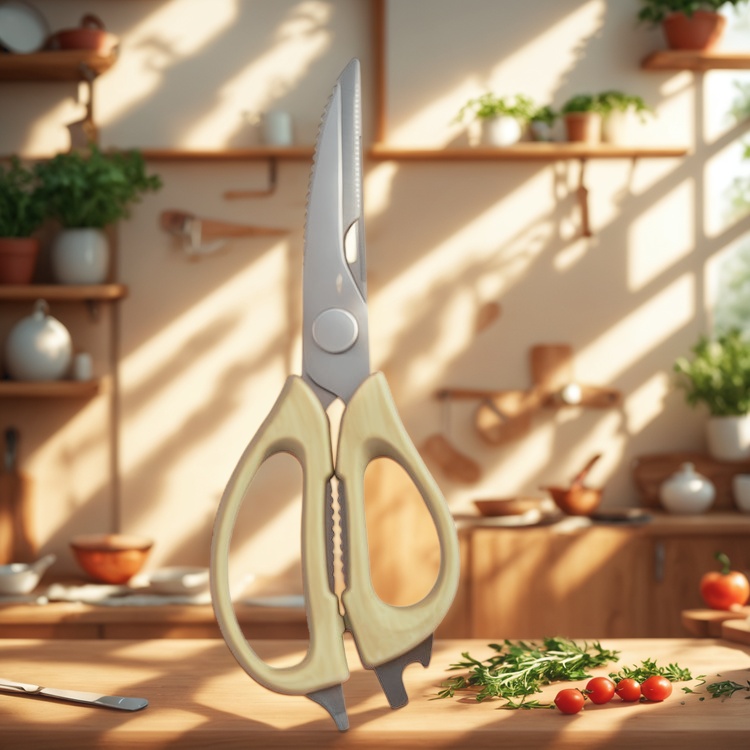
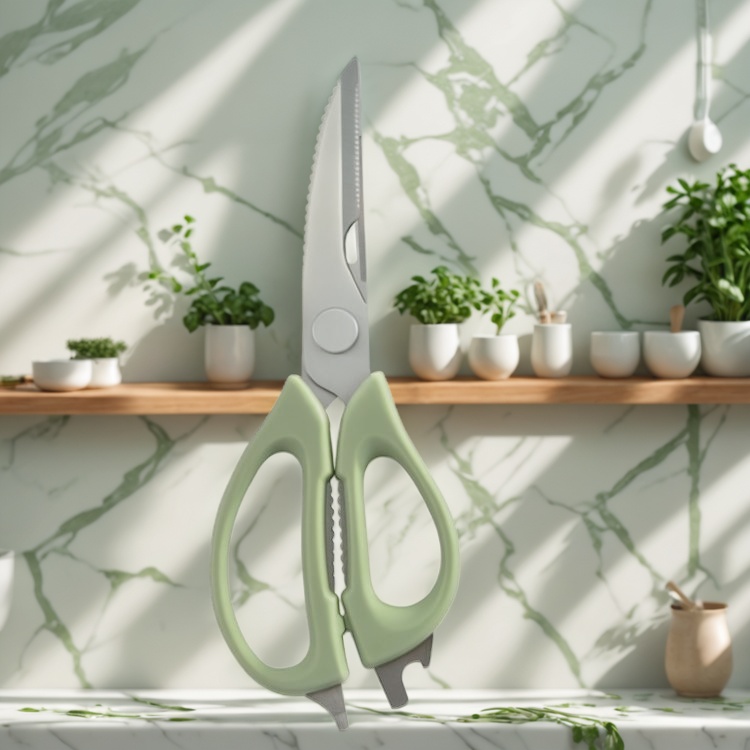
The original product description highlights several useful features: stainless steel construction, micro-serrated edges, ergonomic handles, a sage green color option, disassembly for cleaning, and added functions such as a bottle opener and nutcracker. These details make the product more than a simple cutting tool. For B2B buyers, however, the key question is not only whether the sample looks attractive. The real task is to confirm whether the supplier can produce consistent quality, support the required branding, and answer technical questions clearly before an order is placed.
Key Takeaways
- OEM kitchen scissors should be evaluated for cutting performance, cleaning design, handle comfort, and repeatable production quality.
- Multi-functional features such as bottle openers or nutcrackers are useful only when they do not weaken the main cutting function.
- Buyers should ask suppliers to confirm materials, surface finish, packaging options, inspection process, and customization limits in writing.
- For wholesale or private label projects, request pre-production samples and compare them with shipment samples before approval.
What Makes OEM Kitchen Scissors Different?
Standard kitchen scissors are sold as finished goods under an existing brand or retail package. OEM kitchen scissors are usually adapted for a buyer's own brand, market, or sales channel. Customization may involve handle color, logo placement, packaging artwork, instruction cards, barcode labels, bundled sets, or display-ready cartons. The level of customization depends on what the supplier can actually provide, so buyers should avoid assumptions and confirm each detail early.
Because scissors are handled frequently and often used with food packaging, herbs, poultry, or other kitchen tasks, the product must balance sharpness, safety, and cleanability. A good sourcing conversation should cover the blade design, hinge structure, handle material, cleaning method, and intended usage. If the supplier describes the item as easy-clean or detachable, ask for a clear demonstration, user instructions, and any care warnings that should appear on the packaging.
Important Product Features to Review
The source article mentions multi-functional kitchen scissors with stainless steel blades, micro-serrated edges, ergonomic handles, and extra functions. These are useful selling points, but buyers should evaluate them one by one instead of treating them as decoration for a product listing.
- Blade material: Ask the supplier to identify the stainless steel type and explain how it is finished and maintained.
- Cutting edge: Micro-serrated edges can help grip slippery items, but samples should be tested on the actual use cases expected by your market.
- Handle comfort: Ergonomic handles should fit common hand sizes and remain stable when wet.
- Cleaning design: If the scissors disassemble, confirm how easily they separate and whether users can reassemble them safely.
- Extra tools: Bottle opener and nutcracker functions can add value, but they should not make the scissors bulky or uncomfortable.
Comparison Checklist for Buyer Evaluation
Before placing a wholesale or OEM order, compare samples using a simple checklist. This helps purchasing, product development, and quality teams discuss the same facts instead of relying on first impressions.
| Evaluation Point | What to Check | Questions to Ask the Supplier |
|---|---|---|
| Cutting performance | Test herbs, packaging, and other intended materials. | What cutting tests are used before shipment? |
| Blade and finish | Check edge consistency, surface finish, and hinge movement. | What stainless steel type and finishing process are used? |
| Cleaning | Confirm whether the scissors can be disassembled and cleaned easily. | Are cleaning instructions included or available for packaging? |
| Handle design | Review grip, comfort, color consistency, and balance. | What handle colors and logo options can be supported? |
| Multi-function parts | Test the bottle opener or nutcracker function if included. | Are these features standard or customizable? |
| Packaging | Inspect retail box, blister card, instruction sheet, and carton labels. | Can the supplier provide dielines and packaging samples? |
Sourcing from a Chinese Factory or Supplier
Chinese factory kitchen tools are often considered by international buyers because the supply base is broad and product categories are well developed. Still, supplier selection should be based on evidence rather than broad claims. Ask whether the supplier is a factory, trading company, or a combination of both. Request business information, product photos, sample policies, and clear points of contact for engineering, packaging, and after-sales communication.
For OEM projects, share a written specification sheet. Include target product dimensions if you have them, required handle color, logo method, packaging format, labeling requirements, and any market-specific documents your company needs. Do not rely only on a product photo. A clear specification reduces misunderstandings and makes sample approval easier.
Buyers should also ask practical commercial questions: What is the minimum order quantity for custom color or logo? What is the lead time for samples and bulk production? What inspection standard is used? What happens if the shipment does not match the approved sample? These are normal sourcing questions and should be answered before payment terms are finalized.
Quality Control Before Bulk Orders
Kitchen scissors are simple in appearance, but small differences can affect user satisfaction. A loose hinge, rough edge, uncomfortable handle, or difficult disassembly method can lead to returns. Before bulk production, buyers should approve a sample that represents the exact structure, color, logo, and packaging expected in the order.
During inspection, check appearance, blade alignment, opening and closing movement, cutting performance, handle fit, and packaging accuracy. If the product is marketed as multi-functional, inspect every function rather than only the scissor blades. If it is marketed as easy-clean, confirm that the cleaning design is understandable for end users. Keep one approved sample at your office and ask the supplier to keep a matching reference sample for production comparison.
Packaging and Retail Content Considerations
Packaging should explain the product without exaggeration. For consumer-facing sales channels, include basic use and care guidance, especially if the scissors disassemble. If the product includes a bottle opener or nutcracker, show those functions clearly. If there are limitations, such as items the scissors should not cut, include them in the instruction content.
For private label buyers, packaging files should be reviewed carefully before printing. Check spelling, logo placement, barcode readability, country-of-origin wording, warning statements, and cleaning instructions. If your market requires specific labeling or compliance language, ask qualified internal staff or third-party professionals to review it. The supplier can provide production support, but the brand owner is usually responsible for final market claims.
FAQ
Are OEM kitchen scissors suitable for private label programs?
Yes, they can be suitable if the supplier supports the required logo, handle color, packaging, and inspection process. Buyers should confirm customization options and approval steps before ordering.
What should I test on a sample pair of kitchen scissors?
Test cutting performance, hinge movement, grip comfort, cleaning method, blade alignment, and any added tools such as a bottle opener or nutcracker. Use materials that match your target customer use cases.
Can I claim the scissors are made from a specific steel grade?
Only make that claim if the supplier provides clear written confirmation and your company is comfortable verifying it. Do not add a steel grade to product listings unless it is supported.
What questions should I ask a kitchen scissors supplier first?
Ask whether the product can be customized, what materials are used, what sample process is available, what quality checks are performed, what packaging options exist, and what commercial terms apply.
Are multi-functional scissors always better than simple scissors?
Not always. Extra functions are helpful when they work well and do not reduce comfort or cutting quality. For some markets, a clean, durable, easy-to-use design may be more important than additional features.
Final Sourcing Advice
OEM kitchen scissors can be a strong addition to a houseware range when the product is specified, sampled, and inspected carefully. Focus on real user needs: clean cutting, safe handling, easy cleaning, understandable packaging, and consistent production. Treat multi-functional features as practical benefits to verify, not just selling points to list. A clear specification sheet and disciplined sample approval process will help buyers build a more reliable product program with fewer surprises during bulk production.
