




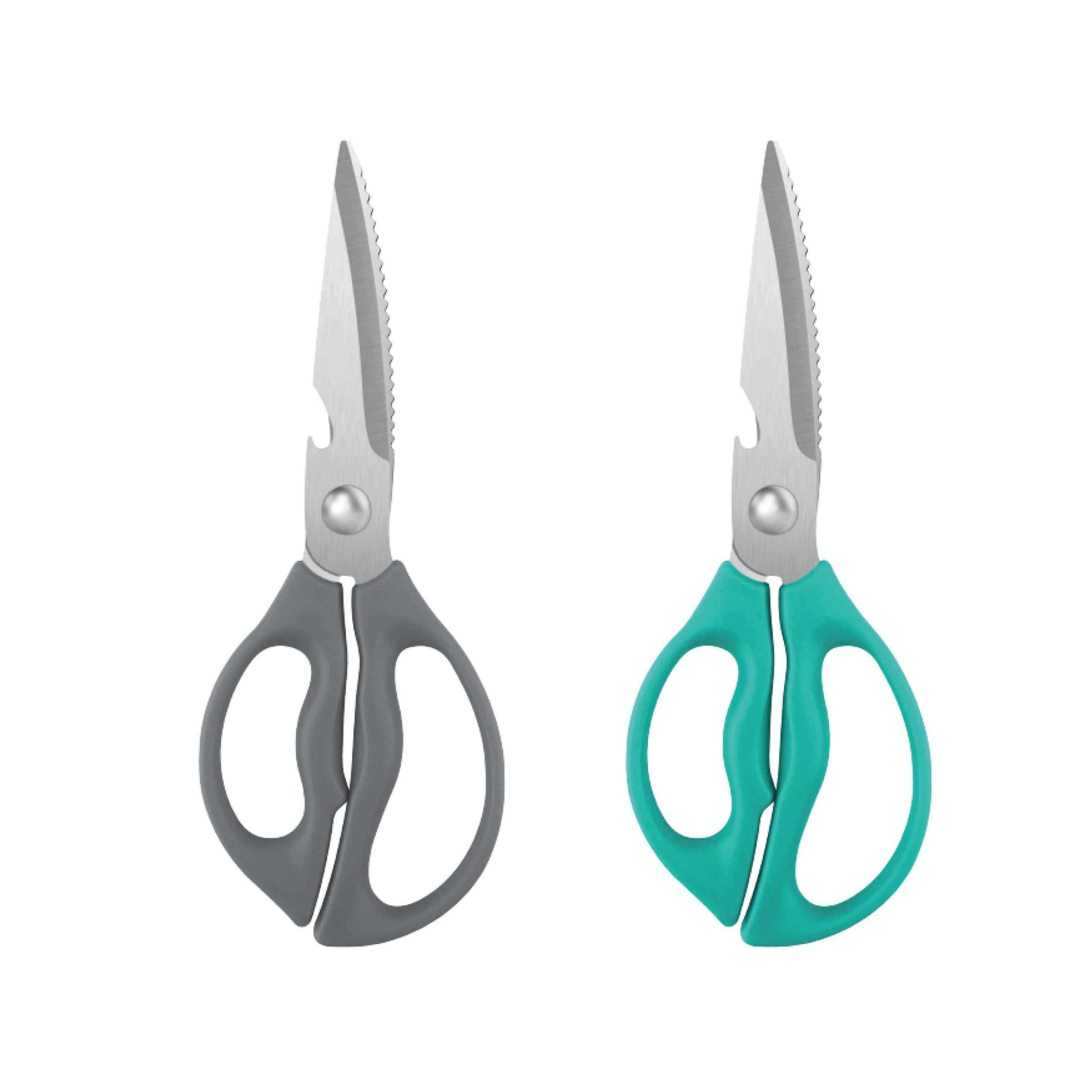
OEM Kitchen Scissors: Stylish, Multi-functional Choice
For retailers, importers, promotional buyers, and kitchenware brands, OEM kitchen scissors are a compact product with broad everyday use. They appeal to home cooks because they can cut herbs, trim vegetables, open packaging, and handle tougher kitchen tasks without taking out a knife and cutting board. For B2B buyers, the real question is not whether kitchen scissors are useful, but how to choose a model that fits the target market, quality expectations, and private-label plan.
The original product description highlights a modern design, gray or turquoise color options, ergonomic non-slip handles, stainless steel blades, a serrated blade edge, an integrated bottle opener, a nutcracker, and a detachable structure for cleaning. Those are helpful starting points. A stronger sourcing decision, however, requires looking at usability, durability, hygiene, packaging, and the questions a buyer should ask before confirming an OEM order.
Key Takeaways
- OEM kitchen scissors should be evaluated as both a cutting tool and a multi-function kitchen accessory.
- Handle comfort, blade grip, cleaning access, and feature placement matter as much as visual design.
- Buyers should confirm material details, packaging options, logo methods, inspection standards, and order requirements directly with the supplier.
- Retail positioning should match the product: basic household use, gift sets, supermarket kitchenware, or premium private-label assortments.
What Makes OEM Kitchen Scissors Different?
Standard kitchen scissors are usually purchased as finished goods with limited changes. OEM kitchen scissors are selected or adjusted for a brand, distributor, or retailer. That may include color selection, logo placement, packaging design, instruction inserts, barcode labels, or pairing the scissors with other kitchen tools in a set. The benefit is better alignment with a buyer's sales channel, whether that channel is online retail, wholesale distribution, supermarket supply, or promotional gifting.
OEM sourcing also creates more responsibility. Buyers should not rely only on appearance. A stylish handle may attract attention, but the product must still feel stable in the hand and cut consistently. A multi-functional design may look valuable on a product page, but every added function should be easy to understand and safe to use. Before placing an order, buyers should request samples and compare them against competing items in the same price and positioning range.
Blade Design and Cutting Performance
The source article describes stainless steel blades and a serrated edge on one blade. This combination is common in kitchen scissors because one blade can help grip slippery foods while the other provides cutting force. For practical evaluation, buyers should test the scissors on realistic kitchen materials such as herbs, leafy vegetables, food packaging, cooked meat, and poultry portions if the product is intended for tougher tasks.
When discussing blade quality with a supplier, avoid vague terms alone. Ask what material is used, how the blade is hardened or finished, and whether the supplier can provide relevant documentation for the intended market. If exact steel grade, hardness, coating, or corrosion performance is important to your sales channel, those details should be confirmed in writing before production. Do not assume a specification simply because the product is described as stainless steel.
Handle Comfort, Color, and Retail Appeal
The original description notes ergonomic, non-slip handles and two color options: contemporary gray and turquoise. For B2B buyers, color is more than decoration. Neutral colors such as gray may suit broad retail assortments and professional-looking kitchen lines. Brighter colors such as turquoise can help a product stand out in online images, gift packs, or seasonal promotions.
Comfort should be checked with different hand sizes. A handle that feels secure for one user may feel tight or awkward for another. During sample review, ask several people to open and close the scissors repeatedly, cut thicker materials, and hold them with wet or slightly oily hands. If the product will be sold as a household kitchen tool, the handle should feel intuitive without requiring special instructions.
Multi-function Features to Review
Multi-functional kitchen scissors can save drawer space by combining several small tasks in one tool. The described model includes an integrated bottle opener and nutcracker in the handles. These features can support stronger shelf appeal, but only if they are positioned clearly and do not interfere with normal cutting.
| Feature | Buyer Checkpoint | Why It Matters |
|---|---|---|
| Serrated blade edge | Test grip on slippery or fibrous foods | Helps determine whether cutting feels controlled |
| Ergonomic non-slip handle | Check comfort with multiple hand sizes | Reduces complaints about hand fatigue or instability |
| Bottle opener | Confirm location, strength, and user clarity | Adds value only if it is easy and safe to use |
| Nutcracker | Test suitable nut sizes and pressure points | Prevents overpromising in product descriptions |
| Detachable structure | Separate and reassemble several times | Supports cleaning but must remain secure in use |
Cleaning and Hygiene Considerations
Kitchen scissors often contact herbs, meat, packaging, and sauces, so cleaning access is important. The source article states that the scissors can be disassembled for a thorough wash, helping remove food particles between the blades. For buyers, this is a useful feature to verify during sample testing. The hinge should separate smoothly, but it should not feel loose during cutting.
Ask the supplier for recommended cleaning instructions and whether the product is intended for hand washing or dishwasher use. If dishwasher compatibility is required for your market, confirm it with the supplier rather than adding the claim independently. Clear care instructions can reduce returns and help consumers use the product safely over time.
OEM Sourcing Questions Buyers Should Ask
- What blade material and handle material are used, and can they be documented?
- Which colors are available for standard production, and can custom colors be matched?
- What logo methods are possible on the product or packaging?
- Can the supplier provide retail packaging, barcode labels, instruction cards, or carton markings?
- What are the minimum order quantity, lead time, sample process, and payment terms?
- What inspections are performed before shipment, and can the buyer define an AQL standard?
- Are there market-specific requirements the buyer should verify for the destination country?
These questions help separate appearance-based selection from responsible sourcing. They also prevent product listings from making unsupported claims about materials, certifications, safety tests, or performance.
How to Position These Scissors in a Product Line
Because the scissors combine cutting, opening, cracking, and detachable cleaning, they can fit several retail strategies. A homeware brand may position them as an everyday kitchen utility tool. A supermarket buyer may treat them as a practical impulse purchase in a kitchen accessories section. An online seller may highlight use cases in product images, such as cutting herbs, trimming vegetables, opening bottles, or separating the blades for cleaning.
The best positioning should match the confirmed specification. If the product is promoted for poultry or heavy-duty use, buyers should test that claim carefully and make sure the supplier agrees with the intended description. If the product is positioned as a general-purpose kitchen scissor, the content can focus on comfort, versatility, and easy cleaning without overclaiming.
FAQ
Are OEM kitchen scissors suitable for private-label retail?
Yes, they can be a practical private-label item if the supplier supports the required color, logo, packaging, labeling, and quality checks. Buyers should confirm available customization before planning the assortment.
What features should be tested before ordering?
Test blade sharpness, serrated grip, handle comfort, bottle opener function, nutcracker function, hinge security, and detachable cleaning. Samples should be reviewed in the same way a consumer would use the product.
Can buyers claim the scissors are dishwasher safe?
Only if the supplier confirms that claim and provides suitable guidance. If not confirmed, use conservative care instructions such as hand washing and drying after use.
What should be included in OEM packaging?
Common packaging items may include product name, brand logo, barcode, country or importer information, care instructions, and safety notes. Exact requirements depend on the destination market and sales channel.
How can buyers avoid overpromising?
Base every claim on confirmed product details. If a material grade, certification, test result, or performance claim is not documented, ask the supplier first or describe the feature more generally.
