




OEM Kitchen Scissors: Practical Sourcing Guide for Multifunctional Culinary Tools
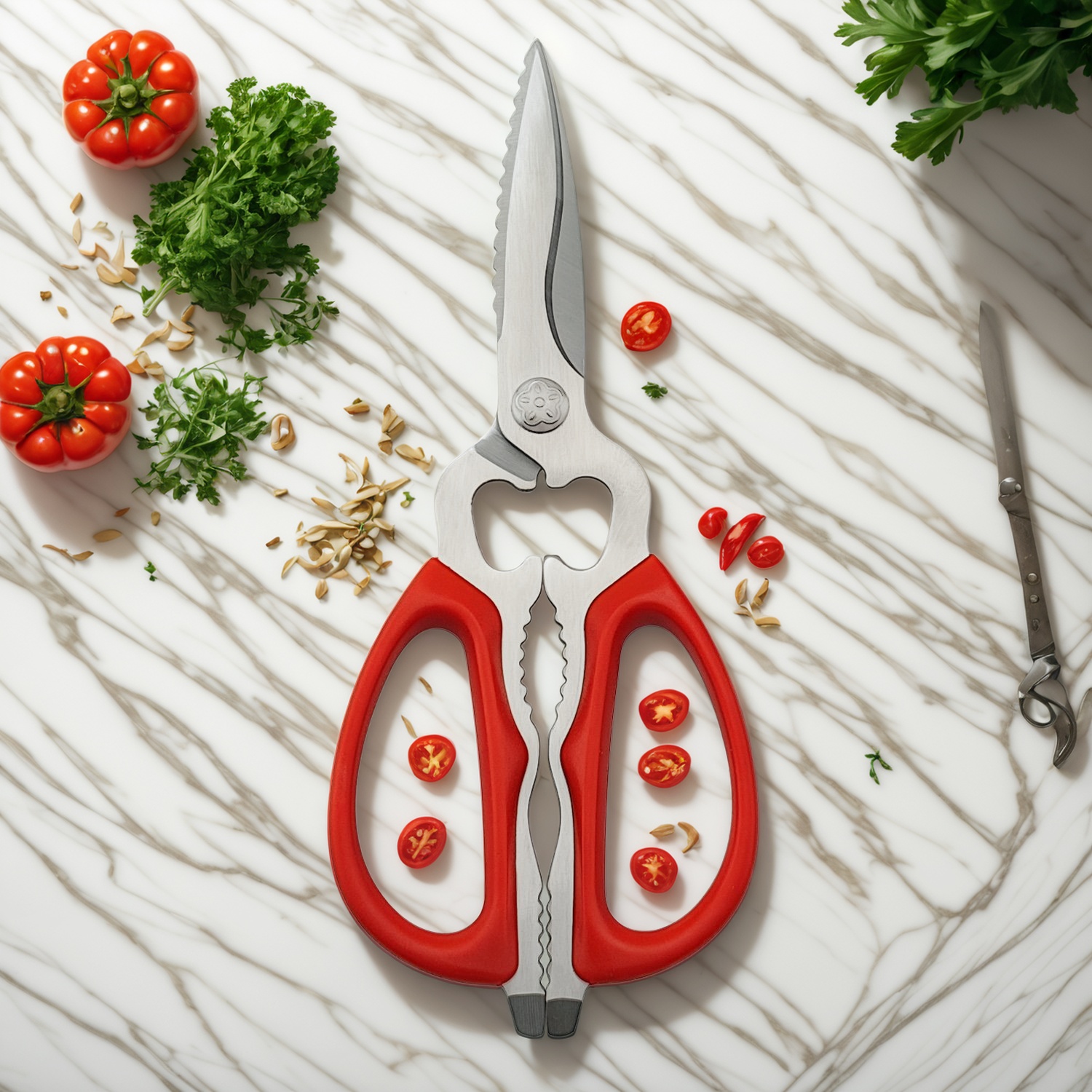
OEM kitchen scissors are a compact but important item in many kitchenware assortments. For retailers, distributors, promotional buyers, and private-label brands, they can fill a practical category need: a hand tool that supports everyday food preparation, packaging opening, and small utility tasks around the kitchen. The original product description highlights several useful functions, including cutting herbs, vegetables, seafood, poultry, and tougher ingredients, plus additional features such as a bottle opener and nutcracker. Those details make this type of product relevant for buyers looking for a multifunctional kitchen tool rather than a simple pair of scissors.
For organic search and real sourcing decisions, however, the key question is not just whether a pair of kitchen scissors looks useful. Buyers need to understand what to verify before placing an OEM or wholesale order: blade performance, handle comfort, accessory functions, packaging options, quality control, and supplier communication. The following guide explains how to evaluate multifunctional kitchen scissors in a practical B2B context without relying on unsupported claims.
Key Takeaways
- OEM kitchen scissors should be evaluated by cutting performance, grip comfort, cleaning method, and durability under repeated use.
- Multifunctional features such as a bottle opener or nutcracker can add value, but only if they work reliably and do not weaken the core cutting function.
- Buyers should request samples and ask suppliers clear questions about materials, packaging, customization, inspection standards, and order terms.
- Do not assume a blade grade, certification, dishwasher safety claim, or factory capacity unless the supplier documents it.
What OEM Kitchen Scissors Are Designed to Do
Kitchen scissors are designed for food-prep cutting tasks that may be awkward with a knife. Common uses include snipping fresh herbs, trimming vegetables, cutting seafood shells, portioning poultry, opening food packaging, and cutting cooking twine. The original article also mentions jagged blades for gripping challenging items and interlocking grips for better control. These details suggest a product positioned for general kitchen versatility rather than a single-purpose tool.
In an OEM program, the buyer may request changes such as handle color, logo placement, packaging style, or assortment configuration. Before discussing branding, it is best to confirm whether the base design performs well. A visually appealing handle or low unit price cannot compensate for blades that do not align, loosen quickly, or feel uncomfortable during repetitive cutting.
Core Features to Evaluate Before Ordering
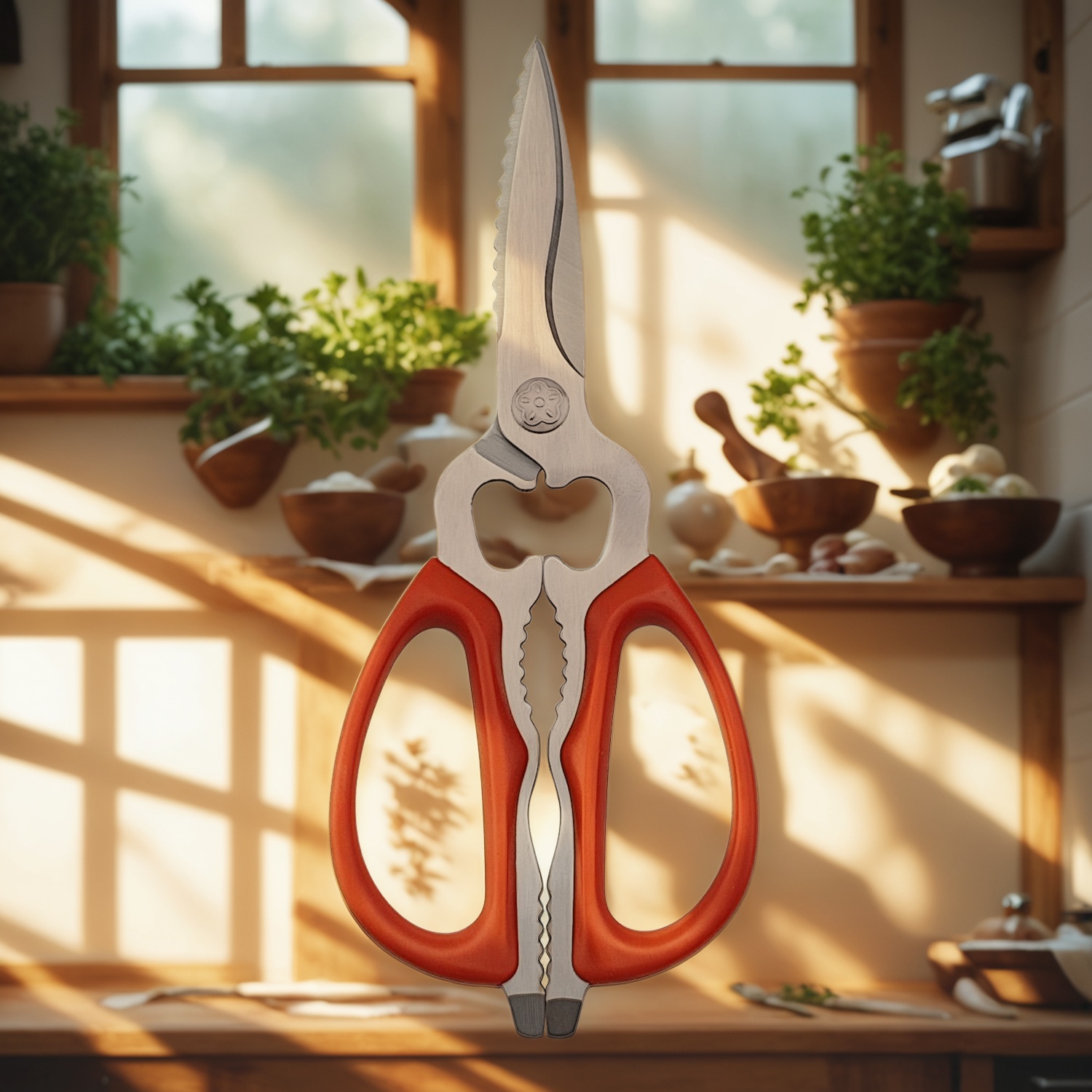
When comparing multifunctional kitchen scissors, buyers should focus on the features that influence daily usability. The original description mentions stainless steel blades and red ergonomic handles. Since material specifications can vary by supplier and order, buyers should ask for the exact blade material, handle material, and any applicable test documentation rather than assuming a grade.
Important evaluation points include:
- Cutting action: Blades should open and close smoothly without excessive wobble or friction.
- Blade edge: The cutting edge should handle herbs, packaging, seafood, and poultry samples cleanly during testing.
- Grip comfort: Handles should suit the target market’s hand size and remain comfortable during repeated use.
- Multifunctional details: Bottle opener, nutcracker, and gripping areas should be tested separately, not just listed on packaging.
- Cleaning approach: Ask whether the design is recommended for hand-washing, and whether the supplier provides care instructions.
Comparison Checklist for Wholesale Buyers
The table below can help buyers compare samples from different suppliers or factory quotations. It is especially useful when sourcing from a kitchenware manufacturing region such as Yangjiang, where many scissor and knife-related suppliers may offer similar-looking products.
| Evaluation Area | What to Check | Questions to Ask the Supplier |
|---|---|---|
| Blade performance | Clean cutting on herbs, packaging, seafood, and poultry samples | What blade material is used, and can it be documented? |
| Handle comfort | Grip shape, pressure points, slipping, and control | Can handle color or material be customized for OEM orders? |
| Multifunctional parts | Bottle opener, nutcracker, serrated or jagged grip areas | Are these functions included in the standard mold or optional? |
| Durability | Blade alignment, pivot strength, and wear after repeated cutting | What in-house inspection steps are used before shipment? |
| Packaging | Retail card, box, instruction sheet, barcode, and warning text | What packaging formats are available, and what files are required? |
| Commercial terms | MOQ, lead time, sample policy, payment terms, and shipment method | What are the current order requirements for this exact model? |
How to Test Samples in a Realistic Kitchen Scenario
Sample testing should be structured, not casual. A buyer can create a simple test plan that reflects the intended customer use. For example, test the scissors on leafy herbs, vegetable stems, food packaging, seafood shells, and poultry skin or joints if that use is part of the product claim. Record whether the blades crush, slip, tear, or cut cleanly. If the scissors include a nutcracker or bottle opener, test those functions with typical items and observe whether the handle remains stable.
It is also worth testing cleaning and drying. The original article recommends hand-washing to help maintain the edge. If care instructions are important for your retail market, ask the supplier to confirm the recommended cleaning method and provide wording suitable for packaging or an instruction insert. Avoid adding dishwasher-safe, food-grade, or compliance-related claims unless they are supported by supplier documentation and relevant test reports.
OEM Branding, Packaging, and Retail Presentation
For private-label kitchen scissors, packaging often determines whether the product communicates value clearly. A multifunctional design can be confusing if the buyer only sees a pair of scissors. Packaging should explain the main functions in plain language: cutting herbs, trimming poultry, opening bottles, cracking nuts, or gripping slippery ingredients if those functions are confirmed for the model.
Buyers should prepare logo files, packaging dimensions, barcode needs, language requirements, and any market-specific warnings before requesting a final quotation. Ask whether the supplier can provide dielines, artwork support, or pre-production packaging samples. If the product is sold through e-commerce, request product photos of the exact sample and make sure the images match the delivered goods, including handle color and visible functional parts.
Supplier Questions for a Yangjiang Scissors Factory or Kitchenware Vendor
The original article references the possibility of production by a Yangjiang scissors factory. Yangjiang is widely associated with cutting tools and kitchenware, but buyers should still evaluate each supplier individually. A factory location alone does not prove product quality, export experience, or consistency.
Useful supplier questions include:
- What is the exact blade and handle material for this model?
- Can you provide physical samples from current production, not only showroom samples?
- What customization options are available for logo, color, and packaging?
- What are the current MOQ, lead time, sample cost, and payment terms?
- What inspections are performed for blade sharpness, alignment, appearance, and packaging?
- Can third-party inspection be arranged before shipment?
- What care instructions and product warnings do you recommend for this model?
Common Sourcing Mistakes to Avoid
One common mistake is treating every multifunctional kitchen scissor as the same product. Similar shapes may hide differences in blade thickness, pivot quality, handle material, and finishing. Another mistake is focusing only on unit price. A slightly cheaper product may create higher costs if it leads to returns, poor reviews, damaged packaging, or inconsistent color matching.
Buyers should also avoid overloading the product page or packaging with claims. If a supplier has not documented a specific material grade, certification, or test result, phrase the detail carefully or leave it out. Reliable sourcing depends on matching the product claim to what can actually be verified.
FAQ
Are OEM kitchen scissors only for cutting food?
They are mainly kitchen prep tools, but many models can also open packaging or perform small utility tasks. Confirm intended uses with the supplier and test samples accordingly.
Should kitchen scissors be hand-washed?
The original article recommends hand-washing to maintain the edge. Buyers should ask the supplier for the official care recommendation for the exact model.
Can multifunctional scissors replace knives?
No. They are useful for specific cutting tasks such as herbs, seafood, poultry trimming, and packaging, but knives and cutting boards remain necessary for many preparation jobs.
What should buyers confirm before placing an OEM order?
Confirm materials, sample performance, logo method, packaging format, MOQ, lead time, inspection process, and any documentation needed for the target market.
Is a bottle opener or nutcracker feature always valuable?
Only if it works well and does not compromise comfort or cutting performance. Test each extra function before using it as a selling point.
