




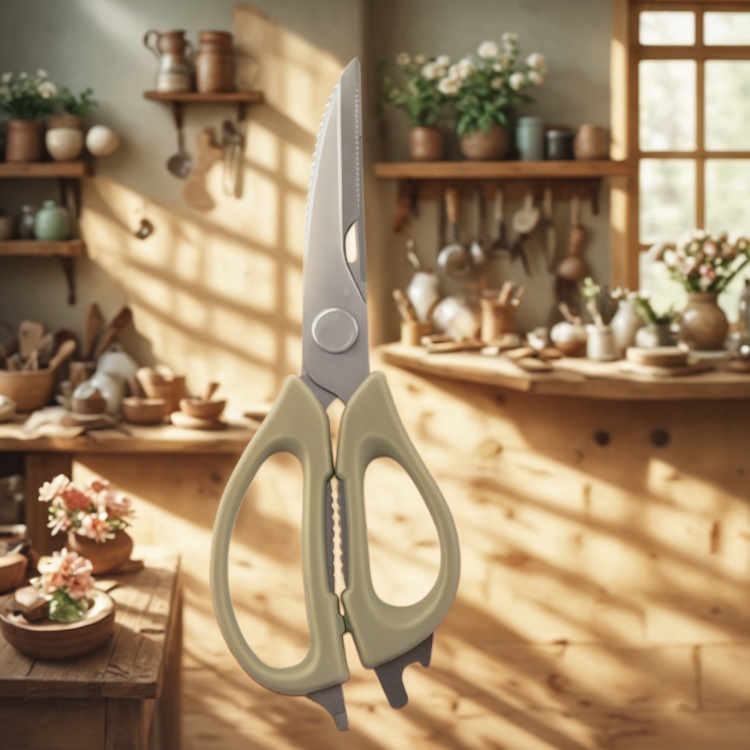
OEM Kitchen Scissors: Practical Sourcing Guide for Multi-Functional Kitchen Tools
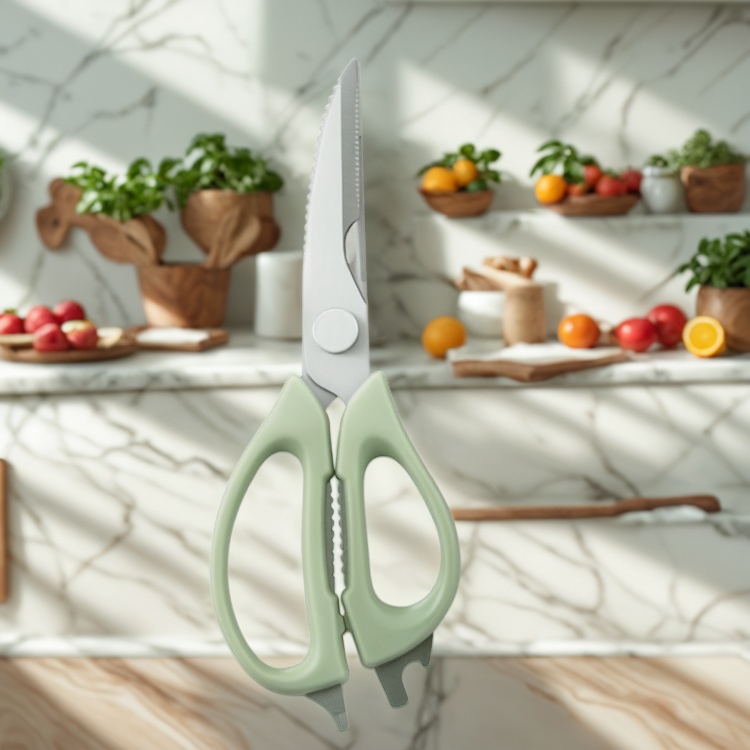
OEM kitchen scissors are a small product category with a wide range of buying decisions behind it. For retailers, importers, promotional buyers, and private label kitchenware brands, the goal is not simply to find scissors that look good in a product photo. The goal is to source a practical tool that cuts reliably, feels comfortable in the hand, is easy for end users to clean, and can be supplied consistently at the required quality level.
The original product description highlights several useful ideas: multi-functional kitchen scissors can support tasks beyond basic cutting, including opening bottles and cracking nuts; serrated edges can help grip foods such as meat or herbs; ergonomic handles can reduce discomfort during repeated use; and stainless steel blades are commonly valued for rust resistance and edge retention. For an OEM or wholesale buyer, these points should become part of a structured specification and supplier review process.
What Buyers Mean by OEM Kitchen Scissors
In kitchenware sourcing, OEM usually means that a factory produces scissors according to a buyer's requested design, branding, packaging, or functional requirements. The factory may offer an existing model that can be adapted, or it may support a more customized development process. The right approach depends on the buyer's budget, timeline, order volume, and target retail channel.
For a private label program, OEM kitchen scissors may require branded packaging, custom handle colors, logo placement, instruction inserts, barcode labels, or carton marks. For a distributor, the priority may be stable repeat supply and dependable packaging for regional wholesale customers. In both cases, the buyer should turn the product concept into a written specification before comparing factories.
Core Functions to Evaluate Before Ordering
Multi-functional kitchen scissors often include more than a pair of cutting blades. The source article mentions bottle-opening and nut-cracking functions, which can be useful if they are well integrated and do not make the product uncomfortable or difficult to clean. Buyers should avoid adding functions only for marketing value. Each function should be practical, safe to use, and clear to the consumer.
- Cutting performance for herbs, poultry, packaging, and general kitchen preparation.
- Serrated blade grip, especially when cutting slippery or fibrous foods.
- Handle comfort for left-hand and right-hand users, if the target market requires it.
- Cleaning access around joints, grooves, and built-in tools.
- Additional functions such as bottle opening or nut cracking, only if they perform reliably.
When reviewing samples, buyers should test the scissors with realistic kitchen tasks rather than judging only appearance. A tool that feels solid in a showroom can still pinch the hand, slip on food, or trap residue after use.
Material and Build Questions to Ask a Supplier
The original article states that Chinese factory kitchen tools can use stainless steel blades that resist rust and maintain sharpness over time. Because stainless steel grades and heat treatment processes can vary, a buyer should ask the supplier for exact material information rather than assuming all stainless steel performs the same way. If a grade, coating, or surface treatment is important for the sales market, request written confirmation and supporting documentation where appropriate.
Useful supplier questions include: What blade material is used? Is the handle material suitable for food-contact kitchen use in the destination market? Are the blades detachable for cleaning, or fixed? How is the pivot assembled? What quality checks are performed on sharpness, alignment, surface finish, and handle strength? Can the factory provide pre-production samples that match mass production materials and packaging?
Comparison Checklist for OEM Kitchen Scissors
| Selection Area | What to Check | Why It Matters |
|---|---|---|
| Blade design | Serration, alignment, edge consistency, cutting feel | Affects grip, clean cutting, and user satisfaction |
| Handle design | Comfort, finger space, surface texture, balance | Reduces hand strain during repeated kitchen tasks |
| Multi-function features | Bottle opener, nut cracker, grip sections, cleaning access | Adds value only when functions are practical and durable |
| Cleaning and maintenance | Detachable or fixed structure, residue traps, drying ease | Important for everyday kitchen hygiene and long-term use |
| OEM packaging | Logo, instructions, barcode, carton label, retail display needs | Supports private label sales and warehouse handling |
| Supplier controls | Sample approval, inspection plan, defect definitions | Helps reduce variation between sample and bulk order |
Chinese Factory Kitchen Tools: How to Source Responsibly
China remains an important sourcing base for kitchen tools, including scissors, because buyers can often find a broad range of models, finishes, packaging options, and production experience. However, broad availability does not remove the need for careful supplier qualification. A lower unit price is not meaningful if the product has inconsistent cutting performance, weak packaging, unclear materials, or high defect rates.
When comparing Chinese factory kitchen tools, request quotations based on the same specification. Include the blade material, handle material, packaging type, logo method, carton requirements, inspection expectations, and target delivery terms. If these details are missing, suppliers may quote different assumptions, making price comparison unreliable. Buyers should also ask about sample lead time, production lead time, payment terms, export experience, and how quality issues are handled after shipment.
OEM Branding, Packaging, and Retail Readiness
Kitchen scissors are often sold in retail packaging where the buyer has limited time to communicate value. Packaging should clearly explain the main functions without exaggeration. If the scissors include serrated blades, a bottle opener, or nut-cracking areas, show these functions accurately. If the product requires hand washing or specific care, include simple instructions.
For wholesale and private label programs, packaging should also protect the product during transport. Ask whether the supplier can provide blister cards, color boxes, hang tags, or other packaging formats if needed, but confirm availability instead of assuming. Carton strength, inner packing, and scissor tip protection are practical details that can affect damage rates and customer complaints.
Quality Control Before Mass Production
A reliable sourcing process should include sample approval, production reference samples, and an inspection checklist. Buyers should define what counts as a critical, major, or minor defect. For kitchen scissors, possible inspection points include sharp edges outside the cutting area, loose pivots, blade misalignment, rust marks, handle cracks, poor logo printing, damaged packaging, and inconsistent function of added tools.
It is also useful to test several pieces from a sample batch, not just one selected item. Repeated cutting tests, opening and closing cycles, cleaning checks, and packaging drop observations can reveal issues that are not visible in a catalog photo. If the target market has specific safety, labeling, or compliance requirements, the buyer should confirm those requirements with qualified advisors and ask the supplier what documentation can be provided.
Key Takeaways
- OEM kitchen scissors should be sourced from a written specification, not from appearance alone.
- Multi-functional features such as bottle opening or nut cracking are valuable only when they are easy and safe to use.
- Ask suppliers to confirm blade material, handle material, packaging options, and quality checks in writing.
- Compare factories using the same quotation details so price and capability can be evaluated fairly.
- Approve production samples and define inspection standards before placing a wholesale order.
FAQ
What should I include in an OEM kitchen scissors specification?
Include blade material, handle material, size, functions, color, logo method, packaging type, carton requirements, inspection criteria, and any destination-market labeling needs.
Are multi-functional kitchen scissors better than basic scissors?
They can be better for retail value if the extra functions are practical. Buyers should test bottle-opening, nut-cracking, and cutting performance before adding them to a product line.
Can I request private label packaging from a supplier?
Many OEM kitchen tool suppliers may offer branding or packaging support, but buyers should ask what options are available, what artwork format is needed, and whether samples can be approved before production.
How do I compare wholesale kitchen scissors suppliers?
Use the same product specification for every quotation, review physical samples, ask about quality control, and clarify lead time, payment terms, packing details, and after-sales handling.
What care guidance should be provided to consumers?
Provide clear cleaning and drying instructions based on the final product design. If the scissors have joints, grooves, or extra tools, explain how users should clean those areas safely.
