





OEM Kitchen Scissors: Sourcing Guide for Practical Kitchen Tool Programs
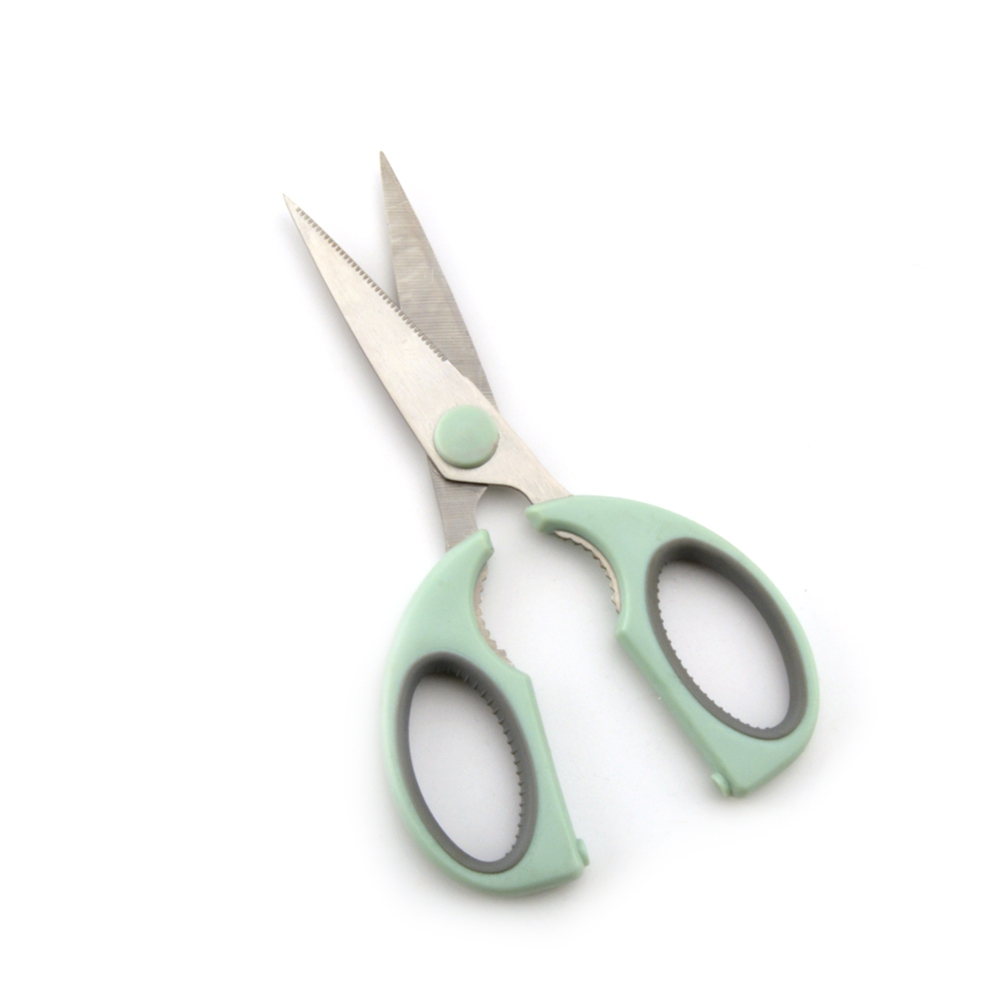
OEM kitchen scissors are common items in kitchenware ranges because they solve everyday preparation tasks while offering room for private-label customization. For importers, retailers, promotional buyers, and brand owners, the key question is not simply whether a pair of scissors looks good in a catalogue. The real sourcing work is to confirm whether the product design, packaging, safety features, quality control process, and commercial terms fit the intended market.
The original article highlighted OEM kitchen scissors, kitchen scissors with cover, and sourcing from a kitchen scissors manufacturer, including factories in Yangjiang. This rewritten guide keeps that sourcing focus but turns it into a practical buyer checklist. Use it when evaluating samples, comparing suppliers, or preparing a quotation request for a customized kitchen scissors program.
Key Takeaways
- OEM kitchen scissors should be evaluated by use case, blade design, handle comfort, safety storage, and packaging requirements.
- A kitchen scissors with cover option can help protect the blade edge during storage and reduce exposed-blade handling in drawers.
- Do not assume material grade, certification, testing, MOQ, or production capacity; ask the supplier to confirm these in writing.
- For wholesale or private-label orders, request samples and compare cutting performance, finish consistency, branding options, and carton packing details.
What OEM Kitchen Scissors Mean for B2B Buyers
OEM kitchen scissors are produced for a buyer’s brand, packaging, or design requirements. In a simple program, the buyer may choose an existing model and customize the logo or packaging. In a more developed project, the buyer may request changes to handle color, cover design, retail card, carton marking, or other details approved by the manufacturer.
Because kitchen scissors are functional tools, customization should not be limited to appearance. Buyers should define the intended channel first. A supermarket item, cookware set accessory, restaurant supply product, and gift-box kitchen tool may require different packaging, price positioning, and durability expectations. A professional buyer should prepare a clear specification sheet before asking for a quotation.
Kitchen Scissors with Cover: When the Sheath Matters
The original article mentioned kitchen scissors with cover as a safety-oriented variation. A protective cover or sheath is useful for storage because it reduces direct blade exposure inside a drawer, display box, or utility kit. It may also help protect the blade edge from contact with other utensils during shipping or daily storage.
However, the cover should be assessed carefully. Buyers should check whether it fits securely without being too tight, whether it is easy to remove by an adult user, and whether the material and color match the product positioning. If the scissors will be sold through retail channels, ask how the cover is packed: attached to the blade, displayed separately, or integrated into a blister, card, or box. Poorly fitted covers can create customer complaints even when the scissors themselves cut well.
Core Selection Criteria for OEM Kitchen Scissors
When reviewing samples from a kitchen scissors manufacturer, buyers should test practical kitchen tasks rather than relying only on product photos. Depending on the intended market, common checks may include cutting herbs, opening food packaging, trimming food-safe wrapping, or handling general kitchen preparation tasks. Avoid making performance claims in marketing unless the supplier provides supportable evidence and the buyer has verified the claim.
Important selection points include:
- Blade alignment: The two blades should meet consistently from pivot to tip without obvious gaps or rubbing.
- Handle comfort: Check whether the grip is comfortable for typical users and whether edges feel smooth.
- Opening and closing action: The pivot should not feel loose, rough, or overly stiff.
- Cover fit: For models with a sheath, confirm retention and ease of removal.
- Cleaning expectations: Ask the supplier for recommended cleaning and care instructions suitable for packaging or user manuals.
- Branding area: Confirm where a logo can be placed and what method is available.
Comparison Checklist for Supplier Evaluation
The table below can help buyers compare quotations from a Yangjiang kitchen scissors factory or any other kitchen scissors manufacturer. It focuses on questions that reduce ambiguity before purchase orders are placed.
| Evaluation Area | What to Check | Questions to Ask the Supplier |
|---|---|---|
| Product design | Blade shape, handle shape, cover option, overall size | Which design elements can be customized without new tooling? |
| Materials | Blade and handle material descriptions | What material grade is used, and can you provide supporting documentation? |
| Performance | Cutting feel, pivot stability, edge consistency | What in-house quality checks are performed before shipment? |
| Safety storage | Sheath fit, exposed edges, retail packing | Is the cover included as standard or optional, and how is it packed? |
| Branding | Logo position, color options, packaging artwork | What files are required for logo and packaging approval? |
| Commercial terms | MOQ, lead time, sample cost, payment terms | What are the current terms for this exact model and order quantity? |
| Compliance | Market-specific requirements | Can you provide documents required for our destination market? |
Working with a Kitchen Scissors Manufacturer
Yangjiang is widely associated with knife and scissors production, and many buyers search for a Yangjiang kitchen scissors factory when sourcing this category. Location alone, however, is not enough to qualify a supplier. The better approach is to evaluate the factory’s ability to support your specific order: communication quality, sample accuracy, packaging execution, inspection cooperation, and willingness to answer technical questions.
When you contact a manufacturer, provide a concise sourcing brief. Include target market, estimated order quantity, required packaging type, logo needs, preferred handle color, whether a cover is required, and any compliance documents your importer or retailer requires. If you do not know the exact specification, ask the supplier to recommend available models and explain the differences between them.
Buyers should avoid assuming MOQ, prices, certifications, or lead times from general website content. These details can change by model, customization level, season, and order quantity. Ask for a current written quotation based on your exact requirements and confirm what is included in the unit price.
Sample Review and Quality Control Steps
Before confirming a wholesale order, request pre-production or confirmation samples that match the final design as closely as possible. A sample should be checked not only by the purchasing team but also by someone who will evaluate usability. If the product is intended for retail, review the packaged sample as a customer would see it.
- Inspect the sample for visual defects, burrs, loose parts, or inconsistent finishing.
- Open and close the scissors repeatedly to assess the pivot feel.
- Test ordinary kitchen cutting tasks relevant to the product description.
- Check whether the cover stays in place during handling.
- Review logo placement, color matching, barcode position, and instruction text.
- Confirm carton packing, inner quantity, labeling, and shipping marks before mass production.
For larger orders, consider third-party or buyer-arranged inspection. The inspection standard should be agreed in advance, including acceptable quality limits, test methods, packaging checks, and defect classification. This is especially important when the product will be sold through formal retail channels.
Packaging, Care Instructions, and Retail Readiness
Packaging affects both presentation and logistics. A kitchen scissors with cover model may be packed in a simple polybag for bulk supply, on a card for retail hanging, in a blister pack, or in a box as part of a kitchenware set. Each choice changes cost, shipping volume, artwork requirements, and inspection points.
Care instructions should be practical and accurate. If the supplier has specific cleaning guidance, request it in writing. Do not claim dishwasher suitability, rust resistance, food-contact compliance, or special blade performance unless the supplier has provided suitable documentation and the buyer has confirmed it for the destination market. Clear instructions can reduce misuse and after-sales issues.
Practical FAQ
Can OEM kitchen scissors be customized with a private logo?
Often yes, but the available logo method and position depend on the model and materials. Ask the manufacturer for artwork requirements, sample approval steps, and whether logo costs are included in the quotation.
Is a cover necessary for kitchen scissors?
A cover is not always required, but it is useful for drawer storage, retail presentation, and blade protection. Buyers should test the cover fit and confirm whether it is included in the quoted price.
What should I ask a kitchen scissors manufacturer before ordering?
Ask about material details, customization options, MOQ, sample timing, packaging choices, quality checks, available documentation, production lead time, and inspection support. Request written confirmation for all commercial terms.
How do I compare different Yangjiang kitchen scissors factory quotations?
Compare the exact model, material description, cover inclusion, packaging type, logo cost, carton details, sample quality, lead time, and payment terms. A lower unit price may not be better if packaging, branding, or inspection support is incomplete.
What is the safest way to start an OEM kitchen scissors project?
Begin with a clear brief, request samples, test them under realistic use, approve final artwork, and confirm inspection criteria before mass production. Keep all specifications and approvals documented.
