




OEM Plastic Kid Scissors: Safe Sourcing Guide for Children’s Craft Tools
OEM plastic kid scissors are used in classrooms, home craft kits, stationery aisles, and promotional children’s activity sets. The original article highlights the key idea well: children’s scissors should be lightweight, easy to handle, visually engaging, and designed with safety in mind. For B2B buyers, however, the bigger question is how to evaluate a kid scissors supplier before placing a private-label, wholesale, or OEM order.
This guide explains what to check when sourcing plastic scissors for children, which product details should be confirmed with a factory, and how buyers can reduce quality and compliance risks without relying on vague marketing claims.
Key Takeaways
- OEM plastic kid scissors should be assessed for child-safe design, grip comfort, cutting performance, and packaging suitability.
- Rounded tips, blunt edges, lightweight construction, and easy-control handles are important features to discuss with suppliers.
- Do not assume material grade, test results, MOQ, or certifications unless the supplier provides documentation.
- Buyers should request samples, clarify intended age range, and verify labeling requirements before mass production.
What OEM Plastic Kid Scissors Are Designed For
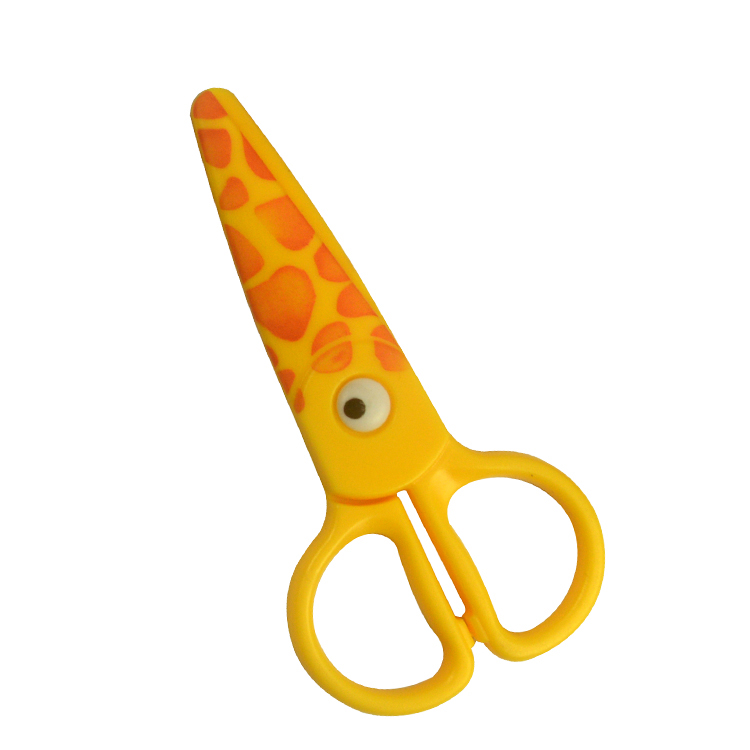
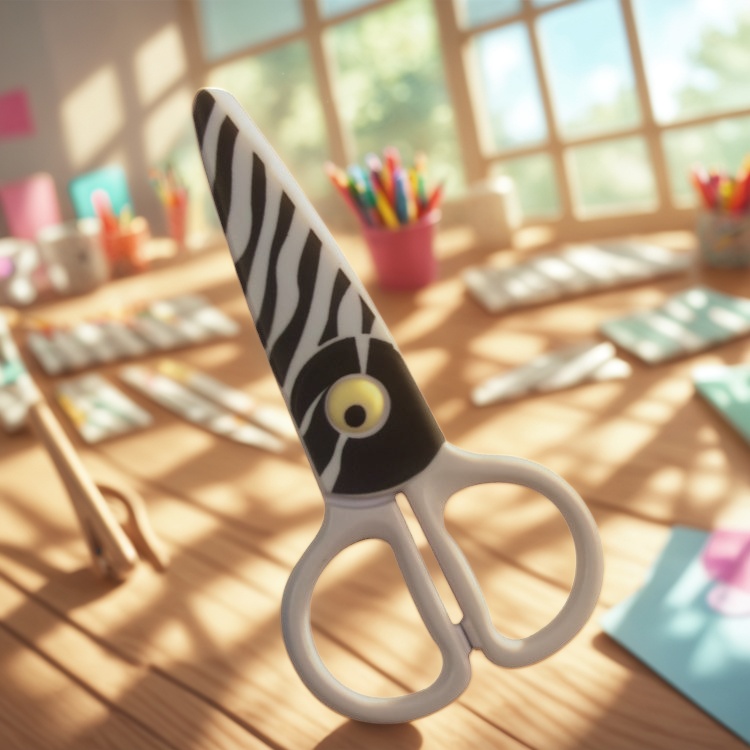
Plastic kid scissors are commonly selected for paper crafts, preschool projects, classroom activities, and basic DIY tasks. Unlike general household scissors, these products are designed around young users who are still developing fine motor control. The source article mentions lightweight plastic construction, rounded tips, blunt edges, comfortable molded handles, and colorful patterns such as zebra prints. These details are useful because they show how the product is positioned: a creative tool that supports safer cutting practice rather than heavy-duty cutting.
For wholesale buyers, this positioning matters. A children’s stationery line, school supply program, or craft-kit brand needs scissors that match the user’s ability level. A product that is too sharp may raise safety concerns, while a product that cannot cut paper properly may frustrate children and teachers. The goal is controlled performance for simple paper-based tasks.
Safety Features Buyers Should Confirm
The phrase “safe children’s scissors” should not be treated as a complete specification. It is a starting point for supplier questions. Buyers should ask what the rounded tip design looks like, how the cutting edge is formed, and what age range the supplier recommends. If the scissors are intended for very young children, packaging warnings and adult supervision guidance may be required depending on the destination market.
Important safety-related questions include:
- Are the tips rounded, and can the supplier provide close-up sample photos?
- Are the edges blunt, plastic, or otherwise designed to reduce injury risk?
- What materials are used for the handles and cutting parts?
- Has the product been tested for the buyer’s target market requirements?
- What warning labels, age grading, and packaging statements are recommended?
These questions help buyers move from general claims to verifiable product information. If certifications or test reports are required, request current documents and confirm that they apply to the exact model, material, and packaging being ordered.
Ergonomics and Usability for Small Hands
Children need scissors that are easy to hold and control. The original article notes molded handles and a comfortable grip, which are important details for reducing slips and helping children cut with better confidence. For sourcing teams, handle shape should be reviewed during sample testing, not just from catalog photos.
Check whether the finger holes are comfortable for the intended age group, whether the scissors open and close smoothly, and whether left-handed users need a separate option. Lightweight plastic construction can reduce hand fatigue, especially in classroom activities where children repeat the same motion many times. However, lightweight should not mean flimsy. Ask the supplier how the hinge or pivot area is designed and whether samples remain stable after repeated opening and closing.
Design, Colors, and Classroom Appeal
Children’s scissors often use bright colors, playful patterns, or animal-inspired designs to make craft time more inviting. The source mentions vibrant colors and zebra prints, which can work well for retail display or themed craft kits. Still, buyers should balance visual appeal with practical requirements.
For OEM projects, confirm which design elements can be customized. Possible discussion points include handle color, printed pattern, logo placement, blister card design, barcode area, and multilingual instructions. Do not assume customization is available for every order size. Ask the factory what artwork files are needed, whether color matching is possible, and whether a pre-production sample will be provided before bulk manufacturing.
Comparison Checklist for Supplier Evaluation
| Evaluation Area | What to Check | Questions to Ask the Supplier |
|---|---|---|
| Safety Design | Rounded tips, blunt edges, controlled cutting ability | Can you provide samples and close-up photos of the tip and blade area? |
| Materials | Plastic construction and any separate cutting components | What materials are used, and can they be documented? |
| Ergonomics | Grip size, handle comfort, opening and closing action | Which age range is this model intended for? |
| OEM Options | Colors, patterns, logo, packaging, instruction text | What customization is available, and what artwork format is required? |
| Quality Control | Sample consistency, hinge durability, packaging condition | What inspections are performed before shipment? |
| Compliance | Market-specific testing, labeling, age grading | Which test reports or certificates can you provide for this exact product? |
Packaging and Wholesale Planning
Packaging is especially important for children’s craft products because it communicates age suitability, intended use, warnings, and brand identity. A retail buyer may need hanging cards or blister packs, while a school-supply distributor may prefer bulk inner packaging. E-commerce sellers should also consider whether the packaging protects the scissors during parcel shipping.
Before confirming an OEM plastic kid scissors order, ask for dielines, packaging samples, carton details, and labeling options. If the product will be sold in multiple countries, confirm language requirements early. Buyers should also ask how the supplier handles mixed colors or assorted patterns, since assortment errors can create inventory and listing problems.
Quality Control Before Mass Production
Sample review is the most practical step in sourcing safe children’s scissors. Test whether the scissors cut ordinary paper cleanly, whether the handle feels stable, and whether the product has sharp plastic burrs or rough edges. If the scissors are part of a craft kit, test them with the paper or materials included in that kit rather than assuming performance from a standalone sample.
For larger wholesale programs, buyers may want to define an inspection checklist before production starts. This can include appearance, color consistency, opening and closing function, packaging accuracy, barcode scanning, carton marking, and quantity checks. Commercial details such as MOQ, lead time, pricing, and payment terms should be confirmed directly with the supplier rather than inferred from general product descriptions.
FAQ
Are plastic kid scissors completely risk-free?
No children’s cutting tool should be treated as risk-free. Rounded tips and blunt edges can reduce certain hazards, but buyers should still confirm age grading, warnings, and supervision guidance for the target market.
Can OEM plastic kid scissors be customized?
Many OEM projects discuss color, pattern, logo, and packaging customization, but availability depends on the supplier’s process and order requirements. Ask for artwork guidelines and a pre-production sample.
What should buyers test in samples?
Check paper-cutting performance, grip comfort, opening and closing action, tip shape, edge finish, packaging quality, and whether the product matches the intended age group.
What compliance documents should a supplier provide?
This depends on the selling market and product classification. Buyers should ask for current test reports or certificates that apply to the exact model, materials, and packaging being purchased.
Are these scissors suitable for all craft materials?
Not necessarily. Plastic kid scissors are usually intended for simple paper crafts. If they need to cut card, foam, fabric, or other materials, test samples with those materials before ordering.
