




OEM Poultry Scissors: Sourcing and Selection Guide
OEM poultry scissors are designed for one of the most demanding cutting jobs in a kitchen: preparing chicken, turkey, duck, and other poultry. For retailers, distributors, private-label brands, and hospitality buyers, the right product is not only about sharpness. It is also about consistency, safe handling, clean cutting performance, packaging options, and dependable communication with the supplier.
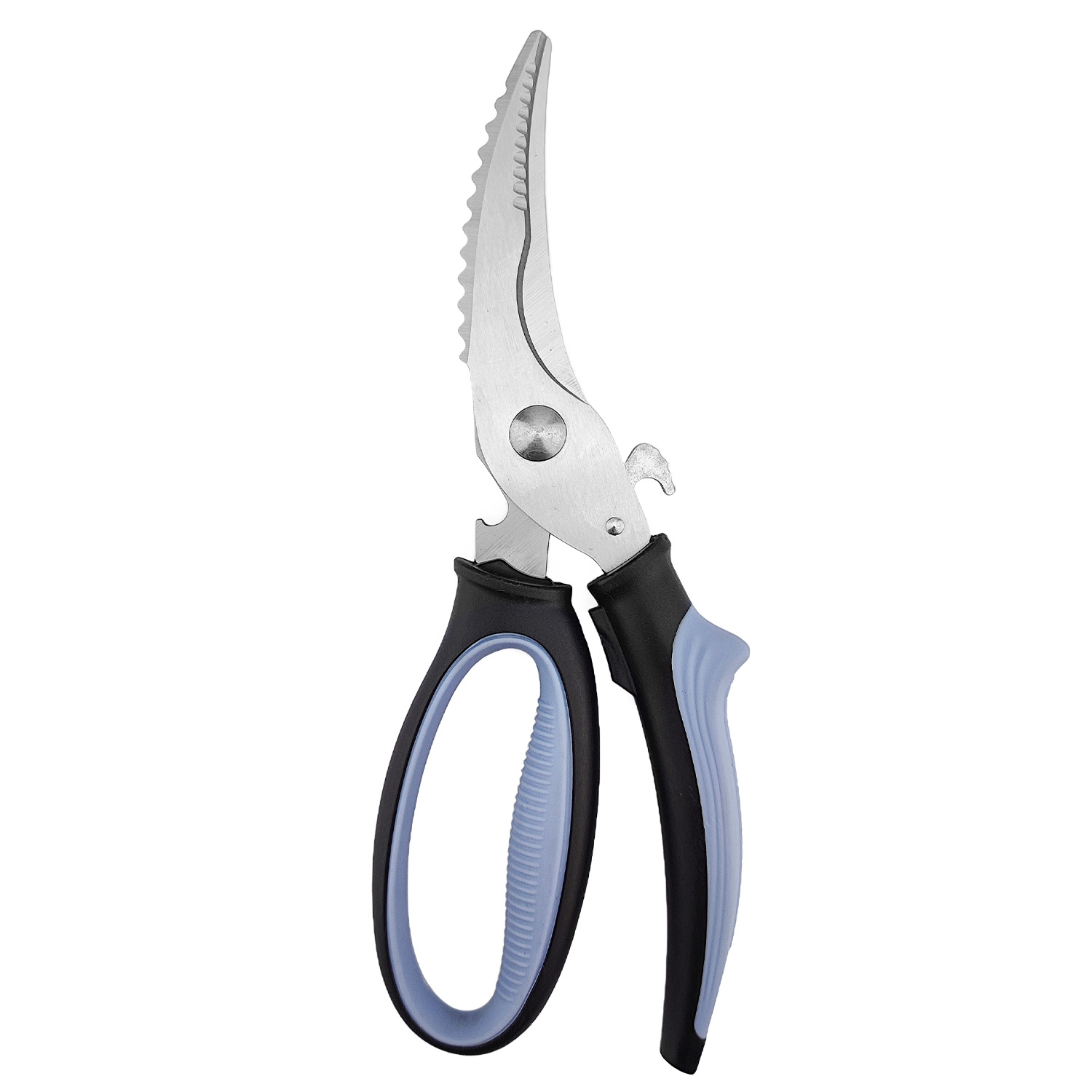
The original product article describes a pair of multi-purpose poultry shears with stainless steel blades, a curved and serrated cutting edge, an ergonomic soft-touch black and lavender grip, and added utility functions including a bottle opener and nutcracker. Those are useful starting points, but B2B buyers should still verify details directly with the manufacturer before placing an OEM or wholesale order.

Key Takeaways
- Choose poultry scissors based on blade geometry, handle comfort, cleaning requirements, and intended cutting tasks.
- For OEM sourcing, confirm materials, packaging, branding options, inspection standards, lead time, and order terms with the supplier.
- Do not rely on appearance alone; request samples and test them on realistic poultry preparation tasks.
- Added features such as a nutcracker or bottle opener can be useful, but they should not compromise cutting control or durability.
What Makes Poultry Scissors Different?
Unlike ordinary household scissors, poultry scissors are built to create leverage. They are used to cut through skin, joints, cartilage, and small bones. A curved blade can help guide the cut around bones and along the contour of poultry. A serrated edge can grip slippery skin better than a smooth edge, reducing the chance of the blade sliding during use.
The product described in the source uses stainless steel blades and is positioned as kitchen bone scissors for poultry preparation. Stainless steel is commonly chosen for kitchen cutting tools because it is suitable for wet food-preparation environments, but buyers should still ask what specific steel type is used, how the blades are finished, and what maintenance is recommended.
Design Features Buyers Should Evaluate
When selecting OEM poultry scissors, assess the entire tool rather than focusing only on blade sharpness. A sharp blade is important, but the joint, handle, balance, and cleaning design also affect long-term performance.
- Blade shape: Curved blades may improve access around joints and uneven cuts.
- Serration: A serrated section helps hold poultry skin and cartilage in place while cutting.
- Handle grip: The source product includes a soft-touch black and lavender grip, which may improve comfort and control.
- Pivot strength: Ask how the pivot is constructed and whether it can withstand repeated cutting pressure.
- Extra functions: Built-in bottle opener and nutcracker features can add versatility, but they should be tested for practical usability.
Comparison Checklist for OEM Evaluation
| Evaluation Point | Why It Matters | Questions to Ask the Supplier |
|---|---|---|
| Blade material | Affects sharpness, corrosion resistance, and service life. | What stainless steel is used? Is the grade documented? |
| Cutting edge | Determines grip on poultry skin and control around joints. | Is the blade curved, serrated, or both? Can samples be tested? |
| Handle design | Influences comfort, slip resistance, and user fatigue. | What material is used for the grip? Are color options available? |
| Cleaning method | Food tools must be easy to clean after contact with raw poultry. | Can the shears be separated for cleaning? What care instructions are provided? |
| OEM packaging | Important for retail presentation and brand consistency. | What packaging formats, artwork requirements, and labeling options are available? |
| Quality inspection | Reduces the risk of inconsistent batches. | What inspections are performed before shipment? Can an AQL standard be agreed? |
How to Test Samples Before a Wholesale Order
Before confirming an OEM poultry scissors order, request production-representative samples, not only showroom samples. Test them in conditions that match real use. A simple office inspection will not show how the tool performs on slippery poultry skin, cartilage, or joints.
- Check blade alignment when the scissors are fully closed.
- Cut through poultry skin to see whether the serrated edge grips securely.
- Cut along joints and small bones to evaluate leverage and hand strain.
- Wash and dry the scissors several times, then inspect the pivot and handle areas.
- Test the added nutcracker and bottle opener functions if they will be promoted on packaging.
- Review packaging samples for barcode space, safety warnings, cleaning instructions, and brand presentation.
Sourcing Questions for a Poultry Scissors Manufacturer
A reliable poultry scissors manufacturer should be able to answer practical questions clearly. Avoid assuming specifications that have not been confirmed in writing. For example, if you need a certain steel grade, color match, logo process, retail card, or carton marking, ask for documented confirmation before production.
Useful sourcing questions include: What customization options are available for handle color and logo placement? What is the sample process? What is the production lead time after artwork approval? What order quantity applies to custom packaging? What inspection method is used for blade sharpness, assembly, appearance, and packaging? What documents can be supplied for your target market? These questions help buyers compare suppliers on more than unit price.
Use and Care Guidance for End Users
Because poultry scissors touch raw poultry, hygiene instructions are important for consumer satisfaction and food safety habits. End users should wash the shears promptly after use with warm water and dish soap, paying attention to the pivot area and serrations. They should dry the tool before storage to help maintain the blades and joint. If the supplier provides specific care instructions, those instructions should be printed clearly on packaging or included in an insert.
Users should also avoid using poultry shears for inappropriate tasks such as cutting hard frozen food, thick bones beyond the intended use, wire, or packaging materials that may dull the edge. For best performance, the tool should be reserved for kitchen cutting tasks that match its design.
Practical FAQ
Are OEM poultry scissors the same as regular kitchen scissors?
No. Poultry scissors are typically designed for stronger leverage and better control when cutting poultry skin, joints, cartilage, and small bones. Regular scissors may lack the blade shape, grip, or pivot strength needed for these tasks.
What features should a private-label buyer prioritize?
Prioritize cutting performance, blade alignment, handle comfort, easy cleaning, packaging clarity, and batch consistency. Extra features are helpful only if the core cutting function performs well.
Can the handle color or packaging be customized?
That depends on the supplier’s OEM options. Buyers should ask about color matching, logo methods, artwork requirements, sample approval, minimum order terms, and any cost differences before confirming an order.
How should buyers verify quality before shipment?
Agree on inspection criteria in advance. Common checks include appearance, blade alignment, cutting performance, handle finish, packaging accuracy, carton marks, and quantity. If needed, buyers can arrange third-party inspection.
Final Selection Advice
OEM poultry scissors can be a strong product for kitchenware assortments when the design is practical and the sourcing process is controlled. The described model includes stainless steel blades, a curved serrated edge, a soft-touch grip, and additional bottle opener and nutcracker functions. For B2B purchasing, treat those features as a checklist to verify through samples, written specifications, and inspection agreements. A careful evaluation process helps ensure the final product is suitable for retail, wholesale, or private-label kitchenware programs.
