





OEM Poultry Scissors: Practical Sourcing Guide for Kitchen Shears
OEM poultry scissors sit in a useful category between everyday kitchen scissors and heavier kitchen bone scissors. For retailers, importers, cookware brands, and hospitality buyers, the key question is not simply whether a pair of shears looks strong. The better question is whether the product, supplier process, packaging plan, and after-sales support fit the way your market will actually use and evaluate the item.
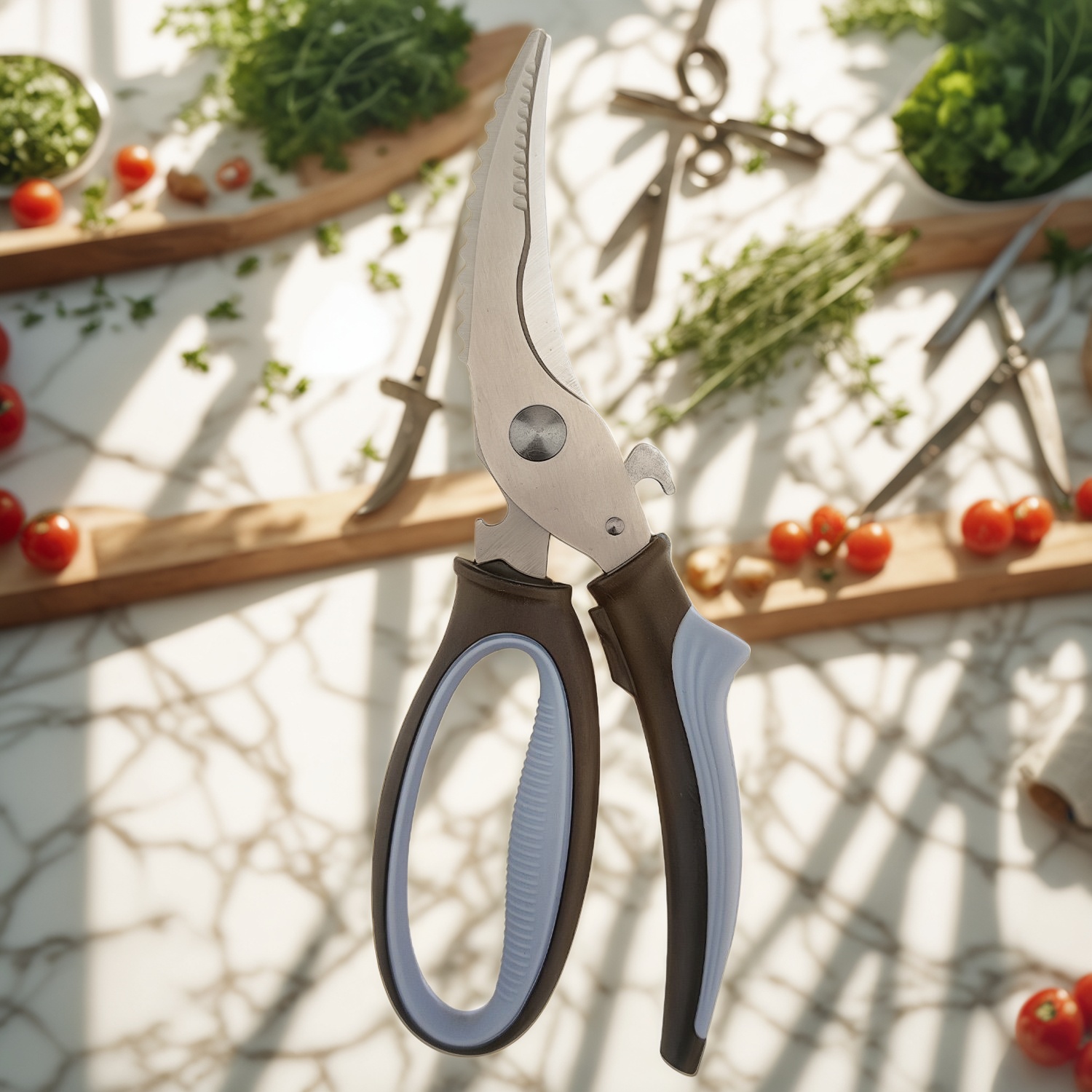
The original product shown for this topic presents a multipurpose poultry shear design with stainless steel blades, a serrated blade edge, ergonomic black and blue rubber handles, and added handle functions such as a bottle opener and nut-cracking area. Those are useful features, but B2B buyers should still verify materials, production controls, packaging options, and compliance requirements directly with the supplier before placing an OEM or wholesale order.
Key Takeaways
- OEM poultry scissors should be evaluated for cutting performance, handle comfort, safety, cleaning, and packaging readiness.
- Do not rely only on product photos; request samples and test them on realistic poultry preparation tasks.
- Ask the supplier to confirm blade material, surface treatment, handle material, packaging, labeling, and quality inspection steps.
- Multifunction details such as a serrated edge, bottle opener, and nut-cracking area can add value when they are durable and clearly explained.
- For private label programs, confirm artwork requirements, carton details, lead time, and any market-specific documentation before ordering.
What Buyers Should Look For in OEM Poultry Scissors
A good sourcing process starts with intended use. Some customers want shears for trimming skin, cutting herbs, and opening food packaging. Others expect the scissors to help break down chicken or cut through joints. If your market describes the product as kitchen bone scissors, the sample should be tested for tougher tasks rather than judged only on appearance.
Blade design is especially important. The source article notes stainless steel construction, sharp blades, rust resistance, and one serrated edge. A serrated edge can help grip slippery food surfaces, which is useful when cutting poultry skin or small bones. However, buyers should ask the poultry scissors manufacturer to specify the stainless steel type, blade hardness target if available, edge grinding process, and recommended cleaning method. If those details are not yet provided, treat them as supplier questions rather than assumptions.
Feature Checklist for Wholesale Evaluation
The following table can help a purchasing team compare samples from a bone scissors supplier or OEM kitchenware partner. It is not a substitute for lab testing or market compliance review, but it gives a practical framework for first-round screening.
| Evaluation Area | What to Check | Questions to Ask the Supplier |
|---|---|---|
| Blade performance | Sharpness, alignment, serrated grip, cutting control | What blade material and edge process are used? |
| Handle comfort | Grip shape, rubber feel, control for repeated cuts | What handle material is used, and can colors be customized? |
| Safety | Stable pivot, secure handle, no sharp burrs outside the cutting edge | What in-process and final inspections are performed? |
| Cleaning | Food residue traps, ease of washing, drying access | What care instructions should appear on packaging? |
| Packaging | Retail card, box, barcode, instructions, private label space | What artwork files and packing details are required? |
| Commercial fit | Target price range, order plan, shipping carton strength | What are the MOQ, lead time, sample cost, and payment terms? |
Design Details That Affect Real Kitchen Use
The product described in the original article includes matte black and blue rubber handles with an ergonomic shape. For end users, this matters because poultry preparation often requires force, repeated cuts, and grip stability. A handle that feels comfortable for a quick demonstration may still cause fatigue during longer preparation work, so buyers should test the scissors with different hand sizes and both right- and left-handed users when possible.
The original article also mentions an ambidextrous handle shape. If that feature is important for your product listing, confirm it during sample testing. Ask several users to cut the same items and record whether the grip feels balanced. In retail, comfort claims can influence returns and reviews, so they should be based on real handling rather than catalog language.
Multifunction Features: Useful or Distracting?
Built-in extras such as a bottle opener and nut-cracking area can be useful, especially for compact kitchens or giftable kitchen tool sets. They can also create problems if they make the handle bulky or if the added function is weak. For OEM poultry scissors, multifunction design should support the main purpose, not distract from cutting performance.
During sample review, test each added function separately. Check whether the bottle opener is positioned naturally, whether the nut-cracking area grips securely, and whether these features create hard-to-clean corners. If your target customer is a professional kitchen or food-service buyer, simple durability may be more important than extra functions. If your target channel is household retail, multifunction benefits may help the product stand out when they are clearly explained on packaging.
OEM and Private Label Sourcing Questions
Before selecting a poultry scissors manufacturer, prepare a clear request for quotation. Include the intended sales channel, expected packaging type, target order quantity, branding needs, and any market documentation your company requires. Avoid vague requests such as “best quality” because they make it difficult to compare suppliers fairly.
- Ask whether logo placement is available on the handle, blade, packaging, or instruction insert.
- Request sample options before confirming any large wholesale or OEM order.
- Confirm the exact product materials and finishes in writing.
- Ask for packaging dimensions, carton quantity, carton weight, and barcode support if needed.
- Clarify inspection procedures, defect handling, spare packaging policy, and shipment terms.
- Check whether your destination market requires any specific food-contact, labeling, or safety documentation.
Commercial details such as MOQ, lead time, price tiers, and customization costs should be confirmed directly with the supplier. They can vary by design, packaging, order volume, material cost, and seasonal production schedule.
Use and Care Guidance for End Customers
Even a well-made pair of kitchen shears can disappoint users if care instructions are unclear. For consumer-facing packaging, include simple guidance: wash before first use, clean promptly after cutting poultry, dry thoroughly before storage, and keep the blade edge away from children. If the supplier recommends hand washing or has specific dishwasher guidance, state it accurately on the packaging and product page.
End users should avoid twisting the scissors sideways through hard material because that can stress the pivot and blade alignment. For better control, cut near the inner section of the blades when more force is needed, and use the serrated edge to grip slippery surfaces. If the shears become loose, damaged, or difficult to clean around the pivot, they should be inspected before further food preparation use.
How to Judge Supplier Communication
A reliable bone scissors supplier should answer technical and commercial questions clearly. Fast replies are helpful, but complete replies are more important. Look for consistency between quotation sheets, sample labels, packaging drafts, and invoice descriptions. If a supplier cannot confirm basic details such as material, packaging, or customization method, pause the order until the information is complete.
For long-term OEM programs, keep an approved sample, signed specification sheet, packaging proof, and inspection checklist. These documents help reduce misunderstandings when reordering or changing packaging. They also give your team a reference point if customer feedback suggests a future improvement.
FAQ
Are OEM poultry scissors the same as regular kitchen scissors?
Not always. Poultry scissors are usually selected for stronger cutting tasks such as trimming poultry, cutting skin, and working around joints. Regular kitchen scissors may be better suited to lighter tasks.
What should I ask a poultry scissors manufacturer before ordering?
Ask about blade material, handle material, edge design, packaging options, logo customization, sample availability, inspection process, MOQ, lead time, and any documents required for your target market.
Is a serrated blade useful on kitchen bone scissors?
Yes, a serrated blade can help grip slippery food surfaces and improve control. Buyers should still test sample performance on realistic cutting tasks before approving an order.
Can the handle color or branding be customized?
That depends on the supplier and order plan. For OEM projects, ask what parts can be customized, what files are needed, whether sample confirmation is available, and what minimum order quantity applies.
How should poultry scissors be cleaned?
Clean them promptly after contact with raw poultry, remove food residue around the blades and pivot, and dry them thoroughly before storage. Follow the supplier’s specific care instructions for the final product.
