




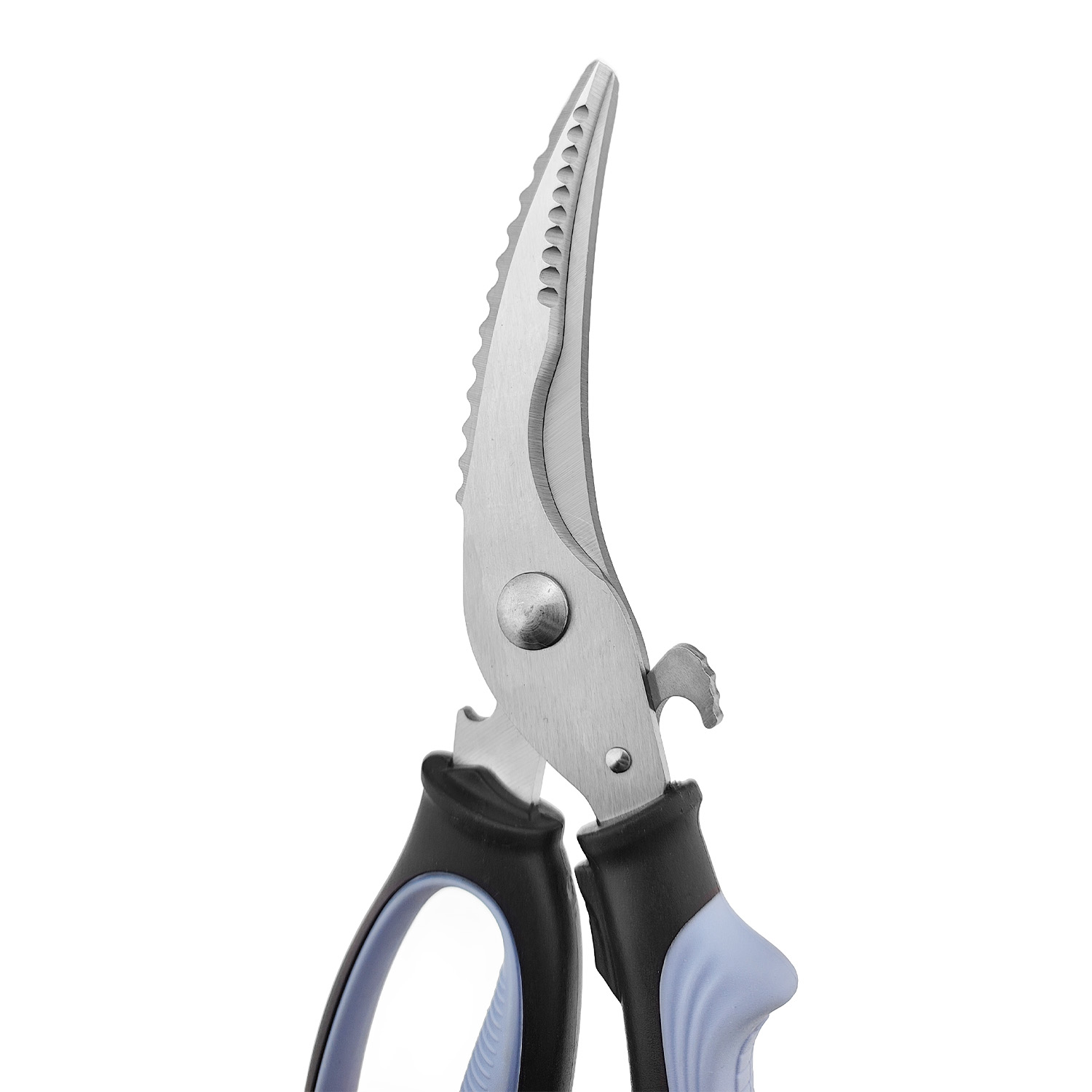
OEM Poultry Scissors: Versatile Kitchen Necessity
OEM poultry scissors are practical kitchen tools for cutting chicken, turkey, and other poultry more safely and efficiently than using a general-purpose pair of household scissors. For distributors, retailers, and private-label buyers, the main question is not simply whether poultry shears can cut well. The better question is whether a supplier can deliver a consistent product that matches your market, packaging needs, quality expectations, and after-sales requirements.
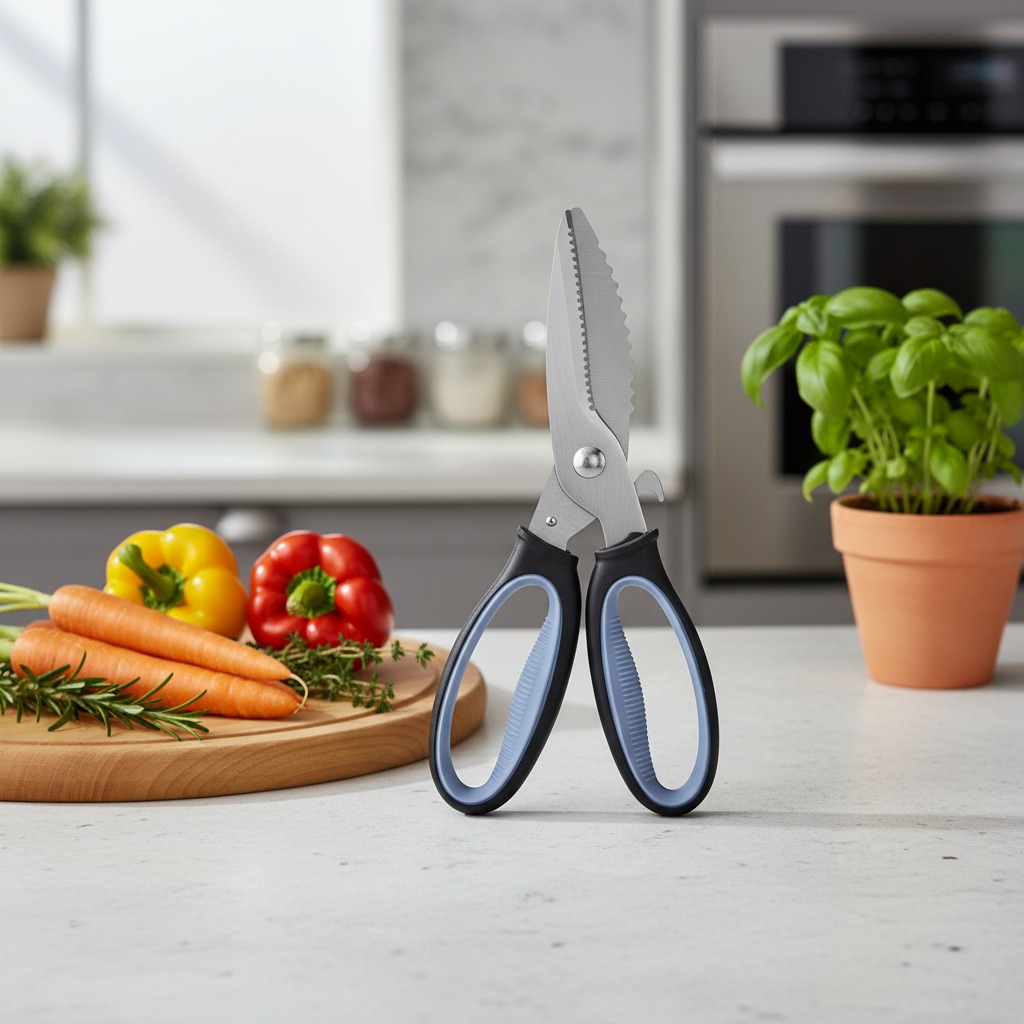
The original product description highlights several useful details: a multi-functional kitchen shears format, straight and serrated cutting edges, a built-in nutcracker on many models, and black and blue ergonomic handles intended to support a non-slip grip. Those features make this type of product relevant for both consumer kitchen use and B2B sourcing programs. However, buyers should still verify materials, dimensions, packaging, compliance requirements, and durability expectations directly with the supplier before placing an OEM or wholesale order.
Key Takeaways
- OEM poultry scissors are designed for tougher food-preparation tasks such as cutting poultry skin, cartilage, and small bones.
- Useful designs often combine straight and serrated blade areas for control across different cutting jobs.
- Multi-functional versions may include added features such as a nutcracker, but buyers should confirm the exact model configuration.
- B2B buyers should request clear answers on materials, finish, packaging, logo options, samples, lead time, and quality inspection standards.
- For private-label programs, consistency across repeat orders is as important as the first sample quality.
What OEM Poultry Scissors Are Used For
Poultry scissors, also called poultry shears or kitchen shears, are made for cutting tasks that are awkward or unsafe with a knife. In home kitchens, they are commonly used to trim chicken skin, separate wings, cut through small bones, portion cooked poultry, or open food packaging. In professional kitchens, they can speed up repetitive prep work when the tool is comfortable, sharp, and easy to clean.
The OEM angle matters because buyers may want a tool that fits a specific retail position. Some markets prefer a compact household design, while others expect a heavier-duty feel for restaurant supply or specialty cooking stores. The right product brief should define the intended user first: home cook, butcher counter, catering kitchen, food-service distributor, or promotional kitchenware line.
Blade Design and Cutting Performance
The source article describes blades with a combination of straight and serrated edges. This is a useful design because each edge serves a different role. A straight edge supports clean slicing, while a serrated edge can help grip slippery poultry skin or food surfaces. This does not automatically prove long-term sharpness or cutting strength, so buyers should ask how the supplier evaluates blade performance during production.
Important questions include: What material is used for the blades? What hardness range is targeted? Are the blades detachable for cleaning, or fixed? How is edge sharpness checked before shipment? Can the supplier provide samples from mass production, not only from a showroom batch? These questions help separate a general kitchen scissors supplier from a partner suitable for repeat OEM sourcing.
Handle Comfort and Safety Considerations
The original article mentions black and blue ergonomic handles with a non-slip grip. Handle design should not be treated as a decorative detail. Poultry cutting can require pressure, and poor handle geometry may cause hand fatigue or unstable cutting. A buyer should check whether the handle fits the dominant hand size in the target market and whether the grip feels secure when hands are damp.
Safety also depends on balance, pivot tightness, and blade alignment. If the scissors twist during cutting, the user may apply extra force and lose control. For B2B buyers, it is worth testing several samples with real poultry-preparation tasks rather than judging only by appearance. If the product will be sold to consumers, packaging or instructions should explain safe cleaning, storage, and intended use without making unsupported performance claims.
Comparison Checklist for B2B Buyers
| Evaluation Area | What to Check | Questions to Ask a Supplier |
|---|---|---|
| Blade configuration | Straight edge, serrated edge, cutting alignment | Is this the standard design or can it be customized? |
| Material details | Blade material, handle material, finish | Can you provide the exact material specification for approval? |
| Multi-function features | Nutcracker or other added functions | Which features are included in the quoted model? |
| Comfort and grip | Handle shape, grip texture, hand fatigue | Can samples be tested before confirming the order? |
| OEM packaging | Logo, color box, blister card, instruction sheet | What artwork files and approvals are required? |
| Quality control | Sharpness, pivot strength, visual defects | What inspection criteria are used before shipment? |
OEM and Wholesale Sourcing Guidance
When sourcing OEM poultry scissors, start with a written specification rather than a vague product photo. Include the target retail channel, desired blade and handle materials, color preference, packaging format, barcode or labeling needs, and any market-specific documentation your business requires. If you do not know the exact specification yet, ask the supplier which existing models are available and what parts can be customized.
Do not assume that every supplier can support the same level of OEM service. Some may mainly provide ready-made wholesale items with limited branding. Others may support color changes, logo printing, packaging design, or tooling adjustments. Before comparing prices, confirm whether each quotation refers to the same product structure, packaging, inspection level, and shipment terms.
Useful sourcing questions include:
- What is the exact blade and handle material for this poultry scissors model?
- Can the supplier provide pre-production samples for approval?
- Which parts of the product can be customized for OEM branding?
- What packaging formats are available for retail or wholesale channels?
- How are sharpness, pivot stability, appearance, and packing quality inspected?
- What are the lead time, order process, and payment terms for repeat orders?
How to Judge Sample Quality
A sample should be tested as a working kitchen tool, not only photographed for a catalog. Open and close the scissors repeatedly to feel the pivot. Check whether the blades meet cleanly from base to tip. Test the grip with dry and slightly damp hands. Cut poultry skin, herbs, food packaging, and other realistic materials if those uses match the product positioning.
Also inspect cleaning convenience. Food can collect near the pivot or textured areas, so buyers should consider how the end user will wash and dry the tool. If detachable blades or dishwasher suitability are important to your market, confirm those details in writing instead of assuming them. Claims about food contact, testing, or compliance should be supported by supplier documentation relevant to the destination market.
Common Buying Mistakes to Avoid
One common mistake is choosing the cheapest quotation without matching specifications. A lower price may reflect a different blade thickness, handle material, packaging type, or inspection level. Another mistake is approving a polished sample and then receiving mass production that feels different. To reduce this risk, define an approved sample, inspection standard, and defect tolerance before production begins.
Buyers should also avoid overloading the product page with unsupported claims. If a feature is not verified, phrase it carefully. For example, say that a model is intended for poultry preparation rather than claiming it cuts every bone type. Clear, accurate product descriptions protect customer trust and reduce return disputes.
Practical FAQ
Are OEM poultry scissors only for chicken?
Not necessarily. They are commonly used for chicken, turkey, and similar poultry-preparation tasks, but the suitable use depends on the blade design and supplier specification.
Can the handles be customized?
Many OEM programs may offer handle color or branding options, but buyers should confirm what is available for the exact model and order type.
Should buyers ask for stainless steel confirmation?
Yes. The original description refers to stainless steel blades, but buyers should still request the exact material specification before ordering.
Is a built-in nutcracker always included?
No. The source notes that many models include a nutcracker, so confirm whether the quoted version includes this feature.
What is the best way to compare kitchen scissors suppliers?
Compare the same specification, sample quality, packaging scope, inspection process, lead time, and communication reliability rather than price alone.
Final Selection Advice
OEM poultry scissors can be a strong item for kitchenware assortments because they solve a real preparation problem and can serve multiple tasks. For buyers, the best results come from careful specification control, realistic sample testing, and clear supplier communication. Focus on blade alignment, grip comfort, cleanability, packaging accuracy, and repeat-order consistency. Those details will matter more to customers than broad marketing language.
