




OEM Poultry Scissors: Sourcing a Multi-Function Kitchen Tool
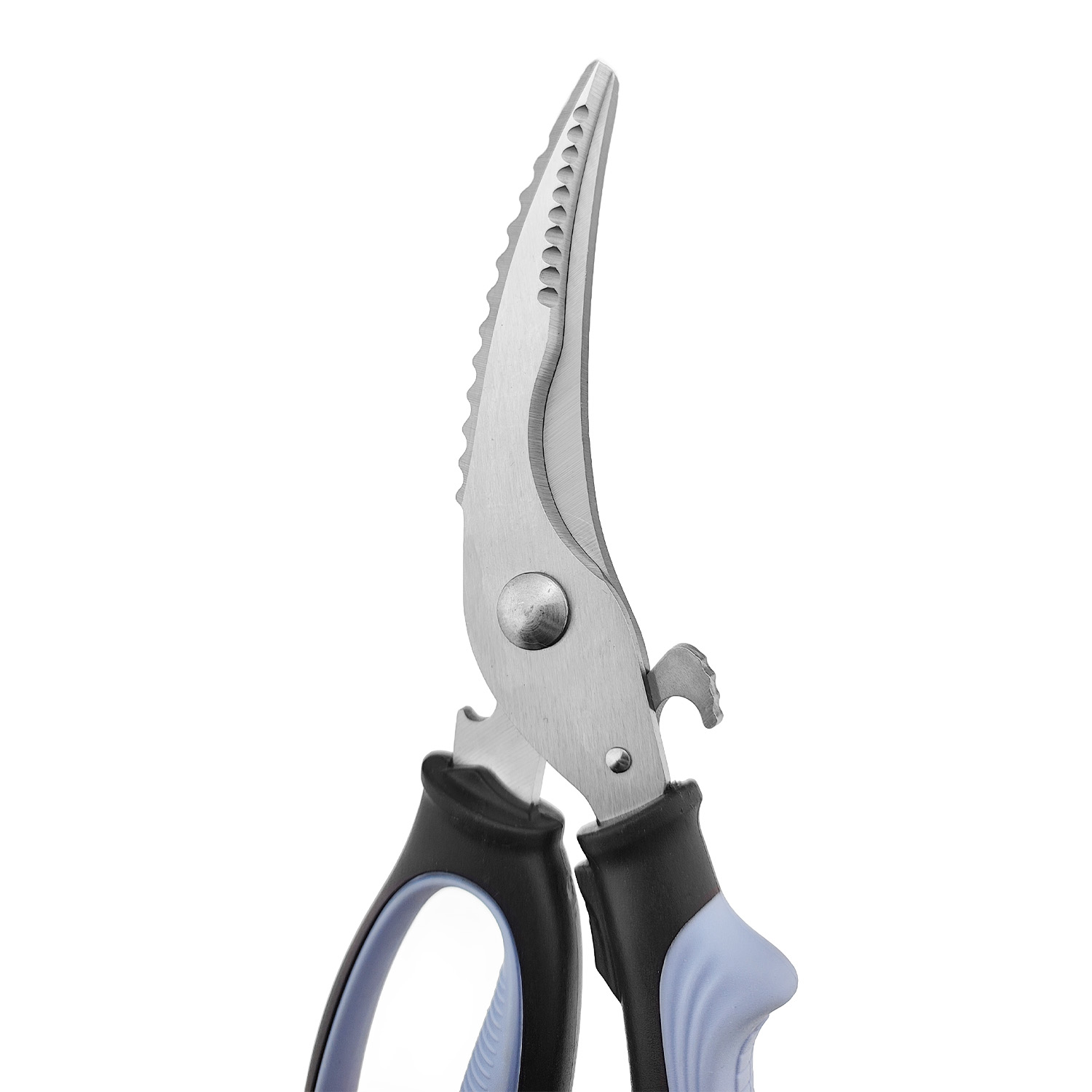
OEM poultry scissors are a practical category for kitchenware importers, distributors, promotional product buyers, and private-label brands. Unlike ordinary household scissors, poultry shears are expected to cut through skin, cartilage, small bones, herbs, packaging, and other common kitchen materials. The original product described a multi-function pair of kitchen shears with stainless steel blades, a black and light blue soft-grip handle, a serrated cutting edge, an integrated nutcracker, bottle opener, and fish scaler. Those are useful features, but buyers should still evaluate them carefully before placing an OEM or wholesale order.

Key Takeaways
- OEM poultry scissors should be assessed for cutting performance, handle comfort, safety, cleaning convenience, and packaging options.
- Multi-function features can add value, but only if they are durable, easy to understand, and relevant to the target market.
- Ask the supplier to confirm material details, customization scope, inspection process, MOQ, lead time, and packaging specifications.
- For private-label projects, request pre-production samples and test them with realistic kitchen tasks before confirming mass production.
What Buyers Should Look For in OEM Poultry Scissors
The first sourcing question is not simply whether the scissors look strong. Buyers need to understand how the tool will be used by the end customer. A home cook may want a compact pair of shears for occasional chicken preparation, herb cutting, and food packaging. A foodservice customer may prioritize grip security, cleaning speed, and repeat cutting comfort. A retail brand may care most about shelf presentation, perceived value, and clear product instructions.
Start with the blade design. The source article states that the product uses stainless steel blades and includes a serrated edge on one blade. That combination can be useful for gripping slippery poultry skin or cutting tougher materials. However, the exact stainless steel grade, hardness, blade thickness, and surface treatment are not stated. These are not details to assume. Ask the supplier for the confirmed material specification and whether it can be documented on the quotation, sample label, or product specification sheet.
Blade, Handle, and Safety Considerations
Poultry scissors need enough cutting leverage to handle common kitchen tasks without forcing the user into an unsafe hand position. Blade sharpness matters, but alignment and pivot stability are equally important. A sharp blade with poor alignment can twist, pinch, or cut unevenly. For OEM sourcing, buyers should check whether the pivot remains stable after repeated opening and closing.
The original article notes an ergonomic soft-grip handle in black and light blue, designed for comfort and control. That is a relevant feature for retail positioning, especially if the handle feels secure when hands are wet. During sample review, test the grip with both dry and slightly damp hands. Also check whether the handle opening fits a range of hand sizes and whether the inner edges create pressure points during heavier cuts.
Safety should also be part of the purchase specification. Ask whether the supplier can provide a blade guard, retail-safe packaging, user instructions, or care warnings. Do not assume these items are included unless they appear in the quotation or confirmed sample package.
Multi-Function Features: Useful or Unnecessary?
Multi-function kitchen shears can be attractive because they reduce the need for separate tools. The source article explicitly mentions a nutcracker, bottle opener, and fish scaler in addition to the main cutting function. These functions may appeal to consumers who want one compact kitchen tool, but they can also create quality risks if poorly designed.
For example, a nutcracker area must withstand pressure without damaging the handle or loosening the pivot. A bottle opener should be positioned so it does not interfere with normal cutting. A fish scaler needs edges that work effectively but are not uncomfortable during handling. Buyers should test each function separately instead of treating them as marketing extras.
Comparison Checklist for Sample Evaluation
| Evaluation Area | What to Check | Questions to Ask the Supplier |
|---|---|---|
| Blade performance | Cuts poultry skin, herbs, packaging, and small joints cleanly | What stainless steel specification is used, and can it be confirmed in writing? |
| Serrated edge | Grips slippery or tough materials without tearing excessively | Is the serration pattern fixed or customizable for OEM orders? |
| Handle comfort | Soft grip feels secure and does not create pressure points | Can handle color, logo placement, or material finish be customized? |
| Multi-function tools | Nutcracker, bottle opener, and fish scaler work without affecting cutting | Are these features standard, optional, or adjustable by design? |
| Cleaning and care | Food residue is easy to remove around the pivot and handle | Are cleaning instructions, warnings, or care labels available? |
| Packaging | Protects sharp blades and explains functions clearly | What retail, bulk, or private-label packaging options are offered? |
OEM and Wholesale Sourcing Questions
When a listing uses terms such as OEM poultry scissors, poultry scissors manufacturer, or bone scissors supplier, buyers should move beyond general product descriptions and request practical production details. Important questions include:
- What customization is available for logo, handle color, packaging, instruction sheet, and barcode label?
- What is the minimum order quantity for standard stock, customized color, and fully private-label packaging?
- What sample options are available before bulk production, and how long does sample preparation usually take?
- What in-process and final inspection steps are used for blade sharpness, alignment, handle finish, and packaging?
- Can the supplier provide product photos, dimensions, weight, carton details, and care instructions for buyer approval?
- Which compliance documents, if any, are available for the target market, and are they current for this exact product?
These questions help buyers avoid assumptions. If the supplier cannot confirm a detail, treat it as unresolved rather than adding it to marketing copy or retail packaging.
How to Test Samples Before Ordering
A small sample test can reveal problems that product photos cannot show. Use the scissors on common kitchen materials that match your target customer: poultry skin, herbs, cardboard food packaging, thin plastic packaging, and small kitchen tasks where the non-cutting tools are relevant. Do not test only once. Open and close the scissors repeatedly, rinse them, dry them, and check whether the handle remains comfortable and the pivot stays smooth.
For retail buyers, also evaluate the product from the shopper’s point of view. Is the purpose clear at a glance? Are the multi-function features explained? Is the sharp blade protected? Does the packaging communicate safe use and care? A strong product can still underperform if the presentation is confusing or if customers do not understand the added functions.
Practical Use and Care Guidance for End Customers
For consumer-facing instructions, keep the guidance simple. Poultry scissors should be washed after contact with raw meat, dried promptly, and stored safely away from children. Users should avoid twisting the blades through hard bones beyond the tool’s intended use. If the product includes a fish scaler, nutcracker, and bottle opener, instructions should show where those functions are located and how to use them safely.
Clear care guidance reduces complaints and helps protect the product experience. If the scissors are dishwasher safe, corrosion resistant, or made from a specific grade of stainless steel, those claims should come only from confirmed supplier documentation for the exact item.
FAQ
What makes poultry scissors different from regular kitchen scissors?
Poultry scissors are designed for heavier food-preparation tasks such as cutting poultry skin, cartilage, herbs, and packaging. Many models also use stronger blades, a secure handle, and added leverage compared with general household scissors.
Are multi-function poultry shears better for OEM projects?
They can be, especially for retail and promotional channels where added utility matters. However, every extra feature should be tested for durability and ease of use before bulk ordering.
Can buyers customize OEM poultry scissors?
Customization may include logo, handle color, packaging, labels, or instruction sheets, but the exact options depend on the supplier. Buyers should confirm available customization, MOQ, sample cost, and lead time before finalizing artwork.
What should be checked before approving production?
Review blade material confirmation, cutting performance, pivot stability, handle comfort, packaging safety, carton details, and any required market documents. Approval should be based on a confirmed sample, not only on catalog photos.
How should sourcing teams compare different suppliers?
Compare confirmed specifications, sample consistency, communication speed, inspection process, packaging support, and willingness to answer technical questions. The lowest unit price is not useful if the supplier cannot confirm basic product details.
