




OEM School Scissors: A Practical Guide for Classroom Buyers
School scissors look simple, but for teachers, distributors, and education supply buyers, they are a daily-use classroom tool that must be chosen carefully. The right pair should help students cut paper and craft materials with control, while reducing common classroom problems such as misplaced supplies, uncomfortable grips, and tools that are too large for smaller hands.
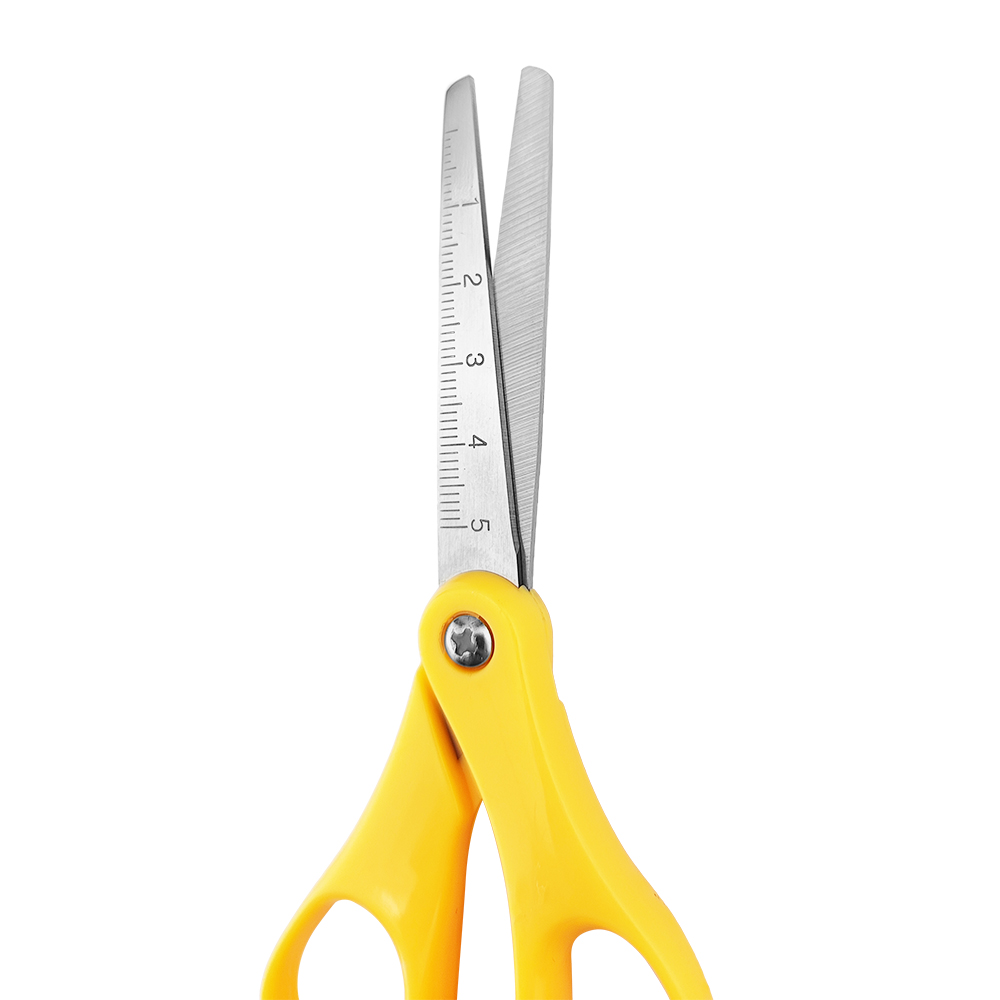
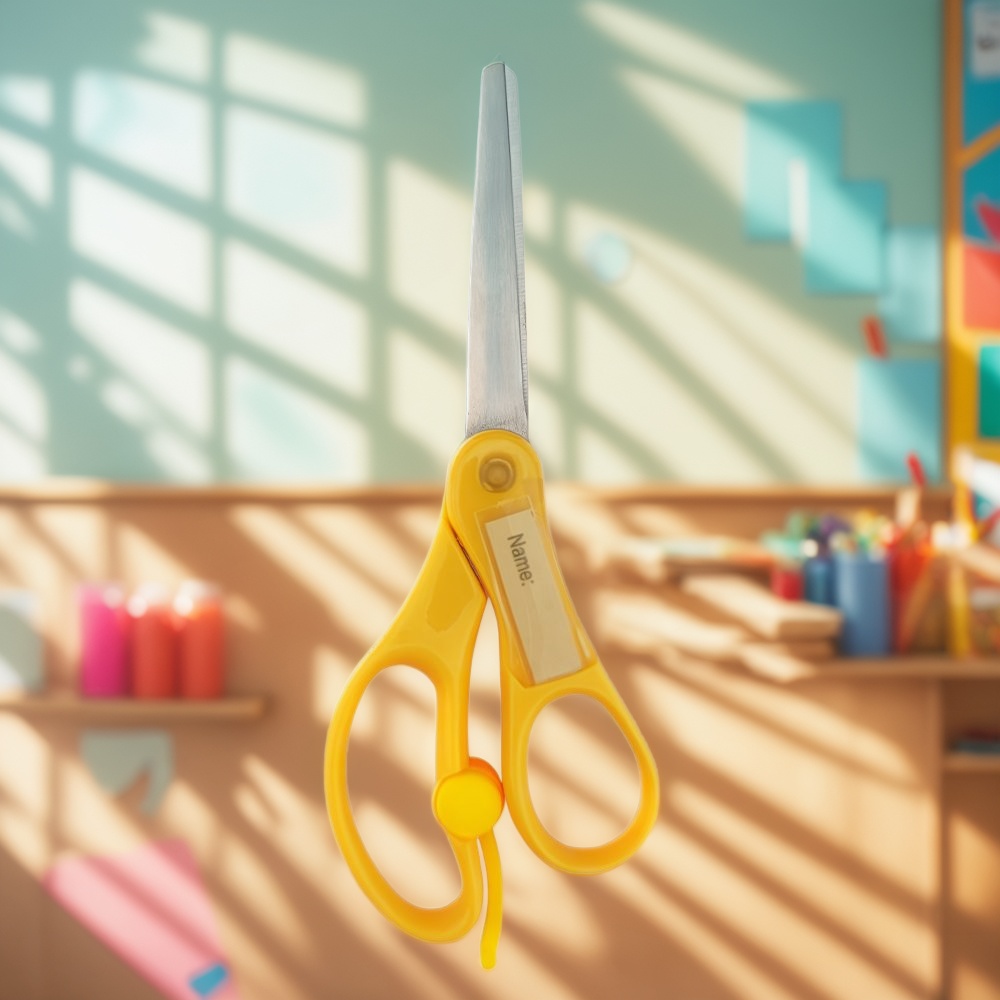
This article reviews the key considerations behind OEM school scissors based on the existing product concept: a bright yellow pair of 6 inch student scissors with stainless steel blades, rounded tips, soft-grip handle lining, ambidextrous usability, and an integrated name tag holder. These details make the product relevant for classroom use, but bulk buyers should still verify commercial, quality, and packaging requirements directly with the supplier before placing an order.
Key Takeaways
- For classroom use, prioritize rounded tips, comfortable handles, and a size suitable for student hands.
- A 6 inch scissor format can be a practical middle ground for many school cutting tasks.
- Name tag holders help reduce lost or mixed-up supplies in shared classrooms.
- OEM buyers should confirm material details, packaging, labeling, quality checks, and order terms with the supplier.
- Do not rely on appearance alone; request samples and evaluate cutting performance before bulk purchasing.
Why School Scissors Need a Different Buying Standard
General-purpose scissors are not always appropriate for younger users or busy learning environments. In a classroom, scissors may be used by many students across art, craft, science, and project-based lessons. They are frequently stored in shared bins, passed between desks, and used under time pressure. That means the purchasing standard should include safety, visibility, manageability, and traceability.
The bright yellow color described in the original product information is useful because it makes the scissors easy to find in a supply tray or art box. While color is not the only buying factor, visibility can support faster cleanup and easier classroom management. For schools and wholesalers, such practical details can matter as much as appearance.
Safety and Student-Friendly Design Features
Rounded blade tips are one of the most important design elements for classroom scissors. They do not remove the need for supervision or correct cutting habits, but they are a sensible feature for tools intended for children. Buyers should ask whether the rounded tip design is consistent across production batches and whether sample units match the intended order.
The original article also identifies stainless steel blades. Stainless steel is commonly chosen for scissors because it can provide reliable cutting performance and resist everyday classroom wear better than some lower-grade alternatives. However, buyers should avoid assuming a specific steel grade unless the supplier states it clearly. If blade composition matters for your market or customer requirements, request written material information from the supplier.
Soft-grip lining on the handle is another practical feature. Students often use scissors during longer crafting sessions, and uncomfortable handles can lead to poor control or hand fatigue. For OEM purchasing, it is worth checking the handle surface, edge smoothness, and whether the grip remains secure after repeated use.
Size, Comfort, and Ambidextrous Use
These are described as 6 inch student scissors, a size that can suit many classroom activities such as cutting paper, cardstock, and common craft materials. A 6 inch format is large enough for controlled cutting, yet not as bulky as adult scissors. Still, the right size depends on the age group and use case. Kindergarten, elementary, and middle school programs may each have different expectations.
Ambidextrous design is especially helpful in school purchasing because classrooms include both left-handed and right-handed students. Buying a tool that works for both can simplify inventory planning and reduce the need to separate classroom supplies by hand preference. Before ordering, buyers should have both left- and right-handed users test samples if possible. Comfort can vary depending on handle geometry, finger opening size, and cutting angle.
Personalized Name Card Feature for Classroom Control
The integrated name tag holder is one of the most useful classroom-focused details in the source article. Lost or mixed-up scissors are a common issue in shared learning spaces. Personalized name card scissors can help students identify their own tools and encourage responsibility for classroom materials.
For institutional buyers, this feature can also support distribution in school kits, classroom packs, or student supply bundles. If you are sourcing for wholesale or OEM programs, ask the supplier how the name card holder is constructed, whether it is easy to insert and remove a label, and whether it remains secure during normal use. If the product will be sold in retail packaging, consider whether instructions for labeling should be included.
Comparison Checklist for Bulk Buyers
Before selecting school factory scissors for a purchasing program, compare samples against the same checklist. This keeps the review process consistent and helps prevent decisions based only on color or price.
| Selection Point | What to Check | Why It Matters |
|---|---|---|
| Blade tips | Confirm rounded tips on samples | Supports classroom-appropriate handling |
| Blade material | Ask for stated material information | Avoids unsupported assumptions about grade |
| Size | Verify the 6 inch measurement | Helps match the scissors to student age groups |
| Handle comfort | Check soft-grip feel and edge smoothness | Improves control during repeated cutting |
| Hand preference | Test with left- and right-handed users | Confirms practical ambidextrous use |
| Name tag holder | Test label insertion and retention | Reduces lost or mixed-up classroom supplies |
| Packaging | Ask about bulk, retail, or school kit options | Supports the intended sales channel |
OEM Sourcing Questions to Ask a Supplier
When the purchasing intent is OEM, wholesale, or institutional supply, the buyer should move beyond product photos and request clear answers. Do not assume minimum order quantity, lead time, testing, packaging, or customization options unless the supplier confirms them.
- Can you provide samples that match the planned production version?
- What blade material is used, and can it be documented?
- Are the scissors consistently produced in the 6 inch size?
- What handle colors, name card options, or packaging formats are available?
- What quality checks are performed before shipment?
- How are scissors packed to reduce scratching or damage in transit?
- What information can be printed on packaging or labels for OEM orders?
- What are the current MOQ, lead time, and payment terms?
These questions help buyers build a more reliable sourcing process without making unsupported claims. They also make it easier to compare multiple suppliers fairly.
Use, Care, and Classroom Management Tips
Even well-designed school scissors last longer when used properly. Teachers and school staff should encourage students to cut only appropriate classroom materials and to return scissors to the same storage location after each activity. If the scissors include a name tag holder, labels should be added before classroom distribution.
- Store scissors dry and away from glue, paint, or wet craft materials.
- Wipe blades after messy craft sessions to reduce buildup.
- Check handles and blade alignment regularly for signs of damage.
- Separate damaged scissors from classroom use immediately.
- Use bins or trays by class, table group, or student name to simplify collection.
FAQ
Are 6 inch student scissors suitable for every grade level?
Not necessarily. A 6 inch size can work well for many student cutting tasks, but buyers should match the size to the age group, hand size, and classroom activity. Sampling is recommended before bulk orders.
Do rounded tips make school scissors completely safe?
No. Rounded tips are a helpful classroom safety feature, but students still need supervision, instruction, and clear rules for carrying and using scissors.
What should OEM buyers confirm before ordering?
Confirm samples, blade material, size, handle design, labeling options, packaging, quality checks, MOQ, lead time, and any customization details directly with the supplier.
Why is a name tag holder useful?
A name tag holder helps identify each student’s scissors, reducing mix-ups and losses in shared classrooms. It can also support school kits or personalized supply packs.
Can these scissors be used by left-handed students?
The original product description states an ambidextrous design. Buyers should still test samples with both left- and right-handed users to confirm comfort and cutting control.
Final Thoughts for Classroom and Wholesale Buyers
OEM school scissors should be evaluated as practical classroom equipment, not just as a low-cost supply item. The bright yellow color, rounded tips, stainless steel blades, soft-grip lining, 6 inch size, ambidextrous design, and name tag holder all address real classroom needs. For bulk buyers, the next step is to verify samples, ask detailed supplier questions, and confirm that the final product matches the intended educational use and sales channel.
