




OEM School Scissors: Safe & Customizable for Kids
OEM school scissors may look like a simple stationery item, but buyers sourcing them for classrooms, retail shelves, school supply kits, or promotional programs need to evaluate more than color and price. The right product should support children as they learn cutting skills, reduce avoidable safety concerns, and be practical for teachers and parents who manage many supplies at once.
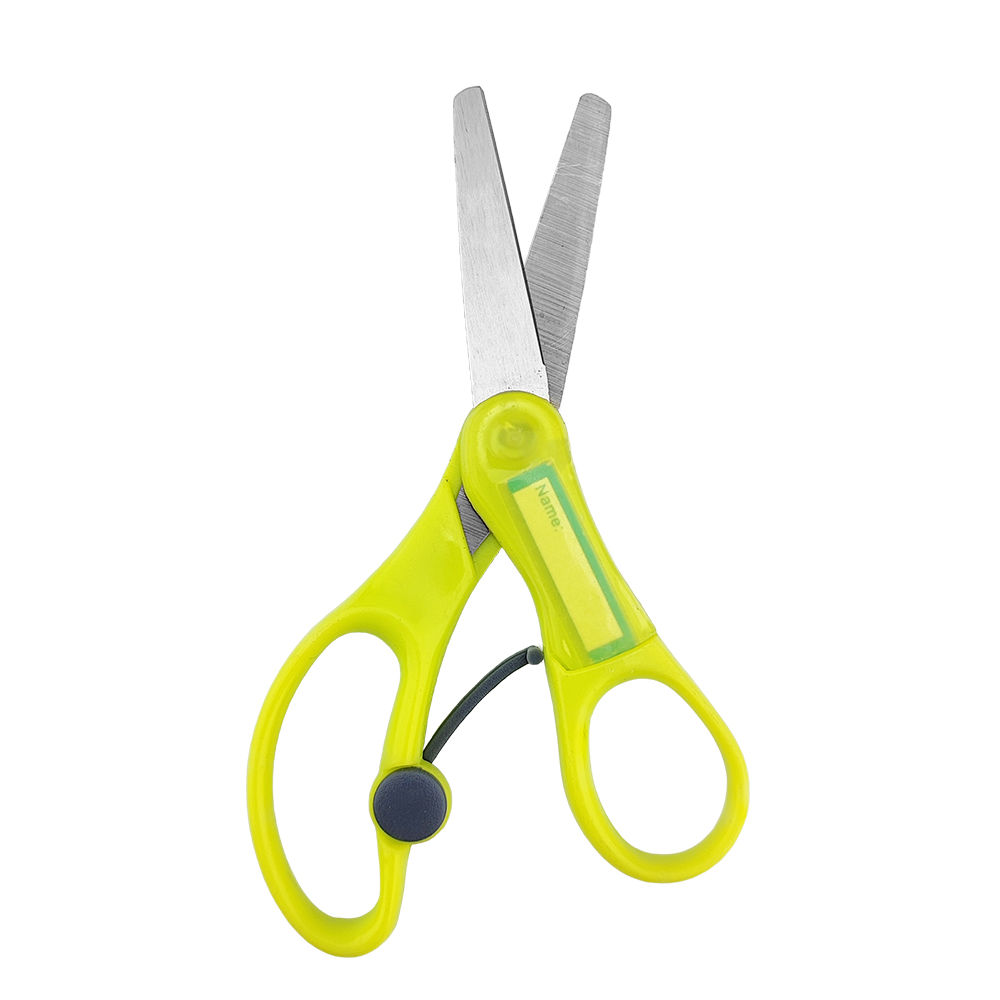
The product shown in the original article is a bright lime green pair of 5 inch school scissors designed for young users. It includes stainless steel blades, rounded tips, ergonomic soft-grip handles with oversized loops, a handle area that can be used for a name tag, and a secure cap for storage or transport. Those details make it a useful example for discussing how to assess OEM school scissors before placing a wholesale or private label order.

Key Takeaways
- For children’s scissors, rounded tips, manageable size, and comfortable handles are core selection points.
- OEM buyers should confirm which features are standard and which require customization.
- Name-label areas and blade caps can help reduce lost supplies and improve classroom organization.
- Do not rely on product photos alone; request samples and written specifications before ordering.
Why OEM School Scissors Need Careful Selection
School scissors are used by children who may still be developing hand strength, coordination, and tool awareness. A product that works well for an adult may be too large, too stiff, or too sharp at the tip for a younger student. For this reason, sourcing teams should evaluate scissors from the viewpoint of the child, the teacher, and the parent.
For B2B buyers, the goal is not simply to find a low-cost item. It is to select a design that fits the intended age group, sales channel, packaging format, and brand expectations. If the scissors will be included in a back-to-school kit, for example, a cap and name-label area may be especially valuable. If the item is sold as part of a craft range, handle comfort and visual appeal may carry more weight.
Safety Features to Review Before Ordering
The original product description highlights rounded blade tips, which are important for reducing accidental pokes during classroom use. Rounded tips do not remove the need for supervision, but they are a practical design choice for children’s stationery. Buyers should also check how smoothly the blades open and close, whether the pivot feels stable, and whether the cap fits securely without being difficult for children to remove.
The blades are described as stainless steel, which is commonly valued for durability in cutting tools. However, buyers should still ask the supplier for the exact material description, blade thickness, corrosion-resistance expectations, and any care instructions. If the product will be sold in a regulated market or to schools with procurement rules, ask what documentation the supplier can provide and whether any third-party testing is available. Do not assume certifications or test results unless they are supplied in writing.
Comfort, Size, and Control for Young Hands
At 5 inches, these scissors are positioned as a manageable size for little hands. Size matters because a child needs to control the cutting path without overextending their fingers or wrist. Oversized handle loops can make the scissors easier to grip, especially when children are practicing repeated cutting motions in paper crafts, worksheets, or art projects.
The original article also notes ergonomic soft-grip handles. For sourcing teams, this is a feature worth checking with physical samples. A handle may look comfortable in photos but feel too rigid, too slippery, or poorly balanced in use. During sample review, ask several people to test the opening force, handle spacing, grip texture, and comfort over repeated cuts. If the target users include younger children, teachers’ feedback can be especially useful.
Customization Options That Help in Classrooms
Customized school scissors can support both branding and day-to-day organization. The highlighted product includes a strip on the handle that can act as a name tag area. In classrooms, this is a simple but practical feature because scissors are frequently shared, misplaced, or mixed with other students’ supplies. A dedicated labeling area can reduce confusion without requiring tape or extra stickers.
For OEM programs, customization may include color selection, handle branding, packaging artwork, label format, or set configuration. The lime green color shown in the source article is useful because it is easy to spot in a desk, pencil case, or art bin. If you need a different color for a private label range, confirm color matching methods, acceptable color variation, and whether the supplier can provide pre-production samples.
Comparison Checklist for OEM Buyers
Use the following checklist when comparing children’s scissors from different suppliers. It focuses on questions that can be verified through samples, written specifications, and supplier communication.
| Evaluation Area | What to Check | Why It Matters |
|---|---|---|
| Blade design | Rounded tips, smooth cutting action, stainless steel description | Supports safer classroom use and consistent cutting performance |
| Size | 5 inch format or other requested size | Helps match the product to the target child age group |
| Handle comfort | Soft-grip feel, oversized loops, opening force | Improves control and reduces hand fatigue during craft activities |
| Identification | Name tag strip or labeling space | Helps teachers and students keep supplies organized |
| Storage | Secure cap fit and ease of removal | Protects blades and helps prevent snagging in bags or pencil cases |
| OEM details | Color, logo, packaging, carton information, lead time | Clarifies what is standard, optional, or subject to supplier confirmation |
Questions to Ask a School Scissors Supplier
Before confirming an OEM order, prepare a clear list of questions. This avoids misunderstandings and helps compare suppliers fairly.
- Which features are included as standard: rounded tips, cap, name-label area, and soft-grip handles?
- What blade material description will appear on the specification sheet?
- Can you provide physical samples before mass production?
- What customization options are available for handle color, logo placement, and packaging?
- What is the required artwork format for branded packaging or labels?
- What quality checks are performed during production and before shipment?
- Can you provide product dimensions, carton details, and care instructions?
- Are any compliance documents or third-party test reports available for the destination market?
Packaging and Use Guidance for School Supply Programs
Packaging should match the sales channel. Retail buyers may need clear product visibility, barcode placement, and concise safety wording. School kit assemblers may prefer compact packaging that is easy to pack in bulk. Online sellers should consider whether the cap is secure enough to keep the scissors protected during parcel handling.
For end users, guidance should be simple: use the scissors for paper and age-appropriate craft materials, keep the cap on during transport, store them in a pencil case or supply bin, and supervise younger children. If the scissors become difficult to open or no longer cut cleanly, they should be inspected and replaced when necessary.
FAQ
Are 5 inch school scissors suitable for all children?
Not always. A 5 inch size is often manageable for young users, but suitability depends on the child’s age, hand size, coordination, and the school’s requirements. Buyers should match the size to the intended user group.
Do rounded tips make school scissors completely safe?
No. Rounded tips help reduce poke-related risks, but scissors are still cutting tools. Children should use them with appropriate supervision and instructions.
Can OEM school scissors be customized with a brand logo?
Often, but customization depends on the supplier’s capabilities and order details. Buyers should ask about logo placement, color options, packaging artwork, samples, and any extra requirements.
Why is a name tag area useful?
A name tag area helps students identify their own scissors and helps teachers manage shared classroom supplies. It can reduce lost items and confusion during group activities.
What should buyers confirm before placing a wholesale order?
Confirm the product specification, sample quality, customization scope, packaging, quality-control process, shipping details, and any documentation needed for the target market.
