




OEM School Scissors: Safety, Covers, and Factory Sourcing Guide
OEM school scissors are small products, but they carry important expectations for classroom safety, reliable cutting, and consistent supply. For school supply brands, distributors, stationery wholesalers, and education procurement teams, the goal is not simply to buy scissors in bulk. The goal is to choose a school scissors factory that can explain its product design, quality controls, packaging options, and customization process clearly.
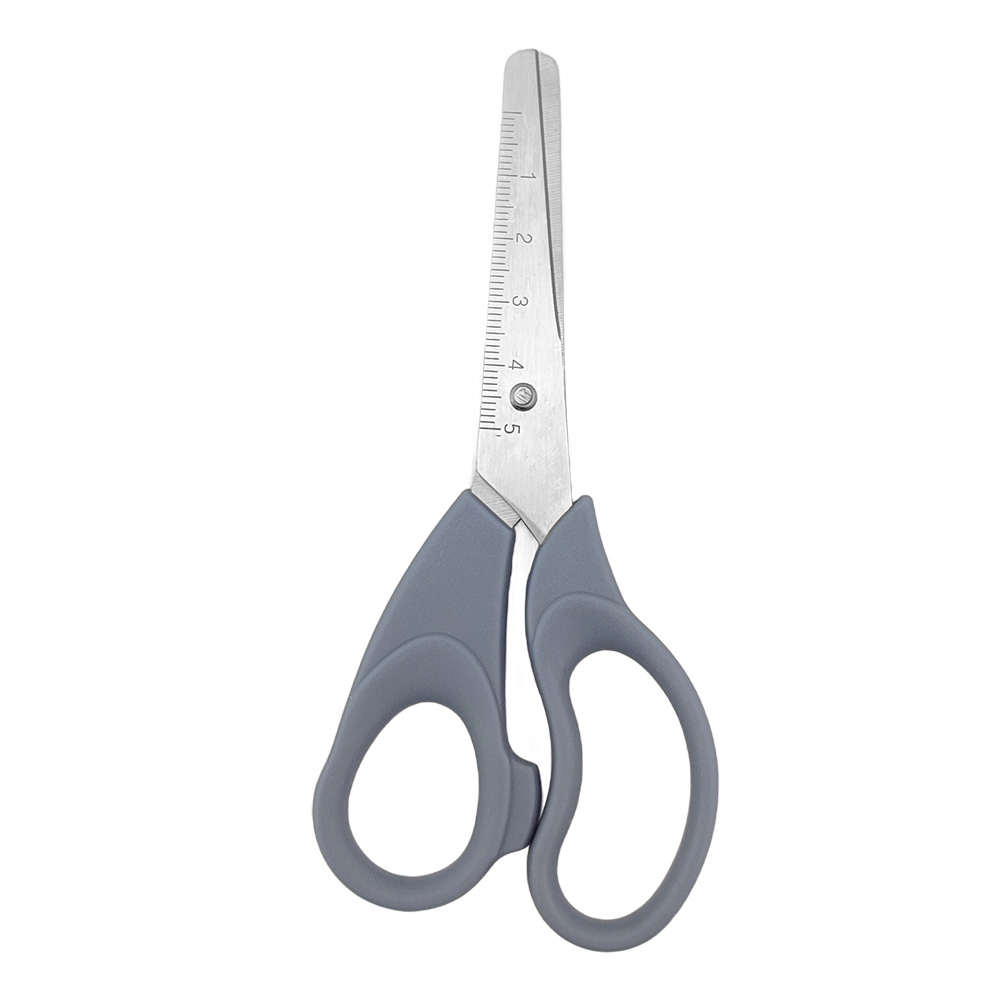
The original product focus highlights school scissors, safety scissors, scissors with cover, and factory production. Those points remain important because school scissors are often used by young learners in shared environments. Buyers should look closely at the details: rounded blade tips, protective covers, grip comfort, blade material, and how the supplier manages OEM requirements.
Key Takeaways
- OEM school scissors should balance cutting performance with child-oriented safety features.
- Rounded blade tips and protective covers can help reduce risk when scissors are stored or shared.
- For OEM projects, buyers should confirm customization scope, packaging options, lead times, and quality checks directly with the supplier.
- Do not rely only on appearance; request samples and test comfort, cutting feel, cover fit, and durability before bulk purchasing.
What Makes School Scissors Different?
School scissors are designed for classrooms, art activities, homework, and basic paper-cutting tasks. Compared with general office scissors, they typically need to be easier for children to hold and safer to store. The original article notes rounded blade tips and protective designs, which are common priorities for safety scissors used in educational settings.
In a B2B sourcing context, buyers should define the user age range before requesting quotations. Scissors for preschool craft activities may need a different size, handle shape, and cutting feel than scissors for older students. If the product will be sold through retail channels, packaging clarity also matters because parents and teachers need to understand whether the item is suitable for the intended user.
Safety Features to Review Before Ordering
Safety scissors are not automatically safe in every situation. Their design reduces certain risks, but responsible use, storage, and supervision still matter. When reviewing OEM school scissors, start with the physical features that affect daily classroom handling.
- Rounded blade tips: The original product description highlights rounded tips, which can help reduce puncture risk compared with pointed tips.
- Protective blade design: Buyers should inspect how much blade edge is exposed and whether the scissors remain practical for cutting paper or craft materials.
- Secure grip: A stable handle can help young users control the scissors more confidently during classroom projects.
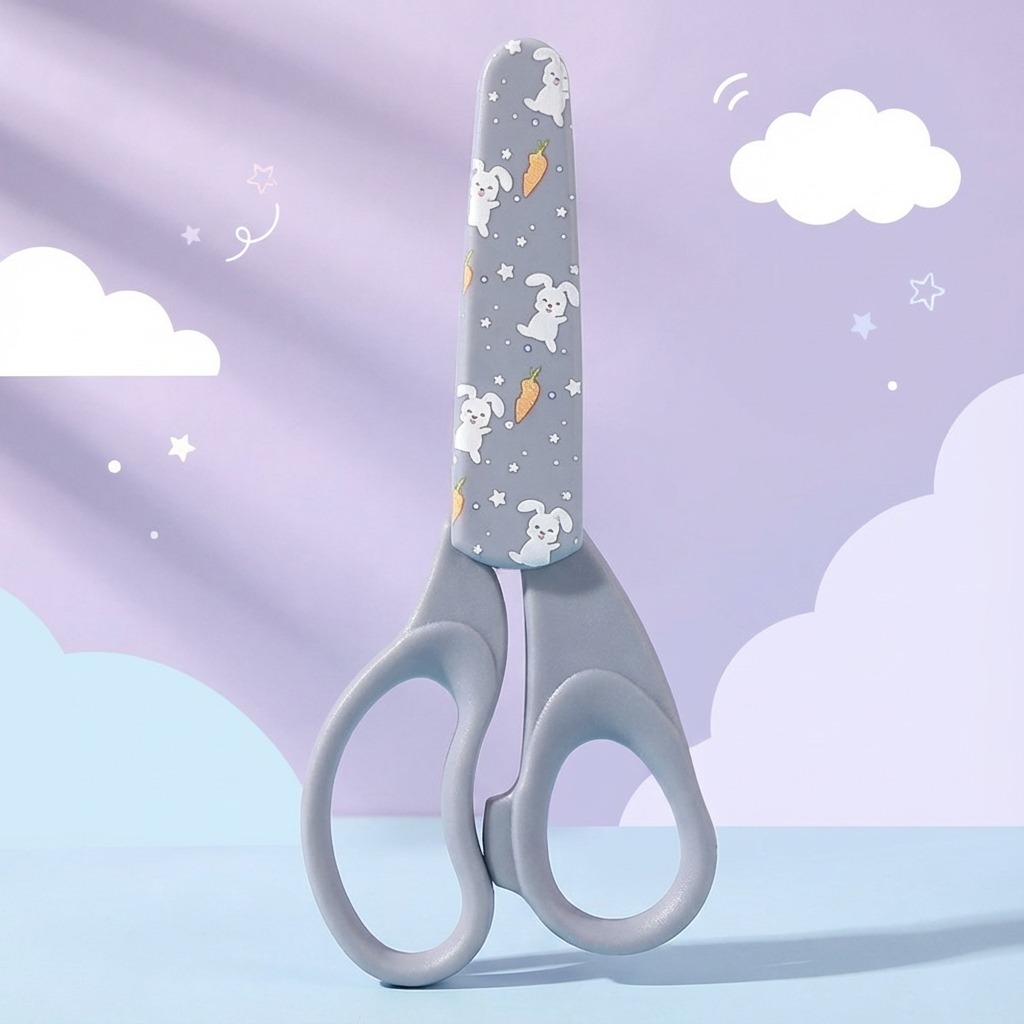
- Cover or guard: A removable cover can shield the blades when the scissors are not in use, especially in shared storage boxes.
- Blade material: The original article refers to rust-resistant stainless steel blades. Buyers should still ask the supplier to confirm the material used for the exact model being quoted.
Why Scissors with Covers Are Useful in Schools
Scissors with cover are practical for classrooms because tools are often moved between desks, stored in bins, or shared among students. A cover can protect fingers from accidental contact with the blade edge during storage and can also help keep the blade area cleaner when the scissors are not being used.
For OEM buyers, the cover should be tested as carefully as the scissors. A cover that is too loose may fall off in transit or storage. A cover that is too tight may frustrate children or teachers. Ask whether the cover can be customized in color, shape, or decoration, but also confirm whether custom changes affect tooling, cost, lead time, or packaging size.
Comparison Checklist for OEM School Scissors
| Item to Check | Why It Matters | Questions to Ask the Supplier |
|---|---|---|
| Blade tip shape | Rounded tips are more suitable for many school environments. | Is this model designed with rounded tips? Can you provide close-up sample photos? |
| Blade cover fit | A removable guard should stay in place during storage. | How is the cover tested for fit? Can samples be shipped with final packaging? |
| Handle comfort | Children need stable control during cutting tasks. | What handle sizes and colors are available for OEM orders? |
| Blade material | Material affects cutting feel and corrosion resistance. | What blade material is used for the quoted model? Is documentation available? |
| Packaging | Retail, school, and wholesale channels may need different packs. | Can you support hang cards, blister packs, bulk packs, or custom artwork? |
| Quality inspection | Consistent batches reduce returns and complaints. | What inspections are performed before shipment, and can results be shared? |
Factory and OEM Sourcing Questions
A school scissors factory should be able to discuss more than price. OEM buyers should prepare a short but specific request that includes target user age, expected sales channel, quantity range, packaging style, color needs, and any branding requirements. If the supplier cannot answer basic product and production questions, that is a warning sign.
Useful questions include: What customization is possible for handle color, cover color, logo placement, and packaging artwork? Are there existing molds suitable for school scissors with cover, or would a new design require tooling? What is the sample process? How long does sample approval usually take? What are the production lead time, payment terms, and export packing method? Are spare samples retained for comparison after shipment?
Buyers should avoid assuming manufacturing capacity, minimum order quantity, certifications, or testing results unless the factory provides written confirmation. If the products will be sold in a regulated market, ask what compliance documents are relevant and whether third-party testing is required for your destination country or sales channel.
Sample Testing Before Bulk Purchase
Samples are essential for OEM school scissors. A photo can show shape and color, but it cannot show grip comfort, cover retention, or cutting feel. Test the sample with typical classroom materials such as paper, thin card, and craft sheets that match your intended use. Check whether the scissors cut smoothly without excessive force.
Also review the product after repeated opening and closing. The pivot should feel stable, and the handle should not create discomfort during normal use. If the scissors include a cover, remove and attach it multiple times. The goal is to identify small issues before they become large problems in a full shipment.
Packaging, Branding, and Classroom Use
OEM branding can include color selection, printed packaging, labels, or other visible elements, depending on what the supplier can support. For school products, packaging should be clear and practical. It should communicate the product type, intended use, and any safety guidance required by the buyer’s market.
For classroom distribution, bulk packaging may be efficient. For retail channels, individual packaging may be more suitable. Ask the supplier whether packaging can protect the blade cover during transport and whether cartons are arranged to reduce deformation. Good packaging is not only about presentation; it helps the product arrive in usable condition.
Practical FAQ
What are OEM school scissors?
OEM school scissors are scissors produced for a buyer’s brand or project requirements. The supplier may support choices such as color, packaging, cover design, or logo placement, depending on the model and production process.
Are scissors with covers better for classrooms?
They can be useful because the cover shields the blades during storage and transport. Buyers should still test whether the cover fits securely and is easy enough for teachers or students to use.
Should I choose rounded tips for school scissors?
Rounded tips are commonly preferred for children’s school scissors because they reduce certain risks compared with pointed tips. Final selection should match the user age, supervision level, and sales market.
What should I ask a school scissors factory before ordering?
Ask about available models, customization options, sample timing, blade material, packaging choices, quality inspection steps, lead time, and whether any market-specific documentation can be provided.
How can I reduce risk in an OEM order?
Request pre-production samples, confirm specifications in writing, inspect packaging artwork carefully, and agree on quality checkpoints before mass production begins.
