





OEM Scissors Manufacturing: The PrismCut Rainbow Scissors Sourcing Guide
For retailers, importers, promotional product buyers, and private-label brands, scissors may look simple at first glance. In practice, a successful household scissors program depends on many small decisions: blade finish, handle comfort, cutting consistency, packaging, inspection standards, and how clearly the supplier can support OEM requirements. The PrismCut Rainbow Scissors concept shows why design and sourcing discipline should be considered together.
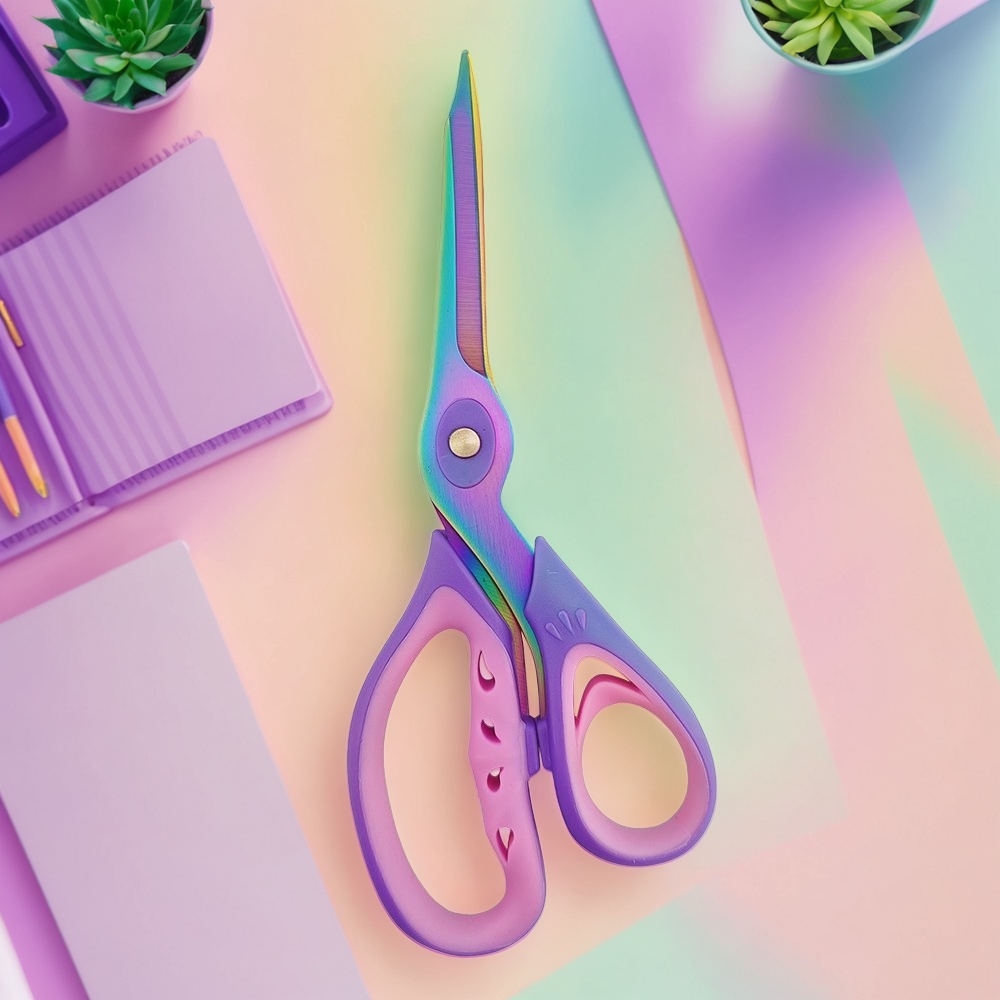
The original product presentation highlights an iridescent rainbow blade finish, titanium coating, laser-etched blade details, soft-touch pink and purple ergonomic handles, and an open-work grip pattern intended to support control for both left- and right-handed users. Those are useful product cues, but B2B buyers should go further than appearance. The better question is: how can a buyer evaluate whether a factory or supplier can reproduce these details consistently at commercial scale?
Key Takeaways
- Rainbow titanium-coated scissors need consistent blade finish, smooth cutting action, and careful surface handling during production and packing.
- OEM buyers should define artwork, handle colors, blade marking, packaging, and inspection standards before confirming an order.
- Do not rely only on photos. Request samples, cutting tests, coating appearance checks, and clear answers about materials and process controls.
- For household scissors, comfort and safe everyday usability are as important as visual differentiation.
What Makes PrismCut-Style Scissors Distinctive?
The most visible feature is the rainbow effect on the blades. In this product concept, the finish is described as a titanium coating that creates an iridescent look while adding durability and corrosion resistance. For a retail shelf or online listing, this finish helps the scissors stand apart from plain stainless-looking options. However, buyers should confirm exactly what the supplier means by “titanium coating,” how it is applied, and how the coating is protected from scratches during production and shipment.
The laser-etched details on the blades also matter. Blade markings can support brand identity, add a premium look, or display product information. OEM buyers should provide vector artwork and ask the supplier whether the marking is laser engraving, printing, etching, or another process. Each method has different durability, cost, and visual results.
Handle Comfort and Everyday Use
The PrismCut concept includes soft-touch handle materials in pink and purple, with an ergonomic shape designed to reduce hand fatigue during longer crafting or cutting sessions. This is important because household scissors are often used across different tasks: paper cutting, gift wrapping, school projects, light craft work, and general home use. A handle that looks attractive but feels uncomfortable can lead to returns or weak reviews.
When evaluating a sample, test more than the first cut. Open and close the scissors repeatedly, cut several materials that match the intended use, and ask multiple users to handle them. The open-work pattern on the finger grips is described as supporting control and ambidextrous use. Buyers should still verify whether the final product is comfortable for the target market, especially if selling to families, students, offices, or craft users.
OEM Scissors Manufacturing Questions to Ask
A reliable OEM discussion should be specific. Instead of asking whether the supplier can “make rainbow scissors,” prepare a checklist of product and production questions. This helps avoid misunderstandings before sampling and mass production.
- What blade material is used, and can the supplier provide the exact material specification?
- How is the titanium coating applied, and what visual variation is normal between batches?
- Can the supplier match custom handle colors, including pink, purple, or brand-specific color references?
- What options are available for blade logo, laser-etched details, or private-label markings?
- What cutting performance checks are performed before shipment?
- How are coated blades protected from rubbing, moisture, and scratches in packaging?
- Can pre-production samples be approved before bulk production?
- What commercial terms, lead time, MOQ, and packaging options apply to the buyer’s project?
These questions do not assume a supplier’s capacity or certifications. They simply create a practical framework for confirming whether the supplier’s process matches the buyer’s expectations.
Comparison Checklist for Buyers
| Evaluation Area | What to Check | Why It Matters |
|---|---|---|
| Blade finish | Rainbow color consistency, visible scratches, coating coverage | A premium-looking finish must remain consistent across units. |
| Cutting action | Smooth opening and closing, clean cut on intended materials | Good appearance cannot compensate for poor performance. |
| Handle design | Grip comfort, soft-touch feel, finger opening size | Comfort affects repeat use and customer satisfaction. |
| Branding | Logo position, laser-etched details, artwork accuracy | OEM products should match the buyer’s brand presentation. |
| Packaging | Blade protection, retail display needs, barcode space | Packaging reduces transit damage and supports sales channels. |
| Inspection plan | Sample approval, batch checks, defect limits | Clear standards reduce disputes and inconsistent shipments. |
Sampling and Quality Review Before an OEM Order
Sampling is where many sourcing problems can be prevented. Buyers should request samples that reflect the intended blade finish, handle color, marking, and packaging as closely as possible. If a sample uses substitute materials or temporary branding, note those differences in writing and confirm what will change in production.
During review, check alignment at the pivot, blade tip matching, handle molding quality, burrs, coating defects, and whether the scissors cut smoothly from the base to the tip. For rainbow-coated blades, look at several pieces under consistent lighting. Some color shift is part of the visual effect, but large differences or obvious patchiness should be discussed before approval.
It is also useful to define the product’s intended cutting scope. Household scissors are versatile, but they are not automatically suitable for every heavy-duty material. Product listings and packaging should describe use honestly to reduce customer dissatisfaction.
Packaging, Positioning, and Channel Fit
PrismCut-style scissors are visually strong, so packaging should allow customers to see the blade finish while still protecting it. For e-commerce, packaging must also help prevent scratching during parcel shipping. For wholesale or retail display, buyers may need hang cards, blister packaging, branded sleeves, or other formats. The right choice depends on channel requirements, not just aesthetics.
Positioning should focus on clear benefits: titanium-coated rainbow appearance, comfortable ergonomic handle, ambidextrous open-work grip design, and suitability for common household and craft tasks. Avoid inflated claims that cannot be supported by product testing or supplier documentation.
Practical FAQ
Are rainbow titanium-coated scissors only for craft users?
No. They can suit craft, school, office, and general household use, depending on the final blade design and cutting performance. Buyers should define the target use before sourcing.
Can an OEM buyer customize the handle colors?
Often, handle colors are part of an OEM discussion, but availability depends on the supplier’s materials, tooling, color matching process, and order terms. Ask for color samples or references before approval.
What should be tested before placing a bulk scissors order?
Check cutting consistency, handle comfort, coating appearance, pivot smoothness, branding accuracy, packaging protection, and sample-to-production consistency.
Should buyers request compliance documents?
Yes, buyers should ask what documents, test reports, or market-specific requirements apply to their destination country and sales channel. Do not assume compliance without written confirmation.
How can buyers reduce quality disputes?
Use approved samples, written specifications, clear artwork files, packaging requirements, and an agreed inspection checklist. Confirm any acceptable tolerances before mass production begins.
Final Sourcing Perspective
The PrismCut Rainbow Scissors concept demonstrates how a practical household tool can gain value through surface finish, handle design, and thoughtful branding. For OEM scissors manufacturing, the strongest results come from balancing visual appeal with verified usability. Buyers should treat the rainbow titanium coating, ergonomic handle, and etched details as specifications to be confirmed, not assumptions to be left open. With careful sampling and clear supplier communication, a distinctive scissors design can become a more dependable private-label or wholesale product.
