




OEM Scissors Manufacturing: Trending with Titanium Coating
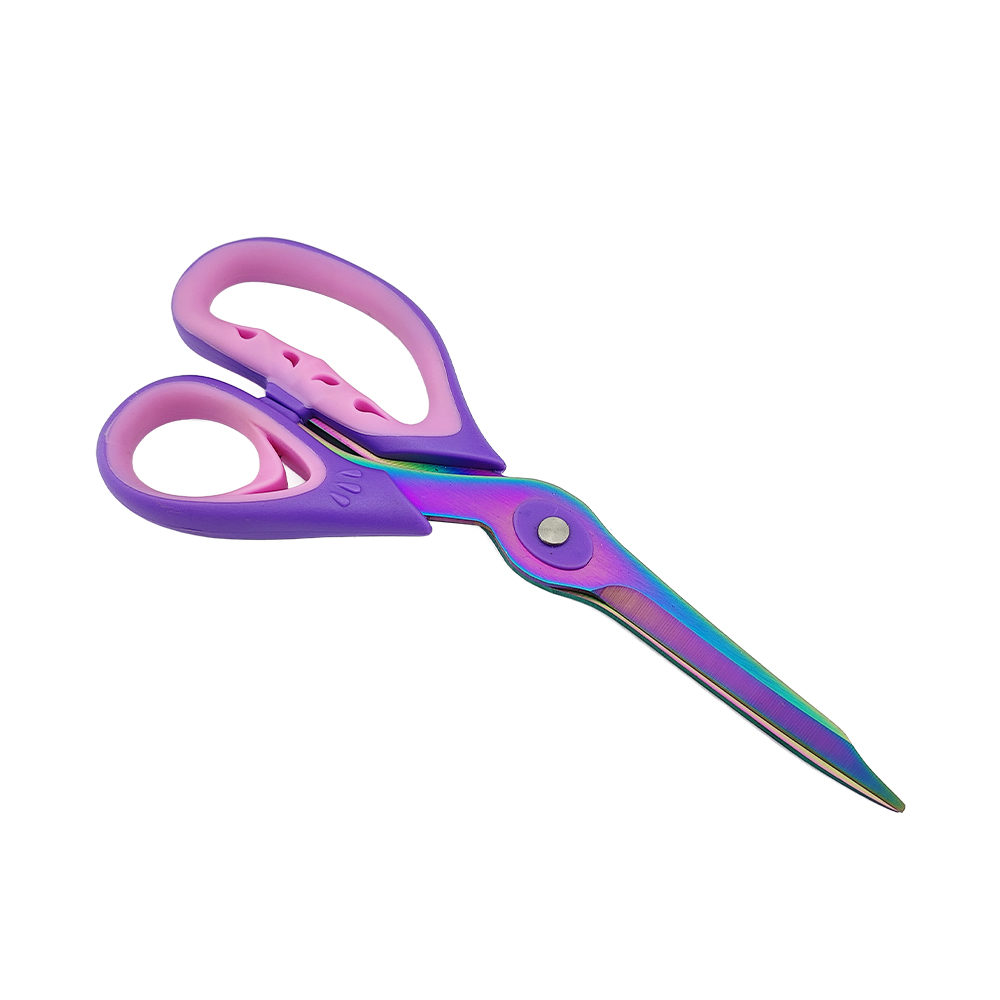
Titanium-coated scissors have moved beyond novelty colors and are now a serious option for brands, importers, distributors, and private-label buyers looking for household and craft cutting tools with stronger shelf appeal. The rainbow-like blade finish shown in the original product image gives the scissors an immediately recognizable look, while the practical value still depends on blade geometry, handle comfort, coating consistency, packaging, and supplier quality control.

For OEM scissors manufacturing, the main sourcing question is not simply whether the blades look attractive. Buyers should confirm whether the product is suitable for the intended channel: household use, school and stationery, crafting, office supplies, gift sets, or promotional programs. A titanium coating can support a premium visual position, but the final product must still cut cleanly, feel secure in the hand, and meet the buyer’s target cost and compliance expectations.
Key Takeaways
- Titanium-coated scissors are popular because the iridescent blade finish creates strong visual differentiation.
- OEM buyers should evaluate cutting performance, coating uniformity, handle ergonomics, and packaging together.
- Do not assume coating quality, steel grade, MOQ, certification, or test results; ask the supplier for written details.
- Samples should be tested on the materials your customers actually cut, such as paper, light fabric, tape, or craft materials.
Why Titanium-Coated Scissors Are Trending
The current interest in titanium coating is partly aesthetic. A multicolor blade can make a common tool feel more modern and giftable, especially when paired with a coordinated handle in soft colors such as lavender, pink, or other custom tones. For retail packaging, e-commerce photos, and social media presentation, this visual contrast can help a product stand out in a crowded scissors category.
The trend is also practical. The original article highlights titanium coating as a feature associated with enhanced durability, corrosion resistance, and sharpness. In sourcing terms, buyers should treat those points as performance objectives to verify, not assumptions to accept without evidence. Ask how the coating is applied, what base blade material is used, how sharpness is checked, and whether any comparative testing is available for the version you intend to purchase.
Product Details Buyers Should Evaluate
When reviewing household scissors with titanium coating, start with the cutting task. A pair designed mainly for paper and office use may not perform the same way as one intended for fabric, light craft materials, or general kitchen drawer use. Blade length, tip shape, pivot tension, and handle opening all influence the user experience.
The handle shown in the original product description includes a lavender and pink appearance with textured holes for grip. For OEM development, handle design is one of the most important customization areas. Buyers can discuss color matching, surface texture, left- or right-hand orientation, hang hole needs, and whether the handle shape is comfortable for prolonged use. If the product will be sold to schools, hobby stores, or household retailers, request samples for real user testing rather than relying only on product photos.
OEM Customization Options to Discuss
OEM scissors manufacturing can involve small cosmetic changes or a more complete private-label development process. The available options depend on the supplier’s tooling, materials, and production workflow, so details should be confirmed early. Useful discussion points include:
- Blade finish: rainbow titanium look, plain metal finish, or other available coatings.
- Handle color: standard colors, matched brand colors, or seasonal color combinations.
- Logo placement: handle printing, blade marking, packaging branding, or label options.
- Packaging format: blister card, paper card, box, bulk pack, or e-commerce protective pack.
- Market positioning: value household scissors, craft scissors, stationery item, or giftable tool.
A professional supplier should be able to explain what is already available from existing molds and what would require new tooling. Buyers should ask about sample lead time, production lead time, color tolerance, artwork requirements, carton information, and approval steps before placing a purchase order.
Comparison Checklist for Sourcing Titanium-Coated Scissors
| Evaluation Area | What to Check | Questions to Ask the Supplier |
|---|---|---|
| Blade performance | Clean cuts, tip alignment, smooth opening and closing | What materials are the scissors designed to cut, and how is sharpness inspected? |
| Titanium coating | Color consistency, surface coverage, visible scratches or defects | How is the coating applied, and what quality checks are used for each batch? |
| Handle comfort | Grip shape, texture, finger opening size, balance | Can the handle color, texture, or mold be customized? |
| Packaging | Retail display, shipping protection, barcode and labeling space | Which packaging formats are available for OEM or private label orders? |
| Quality documentation | Inspection criteria, sampling plan, test reports if available | What product specifications and compliance documents can be provided? |
Quality Control Points Before Ordering
Quality control for scissors should be practical and measurable. Before confirming a bulk order, request pre-production samples and define acceptance standards. Important checks include blade alignment, pivot tightness, burrs, coating appearance, handle bonding or assembly, packaging print accuracy, and carton strength. If the scissors are intended for children, schools, food-contact environments, or regulated retail channels, ask the supplier which requirements apply and request documentation appropriate to your market.
Buyers should also define what counts as a defect. For example, minor color variation in an iridescent coating may be normal, but scratches, peeling, sharp handle edges, loose pivots, or poor cutting performance should be addressed. Written standards reduce misunderstandings between buyer and factory.
How to Select the Right Supplier
A capable OEM scissors supplier should communicate clearly about materials, tooling, samples, and inspection. Avoid choosing only by the lowest unit price, especially when the product relies on a visible coating. Inconsistent coating or weak packaging can lead to returns even if the basic scissors function adequately.
Ask potential suppliers these questions during sourcing:
- What blade material and coating process are used for the quoted product?
- Can you provide physical samples from current production?
- What customization is possible without new tooling?
- What are the MOQ, lead time, payment terms, and packaging options?
- What inspections are performed before shipment?
- Can you support third-party inspection if required by the buyer?
FAQ
Are titanium-coated scissors only decorative?
No. The coating provides a distinctive appearance, and the original product positioning also links it with durability, corrosion resistance, and sharpness. However, actual performance depends on the blade material, coating quality, edge finishing, and inspection standards.
Can titanium-coated scissors be used for fabric?
Some scissors may cut light fabric, but buyers should not assume suitability. Request samples and test them on the exact materials your customers will use.
What should I confirm before placing an OEM order?
Confirm the product specification, sample approval process, handle colors, logo method, packaging artwork, MOQ, lead time, inspection criteria, and any compliance documents required for your sales market.
Is custom packaging available for OEM scissors?
Custom packaging is often part of OEM sourcing, but available formats vary by supplier. Ask about blister cards, paper cards, boxes, barcode placement, carton packing, and artwork requirements.
How can I reduce sourcing risk?
Use approved samples, written specifications, pre-shipment inspection, and clear defect standards. For new suppliers, start with a manageable order and review product consistency before scaling.
Final Sourcing Advice
Titanium-coated scissors can be a strong product direction for brands that want a visually distinctive household, craft, or stationery tool. The best results come from treating the coating as one part of a complete product decision. Evaluate the scissors as users will experience them: how they cut, how they feel, how they look after handling, and how they arrive in packaging. With clear specifications and supplier questions, OEM buyers can turn a popular finish into a reliable private-label product.
