




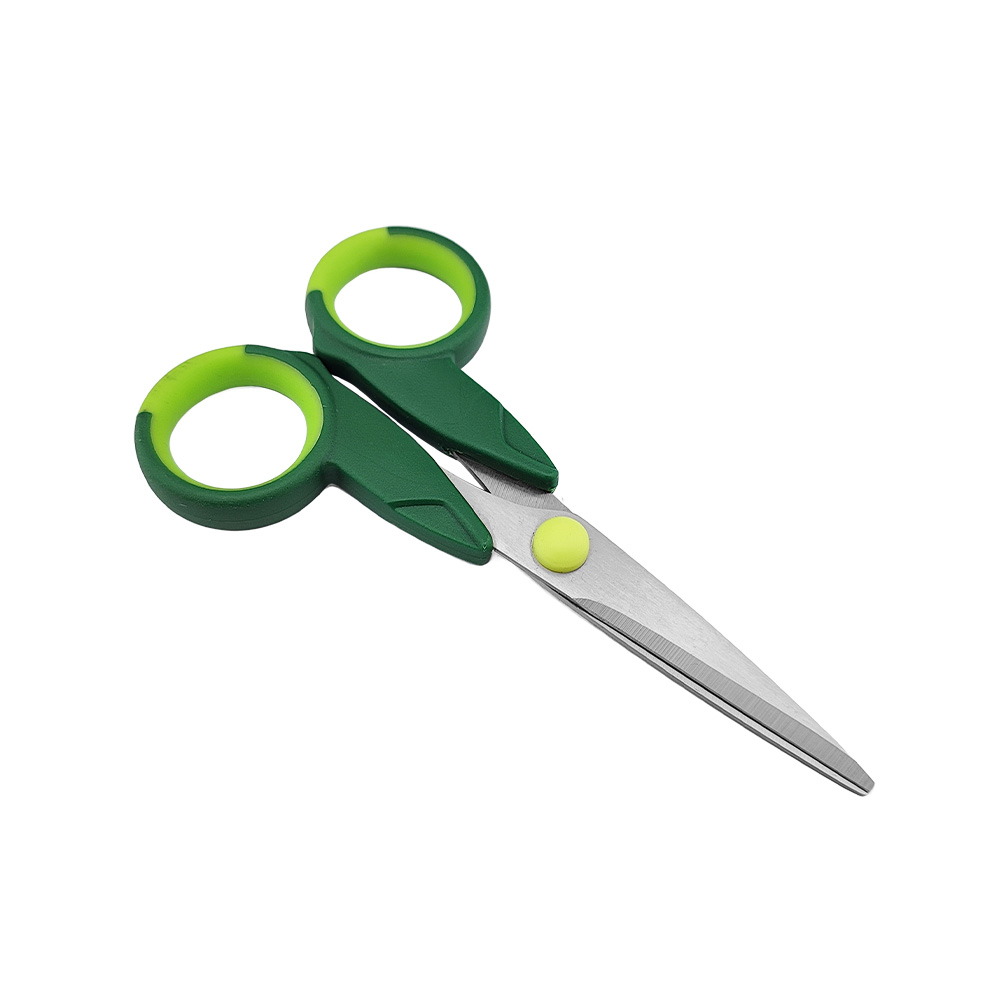
OEM Scissors: Precision Cutting Redefined with Style
OEM scissors are a familiar product, but sourcing the right pair for a retail, promotional, private label, or household goods program requires more than choosing a color and placing a logo. Buyers need to evaluate blade performance, handle comfort, appearance, packaging, and supplier communication with the same care they would apply to any repeat-use tool.
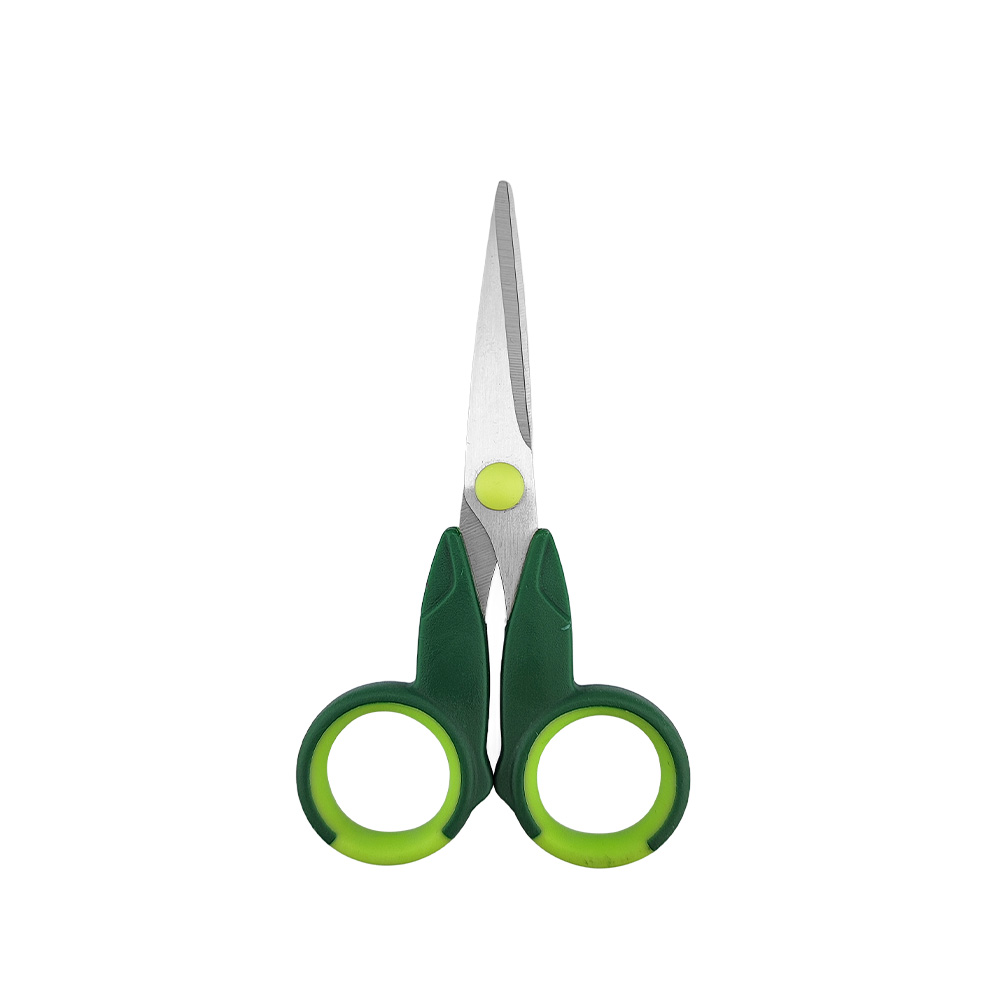
The original product presentation highlights a modern green handle design, an ergonomic grip shape, stainless steel blades, and a tension-adjustable screw. Those details point to the key buying questions: does the product cut consistently, feel comfortable in regular use, and fit the brand position of the buyer's market?
Key Takeaways
- OEM scissors should be reviewed as a functional tool first, not only as a visual product.
- Handle comfort, blade alignment, screw tension, and packaging details all affect buyer satisfaction.
- Do not assume material grade, coating, test results, or compliance status unless the supplier provides documentation.
- Samples should be checked across real cutting tasks such as paper, cardboard, fabric, and light household use.
- For wholesale or OEM orders, buyers should confirm customization limits, inspection standards, lead time, and after-sales handling.
What Makes These OEM Scissors Relevant for Sourcing?
Scissors are often purchased in large quantities for kitchenware assortments, office supply programs, craft lines, household tool sets, and private label retail shelves. Because the category is mature, small differences matter. A comfortable handle, cleaner cutting feel, or more modern color choice can help a product stand out without requiring exaggerated claims.
The described design uses a semi-matte green outer handle with a lime green inner ring. This gives the product a contemporary appearance while still fitting everyday household environments. For buyers, the color combination may be useful for lifestyle-focused packaging, home organization assortments, or stationery and craft displays. However, color should be treated as one part of the specification. The real value comes from how the scissors perform after repeated use.
Blade Performance: What Buyers Should Verify
The source article states that the scissors use stainless steel blades and can cut materials such as paper, cardboard, and fabric. That is useful starting information, but OEM buyers should still request a sample and test it against the intended use case. A pair of scissors for home office use may not need the same cutting feel as scissors positioned for sewing, craft, kitchen drawer use, or school supplies.
During sample evaluation, check whether the blades meet cleanly from pivot to tip. Uneven blade contact can cause tearing, slipping, or incomplete cuts. Also check the tip area, because some scissors cut well near the pivot but lose accuracy at the end. For craft or packaging use, tip control can be especially important.
The original description mentions a tension-adjustable screw. This can be a valuable feature because blade tightness affects cutting resistance and user control. Buyers should ask whether the screw is intended for user adjustment, factory adjustment, or maintenance only. They should also test whether the screw remains stable after repeated opening and closing.
Ergonomics and Handle Design
Handle comfort is not just a consumer preference; it affects returns, reviews, and repeat purchase potential. The original article describes a contoured handle that fits naturally in the hand and helps reduce fatigue during prolonged use. That is an important direction, but buyers should confirm comfort through hands-on testing with different users.
When evaluating ergonomics, check the size of the finger openings, the softness or hardness of the grip area, and whether the inner ring creates pressure points. A handle that feels comfortable for one user may feel narrow, slippery, or oversized for another. If the product is intended for general household distribution, it should suit a broad range of adult users.
It is also worth testing the scissors when hands are slightly damp or when users are cutting thicker materials. A handle may feel secure during a quick paper cut but less stable during longer tasks. If the buyer plans to market the product for crafts, office use, or home utility tasks, practical user trials are more informative than appearance alone.
OEM Customization Questions to Ask
For OEM scissors, customization can include handle color, logo placement, packaging format, barcode labels, instruction inserts, and carton marking. Buyers should avoid assuming that every option is available for every order size or production schedule. Instead, prepare a clear specification sheet and ask the supplier to confirm what can be customized.
- Which handle colors are available as standard options, and which require custom production?
- Can the logo be printed, molded, labeled, or added to packaging only?
- What packaging types are available, such as carded packaging, blister packaging, kraft boxes, or bulk packing?
- What artwork format does the supplier need for private label packaging?
- What are the sample process, production lead time, and approval steps?
- What inspection criteria are used for blade sharpness, alignment, handle finish, and packaging condition?
These questions keep the conversation practical. They also help prevent misunderstandings about appearance, cost, timing, and quality before the buyer moves into bulk production.
Comparison Checklist for Sample Review
| Review Item | What to Check | Why It Matters |
|---|---|---|
| Blade alignment | Blades meet evenly from pivot to tip | Improves cutting consistency and reduces tearing |
| Cutting test | Try paper, light cardboard, and fabric if relevant | Confirms suitability for the target use case |
| Handle comfort | Test grip with several users | Reduces fatigue and supports better product reviews |
| Screw tension | Open and close repeatedly and check stability | Helps maintain smooth operation over time |
| Surface finish | Inspect handle color, edges, and visible defects | Affects shelf appeal and perceived quality |
| Packaging | Check protection, labeling space, and retail display fit | Supports logistics, branding, and in-store presentation |
Quality and Compliance: Avoid Assumptions
Because the original source does not provide specific certifications, test standards, material grade numbers, or compliance documents, buyers should not treat those details as confirmed. Instead, request the documents needed for the destination market and sales channel. Requirements may vary depending on whether the scissors are sold as household tools, office supplies, craft items, or part of a kit.
Ask the supplier what quality checks are performed before shipment. Useful inspection points may include blade sharpness, pivot tightness, handle appearance, carton drop resistance, packaging seal strength, and quantity accuracy. If a third-party inspection is required, define the acceptance criteria in writing before production begins.
Use Cases and Product Positioning
These OEM scissors can be positioned for everyday household use, home offices, school supply ranges, craft corners, and general retail tool assortments, provided the final specification supports those uses. The modern green handle gives the product a more distinctive look than basic black or grey options, while the stainless steel blade description and adjustable screw support a functional product story.
For a budget retail line, packaging efficiency and consistent cutting performance may be the priority. For a private label homeware line, the handle finish, color matching, and user comfort may carry more weight. For craft or office channels, buyers may want to test the scissors on repeated paper, card, and fabric tasks before confirming the final order.
Practical FAQ
Are OEM scissors the same as custom scissors?
Not always. OEM scissors may use an existing product design with buyer-specific branding, packaging, or color changes. Fully custom scissors may require new tooling or deeper design changes. Buyers should ask which level of customization is available.
What should I test before placing a wholesale order?
Test cutting performance, blade alignment, handle comfort, screw stability, surface finish, packaging strength, and barcode or label accuracy. If the product will be sold through a regulated retail channel, ask what documentation is required.
Can the handle color be changed?
It may be possible, but the buyer should confirm available standard colors, custom color requirements, approval samples, and any quantity conditions directly with the supplier.
What information should be included in an OEM inquiry?
Include target quantity, destination market, preferred packaging, logo needs, color requirements, intended use, inspection expectations, and the timeline for samples and production.
How can buyers avoid quality problems?
Approve a pre-production sample, define inspection criteria in writing, keep packaging artwork controlled, and perform sample testing that reflects real customer use. Clear specifications reduce risk for both buyer and supplier.
