




Pepper Grinder Supplier Guide: How to Choose the Right Set
Choosing a pepper grinder supplier looks simple until samples arrive on the buyer’s desk. A grinder set may photograph well, but it still has to feel stable, refill cleanly, grind consistently, and look presentable after daily handling. For retailers, hospitality groups, and kitchenware brands, small weaknesses can become returns, complaints, or poor shelf performance.
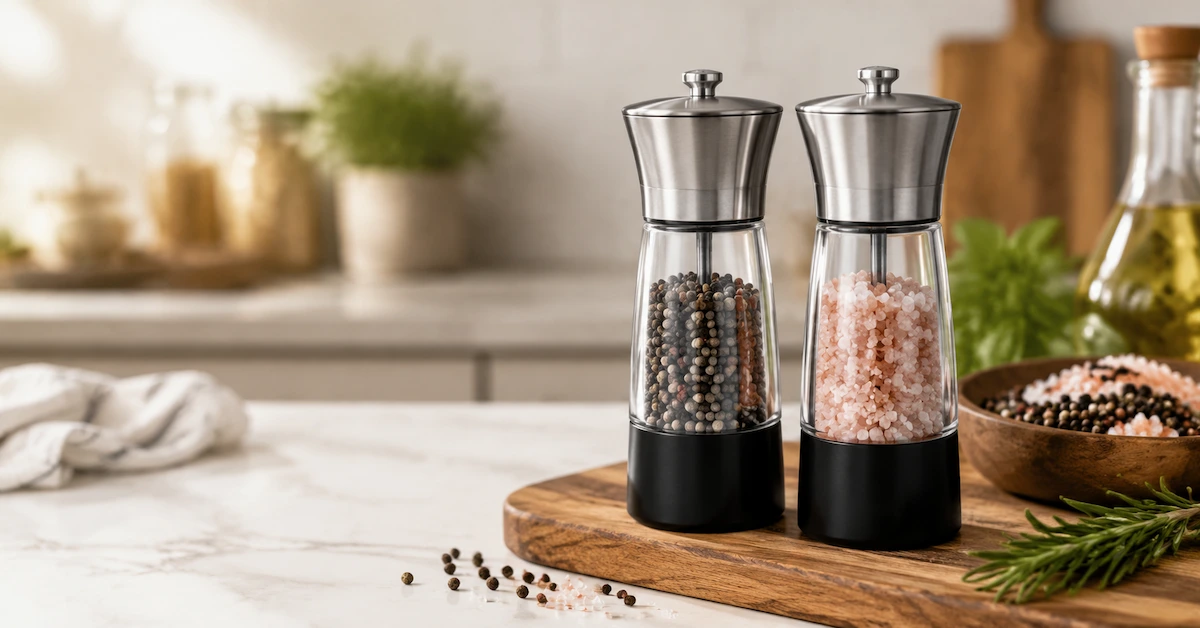
This guide focuses on practical sourcing decisions for a manual pepper or salt-and-pepper grinder set. The visible product style includes a clear lower chamber, a brushed stainless-steel-looking top, and a darker lower section. Those details are useful starting points, but buyers should verify construction, materials, and commercial terms directly with the supplier before committing to an order.
Key Takeaways
- Do not judge a grinder set by the product photo alone; test the sample in real handling conditions.
- Confirm the mechanism, refill method, intended seasonings, and component materials with the supplier.
- For retail, evaluate pair consistency, packaging protection, shelf appearance, and repeat-order matching.
- For hospitality, prioritize durability, stable handling, refill convenience, and ease of cleaning.
- Ask clear sourcing questions instead of assuming capacity, certifications, or specifications that are not documented.
Why the Right Pepper Grinder Supplier Matters
A manual grinder is a small product, but it combines several buyer-sensitive issues: glass or transparent reservoir clarity, metal-look finish quality, assembly alignment, grinding feel, and packaging protection. If one part looks mismatched or loose, the whole set can feel lower value.
For a B2B buyer, the supplier decision is not only about unit price. It is about whether the supplier can explain the product clearly, provide samples that match expected production, and answer questions about materials, assembly, packaging, and quality checks. A reliable pepper mill supplier should help you reduce uncertainty before volume purchasing, not leave basic product details for you to guess.
Understand the Product and Use Case
The paired design shown suggests a coordinated salt-and-pepper set for table service, retail kitchenware, or gifting. The clear chamber allows users to see the fill level, which is helpful for home kitchens and restaurant tables. The compact cylindrical form also works well where countertop or tabletop space is limited.
However, buyers should avoid assuming that both units are suitable for all seasonings. Peppercorns and coarse salt can place different demands on the grinding mechanism. Before approving a purchase, ask whether each grinder is intended for pepper, salt, or both, and whether the supplier can provide written product details for the mechanism and care instructions.
Sample Checks Before You Place an Order
A sample should be treated as a working product, not just a design reference. Hold it, twist it, refill it if possible, and check it under the same lighting where customers will see it. If the product is for hospitality, test it with the people who will actually use it during service.
| What to Check | Why It Matters | Question to Ask the Supplier |
|---|---|---|
| Pair consistency | Two units should look matched when sold as a set. | How do you control color, finish, and height variation across pairs? |
| Chamber clarity | Cloudy or scratched reservoirs reduce retail appeal. | What material is used for the transparent chamber, and how is it protected in packing? |
| Assembly fit | Loose caps, gaps, or wobble can cause complaints. | What checks are made for alignment and tightness before shipment? |
| Grinding mechanism | The grind feel affects everyday satisfaction. | What is the mechanism material and intended seasoning use? |
| Refill design | Hard-to-refill grinders frustrate consumers and restaurant staff. | Can you demonstrate the refill process and provide instructions? |
| Packaging | Glass or clear chambers need protection during transport. | What inner packing is used, and can it be adjusted for retail or e-commerce? |
Material, Finish, and Construction Questions
The visible design combines a clear lower chamber, a brushed metal-looking top cap, and a dark lower section. These features can create a clean, modern appearance, but the buyer still needs confirmation of actual materials and finishes. Do not infer stainless steel grade, glass type, coating, or mechanism material from a photo.
Ask for a specification sheet or written confirmation covering the main body, top cap, lower section, grinding mechanism, and any food-contact parts. If the product will be sold in a regulated market, ask what documentation the supplier can provide, but avoid assuming compliance until records are reviewed by your team or a qualified third party.
Finish quality deserves special attention. Fingerprints, scratches, uneven brushing, cloudy transparent parts, and color mismatch between the two grinders can all affect perceived value. Retail buyers should review samples under store-style lighting. Hospitality buyers should check whether the surface still looks acceptable after repeated handling with dry and slightly damp hands.
Choosing a Specialist Supplier or Broader Kitchenware Source
A specialist pepper grinder manufacturer may offer deeper knowledge of grinding mechanisms, refill structures, and common performance issues. A broader kitchenware supplier may be more convenient if you are sourcing multiple categories at once. The better choice depends on how important the grinder set is within your range.
If the grinder is a core SKU, supplier product knowledge matters. Ask detailed questions and see how confidently the supplier answers. If the set is an add-on to a larger kitchenware program, a broader vendor may still be suitable, provided they can verify product details, manage packaging, and maintain visual consistency between orders.
Commercial and Quality Questions for B2B Buyers
Before requesting pricing, prepare a structured question list. This prevents vague comparisons and helps you evaluate suppliers on the same basis.
- What materials are used for each visible component and the grinding mechanism?
- Is the set designed for pepper, salt, or both?
- How is the grinder refilled and adjusted, if adjustment is available?
- What packaging options are available for retail, wholesale, or e-commerce shipping?
- How are glass or transparent chambers protected during transport?
- What quality checks are performed before shipment?
- Can the supplier provide current product documentation for your target market?
- What are the available customization options, lead times, MOQ, and sample policies?
These questions do not require the supplier to make exaggerated claims. They simply help you understand whether the product and process fit your project.
Practical FAQ
Can this type of grinder be sold as a gift set?
Yes, a matched pair can work well for gifting, but only if the packaging supports the positioning. Check the box structure, product visibility, insert protection, barcode or label placement, and how the set looks on a shelf.
Is a clear chamber better than an opaque body?
A clear chamber helps users see the fill level, which is practical for kitchens and table service. The tradeoff is that clarity, scratches, and internal residue become more visible, so material and packaging checks are important.
What should restaurants test first?
Restaurants should test grip, stability, refill speed, and whether the grinder remains presentable after repeated handling. A product that looks good in a catalog may not be ideal for frequent service use.
Should buyers request pre-production samples?
For meaningful orders, yes. A pre-production sample helps confirm finish, assembly, packaging, and labeling before bulk production. Buyers should compare it carefully against the approved sample.
Next Step for Sourcing Teams
Start with a clear product brief, then request samples from shortlisted suppliers. Compare the grinder set on appearance, structure, refill process, packaging, and supplier communication. The best pepper grinder supplier is not simply the one with the lowest quote; it is the one that can answer practical questions, provide consistent samples, and help you reduce risk before the product reaches your customers.
