




Pizza Cutter Manufacturer: Innovating Slice Precision
For restaurants, kitchenware brands, retailers, and promotional product buyers, choosing a pizza cutter manufacturer is not only about finding a sharp blade. A good sourcing decision considers user comfort, cleaning requirements, packaging, consistency, supplier communication, and the intended sales channel. The original idea remains important: a pizza cutter should divide a pizza cleanly while helping preserve toppings and crust structure. But for B2B buyers, the bigger question is how to evaluate a pizza slicer factory or wholesale supplier before committing to a product line.
This guide explains what to look for when sourcing pizza cutters, how to compare common designs, and what questions to ask about the Green Eclipse Pizza Slicer concept described in the original article: a palm-held circular slicer with a green handle and stainless steel blade. Where specific commercial details are not published, buyers should treat them as supplier questions rather than assumptions.
Key Takeaways
- A pizza cutter manufacturer should be evaluated on design consistency, blade performance, handle comfort, cleaning practicality, and communication quality.
- For wholesale or OEM sourcing, ask direct questions about materials, packaging, lead times, customization options, inspection process, and documentation.
- A palm-held circular slicer can offer compact control, but buyers should test grip comfort, blade coverage, and safe cleaning before placing large orders.
- Do not rely on appearance alone; sample testing with different crust types is essential for commercial buyers.
What Makes a Pizza Cutter Work Well?
A pizza cutter appears simple, yet small design choices affect the cutting experience. The blade needs to move cleanly through thin crust, thick crust, melted cheese, and toppings without dragging them across the surface. The handle or grip should allow steady pressure without forcing the wrist into an awkward angle. The product should also be easy to rinse and dry, especially in environments where tools are used repeatedly.
The original article highlighted precision, ease, ergonomic design, high-quality materials, blade sharpness, and handle balance. These are useful principles, but buyers should verify them through samples. A supplier may describe a blade as sharp, but your team should test it against your intended use case: home retail, commercial kitchen, pizzeria, foodservice supply, gift set, or private-label kitchenware collection.
Comparing Pizza Cutter Designs for Wholesale Buyers
Different pizza cutter styles suit different users. A traditional wheel cutter is familiar and efficient. A rocker blade covers a wide surface but needs more storage space. A compact palm-held circular slicer, such as the Green Eclipse concept, may appeal to buyers looking for a distinctive retail item with controlled hand pressure. The right option depends on your customer profile, price position, packaging plan, and safety expectations.
| Design Type | Best Fit | Buyer Checks |
|---|---|---|
| Traditional wheel cutter | Restaurants, pizzerias, general retail, foodservice kits | Wheel rotation, blade sharpness, handle strength, ease of cleaning |
| Palm-held circular slicer | Retail kitchenware, compact storage, distinctive product lines | Grip comfort, finger clearance, blade exposure, safety during washing |
| Rocker-style cutter | Large pizzas, commercial prep, users wanting straight cuts | Blade length, storage safety, edge protection, packaging size |
| Multi-function slicer | Gift sets or value-oriented retail programs | Durability of added functions, cleaning complexity, user instructions |
Evaluating a Pizza Slicer Factory
When the search intent is manufacturing, wholesale, or OEM supply, the buyer should look beyond product photos. A pizza slicer factory should be able to explain its production process clearly, even if it does not publish every detail online. Ask how the supplier controls blade consistency, checks handle assembly, protects edges during packing, and manages repeat orders.
Important factory evaluation questions include:
- What blade material is used, and can the supplier provide a material statement or specification sheet?
- What handle material is used, and is it suitable for the intended market and cleaning conditions?
- Can the supplier provide pre-production samples for review before bulk production?
- What inspection steps are used for blade rotation, handle attachment, surface finish, and packaging?
- Are custom colors, logo placement, private-label packaging, or OEM changes available?
- What are the lead time, minimum order quantity, payment terms, and shipping options?
- What documentation can be provided if the product will be sold in a regulated retail market?
These questions do not assume any specific capacity, certification, or test result. They are practical checkpoints that help buyers compare suppliers on a like-for-like basis.
Product Focus: Green Eclipse Pizza Slicer
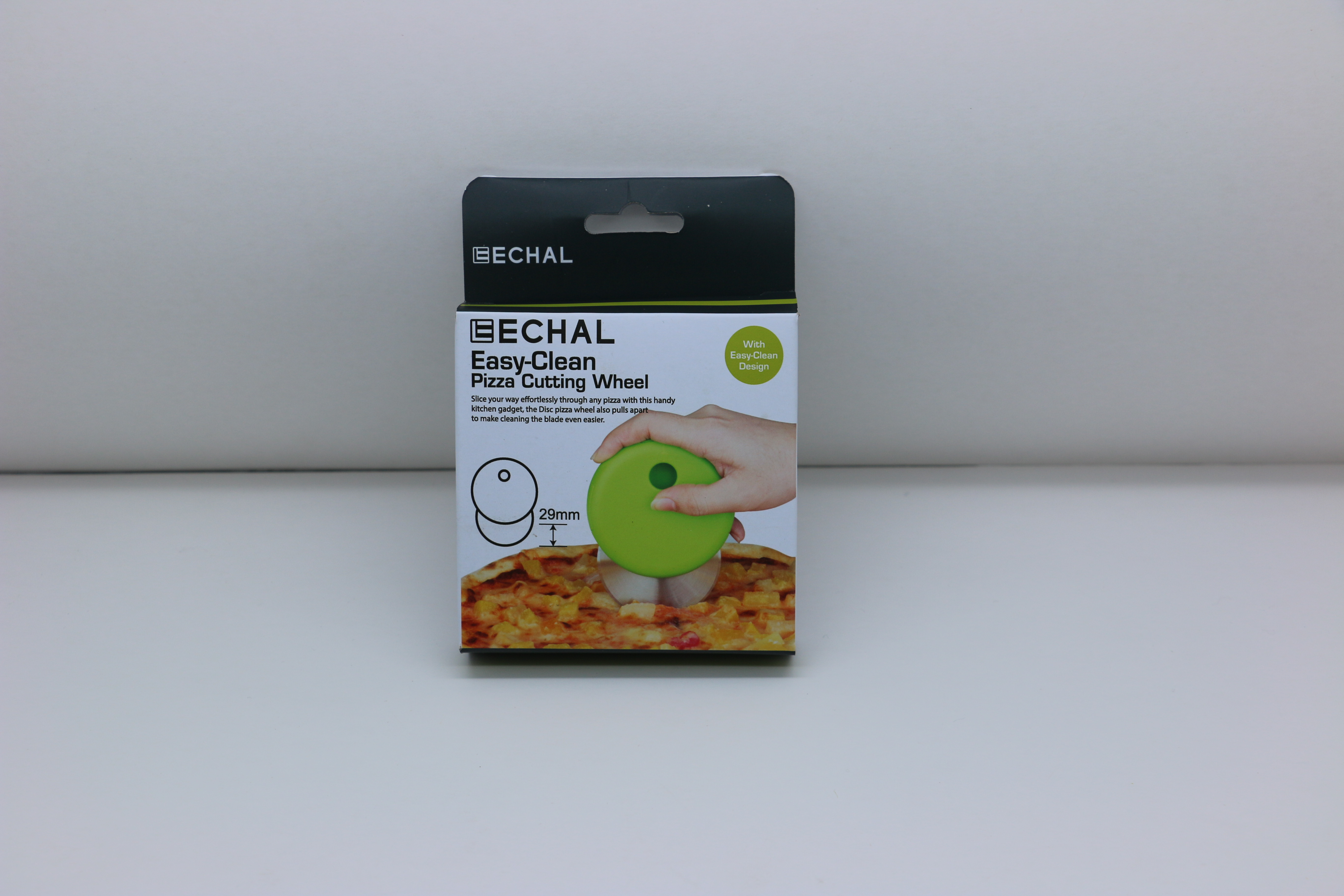
The original article introduced the Green Eclipse Pizza Slicer as a circular pizza cutting tool with a green handle and a stainless steel blade. It is described as a palm-fitting design intended to provide control and precision. For B2B buyers, this type of product may be interesting because it differs from the standard long-handled wheel cutter and can be positioned as a compact kitchen accessory.
However, a new shape should be tested carefully. Request samples and ask several users to cut different pizza styles: thin crust, thick crust, cheese-heavy pizza, and pizza with loose toppings. Observe whether the hand position feels natural, whether the blade glides smoothly, and whether users can clean the product without contacting the edge. If the product is intended for retail, also review the packaging: does it show the product clearly, protect the blade, and communicate safe use?
Wholesale and OEM Sourcing Checklist
For pizza cutter wholesale programs, consistency matters. A single good sample is useful, but buyers need confidence that repeat production will match the approved sample. Before placing a purchase order, create a simple checklist and ask the supplier to confirm each point in writing.
- Approved sample: Keep a signed or photographed reference sample for comparison.
- Material confirmation: Ask for details on blade and handle materials rather than relying on general descriptions.
- Edge protection: Confirm how blades are protected during shipping and retail handling.
- Logo and color approval: Review color samples and branding placement before production.
- Packaging test: Check barcode space, instructions, warning language, and carton strength.
- Inspection method: Ask what defects are checked and what acceptance standard is used.
- After-sales communication: Clarify how quality concerns, shortages, or replacement needs are handled.
How to Test Samples Before Bulk Ordering
Sample testing does not need to be complicated. Use the same checklist across multiple suppliers so the results are comparable. Test each cutter on several pizzas and note the number of passes needed, whether toppings are displaced, whether the blade catches, and how comfortable the grip feels after repeated use. Wash and dry the product according to the supplier’s instructions, then inspect for trapped food, looseness, corrosion concerns, or changes in movement.
If you sell to restaurants or pizzerias, ask staff to test the cutter during normal prep. If you sell through retail, ask ordinary home users to evaluate comfort, safety, and storage. Feedback from the actual target customer is more useful than office-only review.
FAQ
What should I ask a pizza cutter manufacturer first?
Start with the basics: available designs, blade and handle materials, sample policy, customization options, minimum order quantity, lead time, packaging choices, and inspection process. Ask for written specifications before comparing quotes.
Is a stainless steel blade always the best option?
The original article identifies the Green Eclipse blade as stainless steel, which is common for kitchen tools. Buyers should still ask what type of stainless steel is used, how the edge is finished, and what care instructions apply.
Can a pizza cutter be customized for private label?
Many suppliers may offer private-label or OEM services, but the available options vary. Ask whether logo printing, handle color changes, packaging design, or shape modifications are available, and request samples before approving production.
How do I compare pizza cutter wholesale quotes?
Compare more than unit price. Review material details, packaging, inspection process, lead time, freight terms, payment terms, and sample quality. A lower quote may not be better if packaging, consistency, or support is weaker.
What is the best pizza cutter design for restaurants?
Restaurants often prioritize durability, cleaning speed, and repeat cutting performance. A traditional wheel cutter or rocker blade may be familiar, while a palm-held slicer should be tested for comfort and safety in high-frequency use.
Final Sourcing Advice
A reliable pizza cutter manufacturer should help buyers make informed decisions, not simply provide attractive product images. Whether you are considering the Green Eclipse Pizza Slicer or another design, request samples, document specifications, test the product in real use, and confirm commercial details before ordering. Careful sourcing reduces risk and helps ensure the final product suits the people who will actually use it.
