




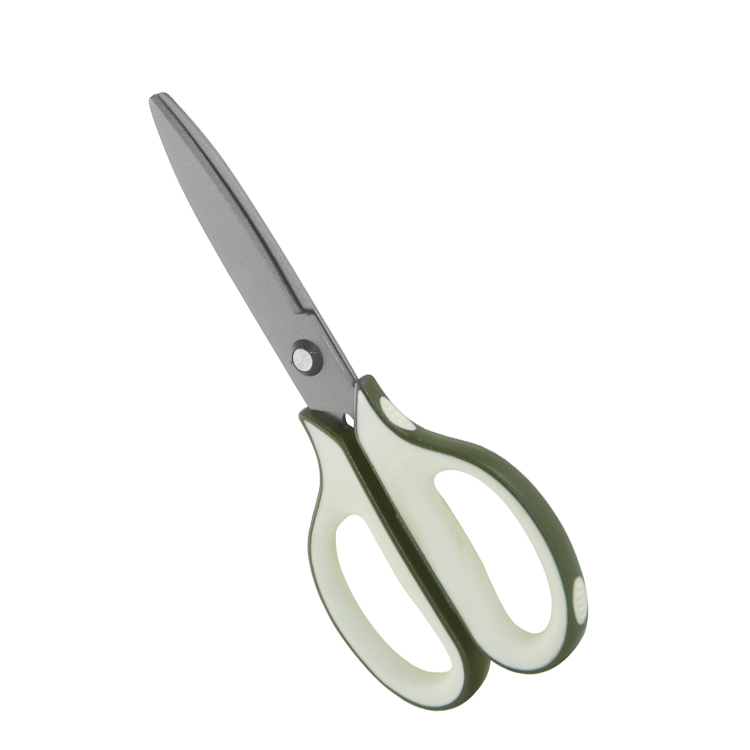
Plastic Handle Office Scissors: Comfort Meets Precision
Plastic handle office scissors are a simple product, but they are used so often that small design choices can affect comfort, cutting quality, and long-term value. For offices, schools, stationery distributors, craft retailers, and promotional product buyers, the right scissors should be easy to hold, reliable for routine cutting, and suitable for repeated daily use.
The original product description highlights stainless steel blades, ergonomic plastic handles, suitability for right- and left-handed users, and an olive green and cream color scheme. Those are useful starting points. However, buyers considering office scissors in bulk should look beyond appearance and ask practical sourcing questions about blade finish, handle comfort, packaging, quality checks, and after-sales support before placing an order.
Key Takeaways
- Plastic handle office scissors are best evaluated by comfort, blade alignment, cutting consistency, and packaging suitability.
- Stainless steel blades can support everyday cutting, but buyers should ask the supplier how sharpness and corrosion resistance are checked.
- Ergonomic handles matter for offices, classrooms, and craft use where scissors may be held for longer periods.
- Bulk buyers should confirm sample availability, labeling, carton packing, lead time, and acceptable quality standards before ordering.
What Plastic Handle Office Scissors Are Used For
In a workplace, scissors are used for opening envelopes, trimming paper, cutting labels, preparing presentation materials, and handling light packaging. In schools and studios, they may be used for paper crafts, classroom projects, scrapbooking, and general creative work. A comfortable plastic handle helps make these tasks easier because the user can control the scissors without gripping too tightly.
These scissors are not the same as heavy-duty industrial shears. Buyers should define the expected use clearly. If the main task is cutting standard paper, documents, thin card, or craft material, office scissors may be suitable. If users need to cut thick cardboard, fabric layers, wire, or hard plastic straps, ask the supplier whether a different blade type or heavier construction is recommended.
Blade Quality: What to Check Before Buying
The source article states that the scissors have stainless steel blades. Stainless steel is commonly chosen for office scissors because it can provide a clean cutting edge and resist routine moisture better than some untreated metals. Still, not all stainless steel blades perform the same. The steel type, blade thickness, edge grinding, pivot tension, and finishing process can all influence performance.
For bulk sourcing, ask for samples and test them with the materials your customers actually use. Cut copy paper, folded paper, thin card, labels, and lightweight packaging film if relevant. Look for smooth opening and closing, clean cutting from the base to the tip, and no tearing at the final part of the cut. Also check whether the blade tips meet evenly. Poor alignment can make scissors feel dull even when the edge is new.
Handle Comfort and User Fit
The original description mentions ergonomic handles designed for a comfortable and secure grip, with usability for both right- and left-handed users. That is important because office scissors often serve many people in shared environments. A handle that feels comfortable for one person may feel narrow, slippery, or awkward for another, so sample testing should include several users.
Plastic handles are practical because they are lightweight and easy to mold into rounded shapes. When checking comfort, focus on finger opening size, edge smoothness, grip stability, and how the scissors feel after repeated cuts. A handle with sharp molding seams or tight finger holes may cause discomfort during longer cutting tasks. If you are buying for schools or large offices, simple comfort testing can reduce complaints and returns.
Comparison Checklist for Bulk Buyers
When comparing scissors in bulk from China or any other sourcing market, use a structured checklist instead of relying only on photos. Product images may show color and shape, but they cannot prove cutting performance, packing strength, or consistency across cartons.
| Check Area | What to Review | Questions to Ask the Supplier |
|---|---|---|
| Blade performance | Cutting smoothness, edge alignment, tip precision | How is blade sharpness inspected before shipment? |
| Handle comfort | Finger space, grip shape, plastic finish | Can you provide samples for user comfort testing? |
| Left/right use | Ease of use by different users | Is the design suitable for both right- and left-handed users? |
| Color and appearance | Olive green and cream consistency, surface finish | How do you control color variation between batches? |
| Packaging | Individual pack, display pack, carton strength | What packing options are available for retail or wholesale? |
| Quality control | Defect limits, inspection method, replacement process | What quality checks are performed, and can they be documented? |
Color, Appearance, and Retail Presentation
The olive green and cream color scheme described in the original article gives these scissors a softer look than standard black or blue office scissors. Color can matter for retail shelves, school supply sets, branded stationery ranges, and office environments where buyers want products to look coordinated.
For commercial orders, ask whether the color shown in samples will match mass production. Plastic color can vary depending on material batches, pigment, lighting, and production conditions. If the scissors will be sold under a retail brand, request clear sample approval steps and ask how the supplier manages color tolerance. If custom packaging or private labeling is needed, confirm artwork requirements and whether packaging samples can be reviewed before production.
Practical Sourcing Guidance for Offices and Distributors
Bulk office scissors can be a cost-effective category, but buyers should avoid choosing only by unit price. A lower price may not be a saving if the scissors arrive with loose pivots, rough handles, inconsistent packaging, or weak cutting performance. Instead, compare total value: product consistency, communication, packing quality, and the supplier’s willingness to answer technical questions.
- Define the target user: office staff, students, craft users, retail consumers, or promotional buyers.
- Request samples and test cutting performance with real materials.
- Check handle comfort with several users, including left-handed users if relevant.
- Confirm packaging format, carton details, labeling needs, and barcode requirements.
- Ask about quality inspection, defect handling, shipment photos, and documentation.
- Clarify lead time, payment terms, order quantity, and whether repeat orders can match the approved sample.
Do not assume that all commercial details are fixed. Minimum order quantity, price, lead time, customization options, and testing documents should be confirmed directly with the supplier for the specific inquiry.
Use and Care Tips for Longer Service
Even basic office scissors last longer when used correctly. Keep them for paper and light office materials unless the supplier confirms they are suitable for tougher tasks. Wipe the blades dry if they contact moisture, adhesive, or residue. Avoid dropping scissors on hard floors, as this can affect blade alignment or loosen the pivot. Store them closed in a drawer, desk organizer, or protective package to reduce damage and improve safety.
If scissors begin to drag or tear paper, check for adhesive buildup first. Cleaning the blades with a suitable wipe may restore performance. If the pivot becomes loose or the blades no longer meet evenly, replacement may be safer and more efficient than trying to repair a low-cost office tool.
FAQ
Are plastic handle office scissors suitable for professional offices?
Yes. They are commonly used for routine office tasks such as cutting paper, opening envelopes, trimming labels, and preparing documents. For heavy packaging or industrial materials, ask the supplier for a more suitable model.
What should I test before ordering office scissors in bulk?
Test blade sharpness, smooth opening and closing, tip alignment, handle comfort, packaging strength, and consistency between samples. Use the same materials your customers or staff will cut in daily work.
Can these scissors be used by left-handed users?
The original description states that the ergonomic handle design caters to both right- and left-handed users. Bulk buyers should still test samples with left-handed users to confirm comfort and cutting control.
What commercial details should I ask a supplier to confirm?
Ask about price, minimum order quantity, sample cost, lead time, packaging options, labeling, inspection process, carton information, payment terms, and how defects are handled after delivery.
How do I avoid quality issues in a bulk scissors order?
Approve a physical sample, define acceptable quality expectations, request pre-shipment inspection details, and confirm that production should match the approved sample in color, handle finish, blade alignment, and packaging.
