




PrecisionPlus OEM Kitchen Scissors: Practical Sourcing Guide
Kitchen scissors are a small item, but they can influence how buyers judge the quality of a kitchenware range. For retailers, distributors, promotional buyers, and private-label brands, a pair of OEM kitchen scissors needs to be more than visually appealing. It should feel comfortable in the hand, cut reliably through common kitchen tasks, be easy to present in packaging, and come from a supplier that can answer detailed commercial and quality questions.
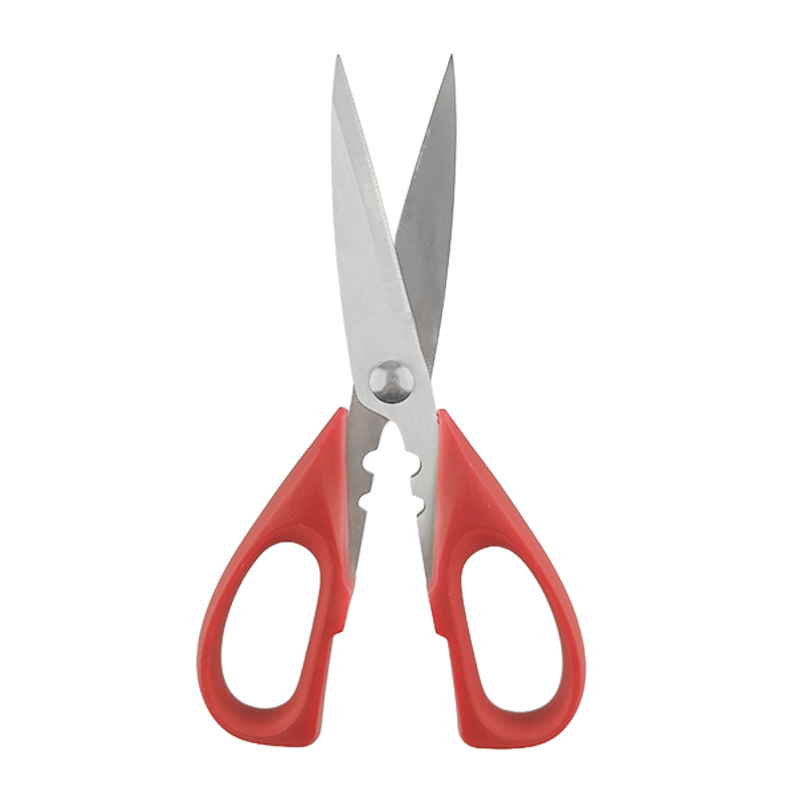
The PrecisionPlus red-handled kitchen scissors are presented as a multi-functional kitchen tool with vibrant crimson handles, ergonomic loops, stainless steel blades, and a three-rivet pivot design. Those are useful starting points, but B2B buyers should still verify details through samples, supplier documentation, and clear purchase specifications before placing an order.

Key Takeaways
- OEM kitchen scissors should be assessed by grip comfort, blade performance, pivot stability, packaging options, and supplier responsiveness.
- The source article identifies red ergonomic handles, wide loops, stainless steel blades, and a three-rivet pivot as notable features.
- Buyers should request samples and written specifications rather than relying on product photos or general descriptions.
- Private-label projects should clarify logo placement, packaging artwork, carton details, lead time, and quality inspection procedures.
What Makes These OEM Kitchen Scissors Relevant for Buyers?
The original product description focuses on a red-handled pair of kitchen scissors designed for everyday food preparation and general kitchen cutting. The crimson handles create a visible retail shelf impression, while the wide ergonomic loops are described as suitable for different hand sizes. For a consumer, those details suggest comfort. For a sourcing buyer, they raise practical questions: will the handle shape fit the intended customer segment, does the color match the brand range, and can the same design be produced consistently across a bulk order?
Because the product is positioned as OEM kitchen scissors, the buying decision should include both product performance and supply suitability. A strong sample is helpful, but repeatability matters more. Buyers should ask how the supplier controls blade alignment, handle finish, pivot assembly, and packaging consistency during mass production.
Design and Ergonomics: What to Check in a Sample
Handle comfort is one of the easiest features to judge during sample review. The existing article notes that the scissors use vibrant red handles with an ergonomic design and wide loops. When evaluating samples, test the grip with several users if possible. A handle that feels comfortable for one person may feel tight, slippery, or awkward for another.
For retail and wholesale programs, the handle should also match the expected use case. A compact pair may suit light household tasks, while a larger grip may appeal to customers who want more control for poultry, herbs, packaging, or meal preparation. Buyers should inspect molding quality, color consistency, surface texture, and any visible rough edges. If the product will carry a private label, ask where a logo can be placed and whether the handle material and surface can support durable branding.
Blade and Pivot Evaluation
The source article states that the scissors have stainless steel blades and a three-rivet pivot design. These details are useful, but they are not enough for a purchase specification. Buyers should ask the supplier to identify the exact blade material, hardness target if available, edge finishing method, and recommended use limitations. If the supplier cannot provide a material grade or technical information, the purchase order should avoid making unsupported claims in consumer-facing packaging.
The pivot is also important because kitchen scissors often twist under uneven pressure. A three-rivet pivot design is described as adding stability, but buyers should still check sample alignment after repeated opening and closing. The blades should meet cleanly, move without grinding, and avoid excessive looseness. For larger orders, define acceptable tolerances and inspection points before production begins.
Comparison Checklist for OEM Kitchen Scissors
| Evaluation Area | What to Review | Questions to Ask the Supplier |
|---|---|---|
| Handle design | Comfort, loop size, grip security, color consistency | Can the handle color, logo, or surface finish be customized? |
| Blade details | Sharpness, alignment, edge finish, stated material | What stainless steel grade is used, and can it be documented? |
| Pivot construction | Smooth movement, stability, resistance to looseness | How is pivot quality checked during production? |
| Packaging | Retail display, barcode space, instructions, carton protection | What packaging formats and artwork requirements are available? |
| Quality control | Sample consistency, defect criteria, inspection process | What checks are performed before shipment? |
| Commercial terms | MOQ, lead time, payment terms, reorder process | What are the current MOQ, production time, and customization limits? |
Private Label and Wholesale Sourcing Guidance
For OEM and wholesale buyers, the best results usually come from a clear product brief. Include the target market, expected retail channel, packaging style, quantity estimate, branding needs, and any claims that must appear on the package. Avoid vague instructions such as “premium quality” without defining what that means. Instead, specify sample approval standards, acceptable appearance defects, blade movement requirements, and packaging durability expectations.
Buyers should also request a pre-production sample when customization is involved. A plain sample can confirm the basic scissor design, but it does not prove that printed packaging, logo placement, color matching, or carton packing will meet expectations. If the order is for a chain store, e-commerce bundle, or promotional campaign, confirm barcode placement, warning labels, language requirements, and shipping carton dimensions early in the process.
Use Cases to Match With Buyer Demand
Multi-functional kitchen scissors are often purchased for more than one task. The original article mentions cutting herbs, packaging, and poultry joints. Buyers should be careful when turning those uses into marketing copy. If the product is intended for heavier food preparation, ask whether the supplier recommends it for poultry bones or only lighter trimming tasks. If it is mainly for household convenience, position it around everyday kitchen cutting rather than extreme performance.
- For supermarket ranges, focus on clear packaging, accessible pricing targets, and broad household usefulness.
- For specialty kitchenware stores, prioritize better hand feel, stronger product information, and attractive presentation.
- For promotional programs, confirm logo options, packing efficiency, and delivery timing.
- For e-commerce, prepare accurate photos, dimensions, care guidance, and realistic use descriptions.
Care and Consumer Communication
Even when the buyer is a business, end-user instructions still matter. Clear care guidance can reduce complaints and improve customer satisfaction. Unless the supplier provides verified dishwasher-safe information, avoid stating that the scissors are dishwasher safe. A safer approach is to advise users to clean and dry the blades after use, keep the pivot area free of food residue, and store the scissors safely away from children.
Packaging or product listings should also avoid unsupported claims such as certified food-grade materials, rust-proof performance, or professional test results unless the supplier provides documentation. Accurate, modest claims are more sustainable than exaggerated wording that may create compliance or customer-service problems later.
FAQ
Are these kitchen scissors suitable for private-label projects?
They are positioned as OEM kitchen scissors, so private-label use may be possible. Buyers should ask the supplier about logo placement, packaging customization, artwork requirements, MOQ, and sample approval steps.
What features are explicitly described in the original product article?
The original article describes red ergonomic handles, wide loops, stainless steel blades, a three-rivet pivot design, and use as multi-functional kitchen scissors.
Should buyers request samples before ordering?
Yes. Samples help verify grip comfort, blade alignment, pivot movement, packaging appearance, and whether the product matches the intended retail or wholesale channel.
Can buyers claim a specific stainless steel grade?
Only if the supplier provides that information in writing. The source mentions stainless steel blades but does not provide a specific material grade.
What commercial details should be confirmed?
Ask about MOQ, lead time, payment terms, packaging options, inspection process, carton details, customization limits, and reorder timing before confirming a purchase.
Final Sourcing Advice
The PrecisionPlus red-handled OEM kitchen scissors have several practical attributes for a kitchenware range: a visible handle color, ergonomic grip concept, stainless steel blades, and a pivot design described for stability. For B2B buyers, the next step is not simply choosing the most attractive sample. It is building a clear specification, asking the right supplier questions, and confirming that the final product, packaging, and commercial terms fit the target market.
Approach these scissors as a sourcing project rather than a single product photo. With careful sample review and documented requirements, buyers can make a more confident decision for wholesale, retail, or private-label kitchenware programs.
