




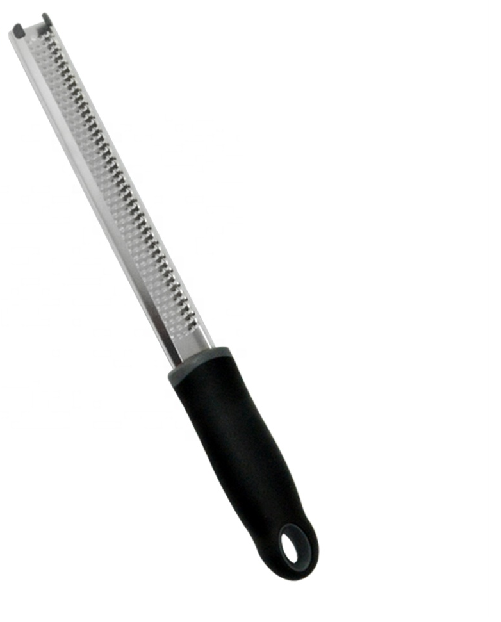
Stainless Steel Grater Supplier Guide for Better Kitchen Tool Sourcing
Choosing a stainless steel grater supplier is not only about finding a product that looks good in a catalog. For retailers, distributors, kitchenware brands, and hospitality buyers, the better question is whether the grater fits real kitchen use, repeat purchasing expectations, packaging needs, and after-sales risk. A grater may be a small kitchen tool, but poor blade performance, weak handles, difficult cleaning, or inconsistent assembly can quickly lead to returns and customer complaints.
The original product described here is a multi-blade stainless steel kitchen grater with six interchangeable blades, polished stainless steel construction, an ergonomic soft-touch handle, a safety lock, and blades suited to jobs such as citrus zesting, Parmesan grating, ginger slicing, and vegetable shredding. Those are useful starting points. A professional buyer should then verify how those features are implemented, how consistently the supplier can deliver them, and what information is available before placing a wholesale or OEM order.
What Buyers Should Confirm First
Before comparing quotations, create a clear purchasing brief. A stainless steel grater supplier can respond more accurately when the buyer defines the target channel, expected use case, packaging format, and quality level. A home kitchen product sold through retail may need different packaging and instructions than a grater supplied to foodservice distributors or promotional programs.
- Confirm the exact product type: box grater, handheld grater, rotary grater, or multi-blade grater.
- Ask whether the six interchangeable blades are standard or customizable for your order.
- Request details on handle material, blade thickness, blade finish, and locking mechanism.
- Clarify whether packaging, labeling, barcode placement, and instruction sheets can be adapted.
- Ask what inspection steps are used before shipment and what defect standards apply.
Do not assume that every supplier offering stainless steel kitchen graters for sale uses the same material grade, edge process, or assembly method. If those details matter for your market, ask for written confirmation and samples.
Product Features Worth Evaluating
A multi-blade grater is attractive because it can cover several preparation tasks with one tool. In the described product, Blade A is used for delicate citrus zesting and fine Parmesan grating, Blade B can slice ginger, and Blade D can shred vegetables. For buyers, the key issue is not simply the number of blades, but whether each blade performs its assigned task cleanly and safely.
Polished stainless steel can support a clean appearance and easier wiping, while the stated rust-resistant design is important for a tool that will often contact water, acidic foods, and detergents. However, buyers should still ask how corrosion resistance is tested, what cleaning instructions are recommended, and whether dishwasher use is allowed or discouraged.
The ergonomic soft-touch handle also deserves close review. A comfortable handle can reduce fatigue during longer prep tasks, but buyers should test grip security with wet hands, check whether the handle coating resists peeling, and confirm whether color or branding options are available. The safety lock should be simple to operate yet firm enough to keep parts secure during use and storage.
Comparison Checklist for Supplier Evaluation
| Evaluation Area | What to Check | Questions to Ask the Supplier |
|---|---|---|
| Blade performance | Cutting, slicing, zesting, and shredding consistency | Can you provide samples for testing with citrus, cheese, ginger, and vegetables? |
| Material details | Polished stainless steel parts and handle construction | What stainless steel grade and handle material are used? |
| Safety design | Safety lock, blade changing process, storage method | How is the lock tested, and are user instructions included? |
| Cleaning and care | Ease of rinsing, trapped food areas, rust-resistant design | What cleaning method do you recommend, and is dishwasher use suitable? |
| Packaging | Retail box, insert card, labeling, warning text | Can packaging artwork, barcodes, and language versions be customized? |
| Quality control | Incoming materials, assembly checks, final inspection | What inspection standard applies before shipment? |
OEM and Wholesale Sourcing Guidance
For OEM or wholesale programs, start with a sample approval process rather than relying only on photos. Ask the stainless steel grater supplier to send production-intent samples, not just showroom samples. Test them with the foods your customers are likely to prepare. A blade that works well for hard cheese may not perform the same way with soft vegetables, ginger, or citrus peel.
Buyers should also clarify commercial details early, but avoid assuming that every supplier has the same terms. Ask about minimum order quantity, lead time, carton packing, private-label options, spare blade availability, and whether mixed orders are possible. If your market requires specific documentation, request it before confirming the order and verify that it applies to the exact product being purchased.
For larger orders, consider a pre-shipment inspection. This can check visual finish, blade installation, handle bonding, safety lock function, packaging accuracy, and carton markings. If the product includes interchangeable blades, the inspection plan should confirm that every set includes the correct blade count and that each blade fits securely.
Use and Care Points to Include for End Customers
Even when the article is written for B2B buyers, end-user care instructions affect reviews and repeat sales. A stainless steel kitchen grater should be presented with practical guidance that reduces misuse. If the supplier provides an instruction sheet, review whether it is clear and easy to translate.
- Use the correct blade for the task, such as fine grating, slicing, zesting, or shredding.
- Lock the blade securely before use and avoid forcing food through the cutting surface.
- Rinse soon after use, especially after grating cheese, citrus, or starchy vegetables.
- Dry the tool before storage to help maintain the stainless steel finish.
- Store interchangeable blades safely so users do not reach into loose sharp parts.
These instructions are simple, but they help reduce avoidable complaints. They also make the product more suitable for retail shelves, online listings, and distributor catalogs.
Key Takeaways
- A stainless steel grater supplier should be evaluated on blade performance, safety, cleaning, packaging, and inspection standards.
- The described multi-blade grater offers six interchangeable blades, polished stainless steel, a soft-touch handle, and a safety lock.
- Buyers should verify material details, rust-resistant claims, cleaning guidance, and packaging options before ordering.
- OEM and wholesale purchasers should request production samples and define quality expectations in writing.
- Clear end-user care instructions can reduce returns and improve customer satisfaction.
FAQ
What should I ask a stainless steel grater supplier before buying?
Ask about blade materials, handle construction, available blade types, packaging options, inspection process, lead time, MOQ, and whether production samples are available.
Is a six-blade grater better than a single-purpose grater?
It depends on the buyer's market. A six-blade design offers versatility for zesting, slicing, shredding, and grating, but it also requires clear storage and safety instructions.
Can stainless steel kitchen graters be customized for private label orders?
Many suppliers offer some level of customization, but buyers should ask specifically about logo placement, packaging artwork, instruction sheets, carton labels, and order quantities.
How can buyers check grater quality before shipment?
Use approved samples, define acceptance criteria, and inspect blade sharpness, blade fit, handle comfort, safety lock function, finish quality, packaging accuracy, and carton contents.
What care advice should be provided to customers?
Customers should use the right blade for each task, secure the blade before use, clean the grater promptly, dry it before storage, and keep sharp interchangeable blades stored safely.
