




Preventing Rust: Storage Tips for Your Stationary Tools
Rust can appear quietly on tools that sit in drawers, cabinets, desk organizers, or workshop trays. For many offices, schools, craft rooms, and small businesses, everyday items such as office scissors, cutters, clips, pliers, and other metal stationery tools are used briefly and then stored for long periods. If those tools are put away with moisture, fingerprints, paper dust, adhesive residue, or poor airflow, corrosion can start faster than expected.
This guide explains why rust forms and how to reduce the risk through practical storage and maintenance habits. It is written for buyers and users who want longer service life from common metal tools without relying on complicated equipment or unverified product claims.
Why Rust Forms on Office and Stationery Tools
Rust is iron oxide, which forms when iron or steel reacts with oxygen and moisture. The process can be accelerated by salts from fingerprints, acidic residue from paper or packaging, cleaning chemicals, and humid air. A tool does not need to be soaked in water to rust. A damp drawer, a storage box near a window, or a tool left against a concrete surface can be enough.
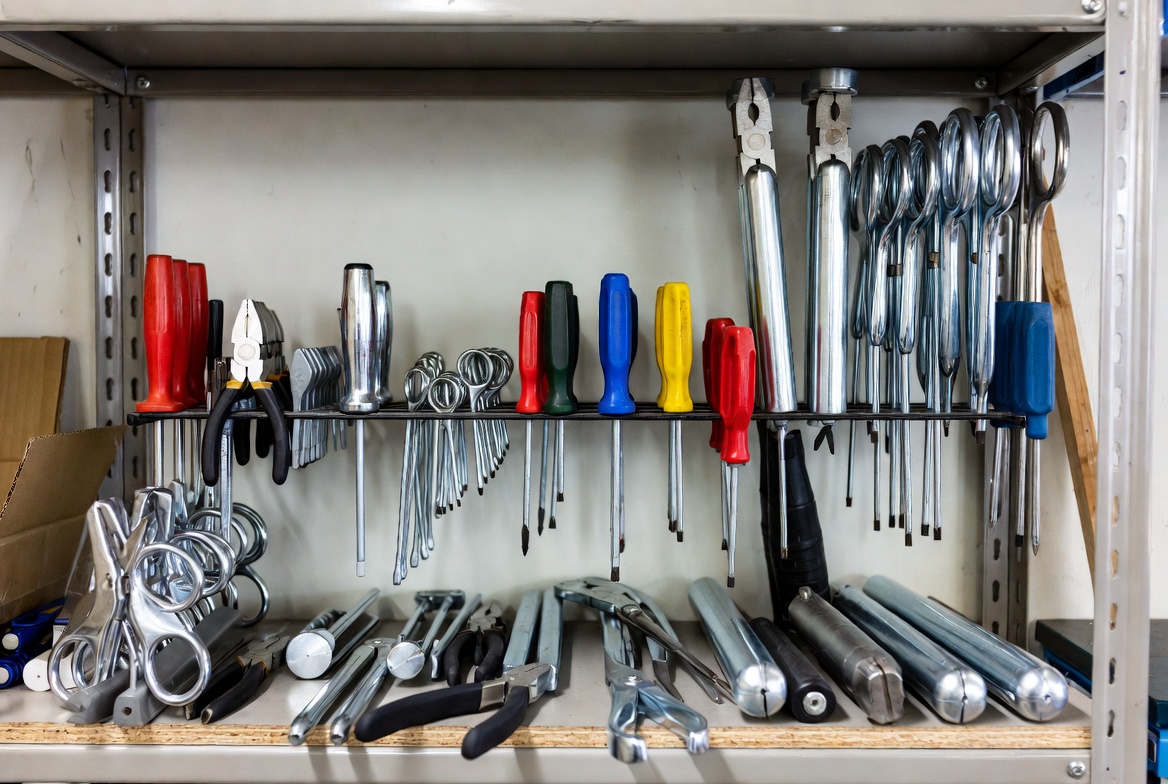
Stationary tools, meaning tools that stay in one place for long periods, are especially vulnerable because they are not inspected every day. Office scissors are a good example: they may be used for paper, packaging tape, labels, or light craft tasks, then dropped into a drawer with staples, paper clips, or other metal items that scratch the surface and trap moisture.
Start with Cleaning Before Storage
Good rust prevention begins before the tool goes back into storage. Dirt, adhesive, paper fibers, and oils from the hand can hold moisture against metal surfaces. For scissors and similar hand tools, wipe the blades and handles with a dry cloth after use. If tape adhesive is present, use a suitable cleaner for the tool surface, then dry the item completely before storage.
- Remove visible debris, paper dust, and adhesive residue.
- Dry the tool fully, especially around joints, pivots, and blade edges.
- Avoid putting damp tools into closed boxes or plastic bags.
- Inspect for early brown spots, stiffness, or rough movement.
- Keep cutting edges separate from staples, clips, or abrasive items.
If a light protective oil is used on metal surfaces, apply only a thin layer and wipe away excess. Too much oil attracts dust and may stain paper. For office scissors used around documents, always wipe blades clean before cutting.
Control Humidity in Drawers, Cabinets, and Tool Chests
Moisture control is one of the most effective ways to slow rust. The original guidance noted that relative humidity below 50% is a useful target for storage areas. In real workplaces, that may require small changes: move tools away from windows, sinks, exterior walls, damp storage rooms, and concrete floors. In humid climates, consider desiccant packs or a room dehumidifier where tools are stored.
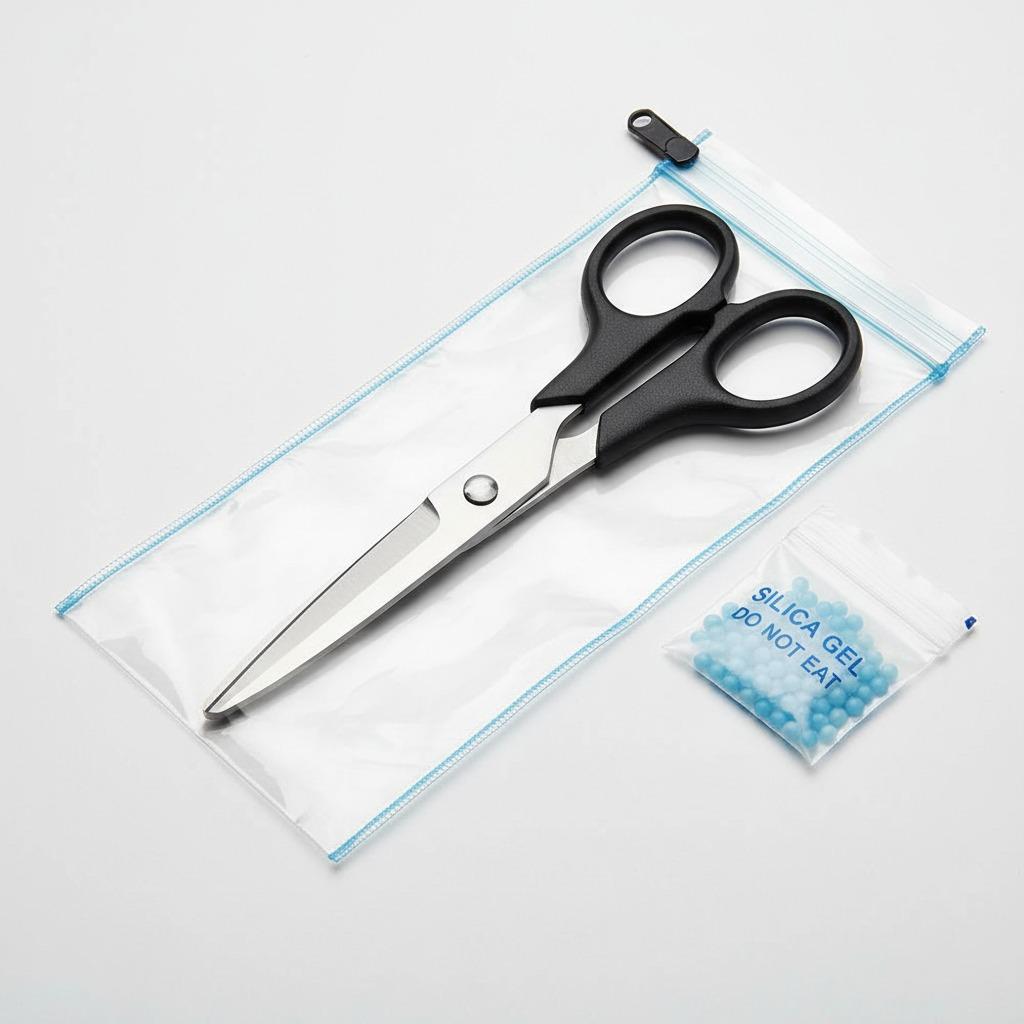
Silica gel packets, moisture absorbers, and sealed storage boxes can help, but they need attention. Desiccants become less effective after absorbing moisture, so ask the supplier whether the product can be recharged or how often it should be replaced. If tools are stored in a shared office cabinet, label the storage area and make tool care part of routine housekeeping.
Choose the Right Storage Method
No single storage method is best for every tool. The right choice depends on humidity, tool value, frequency of use, and whether the tools are used in an office, workshop, school, or packing station. The table below compares common options.
| Storage method | Rust protection | Best use | Care note |
|---|---|---|---|
| Open desk cup or holder | Low to medium | Frequently used office scissors | Use only in dry rooms; wipe blades often |
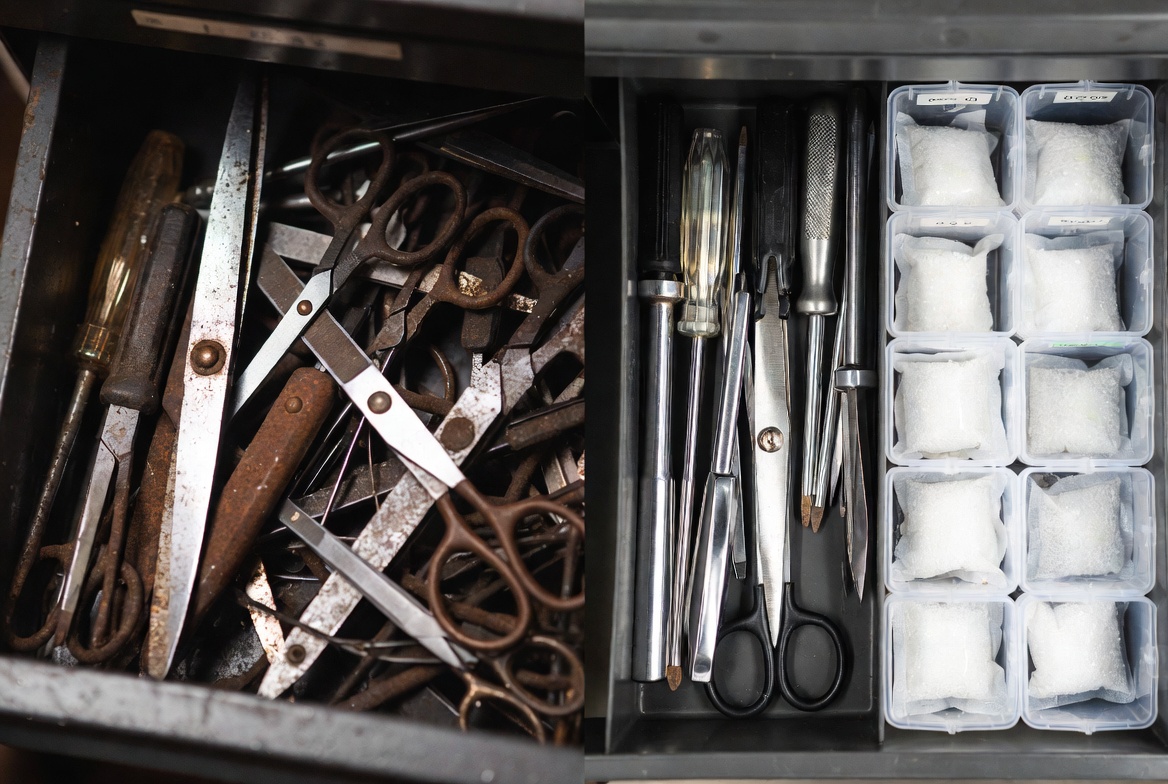
| Drawer with divider tray | Medium | Office tools, cutters, clips | Keep metal tools separated to reduce scratches |
| Sealed box with silica gel | High | Tools stored for weeks or months | Check and replace or recharge desiccant |
| Tool chest with liner | Medium to high | Workshop or maintenance tools | Avoid damp liners and clean spills quickly |
| VCI paper or rust-inhibiting wrap | High | Longer-term storage of metal tools | Ask supplier about suitability and service life |
Special Care for Office Scissors
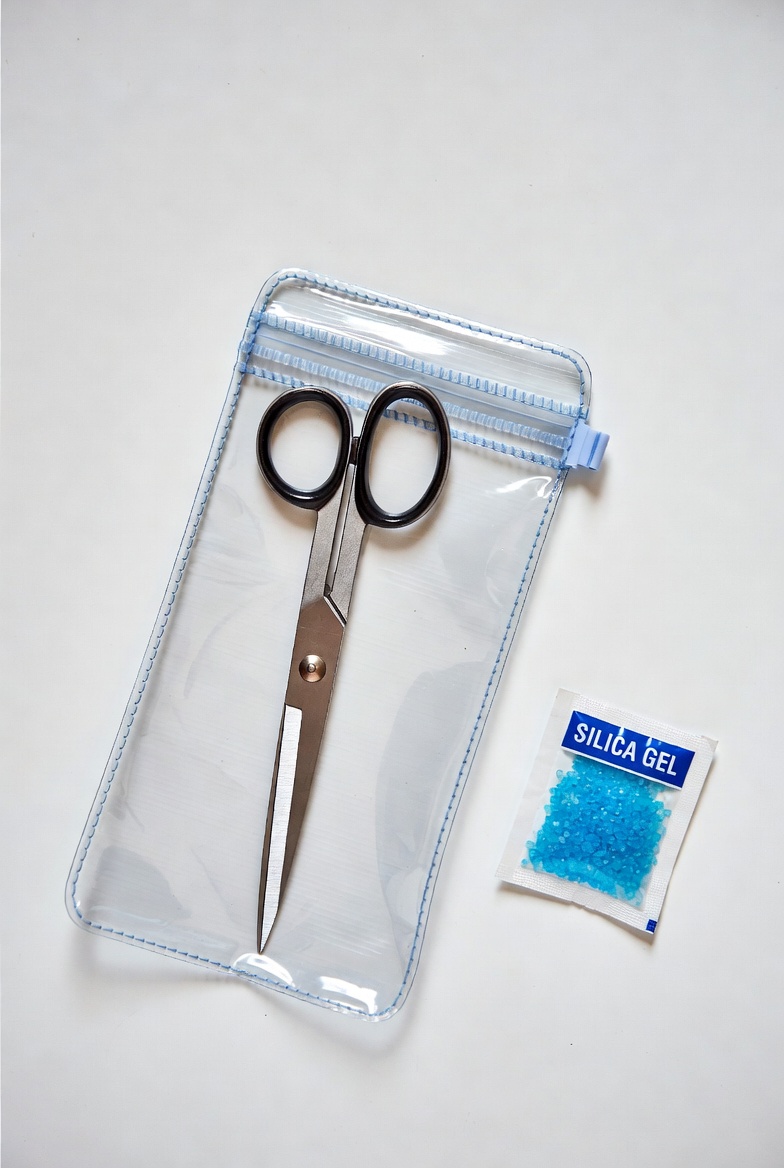
Office scissors are small, but they need the same basic care as larger metal tools. Store them closed and dry. If they are kept in a drawer, use a tray or pouch so the blades do not rub against paper clips, staples, keys, or other hard items. Scratches can expose fresh metal and make rust easier to start.
After cutting tape, packaging, or labels, remove sticky residue before it hardens. Do not wash scissors and leave them wet; water can remain near the screw or pivot. If scissors begin to feel stiff, clean the pivot area and dry it carefully. A tiny amount of suitable lubricant may help, but excess should be wiped off before office use.
Routine Maintenance Checklist
A simple routine prevents most rust problems before they become permanent. Use this checklist monthly, or more often in humid environments:
- Empty the storage drawer or box and check for moisture, dust, and rust spots.
- Wipe tools with a clean, dry cloth.
- Remove adhesive, paper fibers, and grit from blades and joints.
- Replace damp cardboard, cloth liners, or paper packaging.
- Add or refresh silica gel or other moisture absorbers if used.
- Separate sharp tools from loose metal items.
- Check scissors for smooth opening and closing.
- Move tools away from damp walls, windows, sinks, or floor-level storage.
What to Ask When Sourcing Office Scissors or Metal Tools
If you purchase office scissors or stationery tools for a business, school, distributor, or office supply program, rust resistance should be part of your product evaluation. Do not assume all metal tools perform the same in storage. Ask suppliers practical questions instead of relying on broad descriptions.
- What materials are used for the blades and other metal parts?
- Are there any surface treatments or coatings, and how should they be maintained?
- What storage conditions does the supplier recommend?
- Can samples be tested in the buyer's actual workplace environment?
- How should tools be packed for humid shipping or warehouse storage?
- Are care instructions available for end users or retail packaging?
These questions help buyers compare products responsibly without requiring unsupported claims about performance, certifications, or lifespan.
Key Takeaways
- Rust is driven by moisture, oxygen, salts, and residue left on metal surfaces.
- Clean and dry tools before storage, especially scissors used on tape or packaging.
- Humidity control matters; desiccants and sealed storage can help in damp areas.
- Keep office scissors separated from loose metal items to reduce scratches.
- Regular inspection is easier and cheaper than removing advanced corrosion.
FAQ
Can office scissors rust in a normal desk drawer?
Yes. A desk drawer can trap humidity, dust, fingerprints, and residue. If scissors are stored with damp paper, staples, or other metal items, rust risk increases.
Should I oil office scissors?
A very light amount of suitable lubricant may be used on metal parts or the pivot, but excess oil should be wiped away. For scissors used on documents, clean the blades before cutting paper.
Is a plastic box enough to prevent rust?
A plastic box helps only if the tools are dry before storage. If moisture is sealed inside, rust can still form. Add silica gel or another moisture absorber when needed.
How often should stored tools be checked?
Monthly inspection is a practical starting point. Check more often in humid climates, warehouses, basements, or storage areas near water sources.
What should I do if rust has already appeared?
For light surface rust, clean and dry the tool, then use an appropriate rust-removal method for the material. If cutting edges are pitted, loose, or unsafe, replacement may be the better option.
Preventing rust does not require complicated habits. Clean tools, reduce moisture, store them thoughtfully, and inspect them regularly. With those basics in place, everyday office scissors and other stationary tools can remain easier to use and better protected during storage.
