




Professional Kitchen Scissors: Practical Buying and Use Guide
Professional kitchen scissors are more than a backup tool for opening packaging. In home kitchens, restaurants, catering prep areas, and product lines for retailers, a well-chosen pair of kitchen shears can speed up repeated cutting tasks and reduce the need to switch between a knife and cutting board. The original article highlighted stainless steel blades, black ergonomic handles, ambidextrous use, and everyday versatility for jobs such as cutting poultry, trimming fat, snipping herbs, and cracking nuts. This guide expands those points into practical selection, use, care, and sourcing advice.

Key Takeaways
- Choose kitchen scissors based on the main task: poultry, herbs, packaging, seafood, or general prep.
- Stainless steel blades are valued for sharpness, durability, and resistance to kitchen moisture.
- Handle comfort matters when scissors are used repeatedly in commercial or busy home kitchens.
- OEM and wholesale buyers should verify details such as materials, packaging, branding, testing, lead time, and after-sales support.
- Good care habits help preserve cutting performance and hygiene.
What Makes Kitchen Scissors Professional?
The word "professional" should refer to performance and suitability, not just appearance. A professional pair of kitchen scissors should cut cleanly, feel stable in the hand, and withstand frequent contact with food, water, and cleaning routines. For a chef or prep worker, the tool must be predictable. For a retailer, distributor, or brand owner, it must also be consistent from batch to batch.
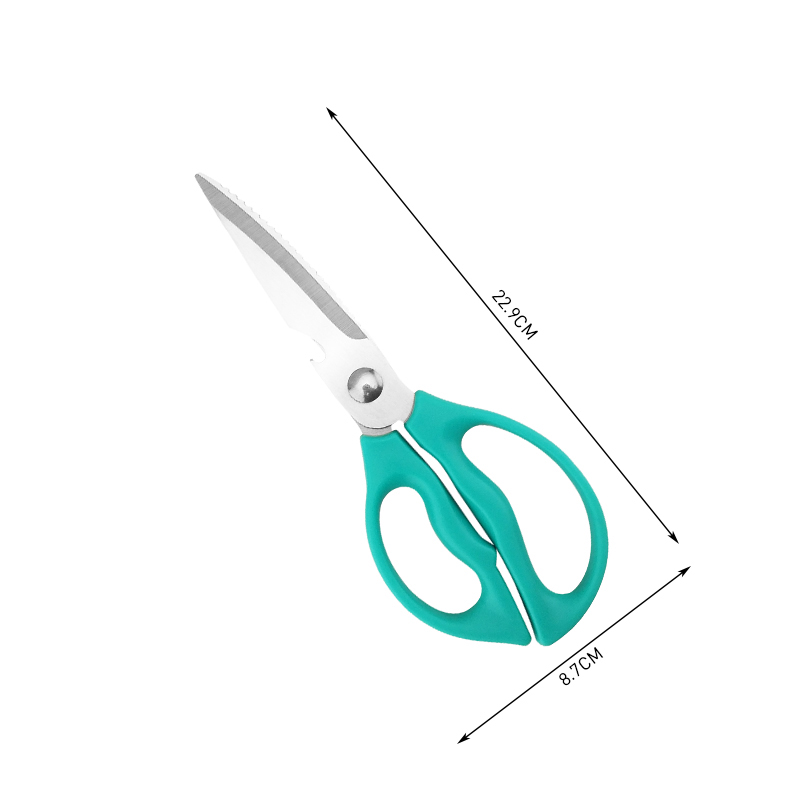
The featured product in the source article is described as premium stainless steel kitchen shears with black ergonomic handles. Those are useful starting points. Stainless steel is commonly selected for kitchen tools because it can resist corrosion better than many non-stainless metals. Ergonomic handles can improve control, especially when cutting slippery foods or repeating the same motion many times.
Common Uses in Home and Commercial Kitchens
Kitchen shears are useful because they bring the cutting edge directly to the food. This can be faster than moving ingredients to a board for every small cut. Typical applications include trimming fat, cutting cooked or raw poultry into portions, snipping herbs, cutting dough sheets, opening food packaging, trimming vegetables, and portioning seafood shells or fins when the blade strength is suitable.
For poultry work, buyers should look for strong blade alignment and a secure grip. For herbs, a clean edge and comfortable control are more important than heavy-duty leverage. For packaging, ease of cleaning becomes critical because adhesives and oils can collect near the pivot. No single pair is ideal for every job, so the best choice depends on the main use case.
Comparison Checklist for Selecting Kitchen Shears
| Selection Point | Why It Matters | Questions to Ask |
|---|---|---|
| Blade material | Affects sharpness, corrosion resistance, and service life. | What stainless steel is used, and how is it described in the supplier specification? |
| Blade edge | Determines whether the scissors cut cleanly through herbs, meat, or packaging. | Is the edge suitable for the intended food-prep task? |
| Handle design | Influences comfort, grip security, and fatigue during repeated use. | Is the handle ambidextrous, textured, or shaped for long prep sessions? |
| Pivot construction | Controls smooth movement and blade alignment. | Can the pivot be cleaned easily, and does it remain stable after repeated cutting? |
| Extra functions | Some shears include nut-cracking or bottle-opening features. | Are added functions useful for the buyer's market, or do they add unnecessary complexity? |
| Packaging and branding | Important for retail, private label, and gift sets. | What packaging formats, logo options, and labeling requirements can be discussed? |
Blade and Handle Features to Review
Sharpness is the first thing most users notice, but long-term satisfaction depends on more than the initial cut. A good blade should meet the opposite blade precisely, with no loose gap that bends food instead of cutting it. Edge retention, corrosion resistance, and clean finishing all affect the user experience.
The original content states that the shears use stainless steel blades and ergonomic black handles. When comparing products, ask whether the handle shape supports both left- and right-handed users if ambidextrous use is important. A non-slip feel is valuable when hands are wet, but buyers should confirm the exact handle material, texture, and cleaning recommendations rather than assuming them.
- Check whether the scissors open and close smoothly without wobble.
- Inspect the tip, blade edge, and pivot area for rough finishing.
- Hold the handle with wet and dry hands to judge control.
- Match the blade strength to the hardest task it will perform.
- Confirm whether the product is intended for dishwasher cleaning or hand washing.
Use and Care for Longer Service Life
Even durable kitchen scissors need simple maintenance. Wash them soon after cutting raw meat, seafood, sticky packaging, or acidic foods. Dry the blades and pivot area thoroughly before storage. If the shears are used for raw poultry, treat them like any other raw-meat tool and avoid cross-contact with ready-to-eat foods until they are properly cleaned.
Do not use kitchen shears on tasks beyond their design, such as cutting wire, hard plastic, or frozen bones unless the supplier specifically states that the model is suitable. Misuse can damage the edge or loosen the pivot. For commercial kitchens, assigning dedicated shears for raw proteins, herbs, and packaging can simplify hygiene management.
Guidance for OEM, Wholesale, and Supplier Buyers
For B2B sourcing, a product sample is only the beginning. Importers, distributors, retail buyers, and private-label brands should review whether a kitchen scissors manufacturer can maintain consistent finishing, packaging, and quality control. The original article mentioned OEM kitchen scissors and custom scissors production, so buyers should prepare a clear specification sheet before requesting a quotation.
Useful sourcing questions include: What blade material is specified? What handle material and color options are available? Can the supplier provide logo placement options? What packaging formats are offered? What quality checks are performed before shipment? What are the lead time, sample process, payment terms, and after-sales process? Are any market-specific labeling or compliance documents available if required by the destination country?
If a supplier is based in a blade manufacturing region such as Yangjiang, that may be relevant experience, but it is not a substitute for due diligence. Buyers should request samples, compare production samples with approved samples, and avoid assuming certifications, capacity, or test results unless they are documented by the supplier.
FAQ
Are professional kitchen scissors the same as regular household scissors?
Not usually. Kitchen scissors are designed for food-prep tasks and should be easier to clean than general household scissors. They may also have stronger blades and larger handles.
Can stainless steel kitchen shears rust?
Stainless steel is chosen for corrosion resistance, but it still needs proper cleaning and drying. Salt, moisture, and food residue can shorten service life if left on the blades.
What should wholesale buyers confirm before ordering?
Confirm blade and handle materials, logo options, packaging, sample approval steps, quality inspection process, lead time, and any documents needed for the target market.
Are ambidextrous handles important?
They are useful when scissors will be shared by multiple users in a home, restaurant, or workplace. Buyers should test comfort for both left- and right-handed users.
How should kitchen scissors be stored?
Store them dry, closed, and away from loose contact with other metal tools that may nick the edge. In commercial kitchens, keep them in a clean, assigned location.
Final Selection Advice
The best professional kitchen scissors are selected by matching the tool to real kitchen work. For consumers, that means choosing a pair that feels secure, cuts the foods you prepare most often, and is easy to clean. For OEM and wholesale buyers, it means turning those same user needs into a written specification and confirming supplier details before production. A reliable pair of stainless steel kitchen shears can become one of the most-used tools in a kitchen, but only when the design, care routine, and sourcing expectations are clearly aligned.
