




Reliable Drain Basket Supplier China: How to Source Drain Baskets with Less Risk
Sourcing a drain basket or colander set from China can be efficient, but it should not be treated as a quick price comparison exercise. Importers, wholesalers, private-label brands, and kitchenware distributors need products that are consistent, practical, well packed, and suitable for the expectations of their market. Common sourcing problems include variable material quality, color inconsistency, unclear packaging standards, delayed shipments, and missing details about compliance documents.
If you are looking for a reliable drain basket supplier China buyers can work with long term, the best approach is to evaluate both the product and the supplier process. A drain basket may look simple, but small design details such as handle comfort, drainage speed, nesting fit, plastic thickness, and carton protection can affect returns, reviews, and repeat orders.
What Buyers Usually Need from China Drain Basket Manufacturers
Drain baskets are everyday kitchen accessories, so buyers generally need a balance of cost control, durability, and user-friendly design. For B2B sourcing, the supplier should be able to explain available materials, color options, packing methods, lead time, sampling process, and quality inspection steps before mass production.
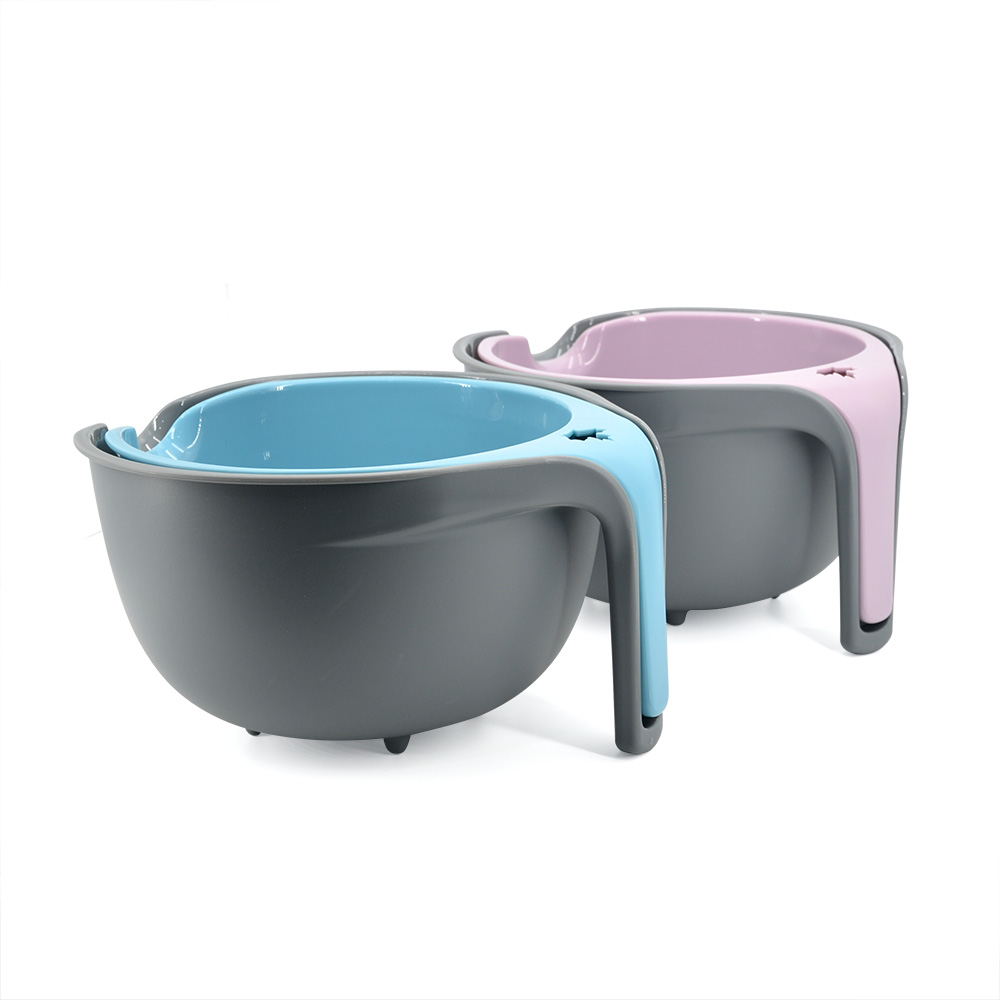
The original product example is a Duo-Tone Multifunctional Colander and Mixing Bowl Set. It includes a pink colander with star-shaped perforations and a gray mixing bowl that nests inside it to save space. The set is described as made from durable, BPA-free plastic, and it is intended for rinsing produce, draining pasta, and mixing ingredients. These are useful product facts for buyers because they show the type of feature set that can appeal to home kitchen channels, online retail, and general household goods assortments.
Product Features to Check Before Placing an Order
Before committing to a wholesale purchase, review the drain basket as a complete retail product, not just as a molded plastic item. The shape should be stable on a countertop or in a sink. The drainage holes should release water efficiently without allowing typical foods to slip through too easily. Handles should feel comfortable and should not flex excessively during normal use.
- Drainage design: Confirm hole shape, drainage speed, and whether the pattern is easy to clean.
- Nesting fit: If the product includes a bowl, check that the colander nests neatly without sticking or rattling too much.
- Surface finish: Look for rough edges, molding marks, uneven color, or visible defects.
- Material statement: Ask the supplier to confirm the plastic type and any available supporting documents.
- Packaging: Confirm retail box, label, barcode, polybag, carton strength, and drop-protection expectations.
- Use case: Make sure the size and design match your sales channel, whether supermarket, online marketplace, gift set, or kitchenware wholesale.
Supplier Evaluation Checklist
A trustworthy supplier should answer sourcing questions clearly and consistently. Do not rely only on product photos. Ask for samples, production photos, packaging layouts, and written confirmation of commercial terms. If compliance, food-contact documentation, or third-party testing is required in your destination market, ask what documents are available and whether new testing will be needed for your order.
| Evaluation Area | What to Check | Questions to Ask |
|---|---|---|
| Product quality | Material feel, drainage holes, handle strength, nesting accuracy, surface finish | Can you provide a pre-production sample and confirm the final approved sample will be used as the standard? |
| Compliance support | Food-contact requirements, BPA-free claim support, labeling needs | What documents are available for this material, and are they valid for my target market? |
| Production control | Color consistency, defect limits, inspection process | How do you control color matching and what inspection standard is used before shipment? |
| Customization | Color, logo, packaging, bundle configuration | What customization options are available, and what costs or lead times change? |
| Commercial terms | MOQ, sample fee, lead time, payment terms, shipping method | Can you quote clearly by product, packaging, carton quantity, and Incoterm? |
How to Compare Drain Basket Designs
For many buyers, the choice is between a simple single colander and a multifunctional colander plus bowl set. A single drain basket is usually easier to position as a low-cost item, while a two-piece set may offer stronger perceived value because it supports more kitchen tasks. The Duo-Tone Multifunctional Colander and Mixing Bowl Set fits this second category: the pink colander is paired with a gray mixing bowl, allowing users to rinse, drain, and mix with one nested set.
When comparing designs, consider how the product will be displayed and shipped. A nested set can save space in kitchen cabinets and may also help optimize carton packing, but buyers should confirm actual packing dimensions with the supplier. For online sales, product stability, clear photography, and packaging strength are especially important because customer reviews often mention practical use rather than factory specifications.
Sampling and Quality Control Steps
A sample process is essential when sourcing from any overseas supplier. First, request a standard sample to evaluate shape, color, weight, handle comfort, and drainage performance. Second, if you make changes to color, logo, or packaging, request a revised sample or pre-production sample. Third, document approval with photos, measurements, and written notes so both sides know the expected standard.
- Request product photos, available colors, packaging options, and quotation details.
- Order samples and test them with produce, pasta, and normal washing conditions.
- Confirm material statements and ask what compliance documents are available.
- Approve packaging artwork and carton marks before mass production.
- Arrange final inspection or request inspection photos before shipment.
Quality control should include appearance, function, quantity, packaging, and carton condition. If your market has strict food-contact requirements, do not assume one general statement is enough. Ask the supplier what can be documented and consider independent testing when needed.
Reducing Cost Without Creating Product Problems
Price matters in wholesale sourcing, but the lowest quote is not always the best landed cost. Thin material, weak handles, poor packaging, and inconsistent color may create returns or discounting later. Instead of pushing only for a lower unit price, compare the full value: product usability, packaging reliability, communication speed, sample accuracy, and shipment preparation.
Buyers can also reduce risk by starting with a focused assortment. For example, a colander and bowl set in a soft pastel color combination may be tested in a smaller order before expanding into more colors or private-label packaging. Ask suppliers how changes affect MOQ, tooling, lead time, and carton packing rather than assuming every option is equally simple.
Key Takeaways
- A reliable drain basket supplier should provide clear answers on samples, materials, packaging, lead time, and inspection.
- Evaluate the product in real use: drainage, nesting, handle comfort, cleaning, and surface finish.
- For the Duo-Tone Multifunctional Colander and Mixing Bowl Set, the explicit features to verify are the pink colander, star-shaped perforations, gray nesting bowl, BPA-free plastic claim, and multifunctional use.
- Do not rely on price alone; poor quality control can increase total sourcing cost.
FAQ
What should I ask a drain basket supplier in China before ordering?
Ask about available materials, sample process, MOQ, lead time, packaging options, carton details, inspection standards, and any documents supporting food-contact or BPA-free claims for your target market.
Is a colander and mixing bowl set better than a single drain basket?
It depends on your sales channel. A single basket may suit budget assortments, while a nested colander and bowl set can offer more functions for rinsing, draining, and mixing.
How can I check product quality from overseas?
Start with samples, record the approved standard, confirm packaging, and arrange pre-shipment inspection when order value or market risk justifies it.
Can suppliers customize colors or packaging?
Many kitchenware suppliers may offer customization, but details vary. Ask about MOQ, added cost, lead time, color matching process, and whether a pre-production sample will be provided.
What should I avoid when selecting a supplier?
Avoid unclear quotations, unsupported quality claims, unwillingness to provide samples, vague packaging details, and suppliers who cannot explain how defects are checked before shipment.
