




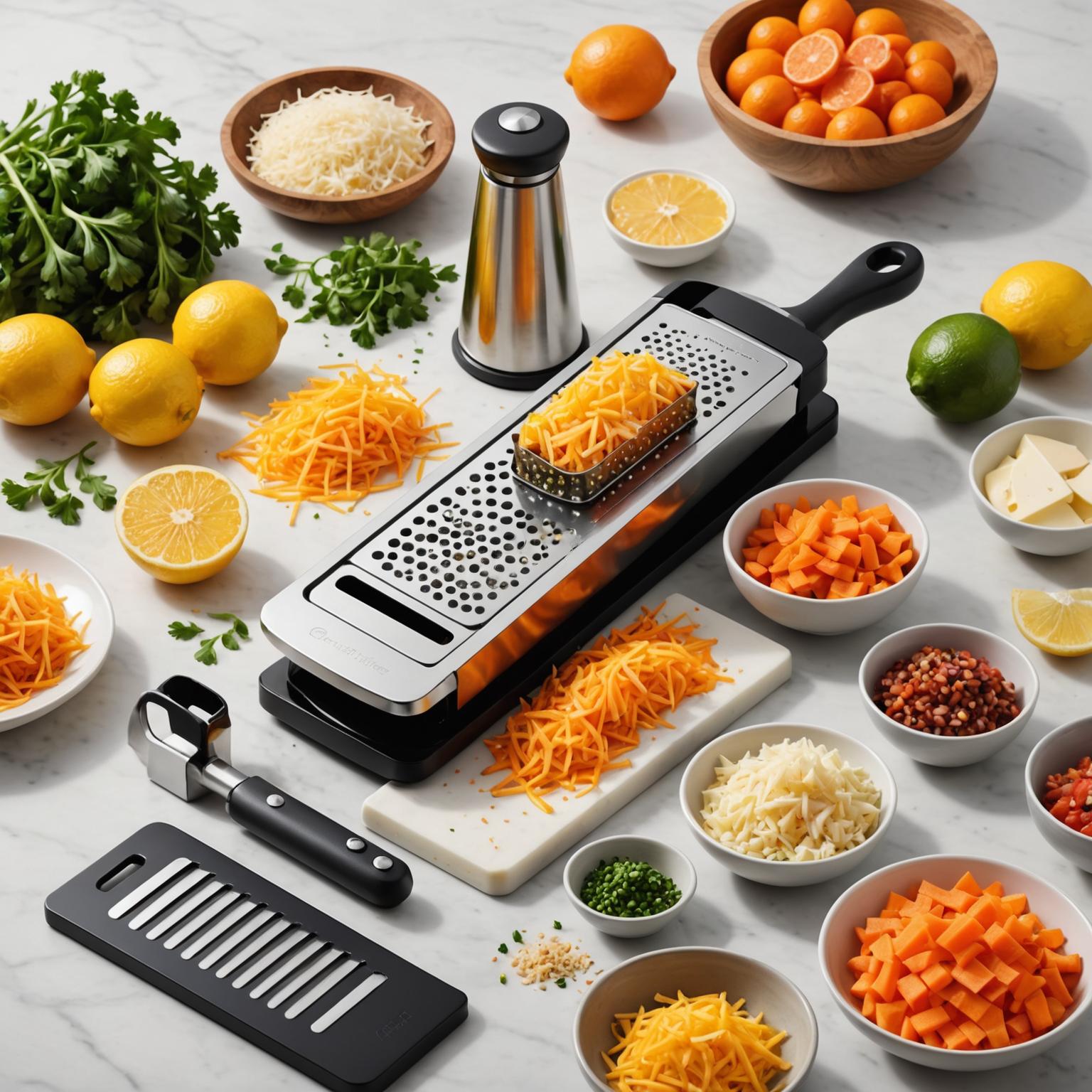
4-in-1 Grater Kit: Practical Guide for Faster Kitchen Prep
A 4-in-1 grater kit is designed for everyday prep tasks such as shredding cheese, slicing vegetables, zesting citrus and preparing firm fruits. Instead of using several separate tools, this type of kit combines interchangeable grating and slicing parts with a container that helps collect ingredients as you work. The original product description highlights a yellow-themed set with four essential components, a transparent container with visible measurement marks, stainless steel blades on the larger grating and slicing plate, a finer grating plate and a cylindrical tool for fruit preparation.
For home cooks, the value of a multi-function grater is not only speed. It is also about control, safer handling and easier cleanup. The right kit can reduce cutting-board clutter, help portion ingredients and make repetitive tasks more consistent. The wrong kit, however, may feel awkward, be difficult to clean or take up more storage space than expected. This guide explains how to evaluate and use a 4-in-1 grater kit with practical buying and care advice.
Key Takeaways
- A 4-in-1 grater kit is best for common prep tasks: shredding, slicing, fine grating and selected fruit preparation.
- A transparent container with measurement marks helps monitor ingredient quantity while reducing mess.
- Stainless steel blades should still be handled carefully, cleaned promptly and stored safely.
- Before buying, check how the parts attach, how stable the container is and whether the set fits your storage space.
- Dishwasher-safe claims should be confirmed from the product instructions, especially for lids, blades and plastic parts.
What Is Included in a 4-in-1 Grater Kit?
A typical 4-in-1 grater kit combines several prep surfaces or attachments in one compact set. Based on the original article, this kit includes four core components tailored for grating and slicing needs. The central container is transparent and has visible measurement marks, allowing you to see how much cheese, carrot, cucumber or other ingredient has been prepared. This is useful when following recipes that call for approximate volumes.
The larger plate is intended for shredding and slicing tasks and is described as using stainless steel blades. A finer grating plate is suited to more delicate work, such as zesting citrus or processing spices. The set also includes a cylindrical tool that can help with fruit preparation, including fruits such as apples, depending on the task and the design of the attachment. A smooth twisting action is mentioned in the source description, which suggests a more controlled hand movement than cutting directly with a knife.
Best Uses for Everyday Cooking
A multi-function grater is most useful when it stays on the practical side of food preparation. It will not replace every knife skill or appliance, but it can handle many small to medium tasks efficiently. Common uses include shredding semi-firm cheese, slicing vegetables for salads, grating carrots for slaws, zesting lemons or oranges and preparing toppings for soups, noodles or grain bowls.
For best results, match the ingredient to the correct attachment. Use the larger grating surface when you want visible shreds or slices. Use the fine grater when you need small particles and aromatic zest. Avoid forcing very hard foods through a blade if the tool does not feel stable. If an ingredient is slippery, wet or too small to hold safely, use a food holder if supplied, or stop before your fingers get close to the cutting surface.
Comparison and Buying Checklist
Before choosing a 4-in-1 grater kit, look beyond the number of functions printed on the packaging. The details below affect comfort, safety and long-term usability.
| Feature to Check | Why It Matters | Questions to Ask Before Buying |
|---|---|---|
| Container with measurements | Helps collect food and estimate quantities during prep. | Are the markings easy to read, and is the container stable on the counter? |
| Blade material | Stainless steel blades are stated in the source for the larger plate and are common for cutting performance. | Which parts use stainless steel, and how should they be cleaned? |
| Attachment fit | Loose parts can make slicing uneven or uncomfortable. | Do the plates lock securely into the container or frame? |
| Fine grater surface | Useful for citrus zest, spices and small garnishes. | Is it fine enough for zest without removing too much bitter pith? |
| Fruit preparation tool | Can help with selected fruits when used correctly. | Which fruits and sizes are recommended by the supplier? |
| Cleaning method | Food can cling to small holes and blade edges. | Are all parts dishwasher safe, or are some hand-wash only? |
| Storage size | A compact set is easier to keep accessible. | Do the components nest together neatly after washing? |
How to Use the Kit Safely
Even a small grater can cause cuts if used carelessly. Place the container on a flat, dry surface before attaching any plate. Make sure the selected insert is seated correctly. Hold food firmly and move it with steady pressure rather than fast, uncontrolled strokes. When the remaining piece becomes too short to grip safely, stop or use a protective holder if one is included.
- Wash and dry the ingredient before grating or slicing.
- Choose the correct plate for the texture you want.
- Attach the plate securely to the container or frame.
- Work in smooth, controlled movements away from your fingers.
- Empty the container before it becomes overfilled.
- Rinse the blade area soon after use to prevent food from drying in the openings.
For citrus zest, use light pressure and rotate the fruit often. The goal is to remove the colorful outer layer, not the bitter white pith. For cheese, chill softer varieties briefly if they smear instead of shred. For vegetables with high water content, such as cucumber, use gentle pressure and expect a softer slice than you would get from a dedicated mandoline.
Cleaning and Care Tips
The original article describes the kit as dishwasher safe, but it is still wise to check the product instructions for the specific set you buy. Some dishwasher-safe items last longer when the blade plates are rinsed immediately and placed securely in the top rack. If hand washing, use a brush and clean from the non-sharp side where possible. Avoid wiping directly along the cutting edge with a loose cloth.
Dry all parts fully before storage to reduce water spots and odor buildup. Store blades where they cannot scrape other utensils or catch fingers when reaching into a drawer. If the kit nests inside its container, make sure no moisture is trapped between parts. Periodically check for cracks in plastic components, loosened inserts or dull blade performance. Replace the tool if it no longer holds attachments securely.
Who Should Consider a 4-in-1 Grater Kit?
This type of kitchen tool is well suited to small households, busy home cooks, meal-prep routines and kitchens with limited drawer space. It is especially useful if you often prepare salads, soups, tacos, pasta toppings, stir-fry vegetables or baked dishes that require grated ingredients. The visible measuring container is helpful for cooks who prefer to prep directly into one vessel instead of transferring ingredients from a cutting board.
It may be less suitable if you regularly process very large batches, need highly uniform paper-thin slices or prefer electric appliances for repetitive prep. In those cases, a food processor, mandoline or commercial prep tool may be more appropriate. For most home kitchens, though, a compact multi-function grater can be a convenient middle option between a simple handheld grater and a larger appliance.
FAQ
Can a 4-in-1 grater kit replace a knife?
No. It can reduce some slicing and grating work, but a knife is still needed for trimming, cutting large items down to size and tasks requiring precise cuts.
Is the container only for catching food?
The container catches ingredients and, when marked with measurements, helps you estimate quantity as you prepare food. It can also reduce counter mess.
What foods work best with the fine grater?
The fine grater is useful for citrus zest, small amounts of spice, hard cheese and garnishes. Use light pressure for best control.
How do I know whether all parts are dishwasher safe?
Check the care instructions supplied with the product. If the instructions are unclear, ask the seller which parts can go in the dishwasher and which should be hand washed.
What should I ask before buying online?
Ask about attachment security, cleaning guidance, blade material for each insert, container dimensions, replacement part availability and whether the product photos show all included components.
