




Ice Tray Manufacturing: Supplier Sourcing and Product Innovation Guide
Ice tray manufacturing covers a practical category of kitchenware used in homes, bars, restaurants, hotels, and retail houseware assortments. Although an ice cube tray looks simple, buyers still need to evaluate material, mold design, usability, packaging, and supplier reliability before placing a wholesale or OEM order. The original market has expanded from basic plastic trays to flexible silicone ice trays, lidded trays for freezer storage, and specialty products such as ice ball makers for cocktails and beverage presentation.
This guide explains how to assess ice cube trays suppliers, what to look for in silicone and plastic options, and which questions to ask when sourcing products for retail, hospitality, or private label programs. It does not assume unverified specifications; instead, it focuses on practical checks that help buyers compare suppliers clearly.
Key Takeaways
- Ice tray sourcing should start with the intended user: home kitchen, bar service, hospitality, retail promotion, or private label.
- Silicone ice trays are valued for flexibility, easy release, cleaning convenience, and resistance to cracking, while plastic trays may appeal for rigid stacking and familiar handling.
- Supplier selection should include questions about materials, tooling, packaging, quality inspection, lead times, and customization options.
- Specialty designs such as multi-compartment ice ball makers can add value when they solve a real use case, not just when they look different.
Understanding Ice Tray Manufacturing
In ice tray manufacturing, the core objective is consistent ice formation with a product that is easy to fill, freeze, release, clean, and store. Manufacturers may produce conventional cube trays, flexible silicone molds, covered trays, novelty shapes, or larger molds for spherical ice. Each design choice affects the user experience. For example, thicker walls may improve stability, while flexible sections can help users release ice without using hot water.
For B2B buyers, the manufacturing conversation should be specific. Ask whether the supplier produces the item directly or trades through another factory. Clarify how tooling is managed, whether existing molds are available, and whether custom shapes, colors, lids, or packaging can be discussed. If the product is intended for food-contact use, ask the supplier to provide relevant documentation for the target market rather than assuming compliance.
Why Ice Cube Trays Suppliers Matter
Ice cube trays suppliers are important because they connect product design, production control, packaging, and delivery. A good supplier does more than quote a unit price. They should be able to explain material options, recommend suitable designs for the intended channel, and identify possible risks before production begins.
Retailers may prioritize shelf-ready packaging, barcode placement, and carton durability. Hospitality buyers may focus on ease of cleaning and repeated handling. Promotional buyers may need color matching or logo packaging, while e-commerce sellers should consider product photography, dimensional accuracy, and packaging that reduces transit damage. Because each channel has different requirements, buyers should share the sales scenario early in the sourcing process.
Plastic vs. Silicone Ice Trays
Plastic and silicone are both common in the ice tray market. The best choice depends on user expectations, price position, packaging format, and product design. Silicone ice trays have become popular because they are flexible, easy to clean, and resistant to cracking. They also help users release ice more easily. Plastic trays remain common because they are familiar, rigid, and often simple to stack.
| Selection Point | Plastic Ice Trays | Silicone Ice Trays | Questions to Ask a Supplier |
|---|---|---|---|
| Ice release | Rigid structure may require twisting or brief warming | Flexible body can make release easier | How does the tray perform after repeated freeze and release cycles? |
| Cleaning | Simple shapes are usually easier to rinse | Flexible molds can be convenient to clean | Are there grooves, lids, or seams that need special cleaning attention? |
| Storage | Often stackable when designed with a flat top | Lids may improve stackable freezer storage | Is a lid included, and does it fit securely during freezing? |
| Design range | Common for standard cubes | Useful for domes, spheres, and flexible shapes | Which existing molds are available, and what customization is possible? |
| Buyer checks | Confirm material, finish, and packaging | Confirm flexibility, odor control, and documentation | Can the supplier provide samples before bulk production? |
Product Innovation: Beyond Standard Cubes
Innovation in ice tray manufacturing is often about usability rather than decoration. Lids can help trays stack neatly in the freezer. Smooth compartments can support cleaner ice shapes. Larger cavities can create slower-melting ice pieces for cocktails, coffee, juice, or everyday drinks. The goal is to make filling, freezing, and release more predictable.
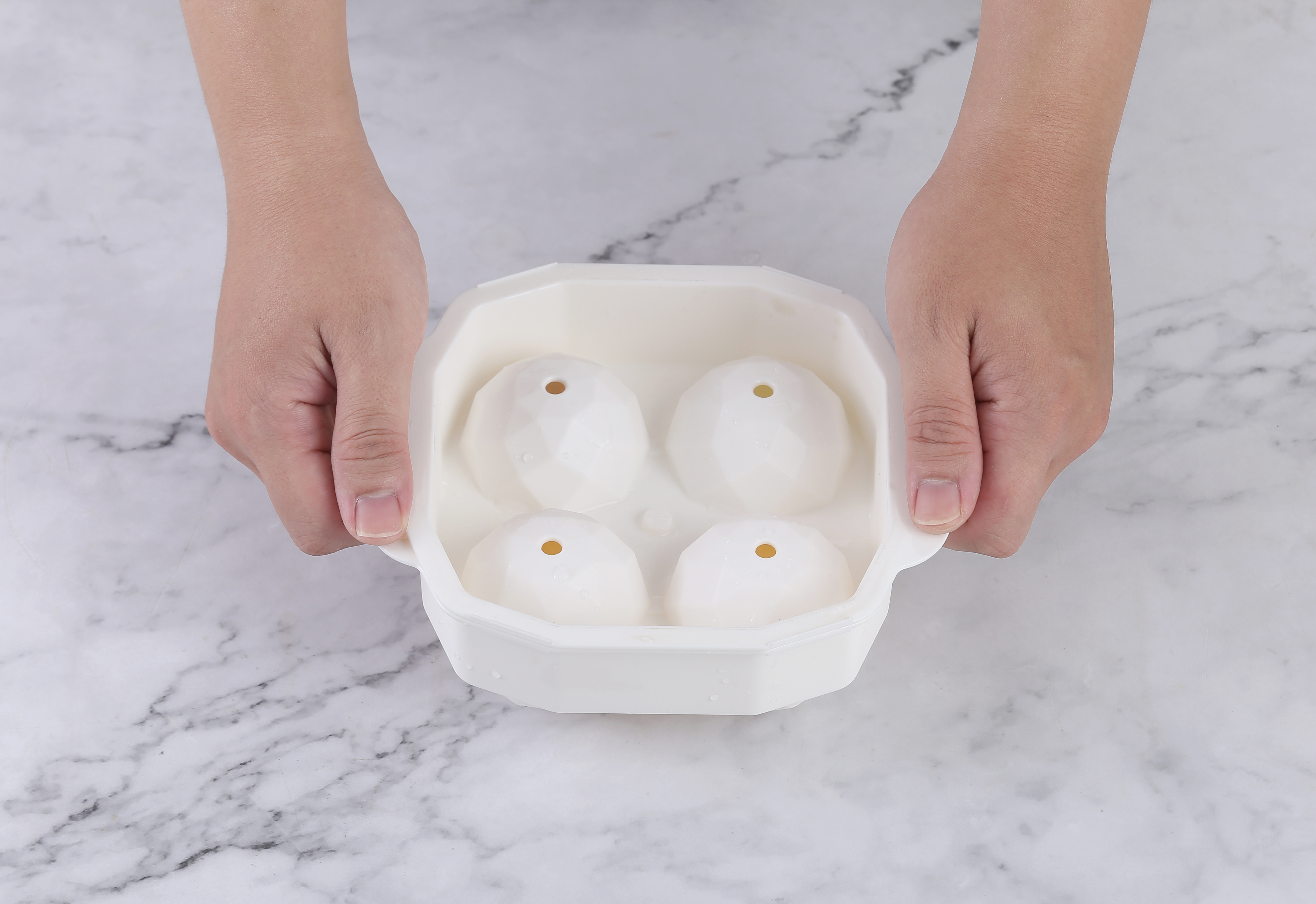
One example from the current product range is a Multi-Dome Ice Ball Maker. It is designed for spherical ice balls and uses a multi-compartment layout with smooth barriers for ice formation. The original product description also notes a transparent pouring spout intended to make filling easier and less messy. For buyers, this kind of item may be relevant for barware assortments, giftable kitchenware, entertaining products, or hospitality use. Before sourcing, confirm the final dimensions, material, packaging, cleaning instructions, and whether the design fits the target customer’s freezer space.
How to Evaluate an Ice Tray Supplier
When comparing ice cube trays suppliers, avoid choosing only by the lowest quoted price. A lower cost can disappear if samples differ from production, packaging is weak, or delivery details are unclear. A structured supplier review helps reduce surprises.
- Request product samples. Test filling, freezing, release, cleaning, lid fit, and stacking.
- Ask about material options. Confirm whether the tray is plastic, silicone, or a combination, and request documentation needed for your sales market.
- Review tooling and customization. Clarify whether the supplier has existing molds or whether a new mold would be needed.
- Check packaging choices. Ask about retail boxes, labels, inserts, master cartons, and e-commerce packaging requirements.
- Discuss quality control. Ask what inspections are performed for appearance, dimensions, fit, and finished packaging.
- Confirm commercial details in writing. Lead time, payment terms, minimum order quantity, sample cost, and shipping terms should be clearly documented by the supplier.
Design and Use Factors Buyers Should Not Overlook
Small design details can decide whether an ice tray receives repeat orders. A tray that is hard to carry when full may frustrate users. Cavities that are too shallow may produce ice that melts quickly. Lids that do not align well can cause spills or make stacking unreliable. If the product has a pouring spout, test whether it helps users fill the mold without overflow.
Also consider how the tray will be explained on packaging or online listings. Clear instructions can reduce complaints. For example, users may need guidance not to overfill cavities, to place the tray on a flat freezer surface, or to allow sufficient freezing time before release. For silicone designs, instructions about washing before first use and storing away from strong odors may be useful if appropriate for the material and supplier guidance.
Practical FAQ
What is the main difference between silicone and plastic ice trays?
Silicone trays are typically chosen for flexibility, easy ice release, cleaning convenience, and resistance to cracking. Plastic trays are rigid, familiar to many consumers, and can be effective for standard cube formats. The right choice depends on the target price, use case, and design.
What should I ask an ice tray manufacturer before ordering?
Ask about material, available molds, sample policy, packaging options, customization, quality inspection, lead time, minimum order quantity, and documentation for the intended market. Do not assume specifications unless the supplier confirms them.
Are ice ball makers only for cocktails?
No. Ice ball makers are often associated with cocktails because larger spherical ice can melt more slowly and improve drink presentation, but they can also be used for everyday beverages, iced coffee, juice, or entertaining.
How can buyers reduce sourcing risk?
Start with samples, test the product in real freezer conditions, confirm packaging strength, review supplier communication, and document all agreed details before production. For private label projects, approve artwork and pre-production samples carefully.
Can ice trays be customized for wholesale or OEM projects?
Many suppliers may offer options such as color, packaging, lids, or mold changes, but availability depends on the factory, tooling, order quantity, and project requirements. Buyers should ask for exact options and costs directly from the supplier.
Final Sourcing Advice
Ice tray manufacturing is a competitive category, but successful sourcing still depends on careful product evaluation. Focus on the user’s real needs: easy filling, stable freezing, clean release, simple cleaning, and practical storage. Whether you source standard cube trays, silicone ice trays, covered freezer trays, or a Multi-Dome Ice Ball Maker, request samples and ask precise supplier questions before committing to a larger order. This approach helps buyers build a more reliable houseware assortment without relying on unverified claims.
