




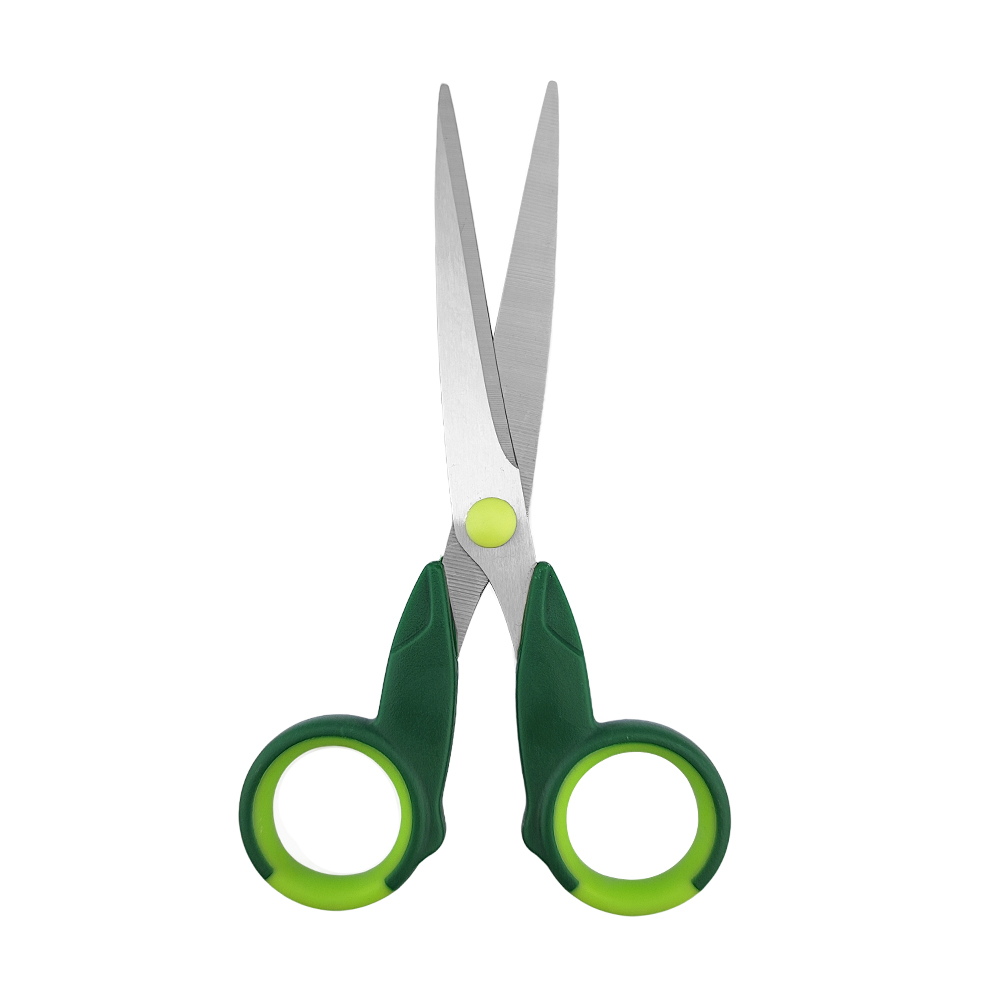
OEM Scissors Sourcing Guide: GreenSoft Precision Scissors Review
For importers, distributors, private-label brands, and promotional product buyers, scissors can look simple at first glance. In reality, a reliable pair of OEM scissors depends on blade alignment, handle comfort, pivot consistency, finishing, packaging, and repeatable production control. The GreenSoft Precision Scissors provide a useful reference point for evaluating what buyers should look for when discussing custom scissors manufacturing with a supplier.
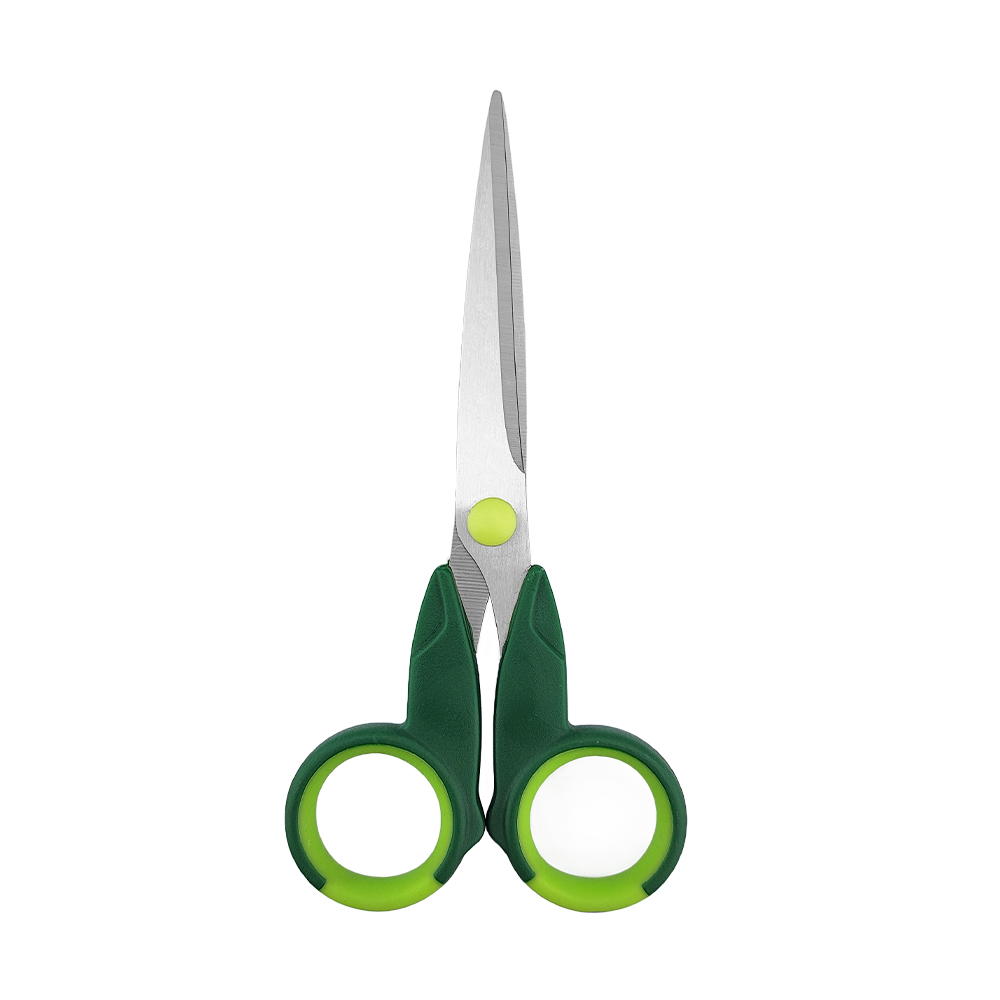
The original product description highlights several visible and functional points: deep green handles with a lime inner ring, a cushioned soft grip, an ergonomic shape, stainless steel blades, and a pivot joint designed to keep the blades aligned. Those details are useful, but B2B buyers should go further. Before placing an OEM order, confirm how these features are specified, tested, packed, and documented.
Key Takeaways
- OEM scissors should be evaluated by cutting feel, blade alignment, handle comfort, and consistency across samples.
- Do not rely only on appearance; request details on blade material, handle material, pivot construction, and quality checks.
- Customization can include color, logo, packaging, and product set configuration, but every option should be confirmed with the supplier.
- For wholesale orders, ask practical questions about samples, lead times, carton packing, inspection standards, and after-sales handling.
Product Overview: What the GreenSoft Scissors Show
The GreenSoft Precision Scissors are positioned as versatile household scissors suitable for tasks such as paper cutting, craft work, office use, and fabric-related projects. Their visual identity is easy to recognize: a deep green outer handle and a lime-colored inner ring. This type of color contrast can be helpful for retail presentation, brand differentiation, or private-label product lines.
The source also describes a cushioned soft grip and ergonomic shape. For buyers, this matters because scissors are hand tools used repeatedly. A handle that feels comfortable during a quick test may still cause strain after longer use, so sample testing should include repeated cutting motions and different hand sizes. Comfort is not only a consumer benefit; it can influence returns, reviews, and repeat orders.
Ergonomics and Handle Evaluation
Handle design is one of the most important differences between basic scissors and better household scissors. In this case, the product description emphasizes a soft grip intended to reduce hand fatigue and improve control. When sourcing OEM scissors, buyers should ask the supplier to define the handle material and confirm whether color, texture, hardness, and finish can be adjusted for a private-label program.
A good ergonomic check should include more than a visual review. Ask team members to test the sample with paper, thin packaging, thread, and other likely materials. Look for pressure points around the thumb and fingers. Check whether the handle openings are suitable for the intended market, such as general household users, craft users, office staff, or promotional gift recipients.
Blade Performance and Cutting Consistency
The original article states that the GreenSoft scissors use stainless steel blades and are designed for smooth, clean cutting. Stainless steel is common in household scissors because it can support a sharp edge and a clean appearance, but buyers should not assume all stainless steel blades perform the same. Ask the supplier which blade specification is used, how the edge is finished, and what cutting tests are performed before shipment.
Cutting consistency is closely connected to blade alignment. The source mentions a robust pivot joint that keeps the blades aligned and reduces wobbling. During sample review, open and close the scissors slowly. The motion should feel controlled, not loose or gritty. Then cut along the full blade length. If the tip does not cut cleanly, or if material folds instead of separating, the issue may be alignment, edge sharpness, or pivot tension.
OEM Customization Questions to Ask
OEM scissors are often purchased for retail ranges, tool kits, stationery lines, craft assortments, or homeware programs. Customization may be possible, but buyers should avoid assuming that every option is available without cost, timing, or tooling implications. A professional sourcing conversation should turn broad ideas into confirmed specifications.
- Can the handle colors be matched to a Pantone reference or approved color sample?
- What logo application methods are available, and where can the logo be placed?
- Can the scissors be supplied in individual retail packaging, bulk packing, or set packaging?
- Are samples available before mass production, and are pre-production samples provided for approval?
- What inspection criteria are used for blade sharpness, alignment, handle finish, and packaging condition?
- How are defective items handled if a shipment does not meet the agreed standard?
Comparison Checklist for B2B Buyers
The table below can be used when comparing the GreenSoft style with other OEM scissors samples. It focuses on practical sourcing checks rather than marketing claims.
| Evaluation Area | What to Check | Questions for the Supplier |
|---|---|---|
| Handle comfort | Grip softness, finger fit, pressure points, surface finish | What handle material is used, and can hardness or color be customized? |
| Blade performance | Clean cuts on paper, craft materials, and intended use cases | What blade material and edge finishing process are specified? |
| Pivot quality | Smooth opening, stable tension, no obvious wobble | How is pivot tightness checked during production? |
| Appearance | Consistent color, clean molding, no scratches or burrs | What cosmetic defect limits are used for inspection? |
| Packaging | Retail presentation, protection in transit, barcode or label needs | Can packaging artwork, language, and carton marks be customized? |
| Order control | Sample approval, production timeline, shipment inspection | What are the sample process, lead time, MOQ, and quality agreement? |
Quality Control Before Wholesale Ordering
For wholesale and OEM orders, quality control should begin before a purchase order is finalized. Start with a written specification sheet that includes product size, blade material, handle color, packaging type, logo position, and any agreed performance checks. If a detail is important to your market, put it in writing and confirm it with an approved sample.
Buyers should also consider third-party or internal inspection for larger orders. Useful checks may include visual inspection, function testing, packaging review, carton drop condition, label accuracy, and quantity verification. The goal is not to create unnecessary complexity; it is to reduce ambiguity. Scissors that look acceptable in a small photo may vary in cutting feel, handle finish, or pivot tension when produced in bulk.
Best-Fit Applications
Based on the described features, this style of scissors may suit household, office, stationery, craft, and general utility ranges. The green handle design gives it a distinctive appearance, while the ergonomic soft-grip concept supports everyday use. For professional or specialized applications, buyers should test samples against the exact material their customers expect to cut. A craft retailer, for example, may test paper, ribbon, thread, and light fabric, while an office supplier may prioritize paper and packaging tasks.
Practical FAQ
What should I test first when I receive OEM scissors samples?
Start with blade alignment, cutting smoothness, handle comfort, and pivot tension. Cut several materials that match your intended use, then check whether the scissors still open and close smoothly.
Can I assume the same sample quality will appear in bulk production?
No. Use the approved sample as the production reference, and confirm inspection standards in writing. For larger orders, consider pre-shipment inspection or your own quality control checklist.
What customization details should be confirmed early?
Confirm handle colors, logo placement, packaging style, barcode or label requirements, carton marks, sample approval process, MOQ, lead time, and any cost impact from custom tooling or packaging.
Are these scissors suitable for all materials?
The source describes use for everyday tasks such as crafts, office work, paper, and fabric. Buyers should test the actual sample on their target materials before making product claims or placing a wholesale order.
Final Sourcing Advice
The GreenSoft Precision Scissors illustrate the main points buyers should evaluate in OEM scissors: an ergonomic handle, stainless steel blades, a stable pivot, and a distinctive color design. However, strong sourcing decisions come from verified details, not assumptions. Request samples, define specifications, document packaging requirements, and ask direct questions about inspection procedures. With clear communication, OEM scissors can be sourced as a dependable homeware, stationery, or craft product that meets both brand expectations and end-user needs.
