








What a rolling pin manufacturer is really supplying
A rolling pin manufacturer is not just turning out a kitchen utensil. For buyers in baking, food service, and private-label retail, the real product is control: a tool that helps a user flatten dough evenly, work quickly, and keep the surface smooth enough for repeatable results. That matters whether the end customer is a home baker making pie crust or a bakery team shaping batches of pastry dough before proofing.
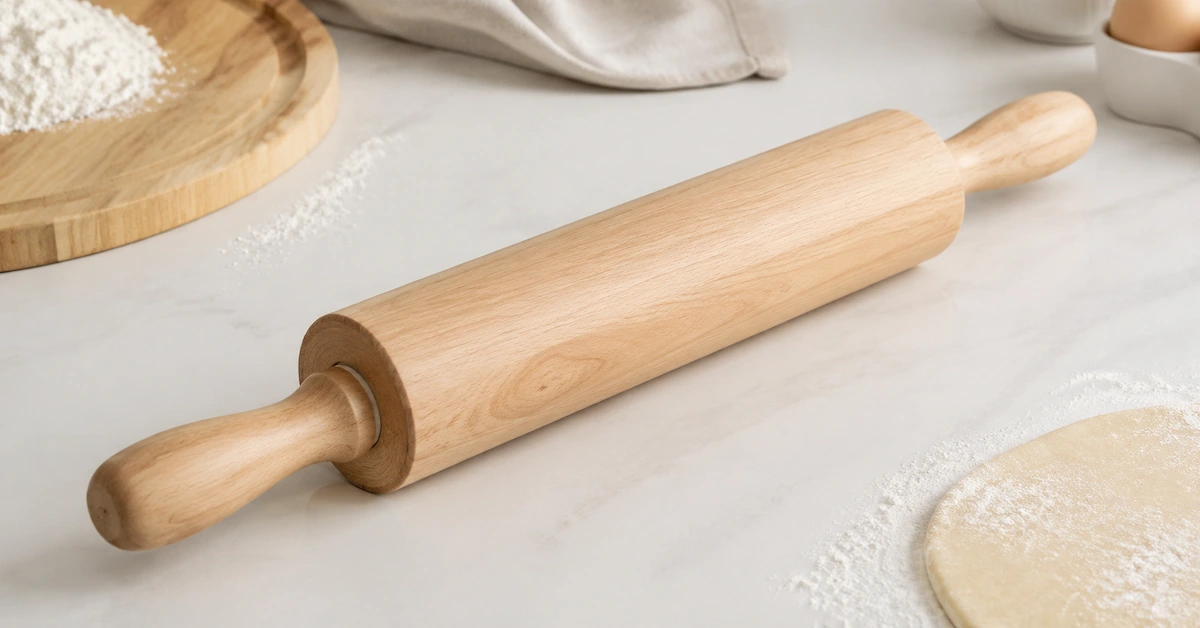
The wooden rolling pin remains popular because it is simple, familiar, and easy to handle. The version described here has a light-colored natural wood appearance, a smooth sanded finish, and a cylindrical barrel with tapered or rounded handles at both ends. That is the kind of design many buyers still prefer when they want a straightforward, reusable tool without moving parts or metal hardware. It is also the sort of product that can look basic on paper but still fail if the material, finishing, or turning is inconsistent.
Why this product category still matters
Dough work looks low-tech, but consistency is hard. A slightly rough surface can drag on sticky dough. Handles that feel awkward can make pressure uneven. A barrel that is not turned cleanly can leave ridges or grab at softer pastry. For commercial buyers, these are not cosmetic issues; they affect speed, waste, and the final appearance of the product.
That is why sourcing decisions for this category should not start with price alone. A wooden rolling pin supplier needs to deliver a tool that is comfortable in the hand, smooth on the dough, and stable under repeated use. For gift sets, retail kitchenware, or bakery support tools, visual quality matters too. The buyer is often purchasing something that will be handled, washed, and noticed every day.
Typical construction and manufacturing approach
Based on the visible form, this type of rolling pin is likely produced through wood turning and finishing, possibly with lathe-turned handles and a centered barrel. That process is common for symmetrical wooden kitchen tools because it gives a clean profile and a consistent round shape. In a simple single-piece design, the body and handles may be cut from one block of wood. In an assembled design, the shape can still look continuous even if there are separate components, though that cannot be confirmed from appearance alone.
The practical manufacturing priorities are fairly clear:
The wood must be selected for stability and a smooth finish.
The turned profile must be even, so the pin rolls without wobble.
The surface needs sanding that removes tool marks but does not leave the wood polished so aggressively that it becomes slippery.
The ends and handle transitions should be shaped to avoid sharp edges or hand fatigue.
The product may look simple, but anyone who has sourced wooden kitchen tools knows that poor turning shows up immediately. Buyers often notice asymmetry before they notice anything else.
Wooden rolling pin types buyers usually compare
Standard handled rolling pin
This is the form most people recognize first: a central barrel with fixed handles on both ends. It offers a familiar grip and a clear feel for pressure. For many home users, it is the safest choice because it is intuitive.
French-style rolling pin
The French-style version usually has tapered ends and no separate handles. It gives experienced bakers more direct hand contact with the dough and can be easier to angle for precision work. It is often chosen for pastry and artisan baking, though not every buyer wants that style.
Pin-style versus assembled designs
Some buyers assume all wooden rolling pins are the same, but construction differences affect durability and user comfort. A one-piece turned-wood tool can feel robust and clean in finish. An assembled design may offer different balance or manufacturing flexibility. If the sourcing brief is for retail display or premium kitchenware, these details are worth discussing early with the factory.
Selection criteria for sourcing teams
The right product choice depends on the end market, but several criteria are worth checking every time.
First, surface finish. A smooth, sanded finish is not just about appearance. It affects dough release and cleaning. Buyers should ask how the final surface is prepared and whether the wood appears consistent across the barrel and handles.
Second, ergonomics. Handle shape sounds minor until someone uses the tool for twenty minutes in a bakery prep line. Rounded or tapered handles can reduce pressure points and make the tool easier to guide. That matters more than many purchasing specs admit.
Third, visual consistency. Natural wood is appealing, but it also varies. Light color, grain pattern, and small color differences are normal in wood products, yet a retail buyer may still want a controlled look across a shipment.
Fourth, application fit. Home baking, pie crust work, cookie dough, fondant, and general kitchen dough shaping do not all place the same demands on a rolling pin. If the user base is pastry-focused, the buyer may care more about balance and edge control. If the pin is for broad kitchen use, durability and comfort usually carry more weight.
Fifth, compliance and finishing details. This is an area where caution is wise. Food-safe coating, exact wood species, and treatment process should be confirmed directly with the manufacturer rather than assumed from appearance. A wooden rolling pin supplier should be able to explain those details clearly, even if the product is simple.
Common sourcing mistakes
The first mistake is treating every wooden tool as commodity stock. In practice, even a basic rolling pin can vary in handle comfort, sanding quality, and turn accuracy. Those differences show up in customer reviews fast.
The second mistake is not asking how the wood behaves over time. Wood is a natural material. It can move with moisture and storage conditions. That does not make it unsuitable, but it does mean the buyer should think about packaging, warehousing, and expected use environment.
The third mistake is over-specifying features that are not visible in the sample and then failing to verify them. For example, if the barrel rotation is important, or if a food-safe coating is required, that should be confirmed in writing. Do not infer it from a polished sample.
The fourth mistake is ignoring end-user cleaning habits. A rolling pin used in home kitchens may be washed differently from one used in a bakery back room. The product and its finish should match the reality of use, not an idealized brochure version.
What a custom rolling pin factory can usually support
A custom rolling pin factory may be able to adjust the profile, handle style, surface finish, branding, and packaging format depending on the project. That could mean a different handle shape for better grip, branding for a retail line, or a finish that aligns with the buyer’s kitchenware range.
For private-label programs, the useful questions are straightforward: What parts of the design are fixed? What can be customized without affecting performance? How is the natural wood appearance controlled from batch to batch? These are the conversations that separate a workable sourcing program from a frustrating one.
If the product is intended for a broad audience, buyers may also want to test comfort across hand sizes. That sounds small, but a kitchen tool is judged by how quickly a user stops thinking about it. The best rolling pin disappears into the task.
Practical buyer checklist
Before placing an order, review the sample under real lighting and not just in photos. Check the smoothness of the barrel, the transition into the handles, and the balance in the hand. If the finish feels too dry, too glossy, or uneven, say so early.
Ask for clarity on the wood species, coating or treatment, cleaning guidance, and packaging. If the project is retail-facing, request a view of how the natural wood tone appears across a small group of samples, not just one unit. Natural variation is expected, but it still needs to stay within the brand’s tolerance for appearance.
For food-service buyers, it is also worth asking how the tool should be stored and whether moisture exposure changes the finish over time. That is not a dramatic question; it is a practical one. Wooden utensils last longer when the buyer understands how they should be handled.
FAQ for sourcing and product teams
Is a wooden rolling pin suitable for both home and commercial use?
Yes, provided the build quality and finish match the use level. A simple, smooth wooden rolling pin is common in both settings, though commercial buyers may care more about durability and consistency.
Why choose wood instead of metal or silicone?
Wood offers a familiar feel, a natural appearance, and straightforward handling. Many users prefer it for pastry work and general baking because it gives direct feedback during rolling.
What should buyers confirm before ordering?
Confirm wood type, surface treatment, packaging needs, customization options, and whether the manufacturer can support the intended market standard. If any of those are uncertain, ask for documentation rather than assuming.
Does the design style affect performance?
Yes. Handled pins and French-style pins feel different in use. The right choice depends on who is using it and what type of dough they are handling.
Next step for sourcing teams
If you are evaluating a rolling pin manufacturer, start with the sample in hand and the end-user scenario in mind. A good product should feel smooth, balanced, and uncomplicated. That sounds obvious, but the market still contains plenty of wooden tools that look acceptable in a catalog and disappoint on the prep table.
For buyers building a retail line or a kitchen tool program, the smartest move is to compare construction, finishing, and customization options before volume discussions begin. If you are working with a custom rolling pin factory, ask what can be adjusted without changing the core feel of the tool. That is usually where the best sourcing decisions are made.
