




Silicone Kitchen Utensils Wholesale: What Buyers Should Know
For wholesale buyers, silicone kitchen utensils are not difficult to find. The harder task is choosing a set that fits the selling channel, feels consistent in hand, and can be described accurately in customer-facing materials. This category is popular because it combines familiar kitchen tools with soft silicone working ends and, in this product format, natural wood handles.
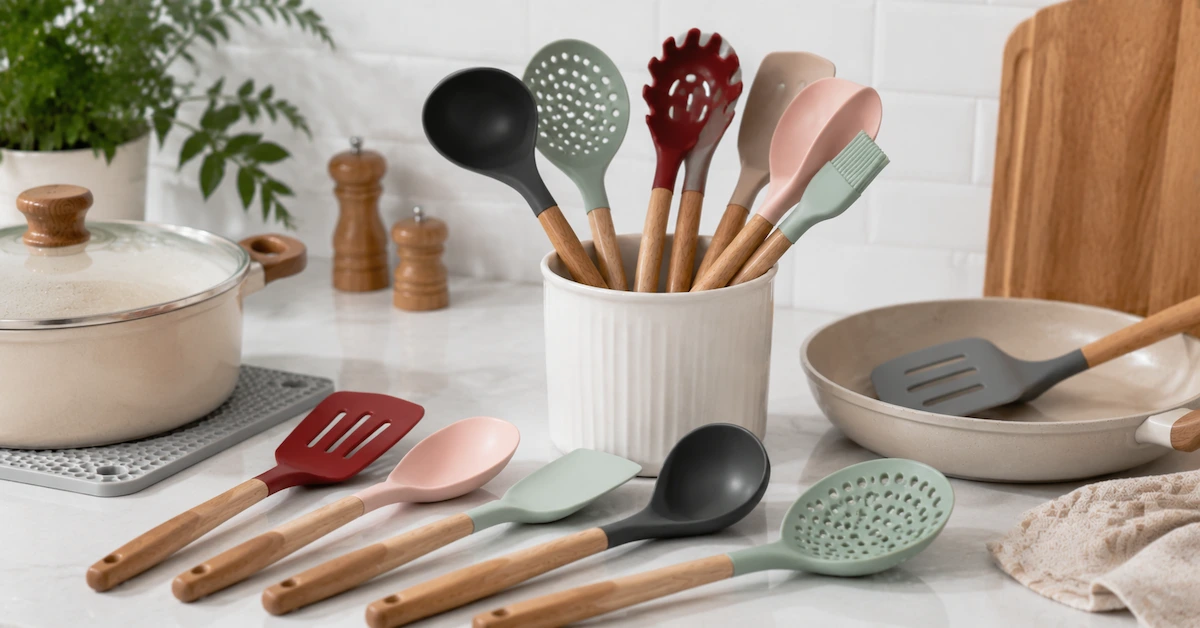
The product shown follows a common wholesale pattern: a coordinated multi-piece utensil assortment with silicone heads and wood handles. Visible utensil types appear to include spoons, ladles, slotted tools, turners, spatula-style pieces, and pasta or serving tools. The image also shows several color options, including black, green, red, beige, pink or peach, and gray. For retailers, distributors, and private-label buyers, that makes the set useful for starter kitchen bundles, giftable assortments, and cookware-adjacent merchandising.
Key Takeaways
- Do not compare wholesale silicone utensil sets by price and piece count alone.
- Check the silicone head shape, thickness, finish consistency, and handle connection.
- Wood handles add visual appeal but require clear care instructions and inspection.
- Ask suppliers to define any heat, food-contact, packaging, or care claims before using them in listings.
- Match the color range and utensil mix to the intended retail or distribution channel.
Why Silicone Utensil Sets Sell in Wholesale Channels
Silicone utensils remain popular because they are easy for buyers and end users to understand. The working ends are suitable for many everyday cooking tasks, especially with cookware surfaces where hard metal tools may be undesirable. A set can cover stirring, serving, flipping, draining, portioning, and scraping without requiring a customer to buy each tool separately.
The addition of wood handles changes the product position. Instead of looking like a fully plastic kitchen tool, the set has a warmer, more natural appearance. That can help retailers build a coordinated kitchenware story, especially when the colors are selected carefully. However, mixed-material utensils also need closer review than one-piece products. Buyers should evaluate both the silicone head and the wood handle, as well as the transition between them.
Product Format and Assortment Planning
This style of product is best understood as a broad-use assortment, not a specialist chef tool. It is designed to give the end user several common kitchen functions in one coordinated family. That is why the utensil mix matters. A well-balanced assortment should include tools for liquids, solids, flipping, draining, and serving.
Before ordering, ask whether the supplier offers the set only as shown or whether the assortment can be adjusted. Some buyers may want more turners and fewer specialty serving tools. Others may prefer a smaller retail pack or a larger bundled set. Do not assume that color, piece count, handle finish, or packaging can be changed unless the supplier confirms it.
Wholesale Evaluation Checklist
A sample review should focus on the details that affect real use and customer satisfaction. The table below can help sourcing teams compare offers consistently.
| Evaluation area | What to check | Questions to ask the supplier |
|---|---|---|
| Utensil mix | Range of spoons, ladles, turners, spatulas, and serving pieces | Can the set composition be changed for different channels? |
| Silicone head | Shape, flexibility, edge thickness, surface finish, and color consistency | What material and performance details can be documented? |
| Handle connection | Fit between silicone head and wood handle, looseness, gaps, or rough seams | How is the head joined to the handle, and what inspections are used? |
| Wood handle | Smoothness, finish, visible variation, hanging hole quality, and feel in hand | What care guidance should be printed or supplied? |
| Packaging | Retail readiness, labeling space, protection during shipping, and set presentation | What packaging formats are available for wholesale or private label? |
| Claims | Heat resistance, dishwasher use, food-contact statements, and market-specific wording | Which claims are supported by documentation for the target market? |
Construction Details Buyers Should Inspect
The silicone head is the working part of the utensil, so it deserves close attention. Buyers should inspect whether a spoon is deep enough to serve properly, whether a turner has enough stiffness to lift food, and whether a spatula edge is shaped for scraping bowls or pans. Tools that look similar in a catalog can perform differently once handled.
The wood handle should be checked separately. Wood can vary in color and grain, and the surface finish affects how the utensil feels. Look for rough spots, inconsistent finishing, cracks, or areas where moisture could collect. If the product will be sold online, remember that customers often judge quality from close-up photos and from first touch after delivery.
The joint between the silicone and the handle is especially important. A loose or uneven joint can make the utensil feel low quality even if the silicone color and packaging look attractive. During sample review, bend and handle each piece normally. The goal is not destructive testing; it is to see whether the set feels reliable during ordinary kitchen motions.
Common Procurement Mistakes
One common mistake is treating all silicone kitchen utensils as interchangeable. They are not. Tool geometry, head flexibility, handle finish, and assembly quality can change the user experience significantly. A low unit cost may not be attractive if the set feels inconsistent or generates customer complaints.
Another mistake is using supplier claims too early. Phrases such as heat resistant, dishwasher safe, food safe, or commercial grade should not be added to listings unless the supplier has provided clear support for the target market. If documentation is not available, phrase the point as a question during sourcing rather than a promise in sales copy.
Color selection is also easy to underestimate. Bright mixed colors may work for some retail channels, while neutral colors may be better for modern homeware lines. Buyers should consider shelf presentation, photography, regional preferences, and whether the set will be sold alone or bundled with cookware.
Supplier Questions Before Placing an Order
- What utensil pieces are included in the standard set, and can the mix be customized?
- Which colors are available, and how is color consistency controlled across batches?
- What information can be provided about the silicone material and intended temperature use?
- What wood handle finish is used, and what care instructions should accompany the product?
- How are the silicone heads attached to the handles?
- What packaging options are available for retail, wholesale, or private-label programs?
- What product claims are supported with documentation for the buyer’s market?
- How are samples, pre-shipment inspections, and defect standards handled?
Best-Fit Channels for This Product Type
Silicone utensil sets with wood handles can fit several wholesale channels. For homeware retailers, the main value is a coordinated set that is easy to display and understand. For online sellers, the appeal is visual consistency, color choice, and a clear everyday-use message. For distributors, the set can pair well with cookware bundles, starter kitchen kits, or seasonal promotions.
Food-service buyers may also consider silicone utensils for certain applications, but they should be more cautious about durability, sanitation procedures, and care requirements, especially because the handle is wood. The supplier should clarify intended use and provide practical care guidance before the product is positioned for heavier commercial environments.
Practical FAQ
Are silicone utensils always safe for nonstick cookware?
Silicone working ends are commonly chosen for use with coated cookware because they are softer than metal. However, buyers should still confirm the product’s intended use, edge design, and care instructions with the supplier.
Can wood handle silicone utensils go in the dishwasher?
Do not assume dishwasher suitability. Wood handles can be affected by moisture, heat, and detergent exposure. Ask the supplier for documented care guidance before making any claim.
What should buyers check first in a sample?
Start with the feel of each utensil, the head-to-handle connection, the smoothness of the wood, and the consistency of the silicone finish. These details are difficult to judge from photos alone.
Is a larger utensil set always better for wholesale?
Not always. A larger set may look more valuable, but only if each piece has a clear use. For some channels, a smaller, well-balanced assortment may sell more cleanly.
Final Sourcing Advice
When comparing silicone kitchen utensils wholesale, focus on usable design, assembly quality, supported claims, and channel fit. A good set should look coordinated, feel solid, and come with enough supplier information for accurate listings and packaging. The best next step is to request samples, review them against a written checklist, and ask direct questions before committing to volume production.
