




Silicone Non Slip Mat Supplier Guide for Kitchen Buyers
A silicone non slip mat looks simple, but sourcing it well requires more than choosing a color from a catalog. For kitchenware distributors, tabletop brands, retailers, and OEM buyers, the real questions are about grip, surface texture, finishing, intended use, consistency, and how clearly the supplier can support the product claim. A mat that slides, curls, stains easily, or is promoted for uses it has not been specified for can create avoidable customer complaints.
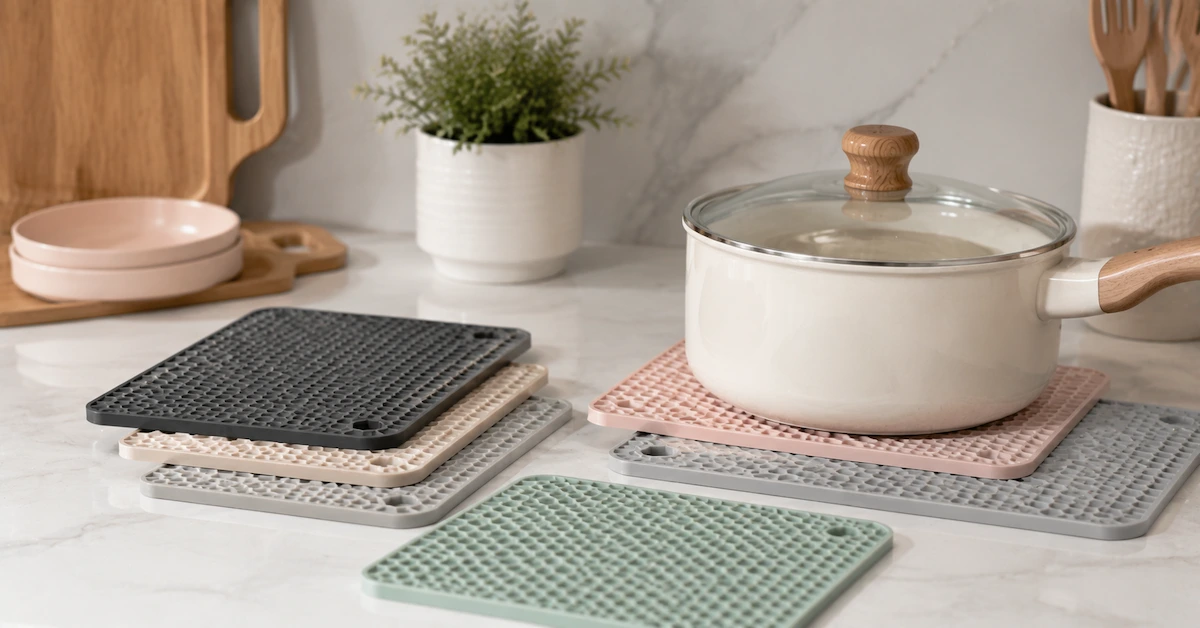
This guide explains how to evaluate a silicone non slip mat supplier without relying on vague product photos or broad marketing language. It preserves the visible facts from the current product presentation: a rectangular flexible mat format, rounded corners, a raised textured surface, a storage hole, and color options shown in black, beige, gray, pink, and mint.
Key Takeaways
- Start sourcing with a defined use case: anti-slip base, counter protector, drying support, liner, or warm-item rest.
- Do not assume heat resistance, dishwasher safety, food-contact suitability, or test results unless the supplier provides written confirmation.
- Check samples for flatness, edge finishing, texture consistency, color consistency, and the position of the hanging hole.
- For OEM or wholesale programs, ask how branding and packaging will be handled without weakening the functional surface.
Why Buyers Source Silicone Non Slip Mats Carefully
In a home kitchen, a slipping bowl or drifting utensil is frustrating. In a retail product line or commercial kitchen program, it becomes a quality issue. Buyers often search for a silicone non slip mat supplier because they need repeatable performance, not just a low-cost accessory. The product has to stay presentable on the shelf, feel reliable in the hand, and behave consistently after repeated handling.
The category is also easy to overstate. A supplier may describe a mat as non slip, heat resistant, multipurpose, or suitable for many kitchen tasks. Those claims may be true for a specific specification, but they should not be assumed from appearance alone. A smart sourcing process separates visible features from claims that require confirmation.
What the Mat Is Designed to Do
The visible product format is practical: a flat rectangular mat with rounded corners, a flexible body, a raised honeycomb or dimple-like texture, and a small hole for hanging or storage. These features suggest use as a grippy kitchen surface, countertop protector, shelf or drawer support, drying area, or general tabletop accessory. If the buyer wants to market it as a trivet or pot rest, the supplier should be asked to confirm the relevant temperature expectations and intended use in writing.
The texture is especially important. It is not merely decorative; it is the working surface that helps create friction between the mat and the object placed on it. However, real grip depends on the countertop surface, cleanliness, moisture, oil, mat thickness, and item weight. A sample test on the target surface is more useful than a general anti-slip claim.
Supplier Comparison Checklist
Before comparing quotations, request the same basic information from each silicone anti slip mat supplier. This makes it easier to compare value instead of simply comparing unit price.
| Item to Check | Why It Matters | Question to Ask |
|---|---|---|
| Surface texture | Affects grip, cleaning feel, and appearance | Is the pattern molded, and is it consistent across the full mat? |
| Flatness | Curling corners can reduce usability | Does the sample lay flat after unpacking? |
| Edge finish | Clean edges improve handling and perceived quality | Are the corners rounded and free from rough flashing? |
| Storage hole | Useful for retail display and home organization | Where is the hole placed, and does it affect stacking? |
| Color range | Important for merchandising and batch consistency | Can the supplier maintain similar appearance across colorways? |
| Use claims | Prevents overpromising in listings or packaging | Which uses are supported by the supplier specification? |
Material and Molding Questions to Ask
The current product style appears to be a molded silicone or silicone-like elastomer mat, but the exact material and process should be confirmed by the supplier. Do not assume a specific silicone grade, temperature range, certification, or food-contact status unless it is provided in the commercial documentation.
Useful questions include: What is the material description? Is the same material used for every color? How is thickness controlled? What visual defects are considered acceptable or unacceptable? Can the supplier provide a current specification sheet? If the mat will be used near cookware, sinks, dishwashers, or warm surfaces, ask how those applications are supported.
Buyers should also inspect the molded texture closely. Uneven dimples, shallow pattern areas, rough edges, or inconsistent flexibility can indicate process control issues. These details may look minor, but they directly affect how the item feels in daily kitchen use.
How to Evaluate Samples
Sample testing should be simple and repeatable. Place the mat on the same type of surface your end customer will use: polished counter, stainless worktop, wood tabletop, shelf, or retail display. Then test it with typical objects such as bowls, jars, utensils, small appliances, or cookware only if that use is intended.
- Check whether the mat lies flat without lifted corners.
- Press and slide a bowl or utensil gently to feel real surface grip.
- Wipe the mat and see whether the texture traps residue.
- Hang it by the hole and check whether the corner feels stable.
- Compare all color samples for texture depth, flexibility, and finish.
- Ask whether production samples will match the approved sample.
If you are buying for retail, also test how the mat looks in packaging. A flexible mat may bend or deform if packed too tightly. If it is sold as part of a set, confirm that stacking does not leave visible marks.
OEM, Wholesale, and Private-Label Guidance
For OEM and wholesale programs, the sourcing conversation should include more than the mat itself. Ask about packaging options, label placement, color matching process, carton packing method, sample approval steps, and how changes are controlled after approval. Avoid asking for a logo placement that interferes with the active grip texture unless the supplier confirms it will not weaken performance.
Commercial terms should be clarified directly with the supplier. Instead of assuming MOQ, lead time, price tier, tooling requirements, or compliance documentation, ask for current details based on your target order and destination market. If the product will be sold through retailers, request the documentation your channel requires before confirming packaging copy.
Common Sourcing Mistakes
One common mistake is treating all soft kitchen mats as interchangeable. Similar-looking products can differ in grip, finish, odor, flexibility, thickness, and durability. Another mistake is promoting the mat for hot cookware without confirming that the supplier supports that use. A third is choosing a color range before checking whether every color performs and looks consistent.
Buyers should also avoid vague product listings. If the primary benefit is anti-slip support, say that clearly. If the secondary benefit is countertop protection or storage convenience, present it as secondary unless confirmed otherwise. Clear positioning reduces returns and helps end users understand the product.
Practical FAQ
Is a silicone non slip mat always a trivet?
No. Some mats may be suitable for warm-item support, but that should be confirmed with the supplier. Do not assume trivet use from shape or material appearance alone.
What should buyers check first in a sample?
Start with flatness, grip on the target surface, edge quality, texture consistency, flexibility, and whether the hanging hole is cleanly finished.
Are multiple colors important?
They can help retail merchandising. The colors shown include black, beige, gray, pink, and mint, but buyers should check whether all colorways meet the same quality expectations.
What should an OEM buyer ask before placing an order?
Ask about material description, intended use, sample approval, packaging, branding position, production tolerance, commercial terms, and any documentation required for the target sales channel.
A Sensible Next Step
Shortlist suppliers by use case, not by catalog image alone. Decide whether the mat is mainly an anti-slip kitchen surface, a countertop protector, a storage aid, or part of a broader tabletop program. Then request samples and written answers to the claims you intend to make. A reliable non slip silicone mat supplier should be able to discuss texture, finish, color consistency, and application limits clearly before you commit to a larger order.
