




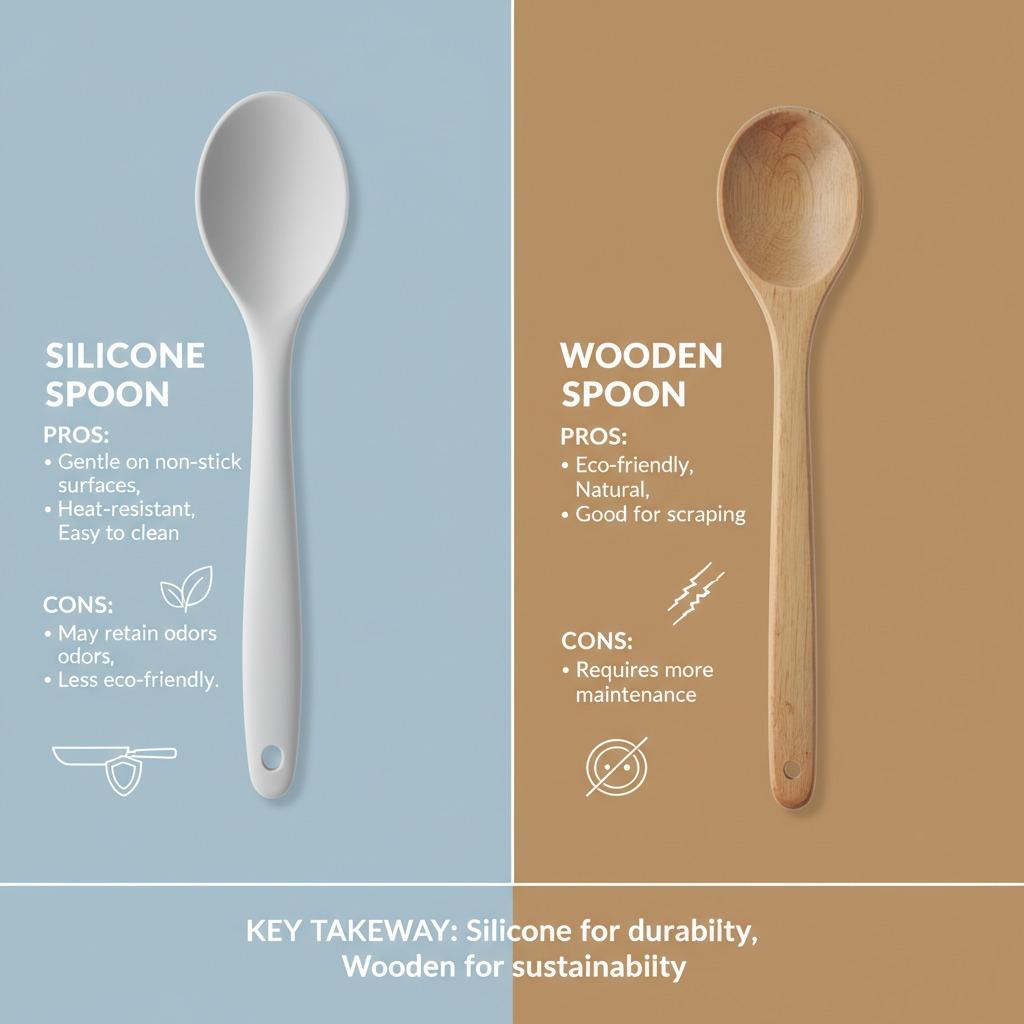
Silicone vs. Wooden Spoons: Which Is Better for Non-Stick Pans?
Non-stick pans make cooking and cleanup easier, but the coating can be damaged by the wrong utensil. A spoon that feels harmless may still create fine marks over time if it has rough edges, exposed hard parts, or a worn surface. That is why many home cooks compare kitchen silicone spoons with traditional wooden spoons before buying new tools.
This guide explains how silicone and wooden spoons perform on non-stick cookware, where each material works best, and what to check before choosing utensils for daily use.
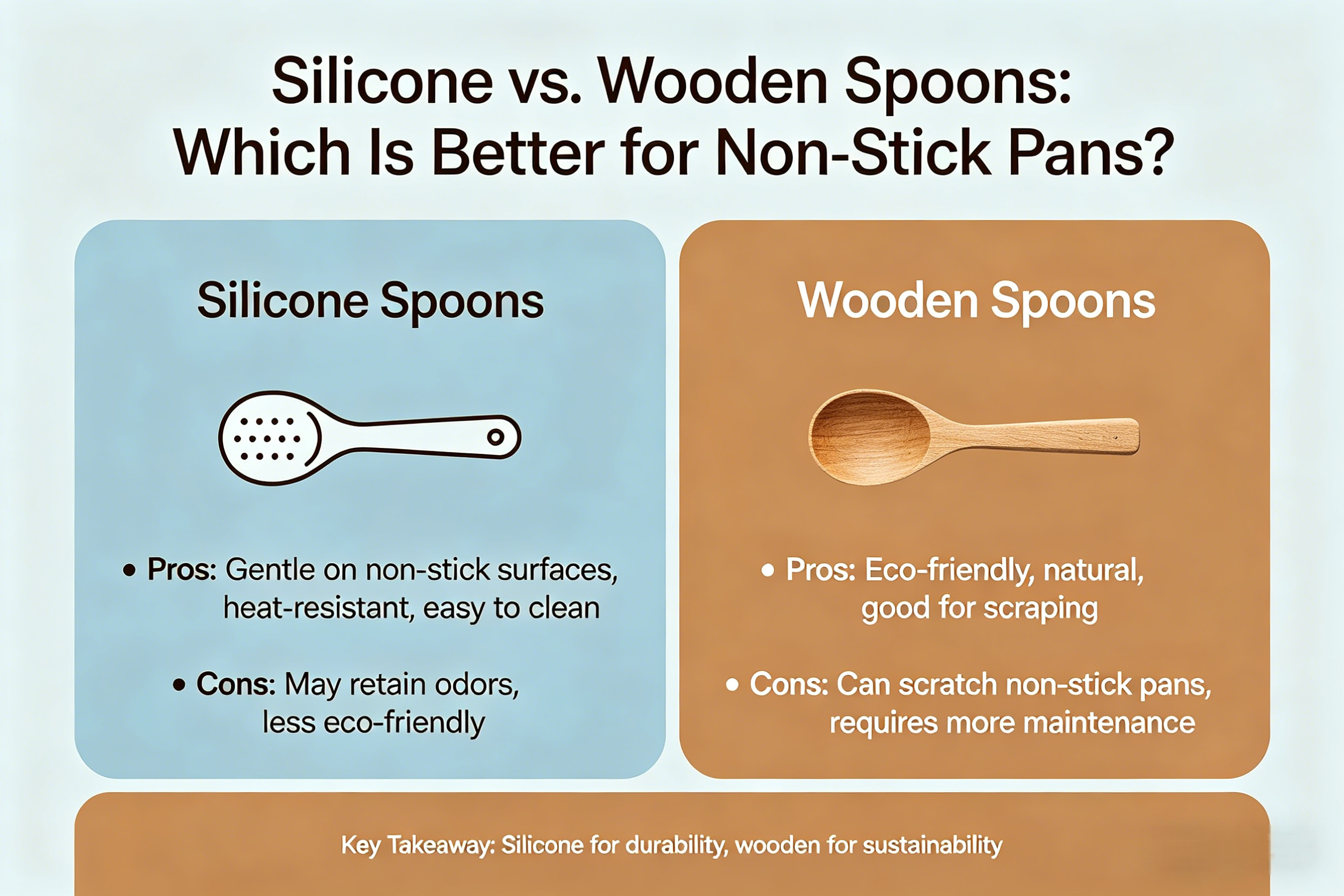
Why Utensil Choice Matters for Non-Stick Cookware
Non-stick surfaces are designed to release food with less sticking, but they are not meant to be scraped with metal or sharp-edged tools. Once a coating is scratched, food can begin to stick in that area, cleaning becomes harder, and the pan may wear out sooner.
A suitable spoon for non-stick pans should be gentle on the surface, comfortable to stir with, and practical to clean after contact with sauces, oils, and strong-smelling ingredients. Heat exposure is also important because spoons are often left near a hot pan or used while simmering dense foods.
Silicone Spoons: Flexible and Non-Abrasive
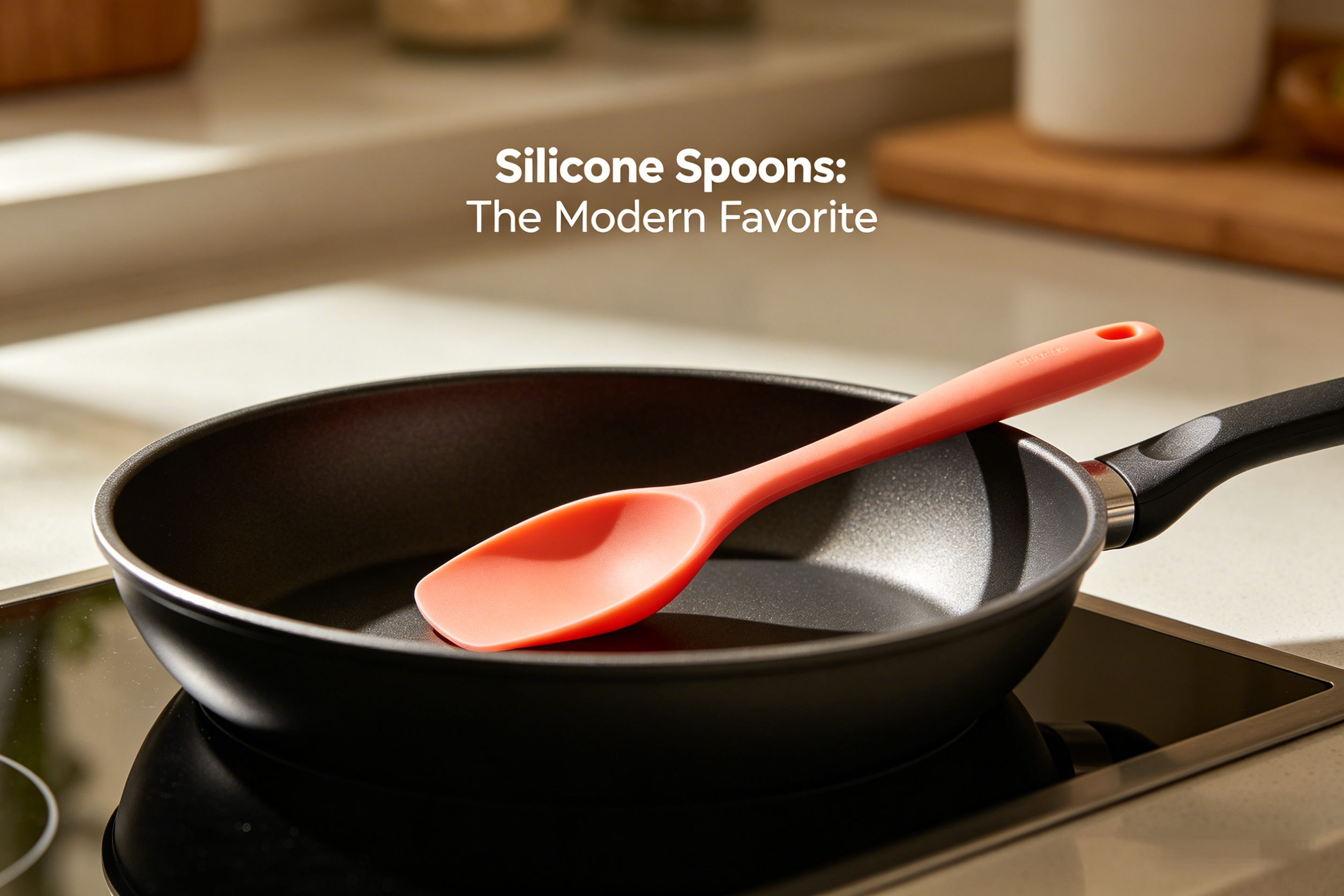
Silicone spoons are popular for non-stick cookware because the head is soft and non-abrasive. The original article notes that kitchen silicone utensils are flexible, suitable for delicate surfaces, and can withstand heat up to 500°F (260°C). This makes them useful for stirring sauces, folding ingredients, serving cooked food, and scraping the curved edges of pans and bowls.
Another advantage is cleaning convenience. Silicone spoons are commonly described as dishwasher-safe and stain-resistant, although buyers should always check the care instructions for the exact product. A smooth silicone surface is less likely to absorb flavors than unfinished wood, which helps when switching between savory, spicy, and sweet recipes.
When selecting silicone utensils, look beyond color. Check whether the spoon head feels firm enough for the foods you cook, whether the edge is smooth, and whether any internal support is fully covered. If a spoon includes a stainless steel core, ask the supplier or seller how the core is sealed and whether the product is intended for dishwasher use.
Wooden Spoons: Traditional, Warm, and Useful
Wooden spoons have been used for generations because they are affordable, easy to find, and comfortable in the hand. They work well for heavy stirring tasks, especially in stainless steel pots, cast iron cookware, and mixing bowls. Many cooks also like the warm feel and natural appearance of wood.
For non-stick pans, however, wood is not always the gentlest option. A new, smooth wooden spoon may be safe when used carefully, but wood can develop rough edges, cracks, or splinters with age. These imperfections may rub against the coating. Wood can also absorb odors, stains, and moisture if it is soaked or cleaned incorrectly.
Wooden spoons normally require hand washing and full drying. They should not be left in water, placed against open flame, or stored while damp. If a wooden spoon has deep stains, a sour odor, cracks, or a fuzzy surface, it is time to replace it.
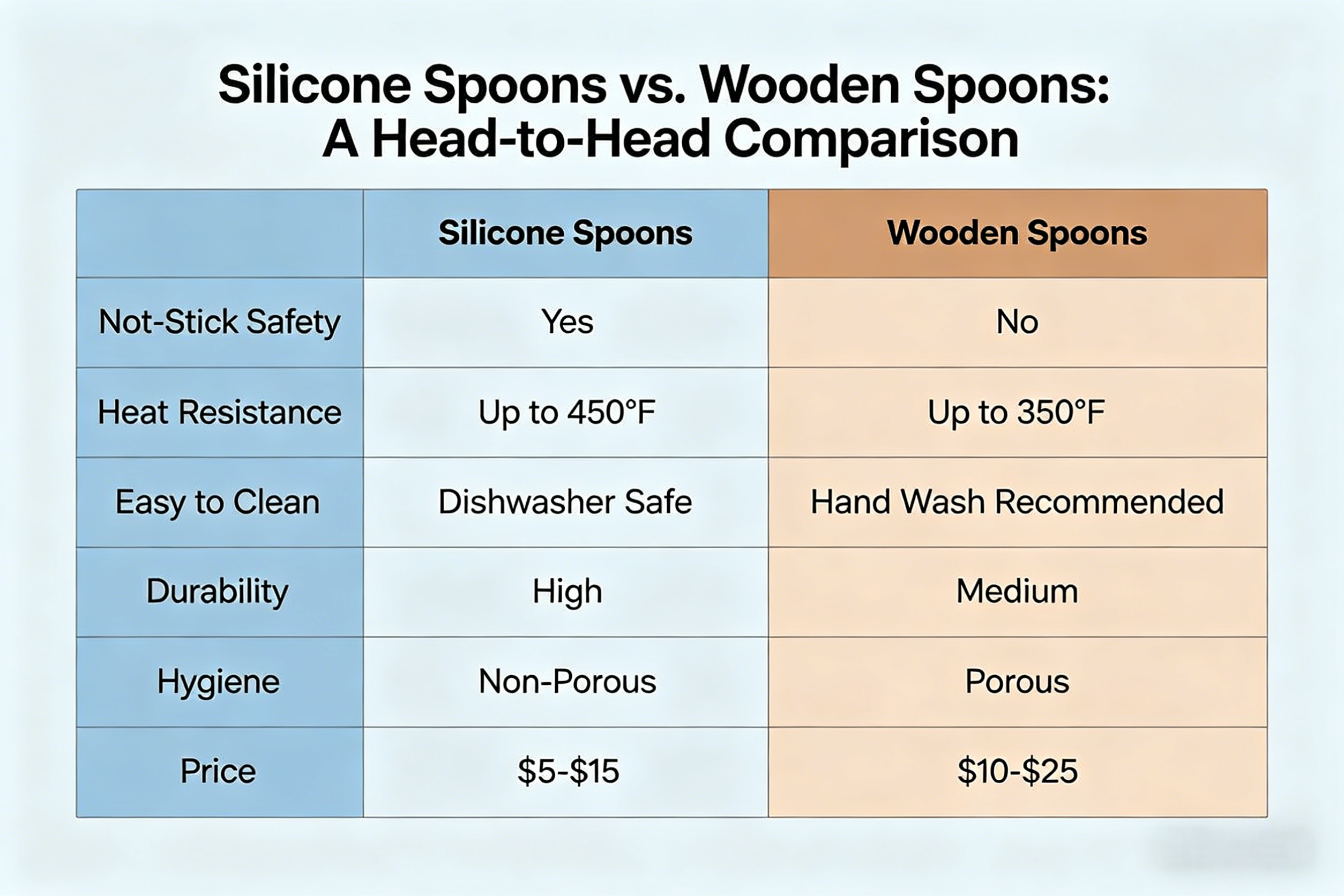
Silicone vs. Wooden Spoons: Quick Comparison
| Selection Point | Silicone Spoons | Wooden Spoons |
|---|---|---|
| Non-stick surface protection | Excellent when the silicone surface is smooth and intact | Generally gentle when new, but worn wood may scratch over time |
| Heat performance | Original article notes heat resistance up to 500°F (260°C) | Handles heat well during stirring, but can char or darken |
| Cleaning | Often dishwasher-safe; check product instructions | Usually hand wash only; dry promptly |
| Odor and stain resistance | Less likely to absorb odors than wood | Can absorb flavors, odors, oils, and stains |
| Best everyday use | Non-stick pans, sauces, eggs, batters, and delicate cookware | Stainless steel, cast iron, soups, stews, and mixing |
| Replacement signal | Tears, sticky surface, exposed core, or deformation | Cracks, splinters, odor, deep stains, or rough edges |
Best Choice for Non-Stick Pans
For most non-stick pans, silicone spoons are the safer everyday choice. Their flexible, non-abrasive heads are better suited to coated cookware, and they are easier to clean after oily or strongly flavored foods. A silicone spoon can also help scrape food from pan edges without using force.
Wooden spoons still belong in many kitchens, but they are better reserved for cookware where surface scratching is less of a concern, such as stainless steel pots or cast iron pans. If you prefer wood for non-stick cooking, choose a spoon with a very smooth finish, use light pressure, and inspect it often.
How to Choose a Silicone Spoon for Daily Cooking
Not all silicone spoons are the same. Before buying, consider the way you cook most often. A deep spoon is better for serving sauces and soups, while a flatter spoon is useful for stirring and scraping. A firmer head helps with dense foods such as mashed vegetables or thick batter, while a more flexible edge is better for delicate pans.
- Check that the spoon surface is smooth, with no sharp seams or rough edges.
- Ask whether the product is intended for use with non-stick cookware.
- Confirm the stated heat-resistance guidance and care instructions.
- Look for a comfortable handle length for your pan size.
- If there is an internal core, make sure it is fully enclosed and not exposed.
- Choose a shape that matches your tasks: stirring, serving, scraping, or mixing.
Care Tips to Protect Both Utensils and Pans
Good care extends the life of both your utensils and your cookware. Even with silicone, avoid cutting food inside a non-stick pan or pressing hard into the coating. Do not leave any utensil resting in a hot empty pan, and avoid direct contact with flame or heating elements.
For silicone spoons, wash away oil and food residue after use. If the product instructions allow dishwasher cleaning, place the spoon where it will not be bent or trapped. For wooden spoons, wash by hand with mild soap, rinse well, and dry completely before storage.
- Use silicone for coated pans when possible.
- Keep metal utensils away from non-stick surfaces.
- Inspect spoon edges before cooking.
- Replace damaged utensils instead of trying to keep using them.
- Store spoons loosely so the heads are not crushed or scratched.
Key Takeaways
- Silicone spoons are generally the better choice for non-stick pans because they are soft, flexible, and non-abrasive.
- Wooden spoons are useful, but worn edges, cracks, and moisture damage can make them less suitable for coated cookware.
- Heat resistance, cleaning instructions, handle comfort, and spoon shape should all influence your choice.
- Replace any spoon that becomes rough, cracked, sticky, torn, or difficult to clean.
Practical FAQ
Can wooden spoons scratch non-stick pans?
A smooth wooden spoon is usually gentler than metal, but wood can become rough, cracked, or splintered over time. Those worn areas may scratch or rub the coating, especially with heavy stirring.
Are silicone spoons always safe for non-stick cookware?
Silicone is generally well suited to non-stick cookware, but quality and condition matter. Check that the spoon is smooth, intact, and intended for cooking use. Replace it if the surface tears or an internal core becomes exposed.
Should I choose silicone or wood for eggs and sauces?
Silicone is usually better for eggs, sauces, and sticky foods in non-stick pans because it can follow the pan surface gently and is easy to clean afterward.
How do I know when to replace a wooden spoon?
Replace a wooden spoon when it has cracks, splinters, deep staining, persistent odor, or a rough surface. These signs make it harder to clean and less suitable for delicate cookware.
What should I ask before buying silicone utensils?
Ask about heat-resistance guidance, cleaning instructions, whether the utensil is recommended for non-stick cookware, and whether any internal support is fully enclosed. These questions help you choose a practical spoon without relying only on appearance.
