




Spiralizer Manufacturing: Innovations & Future Trends
Spiralizer manufacturing sits within a fast-moving part of the kitchenware market: practical food-preparation tools that help users cut vegetables into ribbons, noodles, and decorative shapes. For retailers, importers, private-label brands, and promotional buyers, the opportunity is not only about finding a spiralizer that looks appealing. It is about understanding how the product is designed, how the blade mechanism works, how consistently a factory can assemble it, and what questions should be asked before placing an OEM or wholesale order.
The original appeal of a vegetable spiralizer is simple: it turns ordinary produce into shapes that support salads, stir-fries, low-carbohydrate meals, and more varied home cooking. However, the sourcing side is more complex. Buyers should evaluate usability, cleaning, blade safety, packaging, labeling, and long-term durability before deciding whether a supplier is suitable for their market.
Key Takeaways
- Spiralizer production depends heavily on blade design, body assembly, stability, and ease of cleaning.
- Do not assume material grades, certifications, or test results; ask the supplier to document them.
- OEM buyers should compare samples using the same vegetables, pressure, and cleaning routine.
- Future trends include multifunctional cutting options, compact storage, safer handling, and more attention to material choices.
How Spiralizer Manufacturing Usually Works
A spiralizer factory typically starts with product design: the body shape, handle position, food holder, blade geometry, and assembly method. The blade mechanism is the heart of the tool. It must cut smoothly while keeping the vegetable aligned and reducing waste. The body must support pressure from the user without wobbling, bending, or making the cutting motion awkward.
The original article noted that manufacturers often focus on durable materials, user-friendly designs, and blade mechanisms. Those remain important sourcing points. Some designs use sturdy metal blade components, and stainless steel is commonly associated with kitchen cutting tools, but buyers should not rely on assumptions. If a material grade matters for your market, request a material declaration, test report, or other supplier documentation.
After components are formed, the factory assembles the blade housing, handle, base, food pusher, and any removable parts. For multi-functional models, additional attachments may be included to provide different cutting styles. Assembly consistency matters because a small difference in blade alignment can change cutting performance.
Design Innovations Buyers Should Evaluate
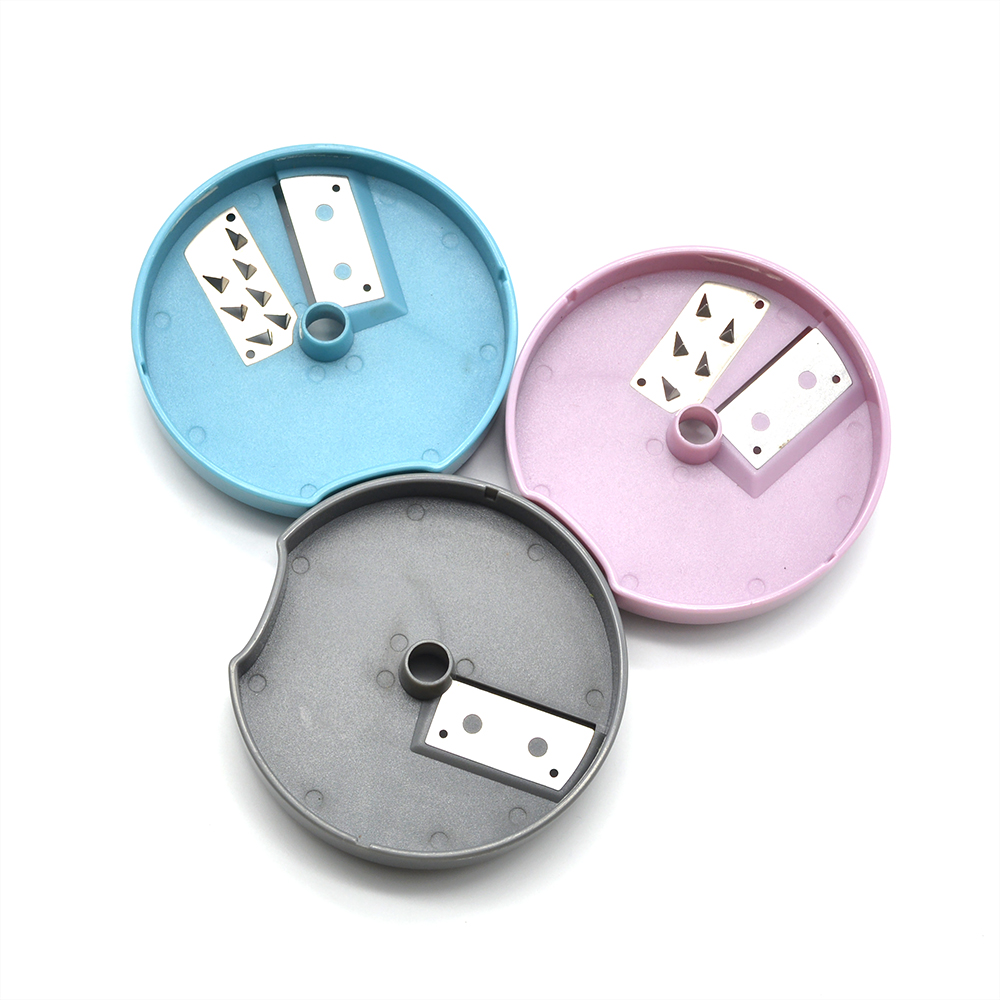
Innovation in spiralizer manufacturing is often practical rather than flashy. A useful improvement is one that makes the tool easier to operate, clean, store, or use safely. For example, color-coded blades can help users identify cutting options more quickly. Interchangeable attachments may also make one product suitable for different vegetable shapes, although each extra part adds complexity to packaging, quality control, and after-sales support.
When reviewing supplier samples, consider the full user journey. Can a first-time user understand how to install the blade? Is the handle comfortable during repeated turning? Does the base remain stable on a flat surface? Are fingers kept away from the blade during normal use? Can vegetable residue be rinsed away without special tools? These questions help separate meaningful design improvements from cosmetic changes.
Comparison Checklist for Sourcing Spiralizers
Before shortlisting a spiralizer supplier, use a structured checklist. This reduces the risk of choosing a product only because the first sample looks attractive.
| Evaluation Area | What to Check | Questions to Ask the Supplier |
|---|---|---|
| Blade mechanism | Cutting consistency, blade alignment, ease of changing attachments | What material is used for the blade, and can documentation be provided? |
| Body construction | Stability, handle comfort, resistance to flexing during use | Which parts are removable, and how are they assembled? |
| User safety | Finger distance from blade, secure food holder, storage of sharp parts | Are there safety instructions or warning labels for the target market? |
| Cleaning | Residue traps, removable parts, cleaning guidance | What cleaning method does the supplier recommend? |
| OEM packaging | Retail box strength, instructions, barcodes, language options | Can artwork, manuals, and labeling be customized? |
| Quality control | Sample consistency, inspection process, defect handling | What inspection steps are used before shipment? |
Quality Control Points During Vegetable Spiralizer Production
For wholesale orders, quality should be evaluated before mass production and again before shipment. A pre-production sample can confirm design, color, packaging, and included attachments. A production sample can show whether the approved version is being followed. A final inspection can check quantity, appearance, assembly, function, and packaging condition.
Useful inspection checks include:
- Confirm all parts and attachments are included according to the approved specification.
- Test spiralizing performance with several vegetable sizes and textures.
- Check whether the tool remains stable under normal hand pressure.
- Inspect blade edges for burrs, deformation, or poor alignment.
- Review instruction sheets for clear assembly, cleaning, and safety guidance.
- Check retail packaging for crushing, incorrect printing, or missing labels.
Buyers should also ask how the factory controls component variation. If blades, handles, or plastic parts are produced in separate batches, small tolerance differences may affect final assembly. Clear approved samples and written specifications help reduce misunderstanding.
OEM and Wholesale Questions to Ask a Spiralizer Factory
Because commercial details vary by supplier, buyers should request confirmed answers instead of assuming. Important questions include:
- What customization options are available for color, logo, packaging, manuals, or accessories?
- What is the minimum order quantity for standard and customized versions?
- What lead time applies to samples, production, and packaging approval?
- Which material details can be documented for the blade, body, and food-contact parts?
- Can the supplier provide test reports or compliance documents required for the destination market?
- How are replacement parts, spare blades, or customer complaints handled?
- What are the carton size, packing method, and loading details?
These questions are especially important for private-label programs. A product that works well in one retail channel may need different packaging, warnings, language, or documentation for another market. A professional supplier should be able to discuss these requirements clearly, even if some details need to be confirmed after sample development.
Future Trends in Spiralizer Manufacturing
The future of spiralizer manufacturing is likely to focus on practical improvements. Consumers want tools that are compact, quick to clean, and easy to store. Retailers want products that reduce returns and customer confusion. Suppliers may respond with clearer blade identification, more intuitive assembly, safer storage for sharp components, and better instruction materials.
Another trend is multifunctionality. A spiralizer may be combined with several cutting options, similar to how grater sets offer multiple surfaces for different tasks. However, buyers should balance feature count with reliability. More attachments can increase perceived value, but they can also create more opportunities for missing parts, user error, and packaging complexity.
Sustainability is also influencing kitchen tool discussions. Some manufacturers are exploring material choices and packaging improvements to reduce environmental impact. Buyers should treat any sustainability claim carefully and request evidence. If recycled content, reduced plastic packaging, or other environmental claims are important, ask what documentation is available and whether it is suitable for your sales region.
Practical FAQ
What should I test first when comparing spiralizer samples?
Start with cutting performance, stability, and cleaning. Use the same vegetables for each sample so comparisons are fair. Then check assembly, blade changeover, packaging, and instructions.
Can a spiralizer be customized for private-label sales?
Often, kitchen tool suppliers can discuss OEM options such as logo placement, color, packaging, and manuals. Exact options, cost, lead time, and MOQ should be confirmed with the supplier.
Are stainless steel blades guaranteed in every spiralizer?
No. Stainless steel is commonly used in kitchen cutting tools, but buyers should not assume the grade or material. Request written material details and any available supporting documents.
What makes a spiralizer easier for consumers to use?
Helpful features include a stable base, comfortable handle, clear blade identification, simple assembly, safe food holding, and parts that can be cleaned without trapping residue.
How can buyers reduce quality risks before shipment?
Approve a detailed sample, define packaging and accessory requirements, request production updates, and arrange inspection that includes function testing, visual checks, and carton review.
Final Sourcing Advice
Spiralizer manufacturing is not only about producing a sharp kitchen gadget. It requires careful attention to blade performance, user safety, cleaning, packaging, and documentation. For B2B buyers, the best results come from comparing samples systematically and asking suppliers specific questions before committing to volume orders. A well-chosen spiralizer should be practical for consumers, clear to use, and consistent enough for retail or private-label distribution.
