




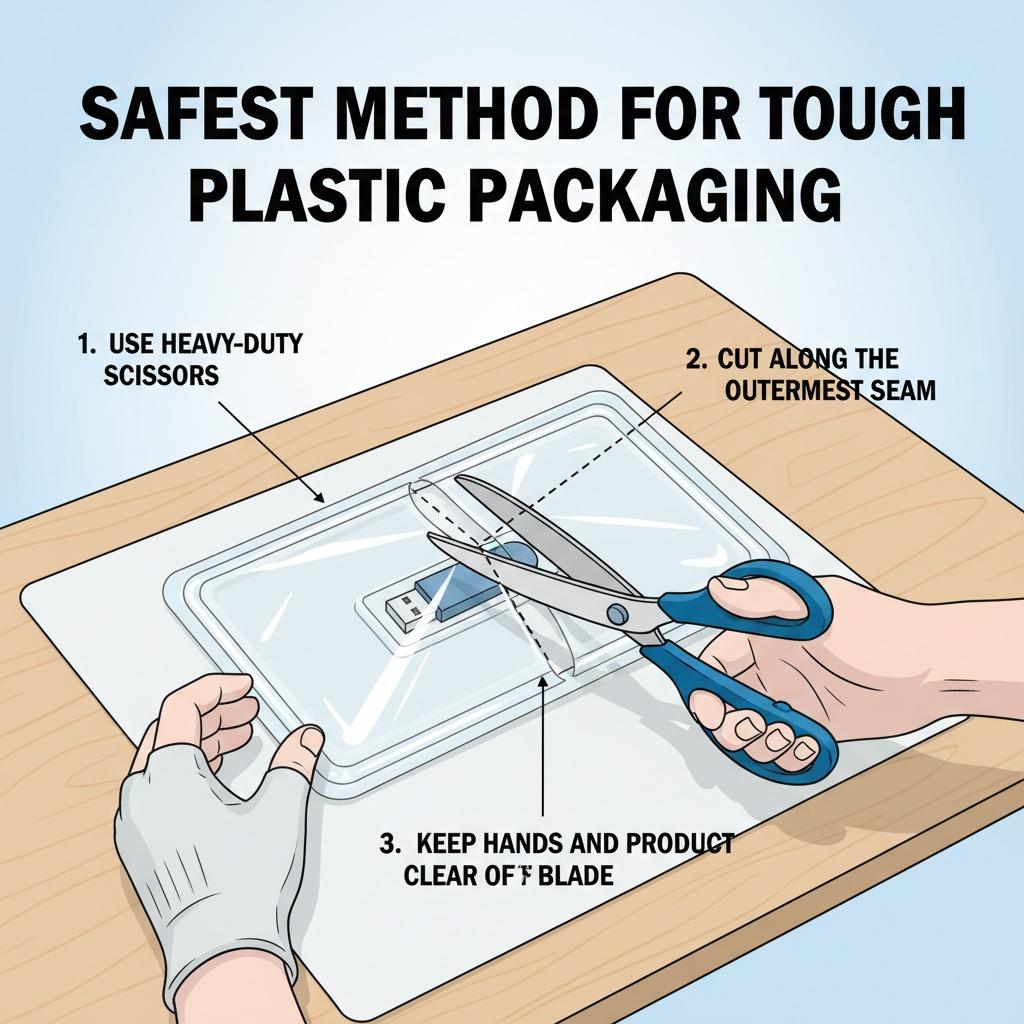
The Safest Way to Open Tough Plastic Packaging
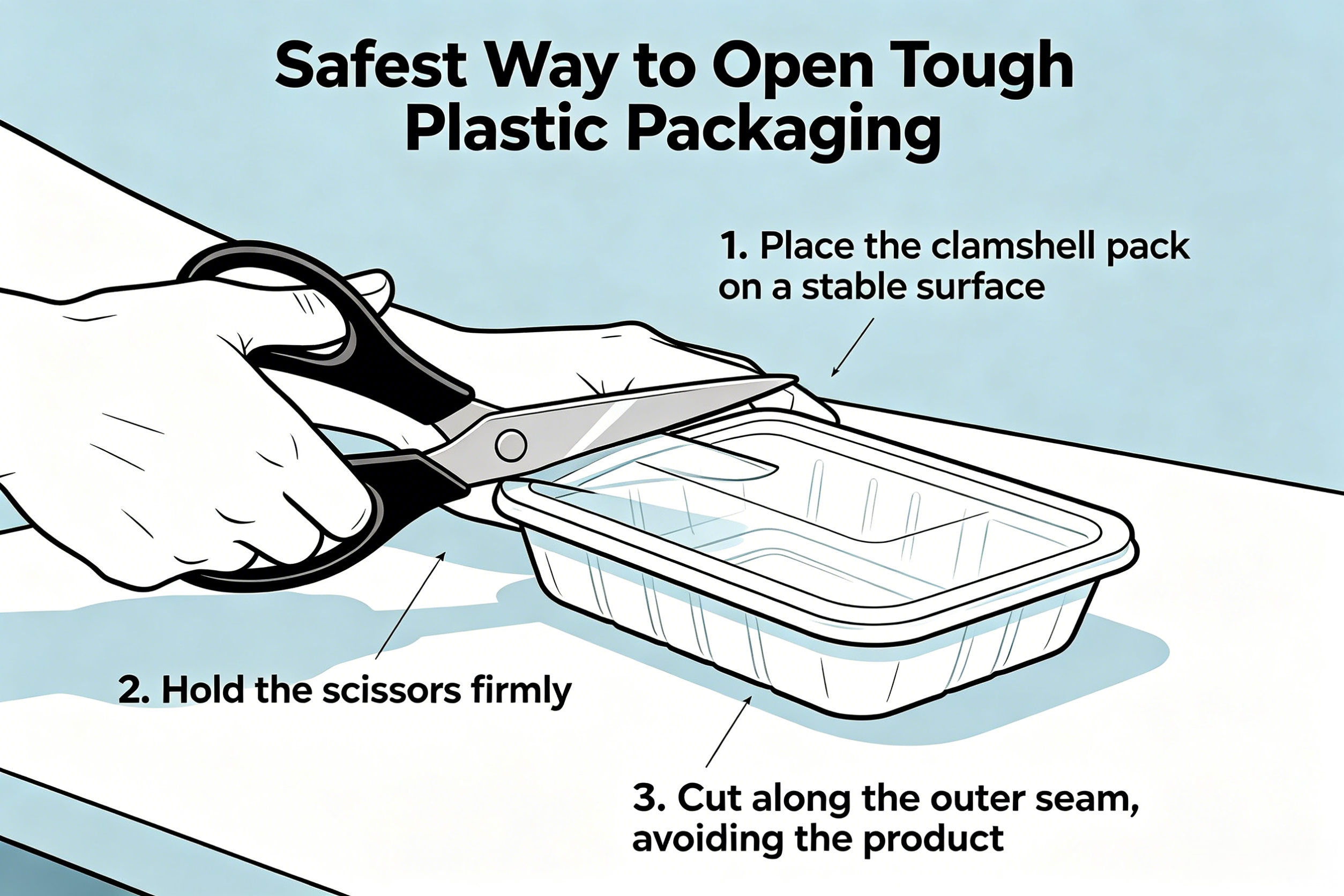
Tough plastic packaging, including clamshell packs and sealed blister packs, is designed to protect products in transit and on shelves. The problem starts when you try to open it at home. Thick plastic can flex, crack into sharp edges, or force your hand into an unsafe position. A rushed cut with the wrong tool can damage the product inside or cause a hand injury.
The safest approach is not about using more force. It is about creating a stable work area, choosing a controlled cutting tool, and cutting along the outer seam rather than stabbing into the package. For many household tasks, a sturdy pair of kitchen scissors offers better control than a loose blade, especially on curved edges and molded plastic seams.
Key Takeaways
- Do not stab the center of clamshell or blister packaging; start at an edge or seam.
- Use a flat, stable surface and keep your non-cutting hand away from the cutting path.
- Kitchen scissors are often easier to control than a utility knife on curved plastic.
- Cut-resistant gloves are useful when plastic is thick, brittle, or difficult to grip.
- Inspect the opened package for sharp plastic shards before handling the product.
Why Tough Plastic Packaging Can Be Risky
Rigid plastic packaging can be difficult because it combines slick surfaces with sharp sealed edges. When pressure builds up, a knife or scissor tip can slip suddenly. Pulling the package apart by hand is not much better; torn plastic can leave jagged edges that cut like a blade.
Safety matters most when opening packages around children, older adults, or anyone with limited hand strength. It also matters when the product inside is fragile. A controlled opening method helps protect both your hands and the item you just bought.
Tools That Make Packaging Safer to Open
You do not need a complicated setup. A few practical tools can reduce slipping and improve control:
- Kitchen scissors: Useful for short, controlled cuts around sealed edges and curved plastic.
- Utility knife: Best reserved for flat, straight seams when used on a cutting mat with a sharp blade.
- Cut-resistant gloves: Helpful for thick packaging or when grip is uncertain.
- Cutting mat or thick cardboard: Protects the table and prevents the package from sliding.
- Small container for scraps: Keeps sharp plastic off the counter and floor.
If you use kitchen scissors for packaging as well as food preparation, clean them thoroughly afterward. Some households prefer a dedicated pair for non-food tasks to avoid transferring dust, adhesive, or packaging residue into the kitchen.
Step-by-Step: A Safer Opening Method
- Clear the area. Place the package on a dry, uncluttered table. Remove children, pets, and loose items from the workspace.
- Stabilize the package. Set it on a cutting mat or thick cardboard. If it rocks or slides, rotate it until it rests more securely.
- Find the seam. Look for molded edges, perforations, or a sealed border. These areas are usually safer to cut than the raised center.
- Start at a corner. Insert only the tip of the scissors into the outer edge. Avoid pushing the tool toward the product inside.
- Use short snips. Cut slowly along the seam, keeping about a small margin between the cut and the item. Short cuts are easier to control than long slicing motions.
- Turn the package, not your wrist. Reposition the packaging as you cut so your hand stays comfortable and your cutting line remains visible.
- Open gently. Once enough of the edge is cut, peel the plastic apart carefully. Do not yank it open.
- Dispose of sharp scraps. Put cut plastic directly into a bin or container so no one steps on it or grabs it by mistake.
Comparison: Common Opening Methods
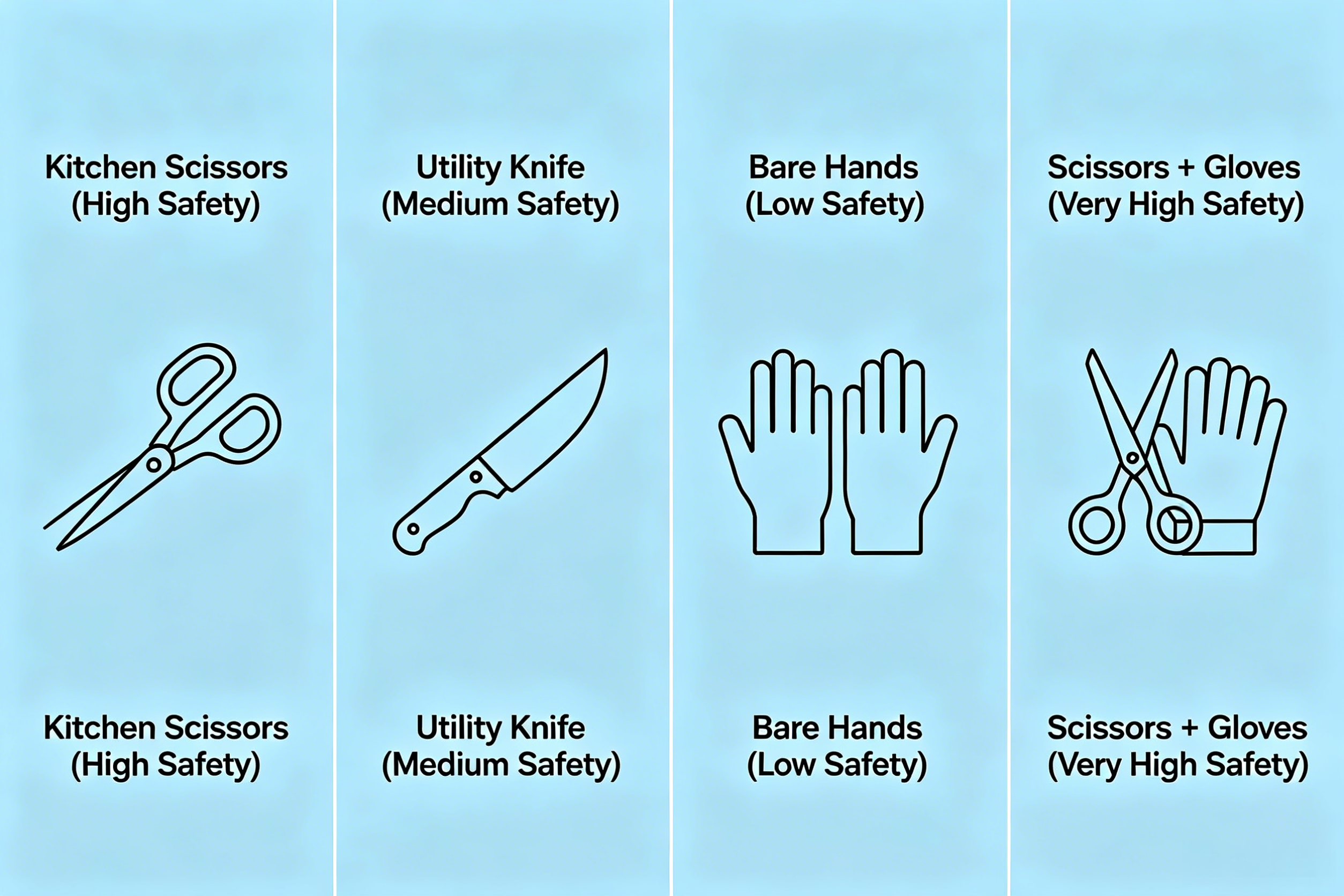
| Method | Control | Best Use | Main Risk | Practical Recommendation |
|---|---|---|---|---|
| Kitchen scissors | High | Curved clamshell edges and blister packs | Sharp plastic after cutting | Best everyday option for controlled snipping |
| Utility knife | Medium | Flat, straight sealed edges | Blade slipping or cutting too deep | Use only on a stable surface with a mat |
| Bare hands | Low | Packages with true pull tabs | Torn, jagged plastic edges | Avoid for rigid packaging |
| Scissors with gloves | Very high | Thick or brittle plastic | Reduced finger sensitivity | Good choice for extra protection |
| Electric opener or cutter | Varies | Repeated packaging tasks | Overcutting or poor fit for shapes | Consider only if you open packaging often |
How to Choose Kitchen Scissors for Packaging Tasks
When selecting kitchen scissors for tough packaging, focus on control and comfort rather than force alone. Look for handles that feel secure in your hand, blades that meet cleanly, and a hinge that does not wobble. If the scissors feel unstable when cutting thin cardboard, they may be frustrating on thick plastic.
Also consider cleaning and storage. Packaging can carry dust, adhesive, and small plastic particles, so scissors should be easy to wipe clean after use. Store them in a sheath, block, or dedicated drawer section rather than loose among other tools. This reduces the chance of grabbing a blade accidentally.
If you are sourcing scissors for retail, hospitality, promotional kits, or OEM projects, ask suppliers practical questions before ordering. Confirm what materials are used, whether samples are available for handling tests, how packaging-use durability is evaluated, what customization options exist, and what lead times apply. Avoid relying on assumptions about steel grade, certifications, or production capacity unless the supplier provides documentation.
Extra Safety Tips for Difficult Packages
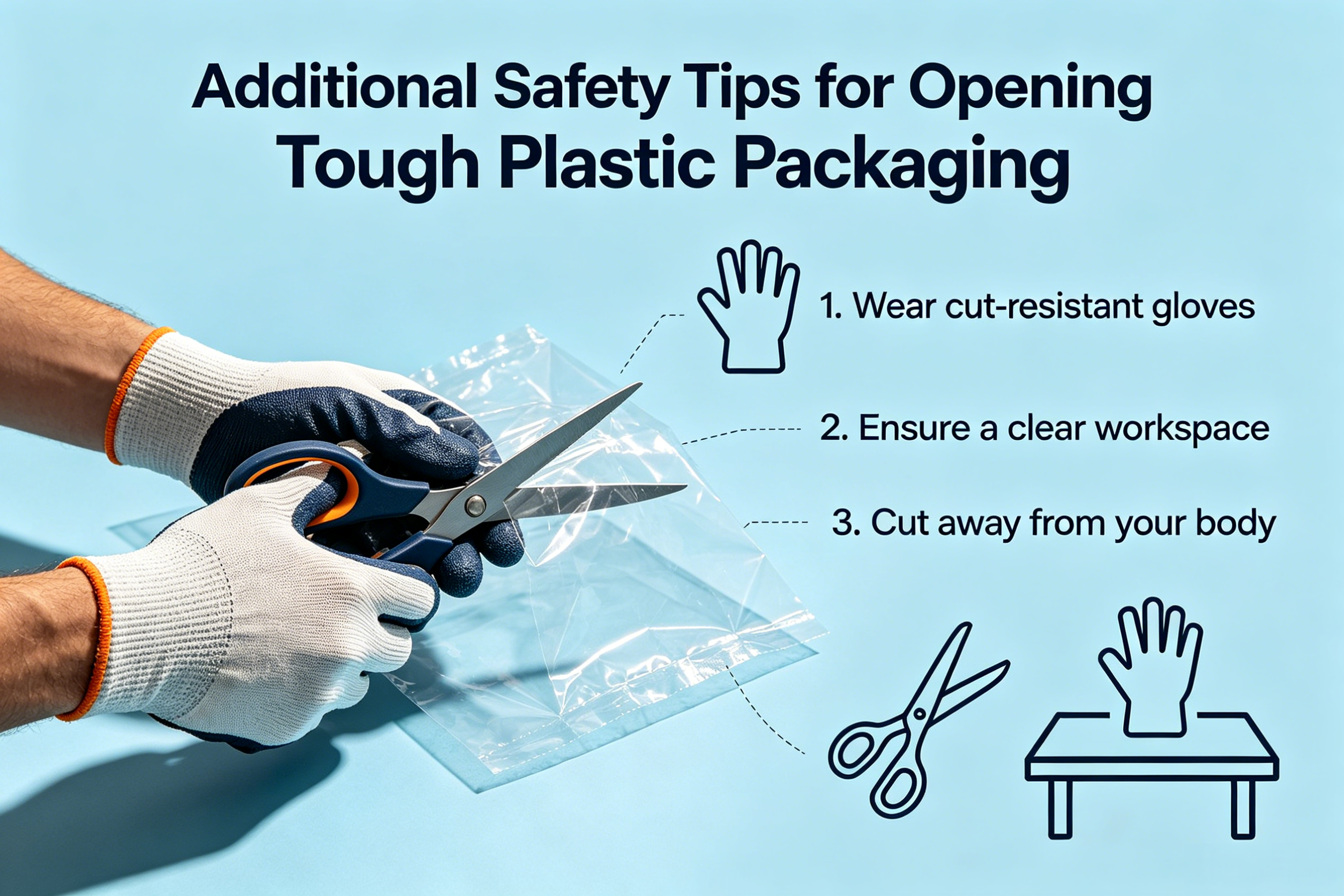
- Cut away from your body and keep the package below chest height.
- Do not hold the package in the air while cutting; place it on a surface.
- If the plastic starts cracking unpredictably, stop and change your cutting angle.
- Use gloves when the packaging is thick, cloudy, brittle, or already cracked.
- Check for small plastic shards before handing the product to a child.
- Do not use food scissors on dirty packaging unless you clean them before food contact.
Care and Cleaning After Opening Packaging
After cutting plastic, wipe the scissor blades to remove residue and small fragments. If adhesive or label material sticks to the blade, clean it before the next use. Dry the scissors before storage, especially if they were washed with water. Keeping the hinge area clean also helps the blades open and close smoothly.
Inspect the edge periodically. Dull scissors can require extra pressure, and extra pressure increases the chance of slipping. If the blades no longer cut packaging cleanly, use a more suitable tool or replace the scissors rather than forcing the cut.
FAQ
Are kitchen scissors safer than a utility knife for clamshell packaging?
Often, yes. Scissors allow short, controlled snips around the edge, while a utility knife can slip if the plastic flexes. A knife may still be useful for straight, flat seams when used carefully on a cutting mat.
Where should I start cutting a blister pack?
Start at an outer corner or sealed seam. Avoid stabbing into the center because the tool can break through suddenly and hit your hand or the product.
Should I wear gloves?
Gloves are a good idea for thick, brittle, or sharp packaging. They are also helpful if you have reduced grip strength or are opening several packages at once.
Can I use the same scissors for food and packaging?
You can, but clean them thoroughly after cutting packaging. For better hygiene and convenience, many households keep one pair for food and another for utility tasks.
What should business buyers ask when sourcing kitchen scissors?
Ask about materials, sample availability, packaging options, cleaning guidance, customization, quality checks, lead times, and any documents needed for your market. Do not assume specifications that are not clearly provided.
