




The Ultimate Guide to OEM Tailor Scissors
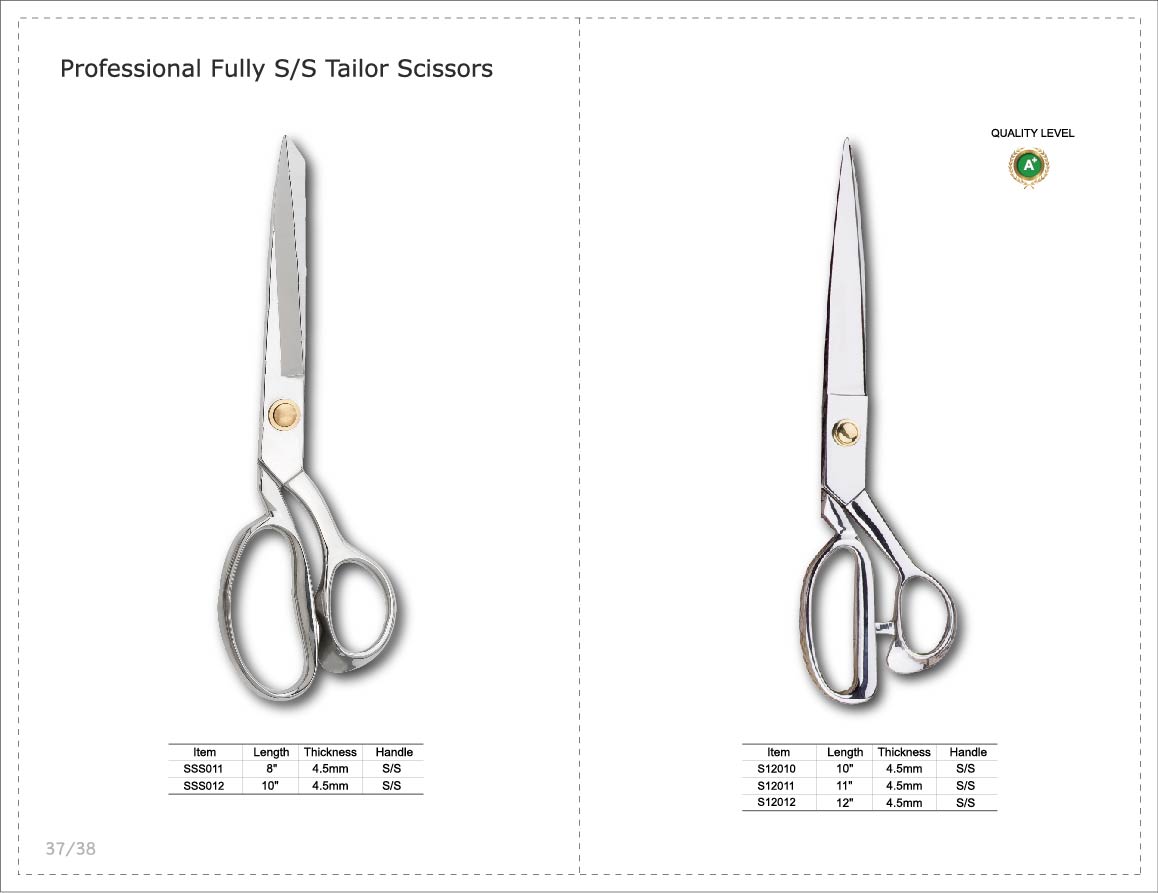
OEM tailor scissors are an important category for sewing tool brands, textile distributors, uniform suppliers, craft retailers, and professional tailoring channels. The buying decision is not only about finding a sharp pair of scissors. It is about choosing a supplier that can support consistent cutting performance, repeatable appearance, practical packaging, and clear communication throughout the production process.
The original article notes three useful points: professional users need clean and precise cutting, OEM services can support customization, and quality assurance is essential. This expanded guide builds on those ideas with a more practical sourcing framework for B2B buyers who want to evaluate tailor scissors before placing an OEM or wholesale order.
Key Takeaways
- OEM tailor scissors should be evaluated by cutting performance, balance, handle comfort, finish consistency, and packaging suitability.
- Customization can include branding, handle design, blade style, edge geometry, color, and retail presentation, but each option should be confirmed with the supplier.
- Buyers should request samples and define inspection criteria before confirming bulk production.
- Do not rely only on catalog photos; ask how the supplier controls sharpening, assembly, surface finish, and final inspection.
What Are OEM Tailor Scissors?
OEM tailor scissors are scissors produced by a manufacturer for another company to sell under its own brand or distribution program. In this context, OEM may involve a standard product with brand marking, a modified design based on an existing model, or a more customized product developed around the buyer's requirements.
For tailoring, upholstery, garment repair, sewing education, and fabric retail markets, the scissors must handle repeated cutting tasks with accuracy and comfort. A professional user expects the blades to meet cleanly, the hinge to feel stable, and the handles to support controlled cutting over longer sessions. For a buyer, the challenge is to translate these user expectations into clear sourcing requirements that a supplier can understand and verify.
Why Professional Buyers Choose Scissors OEM Services
Scissors OEM services are useful when a buyer needs more control than a generic wholesale product can provide. A distributor may want packaging that matches an existing tool range. A sewing brand may need a handle color that fits its identity. A retailer may prefer a specific assortment, such as tailor scissors paired with thread snips or measuring tools. OEM sourcing allows these choices to be discussed before production rather than after receiving finished stock.
However, customization should be handled carefully. Each requested change may affect cost, lead time, tooling, packaging, inspection, or minimum order requirements. Since the original information does not provide Bonet-specific MOQ, production capacity, certifications, prices, or material grades, buyers should ask for those details directly instead of assuming them. A professional supplier discussion should be specific, documented, and sample-based.
Customization Options to Discuss With a Supplier
The original article mentions possible control over blade steel, cutting edge angle, handle shape, and handle material. These are common areas to discuss, but the final available options depend on the supplier's actual product line and production process. Before requesting a quotation, prepare a simple product brief that separates necessary requirements from preferences.
| Customization Area | What to Confirm | Why It Matters |
|---|---|---|
| Blade design | Available sizes, blade shape, edge style, and finishing options | Affects fabric cutting feel, appearance, and product positioning |
| Handle design | Color, shape, grip material, right-hand or left-hand availability | Influences comfort, control, and user suitability |
| Branding | Logo method, placement, artwork format, and durability expectations | Supports private label identity and retail recognition |
| Packaging | Blister card, box, sleeve, barcode, language, and carton details | Determines shelf presentation and warehouse handling |
| Inspection | Sharpness checks, opening and closing feel, visual defects, and sampling plan | Reduces inconsistent quality in bulk shipments |
Quality Assurance for Tailor Scissors
Quality assurance tailor scissors processes should be discussed before production starts. A reliable approach normally covers incoming material checks, in-process control, sharpening consistency, assembly, surface inspection, and final packing review. Buyers do not need to manage the factory's internal process, but they should agree on measurable acceptance criteria.
Useful inspection questions include: How is blade alignment checked? What is considered acceptable hinge tension? How are burrs, scratches, stains, or handle defects classified? Is there a cutting test using fabric or other agreed material? How many pieces are inspected per batch? What happens if a shipment fails inspection?
For professional sewing and tailoring markets, small defects can create large customer complaints. A blade that drags, a loose screw, or a rough handle edge may be enough for a user to reject the product. This is why sampling, pre-production approval, and final inspection records are important parts of an OEM scissors project.
How to Evaluate Samples Before Bulk Ordering
Samples are essential because catalog descriptions cannot fully show balance, blade contact, handle comfort, or cutting feel. When samples arrive, test them in a realistic environment rather than only checking their appearance. If the target market includes tailors or sewing professionals, involve someone who regularly cuts fabric and can provide practical feedback.
- Check visual consistency, including blade finish, handle molding, logo position, and packaging quality.
- Open and close each sample several times to assess smoothness, hinge stability, and any grinding feel.
- Cut different fabric types if relevant to the intended market, and note whether the scissors cut cleanly to the tip.
- Compare multiple samples from the same supplier to see whether performance is consistent.
- Record requested changes clearly and ask for confirmation before approving production.
Supplier Questions for OEM and Wholesale Buyers
Clear supplier questions help prevent misunderstandings. Instead of asking only for the lowest price, buyers should request information that connects product quality, customization, and delivery. This is especially important for private label programs where the buyer's brand reputation depends on the final product.
- Which tailor scissors models are available for OEM branding?
- What customization options are available for blade finish, handle color, logo, and packaging?
- What are the MOQ, sample cost, tooling requirements, and estimated lead time?
- Can the supplier provide a pre-production sample before mass production?
- What inspection steps are used before shipment?
- Which product details should be confirmed for the destination market, including labeling and documentation?
Choosing the Right OEM Tailor Scissors for Your Market
The best tailor scissors for one channel may not be the best choice for another. A professional tailor may prioritize blade feel and durability. A retail sewing kit may require compact packaging and clear product instructions. A distributor serving schools or training centers may need consistent pricing and simple replacement ordering. Start by defining the end user, usage frequency, expected price position, and packaging environment.
Buyers should also consider assortment strategy. Offering too many similar scissors can make inventory harder to manage, while offering too few options may not serve different fabric or user needs. A practical range may include a core tailor scissors model, a premium-positioned option, and complementary small cutting tools, depending on the supplier's available catalog and the buyer's market.
FAQ
What does OEM mean for tailor scissors?
OEM means a manufacturer produces tailor scissors for another company to sell under its own brand or customized program. The level of customization should be confirmed with the supplier.
Can I customize the handle color and logo?
Often these are possible OEM discussion points, but availability depends on the supplier's models, production method, order quantity, and artwork requirements.
How should I check tailor scissors quality?
Review samples for cutting performance, blade alignment, hinge tension, handle comfort, appearance, packaging, and consistency between pieces.
What should I ask before placing a wholesale order?
Ask about MOQ, lead time, sample approval, packaging options, inspection process, payment terms, shipping details, and any documentation needed for your market.
Are OEM tailor scissors only for professional tailoring brands?
No. They can also be suitable for sewing retailers, craft distributors, garment accessory suppliers, school supply programs, and textile-related private label ranges.
Final Sourcing Advice
OEM tailor scissors sourcing works best when buyers combine market knowledge with disciplined supplier communication. Define the product role, request samples, confirm customization limits, document inspection expectations, and ask commercial questions before committing to a bulk order. A clear process helps buyers avoid vague specifications and gives the supplier a better chance to deliver scissors that meet the intended market's expectations.
