




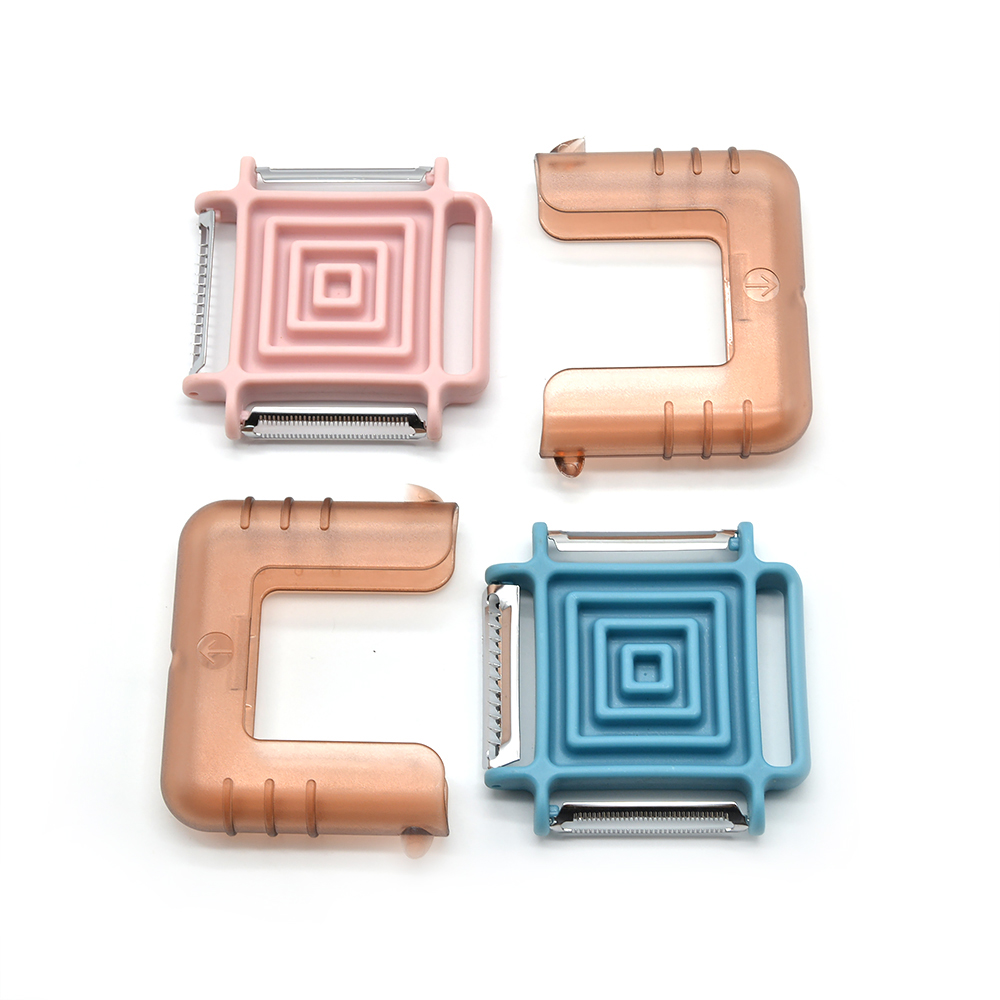
The Ultimate Versatility of the Three-Purpose Peeler
A good peeler does more than remove skin from potatoes. For many home cooks, it is one of the first tools picked up during meal preparation and one of the last to be cleaned afterward. A three-purpose peeler is designed to reduce the need for several single-use gadgets by combining multiple peeling functions in one compact tool. When chosen and used well, it can help with fruits, vegetables, tougher skins, and decorative prep without adding clutter to the drawer.
The original product description highlights a modern peeler with a geometric square motif, pastel pink and blue colors with warm apricot copper accents, interchangeable stainless steel blades, a standard blade, a serrated blade, an ergonomic handle positioned parallel to the blade, and protective clips for safer storage. Those details matter, but the real value of this type of tool depends on how it performs in daily kitchen routines.
Key Takeaways
- A three-purpose peeler is useful when you regularly prepare different fruits and vegetables and want fewer tools in the drawer.
- Standard and serrated blades serve different jobs, so blade selection is more important than appearance alone.
- Comfort, grip control, and safe blade storage should be checked before buying.
- Interchangeable blades need careful cleaning, drying, and storage to stay practical over time.
What Is a Three-Purpose Peeler?
A three-purpose peeler is a multi-functional kitchen prep tool intended to handle more than one peeling task. Depending on the design, it may include interchangeable blades or multiple blade edges that suit different ingredients. In this case, the source description specifically identifies interchangeable stainless steel blades, including a standard blade and a serrated blade. The third purpose may vary by product configuration, so shoppers should confirm the exact functions before purchase rather than assuming every model works the same way.
The main appeal is convenience. Instead of keeping separate peelers for smooth-skinned produce, soft fruit, or tougher skins, a multi-functional peeler can consolidate several tasks. This is especially helpful in smaller kitchens, shared homes, dorms, and busy households where storage space and cleanup time are limited.
Where a Standard Blade Works Best
The standard blade is the everyday option for common peeling jobs. It is typically suited to ingredients with relatively smooth skins, such as carrots, cucumbers, potatoes, apples, pears, and similar produce. A sharp, stable blade helps remove thin strips of skin instead of taking away too much edible flesh.
When using a standard blade, apply light pressure and let the blade do the work. Pressing too hard can cause uneven peeling, waste more produce, or increase the chance of slipping. For round items, rotate the ingredient rather than forcing your wrist into an awkward angle. If the handle is parallel to the blade, as described in the original article, test whether that orientation feels natural for your grip style before making it your daily tool.
When to Use a Serrated Blade
A serrated blade can be useful on tougher or more delicate skins where a smooth blade may slide instead of bite. Examples may include tomatoes, peaches, kiwifruit, eggplant, or firm-skinned vegetables. It can also help start a peel on produce with a waxy or resistant surface.
The key is control. Serrated blades can feel more aggressive than standard blades, so use shorter strokes and keep fingers away from the cutting path. If the fruit is very soft, support it gently rather than squeezing. For tough vegetables, stabilize the item on a cutting board if handheld peeling feels unsafe.
Comparison Checklist for Choosing a Peeler
| Feature to Check | Why It Matters | Question to Ask Before Buying |
|---|---|---|
| Blade types | Different edges suit different produce skins. | Which exact three functions or blade options are included? |
| Blade material | The source states stainless steel blades, but grade is not specified. | What stainless steel grade is used, and how should it be maintained? |
| Handle shape | A comfortable handle improves control during repetitive prep. | Does the parallel handle design suit right- and left-handed users? |
| Blade changing method | Interchangeable parts should be secure and easy to clean. | How are blades locked, removed, and reattached safely? |
| Storage protection | Protective clips can reduce accidental contact with sharp edges. | Are clips included for every blade, and are replacements available? |
Design and Storage Considerations
Appearance is not the only reason to compare designs, but it can still matter if the tool is kept on an open rack or countertop. The described peeler uses a geometric square motif and a color mix of pastel pink, blue, and warm apricot copper. For buyers who prefer coordinated kitchen tools, those visible details may be attractive.
However, design should support function. Look for a handle that stays steady when wet, a blade angle that does not strain the wrist, and a storage method that protects both the blade and the user. Protective clips are a useful feature because peelers often sit in crowded drawers with knives, measuring spoons, and other utensils. A covered blade is less likely to nick fingers during storage and less likely to be dulled by contact with other tools.
How to Use a Multi-Functional Peeler Safely
- Wash produce first so dirt does not drag across the blade or food surface.
- Choose the blade that matches the skin texture instead of using one blade for every task.
- Hold the produce firmly and peel away from your fingers whenever possible.
- Use slow, controlled strokes on round, wet, or irregularly shaped ingredients.
- Attach the protective clip before placing the peeler or spare blade in a drawer.
If a blade feels loose, dull, bent, or difficult to lock in place, stop using it until the issue is resolved. Multi-part tools are convenient only when every part remains secure during normal use.
Cleaning and Care Tips
Interchangeable blades create small gaps where peel, starch, and moisture can collect. Rinse the blade soon after use, especially after peeling potatoes, citrus, or soft fruit. Use a small brush if food is trapped near the blade mount, and dry the parts before storage to reduce water spots and residue.
Do not assume dishwasher suitability unless the product instructions say so. Heat, detergent, and movement in a dishwasher can affect handles, finishes, clips, or blade sharpness on some kitchen tools. If care instructions are not provided, hand washing is the safer default.
FAQ
Is a three-purpose peeler better than a regular peeler?
It depends on your cooking habits. If you peel many types of produce, a multi-functional peeler can be more flexible. If you only peel potatoes or carrots occasionally, a simple peeler may be enough.
Can one peeler handle both fruits and vegetables?
Yes, if the blade type is suitable. A standard blade works well for many firm vegetables, while a serrated blade may help with softer fruit or tougher skins.
Are stainless steel blades always rustproof?
No. Stainless steel resists corrosion better than many metals, but care still matters. Dry blades after washing and ask the supplier what stainless steel grade is used if that detail is important to you.
What should I confirm before purchasing?
Confirm the three functions, included blades, blade locking method, cleaning instructions, storage clips, and whether replacement parts are available.
How should I store spare blades?
Store spare blades with protective clips attached and keep them in a defined drawer section or container so they are not loose among other utensils.
Final Buying Advice
A three-purpose peeler is most useful when it combines the right blades, comfortable handling, and safe storage. The visual design may make it pleasant to keep nearby, but performance comes from blade control, secure interchangeable parts, and easy maintenance. Before choosing one, match the tool to the produce you prepare most often and ask clear questions about blade functions, material details, care instructions, and replacement options.
