





Top Kitchen Scissors Factory & OEM Solutions
Kitchen scissors are practical tools for food preparation, packaging, herbs, poultry trimming, and everyday cutting tasks. For importers, retailers, private-label brands, and promotional buyers, choosing the right kitchen scissors factory is not only about finding a sharp product. It is about confirming that the supplier can support consistent production, clear communication, suitable packaging, and repeatable quality.
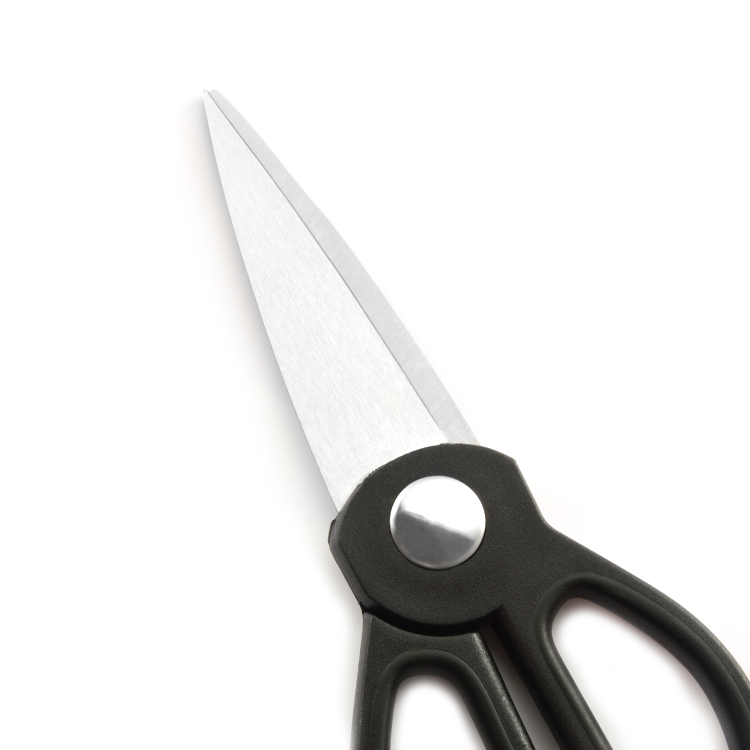
The original product presentation highlights several visible and functional details: ergonomically designed black handles, stainless steel blades, a brushed metal pivot, and a symmetrical design. These are useful starting points for sourcing conversations. However, a serious OEM or wholesale buyer should go further by asking how those features are specified, inspected, packed, and maintained across production batches.
Key Takeaways
- Start with the intended use: household cooking, retail packs, food service, promotional gifts, or private-label kitchenware lines.
- Confirm explicit product details such as blade material, handle design, pivot construction, packaging, and labeling before ordering.
- Ask the supplier which OEM options are available instead of assuming custom colors, logos, or packaging are automatically included.
- Review samples for cutting feel, handle comfort, blade alignment, cleaning convenience, and overall finish.
- Use written specifications and inspection criteria to reduce misunderstandings between buyer and factory.
What Buyers Should Look for in Kitchen Scissors
Kitchen scissors should feel stable, cut cleanly, and be easy to control during repeated use. A buyer evaluating samples should test more than one material. Paper, herbs, thin plastic packaging, and common food-preparation items can reveal different performance issues. Uneven cutting, blade wobble, handle discomfort, or a stiff pivot may not appear in a quick visual review.
The black ergonomic handles mentioned in the source are relevant because handle shape affects comfort and control. For a retail buyer, this can influence customer satisfaction. For a food service or wholesale buyer, it can affect repeated-use fatigue. Ask whether the handle shape, surface texture, and color are standard factory options or customizable OEM elements.
Factory and OEM Evaluation Checklist
When sourcing from a kitchen scissors factory, buyers should turn general claims into measurable questions. The table below can help organize a supplier review before confirming samples or a purchase order.
| Evaluation Area | What to Check | Questions to Ask the Supplier |
|---|---|---|
| Blade material | The source states stainless steel blades. | What stainless steel type is used, and how is it documented? |
| Cutting performance | Sharpness, blade alignment, smooth opening and closing. | What cutting tests are used during inspection? |
| Handle design | Ergonomic black handles are described. | Can handle color, texture, or branding be customized? |
| Pivot construction | A brushed metal pivot is mentioned. | How is pivot tightness checked before packing? |
| Packaging | Retail, bulk, or private-label packaging needs. | What packaging formats are available for OEM orders? |
| Quality control | Consistency between approval sample and mass production. | Can inspection criteria be agreed in writing? |
OEM Kitchen Scissors: Customization Points
OEM kitchen scissors projects often involve more than adding a logo. Buyers may need to discuss handle color, blade finish, pivot appearance, packaging artwork, barcode placement, carton labeling, and instruction inserts. These details matter because kitchen scissors are frequently sold as part of broader kitchenware assortments, and inconsistent presentation can weaken shelf appeal or brand recognition.
Before requesting a quotation, prepare a specification sheet. Include product dimensions if known, target use, preferred materials, packaging style, logo position, required languages on packaging, and any market-specific documentation you need. If those details are not final, state them as open questions. A reliable supplier should be able to explain which options are standard and which require further development.
Material and Design Questions to Clarify
The source explicitly mentions stainless steel blades, but it does not state the stainless steel grade, thickness, hardness, coating, dishwasher suitability, or corrosion-resistance test results. These should not be assumed. Buyers should request confirmation and, where necessary, supporting documents or sample testing.
The brushed metal pivot is another useful design point. A pivot affects cutting smoothness and blade stability. During sample review, open and close the scissors repeatedly, listen for scraping, and check whether the blades remain aligned. If the scissors are intended for frequent use, ask how the factory controls pivot assembly during production.
The symmetrical design described in the original content may support a balanced appearance, but buyers should still check practical handling. If the product is promoted for broad household use, confirm whether it is comfortable for the target users and whether the handle openings fit the intended market.
Sample Review Before Wholesale Orders
Samples are essential in OEM and wholesale sourcing. Do not evaluate only the first impression. A practical review should include cutting tests, comfort checks, visual inspection, cleaning review, and packaging assessment. Compare several pieces from the same sample set if available; variation between pieces can reveal manufacturing consistency issues.
- Check blade tips, edges, and alignment under good lighting.
- Open and close the scissors multiple times to judge pivot smoothness.
- Cut different common materials and note whether the cut is clean or uneven.
- Hold the handles for repeated snips to assess comfort and pressure points.
- Review packaging strength, labeling accuracy, and carton protection.
Communication With a Kitchen Shears Supplier
Clear communication reduces sourcing risk. Instead of asking for a general price, provide a target order scenario and ask what variables affect the quotation. Those variables may include material choices, finish, packaging, logo method, carton requirements, and inspection expectations. If minimum order quantities, lead times, or customization charges are important, ask the supplier directly and request written confirmation.
For private-label projects, confirm artwork requirements early. Ask which file formats are accepted, how colors are matched, whether pre-production samples are available, and how final packaging approval is handled. If your market requires specific labeling or compliance documentation, identify those requirements before production planning rather than after goods are finished.
Practical FAQ
What should I ask a kitchen scissors factory first?
Start with the intended use, available blade materials, handle options, packaging formats, OEM capabilities, sample process, and inspection standards. Ask for clear written answers rather than relying on general descriptions.
Can OEM kitchen scissors include custom branding?
They may, depending on the supplier's available processes. Ask whether branding can be applied to the handle, blade, packaging, or inserts, and confirm any artwork, cost, and order requirements.
Are stainless steel blades always the same quality?
No. The source states stainless steel blades, but stainless steel can vary by grade, thickness, heat treatment, and finish. Buyers should ask the supplier to specify the material and provide relevant details.
How should I compare samples from different suppliers?
Use the same tests for each sample: cutting performance, handle comfort, pivot smoothness, visual finish, packaging quality, and consistency across multiple pieces.
What details should be written into a purchase order?
Include approved sample reference, material description, color, logo placement, packaging requirements, carton marks, inspection criteria, quantity, delivery terms, and any documents the supplier must provide.
Final Sourcing Advice
A good kitchen scissors OEM project begins with a clear product brief and a disciplined sample review. The visible features described in the original article, including black ergonomic handles, stainless steel blades, a brushed metal pivot, and a symmetrical design, can be valuable selling points when they are supported by consistent production and transparent specifications. For buyers, the best approach is to ask precise questions, document agreed details, and verify samples before moving into wholesale production.
