




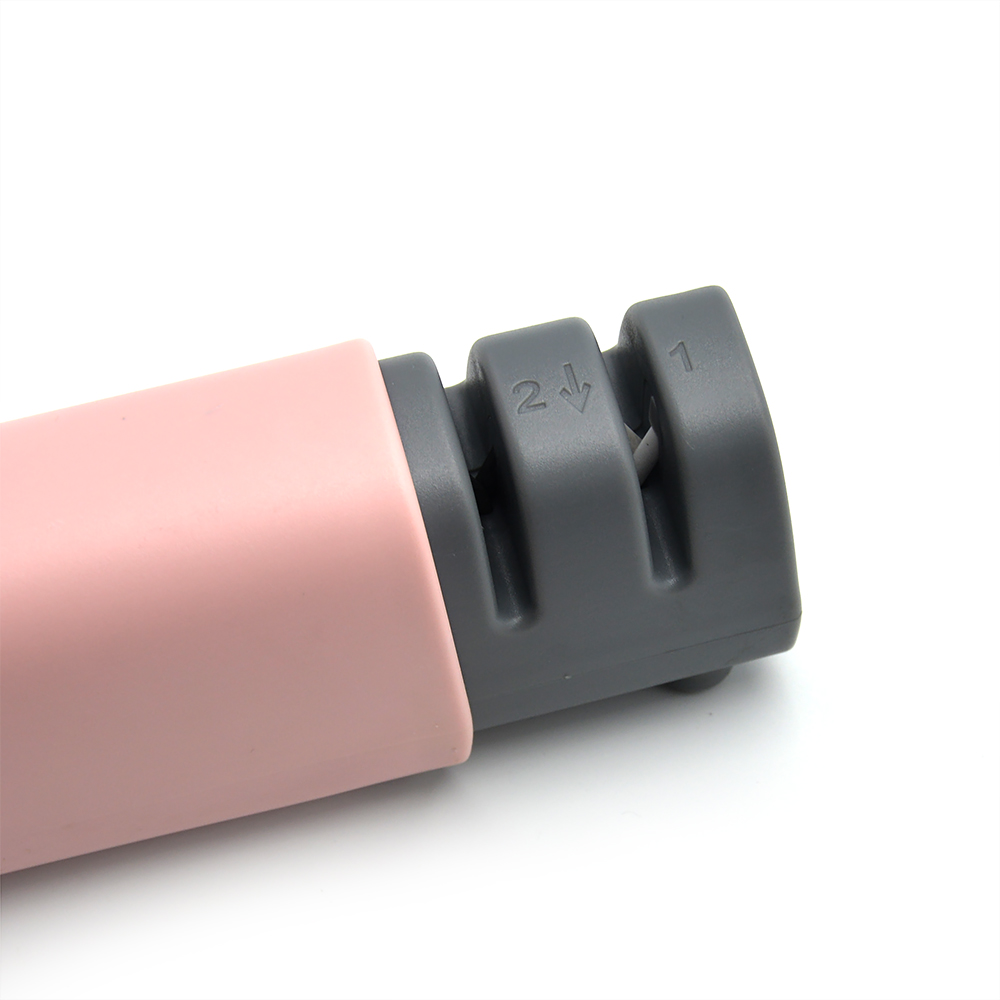
Top Knife Sharpener Supplier for Industrial & Wholesale Needs
Choosing a knife sharpener supplier is not only about finding a low unit price. For wholesalers, distributors, kitchenware brands, hospitality buyers, and industrial users, the better question is whether the supplier can provide consistent product quality, clear communication, suitable packaging, and dependable replenishment. A compact sharpener may look simple, but small differences in sharpening stages, grip comfort, housing design, and packaging reliability can affect customer satisfaction and repeat orders.
The original article introduced the Knife Sharpener Pro as a dual-stage sharpener with coarse and fine grits, a lime green and gray design, ergonomic handling, and a compact format. Those are useful starting points. This rewritten guide focuses on how B2B buyers should evaluate a knife sharpener supplier before placing wholesale or industrial orders, without assuming specifications that have not been confirmed by the supplier.
Key Takeaways
- Match the sharpener type to the buyer channel: retail, food service, workshop, or industrial maintenance.
- Confirm product details such as sharpening stages, materials, packaging, labeling, and instructions before ordering.
- Ask for samples and review consistency across multiple units, not just one demonstration piece.
- For OEM or wholesale programs, clarify artwork, carton packing, lead time, inspection process, and after-sales support.
What a Knife Sharpener Supplier Should Help You Decide
A capable supplier should do more than provide a catalog. Buyers need guidance on which sharpener design fits their target users. A home kitchen retailer may prefer a compact manual sharpener that is easy to explain on a shelf display. A professional kitchen distributor may focus on faster maintenance, stable grip, and clear use instructions. An industrial buyer may need a more robust solution for frequent use and should ask whether the product is intended for that workload.
If you are evaluating the Knife Sharpener Pro or a similar dual-stage model, confirm what each stage is designed to do. A coarse stage is generally used for restoring a dull edge, while a fine stage is commonly used for finishing or routine maintenance. Buyers should request written usage guidance from the supplier so end users understand how to use the sharpener safely and avoid unnecessary blade wear.
Industrial vs. Wholesale Knife Sharpener Sourcing
The phrase industrial knife sharpener supplier can mean different things. Some buyers use it to describe high-volume sharpening in restaurants, butcher shops, food processing support areas, or maintenance departments. Others use it for reselling sharpeners to business customers. Before comparing quotations, define the intended environment and expected frequency of use.
| Buying scenario | Primary concern | Questions to ask the supplier |
|---|---|---|
| Wholesale resale | Retail appeal, packaging, margin, reorder stability | Can packaging be customized? What carton information is available? Are product photos and instructions provided? |
| Professional kitchen supply | Ease of use, grip comfort, clear maintenance guidance | Is the sharpener suitable for common chef's knives? Are safety instructions included? Can samples be tested by kitchen staff? |
| Industrial or frequent-use environment | Durability, consistency, suitability for repeated use | What use level is the product designed for? What quality checks are performed? Are replacement or support policies available? |
| OEM or private label | Branding, artwork control, production consistency | What labeling options exist? What files are required? How are pre-production samples approved? |
Product Details to Confirm Before Ordering
Do not rely only on a product name or a short sales description. The existing information describes the Knife Sharpener Pro as a compact, lime green and gray tool with ergonomic handling and a dual-stage system using coarse and fine grits. For a wholesale purchase, that information is helpful but not complete. Buyers should request a current specification sheet or product confirmation before committing to bulk orders.
Important details to verify include:
- Overall dimensions and weight for shipping and shelf planning.
- Recommended knife types and any knives that should not be used with the sharpener.
- Instructions for the coarse and fine stages, including suggested number of pulls.
- Packaging type, carton quantity, carton size, and gross weight.
- Available colors, branding positions, and labeling options, if customization is needed.
- Inspection standards, sample approval process, and how defects are handled.
These questions protect both sides. The buyer gets a clearer picture of what will arrive, and the supplier has a written basis for production and quality control.
How to Evaluate Samples from a Knife Sharpener Supplier
Samples should be reviewed systematically. A common mistake is to test only whether a dull knife feels sharper after a few passes. That is useful, but B2B buyers need a broader review because they are responsible for many units entering a sales channel.
- Check appearance: color consistency, clean molding, stable assembly, and packaging condition.
- Read the instructions: confirm that the wording is clear for the intended market and user level.
- Test handling: the sharpener should feel controlled during use, especially if ergonomic handling is a selling point.
- Compare multiple samples: look for consistent sharpening feel and build quality across units.
- Record feedback: collect comments from the people who will sell, use, or service the product.
If the product will be sold under your own brand, ask whether a pre-production sample can be approved before mass production. Do not assume that a sample automatically represents every future batch unless the supplier explains its quality control process.
Wholesale Pricing, MOQ, and Lead Time Questions
The original article mentioned competitive pricing, but buyers should avoid making decisions based on price alone. Lower cost can be useful only if packaging, quality, and delivery are also suitable for the channel. Because specific MOQ, lead time, and price details are commercial terms that vary by order, they should be confirmed directly with the supplier.
Useful sourcing questions include: What is the minimum order quantity for standard packaging? Does private label packaging change the MOQ? What is the estimated lead time after sample approval? Are there price breaks by quantity? Which payment terms are available? What documents are provided with shipment? How are shortages, damaged cartons, or quality issues reported and resolved?
Packaging and Instructions Matter in B2B Sales
For wholesale knife sharpeners, packaging is part of the product experience. Retail buyers may need hang holes, barcodes, multilingual instructions, or carton markings. Food service distributors may prefer practical bulk packaging with clear identification. Online sellers may care about package durability and accurate product descriptions to reduce returns.
Instructions are equally important. A dual-stage sharpener with coarse and fine grits should explain when to use each stage. Clear warnings and maintenance guidance help end users operate the product correctly. Ask the supplier what instruction formats are available and whether custom text can be reviewed before production.
Practical FAQ for Buyers
What should I ask before choosing a knife sharpener supplier?
Ask for product specifications, sample availability, packaging details, MOQ, lead time, customization options, inspection process, and after-sales support. If the product is for professional or industrial use, ask whether it is designed for that level of frequency.
Is a dual-stage sharpener better for wholesale sales?
A dual-stage design can be easier to market because it gives users separate coarse and fine sharpening options. However, suitability depends on the target customer, instructions, and actual sample performance.
Can I order private label knife sharpeners?
Many suppliers may offer OEM or private label options, but the details vary. Ask about logo placement, packaging artwork requirements, sample approval, MOQ, and lead time before planning a branded program.
How do I reduce risk on a bulk order?
Start with samples, confirm written specifications, approve packaging artwork carefully, and agree on inspection criteria before production. Keep records of all confirmed details so the final goods can be checked against them.
What information should be included for end users?
Include clear instructions for the coarse and fine stages, safe handling guidance, recommended knife compatibility, and care information. Good instructions can reduce misuse and improve customer satisfaction.
Final Sourcing Advice
A reliable knife sharpener supplier should make the buying process transparent. For industrial and wholesale needs, focus on confirmed product details, sample consistency, packaging accuracy, and responsive communication. The Knife Sharpener Pro description offers a useful example of a compact dual-stage sharpener with coarse and fine grits, ergonomic handling, and a lime green and gray appearance. Before placing a bulk order, turn those selling points into verified specifications and practical buyer questions. That approach leads to better purchasing decisions and fewer surprises after shipment.
